How to Find a High-End Handbag Supplier: A Three-Week Search Funnel With the Numbers Attached
How do you find a high-end handbag production house? Treat it as a three-week funnel with numbers attached: start with twelve candidates, screen to five on documents alone, commission samples from three, and appoint one. Twelve candidates is realistic because roughly a third will not answer a technical brief properly, and a third more will fail on lot traceability. Sampling costs 6-10 working days per house and swatch card sets run USD 4.80. Below, the funnel is costed week by week, with the six lines every quotation must carry before any number is compared.
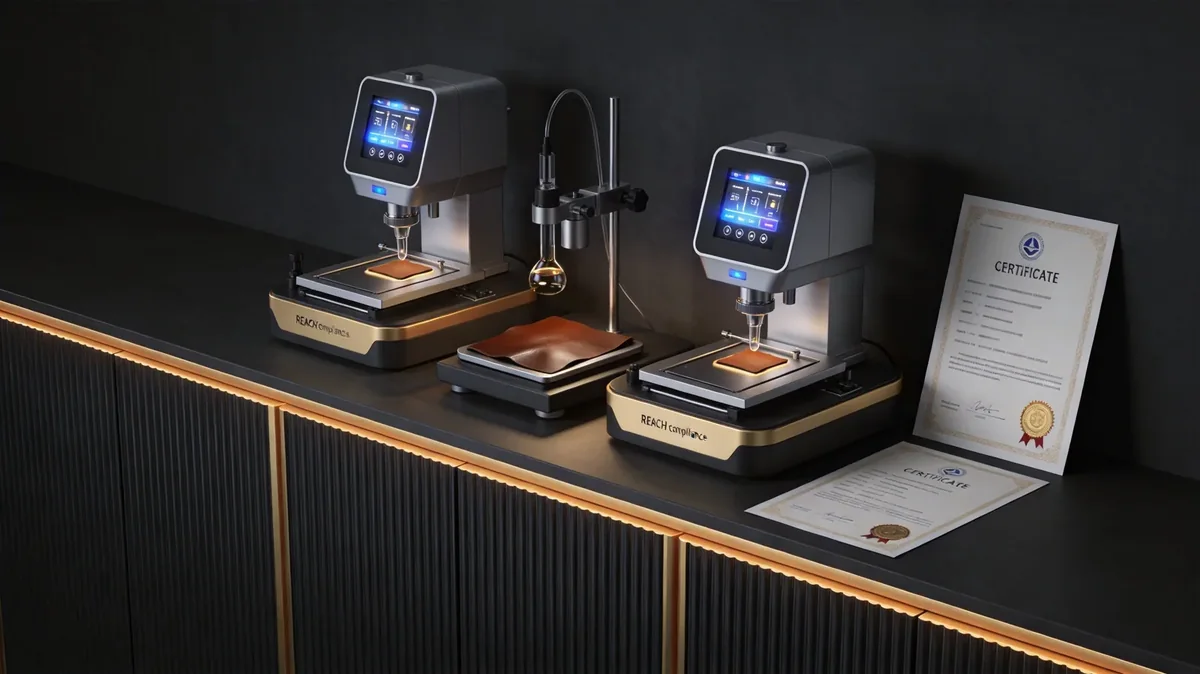
What the Search Actually Costs, in Weeks and Days
Finding the right house costs about three weeks of calendar and very little money. The money is trivial by comparison: swatch card sets at USD 4.80 and sample courier charges. The calendar is the real expense, and it is worth spending deliberately rather than discovering.
- Week 1
- Screening twelve candidates on documents alone, no samples commissioned
- Week 2
- Technical brief sent to five, three answer it properly, two drop out
- Week 3
- Samples commissioned from three at 6-10 working days each
- Decision
- One appointed, with the sample fee credited against the first order
- Typical attrition
- About a third never answer a technical brief; a third more fail on lot traceability
That attrition rate is the useful number. It explains why starting with three candidates is a mistake: two of them will disappear before sampling, and you will appoint whoever is left rather than whoever is best.
Week One: Screening Twelve Without Commissioning Anything
Week one is document work. Send the same technical brief to twelve houses and score the answers rather than the portfolios. A portfolio proves a house made something once; an answer to a technical brief proves it can read a specification.
- Ask which tannery and lot the leather in the reference piece came from.
- Ask for the measurement sheet from the last comparable run, not a promise about the next one.
- Ask for the AQL plan on a 500 pcs lot, in numbers rather than in words.
- Ask what happens if a reserved lot runs out mid-run.
- Score each answer 0-2 and drop every house scoring under six.
The scoring matters more than the questions. Twelve sets of answers read informally will feel broadly similar; twelve sets scored on the same five lines will separate cleanly, usually into a top four and a long tail.
Week Two: The Brief That Eliminates Two Thirds
Send one brief to the surviving five and give it a two-working-day deadline. The brief should contain a dimensioned drawing, a named material direction, quantity, markets and a date, because those five items are what a real answer requires.
| Brief item | What a good answer contains | What a weak answer contains |
|---|---|---|
| Drawing | Comments on skiving and tolerance at ±0.5 mm | A price and a photograph |
| Material | A named tannery lot with test reports offered | A generic leather description |
| Quantity | Confirms MOQ 500 pcs per style and colourway | Avoids the minimum entirely |
| Markets | Per-lot REACH and Prop 65 declarations | A certificate of unspecified scope |
| Date | A calendar built backwards, with buffers marked | A single optimistic date |
The material row does most of the elimination. A house that cannot name the tannery behind a reference piece usually has no lot to name, and a house with no lot will substitute material after your reports are written, which invalidates them.
Week Three: Three Samples, Compared on the Same Sheet
Commission samples from three houses and compare them on one sheet, measured rather than admired. Sampling takes 6-10 working days per house and should include a corrected round, so allow around three weeks for this stage rather than ten days. Houses differ most visibly at this point, because the brief that read similarly on paper produces panels, edges and closures that behave differently in the hand.
Measure, do not admire
Check panel dimensions against the drawing within ±0.5 mm, stitch density at 8-9 per inch, turn-in width at 8-10 mm and skived thickness at 0.6-0.7 mm.
Open the bag
Inspect interlining at 0.8 mm on load panels, lining substance at 0.6-0.8 mm, and whether the base has a 0.8 mm board behind it.
Work the closure
Open and close it fifty times. Plating at 0.15-0.3 µm should show no wear at contact points, and the lock should have no play.
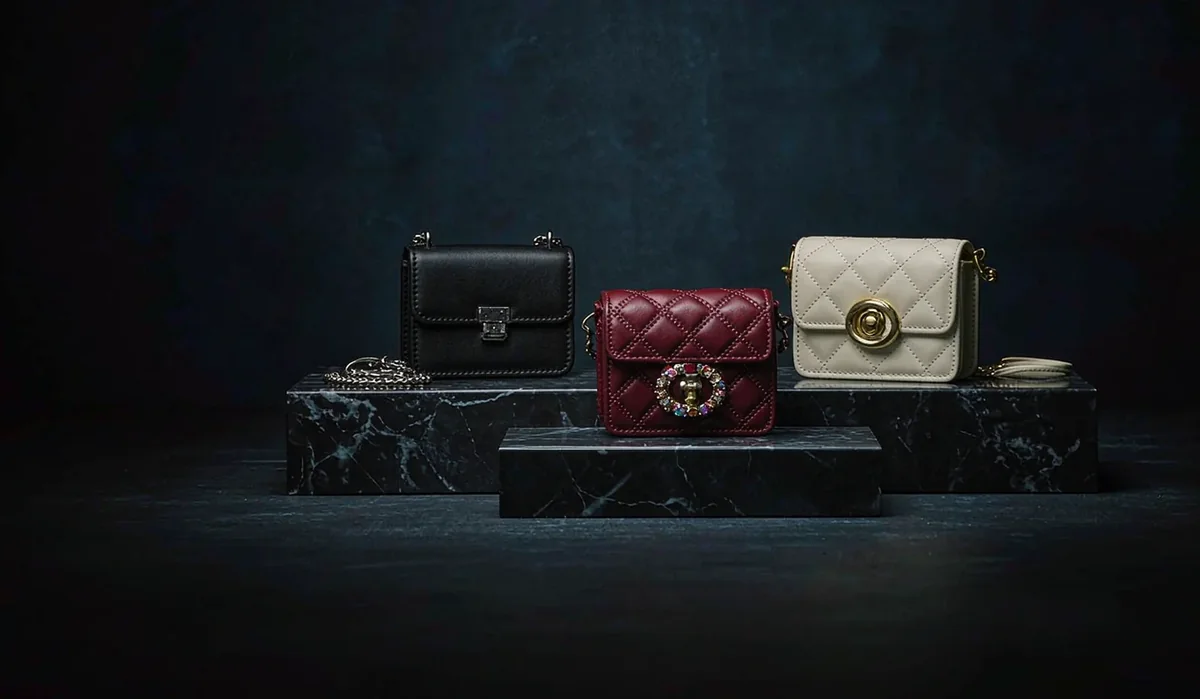
Comparing three is the minimum, not a luxury. With two, a difference in finish reads as a preference; with three, it reads as a standard, which is what you are actually trying to establish.
What a Sample Fee Buys, and What It Should Cost
A sample fee buys a built unit, measurement against the pack, a written correction list and one corrected round. It should not buy a single attempt, and it should not be quoted without stating what happens if the first unit needs re-working.
- Swatch card sets: billed at USD 4.80 and credited against the first bulk order.
- Sampling window: 6-10 working days for a standard build, 12-15 for a complex one.
- Corrected round: included, because the first unit almost always reveals something the drawing did not.
- Courier: charged at cost, and worth paying for speed at this stage of the search.
- Structural change after the freeze: quoted as a new round, and a fair reason for a revised date.
A house that quotes a sample without a corrected round is quoting a photograph rather than a development step. The corrected round is where the specification actually gets written, and it is the least costly iteration available anywhere in the programme.
Six Lines Every Quotation Must Carry
Compare quotations only on houses that itemise six lines. A single figure with no breakdown is not a quotation; it is an opening position, and comparing two of them tells you nothing reliable.
The six lines
- Material: leather type, substance range, finish and the tannery lot behind it.
- Hardware: base metal, plating thickness at 0.15-0.3 µm and salt spray proving at 24 or 48 hours.
- Construction: interlining, lining substance, stitch density and edge coat count.
- Compliance: per-lot REACH, Prop 65 and, where relevant, CPSIA testing for the named markets.
- Inspection: AQL 2.5 under ISO 2859-1, with the accept and reject numbers stated.
- Terms: FOB Xiamen, with CIF and DDP priced as alternatives rather than assumed.
The fourth line is the one most often missing, and its absence is the clearest signal in the whole document. Compliance is a per-lot obligation, so a quotation that omits it is either guessing at your markets or planning to deal with the problem later.
Verification: Documents Worth Asking For
Four documents separate a professional house from a persuasive one. None is difficult to produce, and each takes under a day for a house that already has it.
- Measurement sheets from a previous comparable run, kept with the pattern.
- Test reports issued against a lot: ISO 3376, ISO 11644 and ISO 105, not a generic certificate.
- A tannery audit reference, ideally a Leather Working Group (LWG) audited site.
- A social compliance reference such as BSCI or Sedex for the appointed site.
Ask for these before you ask for a price. A house that produces them promptly will also produce them at the end of your run, which is exactly when you will need them.
Where Searches Go Wrong
Four failure patterns account for most bad appointments. Each is recognisable early, and each is cheaper to act on during the search than after the deposit.
| Pattern | Early signal | What it costs later |
|---|---|---|
| Appointing on portfolio | Beautiful photography, vague answers on lots | Unrepeatable second run, shade drift between deliveries |
| Comparing single figures | No material or testing lines in the quotation | Re-pricing after the first sample, usually upwards |
| Skipping the second sample | One house sampled, no comparison standard | No way to tell whether a finish is good or merely familiar |
| Ignoring the material row | Tannery not named | Substitution after testing, invalidating the reports |
The second row deserves emphasis. Comparing two single figures tells you which house quoted lower, not which house understood the brief, and those are different questions with different answers. A figure with lines behind it can be argued with line by line, which is exactly what you want before a deposit rather than after one.
One further pattern sits slightly outside the table and is worth naming: appointing a house whose calendar is built around a different shape of order. A programme optimised for six lots of 500 will quote keenly and then struggle to prioritise a single colourway, and the symptom appears as a sudden enthusiasm for a larger quantity halfway through development.
Fit: Which Kind of House Suits Which Buyer
Not every buyer needs the same kind of house. Matching the appointment to how you actually buy is worth more than appointing the highest-scoring candidate on a generic sheet.
Founder launching a first capsule
Needs a house that teaches as it goes: stock hardware, one reserved lot, sampling at 6-10 working days and a written board built backwards from the launch date.
Established label extending a range
Needs lot discipline and retention: frozen patterns, held lots and reports that still cover the material, so a re-order lands in 8-10 weeks.
Boutique buying a small exclusive run
Needs flexibility on quantity and a willingness to run one colourway at MOQ 500 pcs without charging for a full development cycle.
Fit also runs the other way. A house that excels at 3,000-piece capsules may be the wrong appointment for a 500-piece exclusive, not because it cannot make the bag but because its calendar is built around a different shape of order.
What to Send on Day One
Day one produces a real answer when four things arrive together. Send them to all twelve candidates in the same message, and the responses become directly comparable.
- A dimensioned drawing or a reference piece, with every intended change noted in writing.
- Quantity per style and colourway, since MOQ 500 pcs applies per combination.
- The material direction and the destination markets, because compliance is booked per lot.
- The immovable date, so the calendar can be built backwards from it.
Our programme runs across 7 production lines with about 200,000 pcs per month of capacity and has held export experience since 2014, carried out through our validated partner factory Quanzhou Yingming Bags, an SGS-validated site. Answers to a completed brief are returned within two working days, with material, hardware, testing and inspection lines itemised. The wider route sits on the high-end handbag sourcing page, and standards detail under luxury quality control.
Send one brief to your shortlist
Send your drawings, quantity, markets and date. You will receive an itemised answer with a lot named, an AQL plan and a calendar, within two working days. Request a quote.
Frequently Asked Questions
How do I find a high-end handbag production house?
Run a three-week funnel: send one technical brief to twelve candidates, screen to five on documents alone, commission samples from three and appoint one. Roughly a third never answer a technical brief properly and a third more fail on lot traceability, so starting with three candidates leaves you appointing whoever remains.
How many candidates should I shortlist?
Twelve at the screening stage, five after document review, three at sampling and one appointed. The attrition is real and predictable: houses drop out because they cannot name a tannery lot or because they will not state an AQL plan in numbers rather than words.
What should a technical brief contain?
A dimensioned drawing or a reference piece with intended changes noted, the material direction, quantity per style and colourway, the destination markets and the immovable date. Sending the same brief to every candidate is what makes their answers directly comparable.
How long should sampling take during a search?
Six to ten working days per house, including one corrected round, so allow around three weeks for the sampling stage rather than ten days. Complex builds take 12-15 days, mostly to prove a bespoke closure and to set a framed or reinforced body.
What does a sample cost?
Swatch card sets are billed at USD 4.80 and credited against the first bulk order, with courier charged at cost. The larger cost is calendar rather than money, which is why commissioning three samples in parallel beats commissioning one at a time.
What lines must a quotation carry?
Six: material with the tannery lot named, hardware with plating thickness and salt spray proving, construction including interlining and stitch density, compliance per lot for the named markets, inspection at AQL 2.5 with accept and reject numbers, and trade terms.
Which documents should I ask for before appointing?
Measurement sheets from a comparable previous run, test reports issued against a lot under ISO 3376, ISO 11644 and ISO 105, a tannery audit reference such as a Leather Working Group audited site, and a social compliance reference such as BSCI or Sedex.
Why does lot traceability matter so much?
Because reports are issued against a lot. Substituting material after testing invalidates the results you hold, and an untraceable hide is the main reason two deliveries of one style differ in hand, shade and edge-paint behaviour.
How do I compare three samples fairly?
Measure them on one sheet: panel dimensions within ±0.5 mm of the drawing, stitch density at 8-9 per inch, turn-in width at 8-10 mm, interlining at 0.8 mm on load panels and no play in the closure after fifty openings.
What is the most common mistake when searching?
Appointing on portfolio. Beautiful photography proves a house made something once; it does not prove the panel matches the pack or that a second run will repeat the first. The next most common mistake is comparing quotations that carry no itemised lines.
How much does a search cost in calendar time?
About three weeks: one for screening twelve, one for the technical brief to five, and one to three for samples from three houses. That is proportionate insurance against appointing a house that cannot repeat its own work.
What quantity applies once a house is appointed?
MOQ 500 pcs per style and colourway. Where a brand wants three styles in two colourways, that is six lots of 500 and should be planned as one reserved hide lot rather than six separate reservations, to protect shade consistency.
Which kind of house suits a first capsule?
One that teaches as it goes: stock hardware rather than bespoke tooling, a single reserved lot, sampling at 6-10 working days and a written board built backwards from the launch date. A house built around 3,000-piece capsules may be the wrong fit for a 500-piece exclusive.
How quickly should a house answer a completed brief?
Within two working days. A longer silence at the brief stage usually predicts a longer silence at approval stage, and approval delays are the most common cause of a slipped launch date on a first capsule.
People Also Ask
Where do I start when looking for a handbag production house?
With a written technical brief sent to twelve candidates. Screen on documents, not photography: ask for the tannery lot, a measurement sheet from a comparable run and an AQL plan in numbers.
How do I know if a bag house is legitimate?
Ask for per-lot test reports under ISO 3376, ISO 11644 and ISO 105, a tannery audit reference such as LWG, and a social compliance reference such as BSCI or Sedex. Each takes a day to produce if it exists.
Should I sample from more than one house?
Yes, three. With two samples a difference in finish reads as a preference; with three it reads as a standard. Sampling takes 6-10 working days per house including one corrected round.
What is a fair sampling window?
Six to ten working days for a standard build and 12-15 for a complex one. The window should include a corrected round, because the first unit almost always reveals something the drawing did not.
What minimum quantity should I expect?
MOQ 500 pcs per style and colourway. Quantity affects the material commitment most, because a hide lot is reserved per combination rather than per style, which is why fewer colourways is usually the better first move.
Sources and further reading
Every figure on this page is either our own programme data or attributed below. Open the originals before you write them into a specification.
- Leather Working GroupLeather Working Group Tannery audit protocol used to qualify a named lot, the most useful single verification document in a sourcing search.
- ISO — International Organization for StandardizationISO Publisher of ISO 2859-1 for AQL sampling plans and the ISO 3376, ISO 11644 and ISO 105 test methods cited in the document checks.
- amfori — BSCIamfori Social compliance framework referenced when a buyer audits a production site before appointing it.
- SedexSedex Supply chain data platform used to share audit findings between brands and the sites they appoint.
- Sourcing JournalSourcing Journal Reporting on sourcing practice, vetting and material traceability that informs the funnel described here.