High-End Handbag Sourcing for Luxury Buyers: One Boutique Capsule Followed From Brief to Sell-Through
What does high-end handbag sourcing look like from a buyer's desk? One London boutique commissioned an exclusive capsule of 500 pcs in two colourways, took it through sampling at 6-10 working days and bulk at 35-50 days, and inspected it at AQL 2.5 with 50 units drawn. The decision that mattered most was not the unit price: it was writing exclusivity into the agreement and building landed cost before the first quotation arrived. Below, that capsule is followed from brief to sell-through, and the six rules the buyer took away are set out in order.
The Buyer, the Brief and the Exclusive
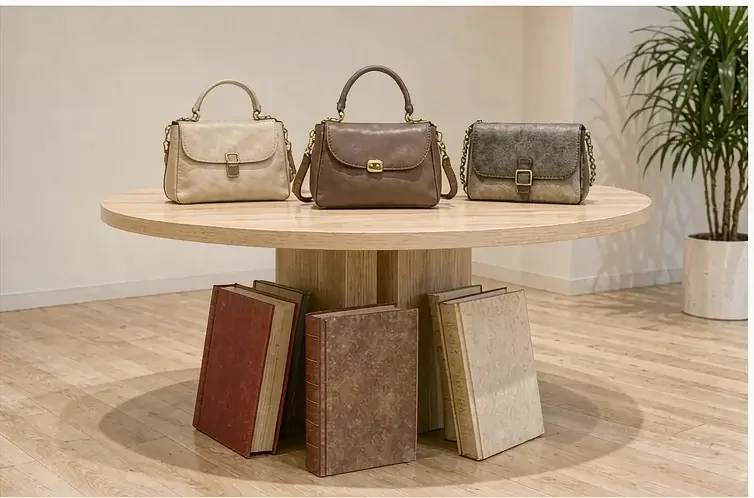
A Marylebone boutique with two shops wanted a capsule no other retailer in its city could carry. The brief was narrow on purpose: one structured body, two colourways, 500 pcs in total split across them, and a delivery date tied to an autumn window display rather than to a trade show.
The buyer had run capsules before and knew the two things that usually go wrong. The first was exclusivity that existed in conversation but not in writing, so a near-identical piece appeared in another shop within a season. The second was a landed cost built after the quotation, which turned a workable unit price into an unworkable retail one once freight and duty were added.
- One structured body in full-grain calfskin at 1.2-1.4 mm, two colourways from a single reserved lot.
- 500 pcs total, at MOQ 500 per style and colourway applied flexibly to one style in two shades.
- Twelve months of exclusivity for the city, written into the agreement rather than discussed.
- Delivery against an autumn window date, which is immovable once the display is booked.
What the Buyer Was Actually Buying
The capsule was not bought as inventory; it was bought as a reason to visit. That distinction changed what the buyer asked for, and it is the first thing worth understanding about sourcing at this end of the market.
A piece bought as inventory is judged on margin and turnover. A piece bought as a reason to visit is judged on whether it is recognisably different, whether it photographs well under shop lighting, and whether the story behind it survives a customer asking two questions. All three are specification questions: substance, finish and the documented provenance of the lot.
- Difference: a construction or a material the customer cannot find elsewhere in the same postcode.
- Photography: a finish that holds under warm shop lighting, checked against ISO 105 light fastness.
- Story: a tannery and a lot that can be named aloud without hesitation.
- Margin: a landed cost built before quotation, not reconstructed afterwards.
Notice that three of the four are decided before a price exists. Buyers who start with margin tend to end up with a piece that is profitable and forgettable, which is the wrong outcome for a capsule whose job is to draw people through a door.
Landed Cost: The Arithmetic Behind the Number
Landed cost is the unit price plus freight, duty, inland delivery and a reserve for correction, and on a 500-piece capsule the non-unit elements routinely add a fifth to a third of the figure. Building it first is the difference between a capsule that works and one that is repriced in the shop.
- Unit price
- Material, hardware, construction and testing, quoted with each line itemised
- Freight
- Sea 25-35 days to northern Europe, priced on the chosen trade term
- Duty and clearance
- Applied at the destination tariff for leather goods, not assumed
- Inland delivery
- Port to shop, quoted rather than estimated
- Correction reserve
- A small allowance against defects found at inspection and re-checked
- Terms
- FOB Xiamen by default, with CIF and DDP priced as explicit alternatives
The correction reserve is the line buyers omit. Inspection at AQL 2.5 will find something on a first run, because 50 units drawn from 500 is a tenth of the order, and a reserve turns that from a crisis into an arithmetic adjustment.
The Evaluation Sheet the Buyer Used
Evaluation at this level is a scored sheet rather than a conversation. The buyer used six criteria, each scored 0-3, and declined to discuss price until the sheet was complete.
| Criterion | What earns three | What earns one |
|---|---|---|
| Material provenance | A named tannery lot, LWG-audited, with test reports offered | A leather described by feel and colour |
| Construction record | Measurement sheets and a tolerance of ±0.5 mm | Visual standards and assurances |
| Sampling scope | 6-10 working days including a corrected round | A single attempt with no revision |
| Inspection | AQL 2.5, ISO 2859-1, with numbers stated | A verbal promise of careful checking |
| Exclusivity | Terms offered in writing with a territory and a period | Exclusivity discussed but unwritten |
| Retention | Patterns and reports held for the re-order | Each run treated as a fresh project |
Scoring exclusivity alongside construction is the unusual part, and it is the part most worth copying. A house that will not write exclusivity down is telling you how it will behave in twelve months, and that matters more than any finishing detail.
Samples, Then a Second Round
Sampling took 6-10 working days and the buyer insisted on the corrected round, which is where the capsule actually improved. The first unit had two faults visible under shop lighting rather than studio lighting, and both were caught because the buyer looked at the sample where it would be sold.
Look at it where it sells
Warm shop lighting reveals shade and finish faults that studio lighting hides. The buyer took the sample to the shop floor before approving it.
Work the closure fifty times
Plating at 0.15-0.3 µm should show no wear at contact points after repeated opening, and a milled lock should have no play.
Ask what changed
Request the correction list in writing. A house that records corrections will not repeat them in bulk, and the list is the record that proves it.
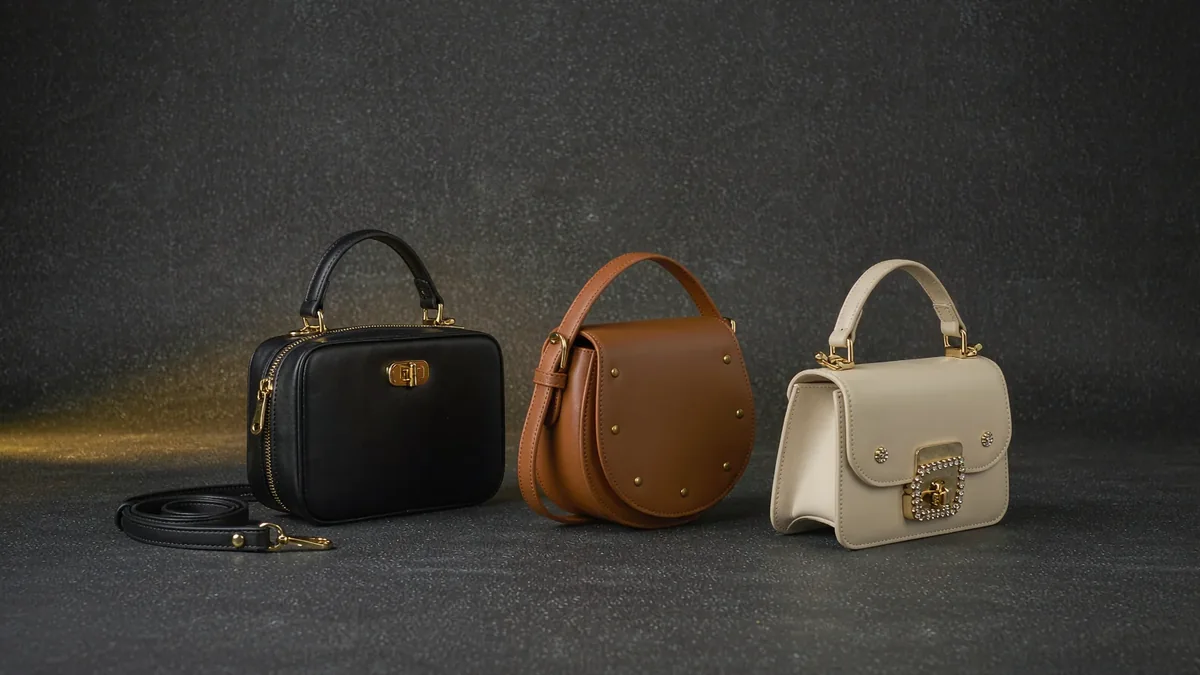
Swatch card sets are billed at USD 4.80 and credited against the first order, and the buyer ordered two sets: one for the shop, one for the window display plan. That is the most useful four pounds and eighty cents in a capsule of this kind.
Exclusivity: What It Means in Writing
Exclusivity is four sentences: which territory, for how long, on which styles and colourways, and what happens at the end. Anything less is a sentiment, and sentiments do not survive a good season.
- Territory: named precisely, by city or by country, never by a phrase such as the region.
- Period: twelve months from delivery is the usual term for a boutique capsule.
- Scope: named styles and colourways, since a near-identical piece in a new shade is still a breach in spirit.
- Ending: what happens at renewal, and whether the buyer has a first option on the second capsule.
The third line is the one that gets argued about. A capsule is exclusive on a silhouette and a material, not merely on a colour, and writing that down costs nothing at the start and saves a difficult conversation in month nine.
Inspection and Acceptance at Handover
Inspection was drawn at AQL 2.5 under ISO 2859-1, with the plan agreed before bulk began. On a 500 pcs lot at general inspection level II that is code letter H: 50 units drawn, accept 3, reject 4.
- Agree the plan and the level before bulk, not at the end of it.
- Draw the sample with the packing list, so carton counts reconcile with units.
- Record defects by operation, not by unit, so the cause can be corrected rather than repaired.
- Re-check after correction, which is the step most calendars forget to allow for.
- Release packing only once the re-check closes, since packing is what makes a defect expensive.
Third-party inspection can be arranged alongside the internal audit, and the buyer took that option on the first capsule only. It is worth doing once, because it establishes whether the house's own numbers can be trusted before the relationship depends on them.
Six Rules the Buyer Took Away
Six rules came out of the capsule, and the buyer now applies them to every commission. None of them is about negotiation.
Six rules from one boutique capsule
- Build landed cost before you ask for a unit price, and include a correction reserve.
- Write exclusivity down: territory, period, scope and renewal, in four sentences.
- Examine the sample under the lighting it will be sold in, not under studio light.
- Agree the AQL 2.5 plan before bulk, so acceptance is a check rather than a negotiation.
- Score the house on six criteria and discuss price only after the sheet is complete.
- Reserve the hide lot early, which removes 15-20 working days and protects shade consistency.
The second and third rules are the ones the buyer cites most often. Both cost nothing at the start, both are impossible to fix later, and both came from experience rather than from a specification sheet.
Three Sourcing Routes Compared
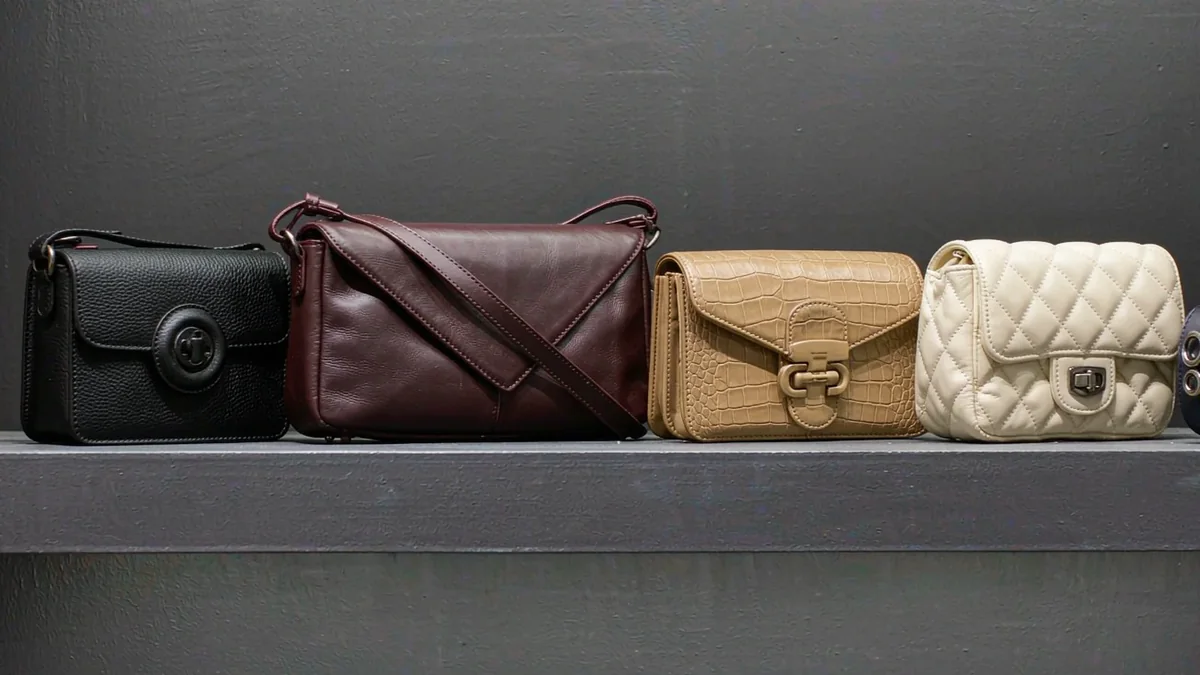
Buyers generally choose between three routes, and the right one depends on what the capsule is for. The comparison below is what the boutique weighed before appointing.
Exclusive capsule
One style, two colourways, 500 pcs, exclusivity written in, sampling 6-10 working days and bulk 35-50 days. Right when the piece exists to draw visitors.
Shared programme
A silhouette from an existing range, adapted in material and hardware. Faster and less expensive, but exclusivity is limited to the colourway.
Bench-made hero pieces
One to three pieces at 18-30 bench hours each, used for the window and for press. Slower and more costly, and not a route to 500 units.
The boutique ran the first and third together: a capsule of 500 plus two bench-made pieces for the window. The shared lot made the whole thing read as one family, which is the detail that made the display work.
Timing: What a Buyer Must Decide First
Two dates govern a buyer's calendar, and only one of them is negotiable. The display or press date is fixed; the delivery date is built backwards from it, subtracting freight first.
| If the capsule is | Allow from brief | Because |
|---|---|---|
| Calfskin, stock hardware | 11-14 weeks to the shop | production 35-50 days of sea freight dominate |
| Calfskin with a bespoke closure | 14-17 weeks | Tooling and bench proving add 30-40 working days |
| Including a listed skin | 16-20 weeks | Permit documents add 30-45 working days |
| A re-order on a frozen pattern | 8-10 weeks | Every development gate is already closed |
Where a buyer has seasonal pressure, the useful move is to hold the lot. Reserving the hide when the shade is settled removes 15-20 working days from the front of the plan, and it carries no design risk at all.
What a Buyer Should Send on Day One
A buyer's first message produces a real answer when it contains four items. With them, a house can quote and calendar the capsule in two working days; without them, it can only estimate.
- A dimensioned drawing or a reference piece, with every intended change written down.
- Quantity per style and colourway, at MOQ 500 pcs per combination.
- The material direction and the selling markets, since compliance is booked per lot.
- The immovable date, and the territory and period of exclusivity required.
Our programme runs across 7 production lines with about 200,000 pcs per month of capacity and has held export experience since 2014, carried out through our validated partner factory Quanzhou Yingming Bags, an SGS-validated site. Inspection is drawn at AQL 2.5 under ISO 2859-1, with third-party inspection available alongside it, and handover is on FOB Xiamen terms. Evaluation criteria in detail sit under luxury quality control, material selection under luxury materials, and the full route on the high-end handbag sourcing page.
Cost your capsule before you quote it
Send your drawing, quantity, territory and window date. You will receive a landed cost with every element itemised, plus an exclusivity term you can sign. Request a quote.
Frequently Asked Questions
How should a luxury buyer approach handbag sourcing?
Build landed cost before asking for a unit price, score the house on six written criteria, and only then discuss price. Decide territory, period, scope and renewal for exclusivity up front, and hold the hide lot early so shade consistency is protected across the capsule.
What is landed cost and why does it come first?
Landed cost is the unit price plus freight, duty, inland delivery and a reserve for correction. On a 500-piece capsule the non-unit elements commonly add a fifth to a third of the figure, so a unit price quoted alone can look workable and turn unworkable in the shop.
How much should a buyer allow for defects?
A small reserve against what inspection finds, rather than a fixed percentage. At AQL 2.5 a 500 pcs lot draws 50 units with accept 3 and reject 4, so whatever variation exists in the run will surface in that tenth and needs to be absorbed calmly.
What should an exclusivity agreement contain?
Four sentences: the territory, named precisely; the period, usually twelve months from delivery; the scope, meaning the named styles and colourways rather than the colour alone; and what happens at renewal, including a first option on the second capsule.
How long does a boutique capsule take to arrive?
Eleven to fourteen weeks for calfskin with stock hardware, fourteen to seventeen with a bespoke closure, and sixteen to twenty where a listed skin is involved. A re-order on a frozen pattern lands in eight to ten weeks because every development gate is closed.
Why should a sample be seen under shop lighting?
Warm retail lighting reveals shade and finish faults that studio lighting hides. Two faults on the London capsule were visible only on the shop floor, and both were caught before bulk because the buyer insisted on looking at the sample where it would be sold.
What does sampling include for a buyer's capsule?
Six to ten working days covering a first built unit, measurement against the drawing within ±0.5 mm, a written correction list and one corrected round. Complex builds take 12-15 days, mostly to prove a bespoke closure or a framed body.
How is inspection handled at handover?
At AQL 2.5 under ISO 2859-1, agreed before bulk begins. On 500 pcs at general inspection level II, 50 units are drawn, accept 3 and reject 4. Defects are recorded by operation so the cause is corrected, then re-checked before packing is released.
Should a buyer use third-party inspection?
It is worth doing once, on the first capsule. It establishes whether the house's own numbers can be trusted before the relationship depends on them, and it can then be dropped or kept according to what the first audit showed.
What is the minimum quantity for an exclusive capsule?
MOQ 500 pcs per style and colourway. The London capsule ran one style in two colourways from a single reserved lot, which keeps the run at 500 pieces while still giving the shop two shades to display.
How do I keep two colourways consistent in shade?
Reserve both from the same hide lot and test that lot before cutting. Reports under ISO 3376, ISO 11644 and ISO 105 are issued per lot, so buying two colourways from two sources is the fastest way to produce a visible mismatch.
What are the three sourcing routes a buyer can choose?
An exclusive capsule at 500 pcs with written exclusivity, a shared programme using an existing silhouette adapted in material, or bench-made hero pieces at 18-30 hours each for the window and press. Many buyers run the first and third together on a shared lot.
Which trade terms apply to a buyer's shipment?
FOB Xiamen by default, with CIF and DDP priced as explicit alternatives. The term decides who carries freight risk and who manages customs documentation, so it should be fixed at quotation rather than at handover, because changing it re-prices the shipment.
What should a buyer send on the first day?
A dimensioned drawing or reference piece with intended changes noted, quantity per style and colourway, the material direction and selling markets, the immovable date, and the territory and period of exclusivity required. With those, a scoped answer returns in two working days.
People Also Ask
What is landed cost in handbag sourcing?
The unit price plus freight, duty, inland delivery and a reserve for correction. On a 500-piece capsule the added elements commonly account for a fifth to a third of the total, which is why it must be built before a quotation is compared.
How long does an exclusive handbag capsule take?
About 11-14 weeks for calfskin with stock hardware: sampling 6-10 working days, production 35-50 days of sea freight. A bespoke closure adds 30-40 working days and a listed skin adds 30-45.
What should exclusivity cover?
Territory, period, scope and renewal. Territory should name a city or country, the period is usually twelve months from delivery, scope covers the named styles and colourways, and renewal should give the buyer a first option.
How many units are inspected on a 500-piece order?
Fifty, under AQL 2.5 at general inspection level II, code letter H, with accept 3 and reject 4. Defects are recorded by operation so the cause is corrected, and a re-check closes before packing is released.
Can a boutique order fewer than 500 pieces?
The programme minimum is 500 pcs per style and colourway. Running one style in two colourways from a single reserved lot keeps the total at 500 pieces and still gives the shop two shades to display.
Sources and further reading
Every figure on this page is either our own programme data or attributed below. Open the originals before you write them into a specification.
- ISO — International Organization for StandardizationISO Publisher of ISO 2859-1, which sets the AQL sampling plans, code letters and accept and reject numbers used at handover, and of the ISO 105 light fastness method referenced here.
- Leather Working GroupLeather Working Group Tannery audit protocol behind lot qualification, the basis of the provenance criterion on the buyer's evaluation sheet.
- CITES — Convention on International Trade in Endangered SpeciesCITES Appendix listings determine which permit documents must travel with listed skins, adding 30-45 working days to a capsule calendar.
- FashionUnitedFashionUnited Reporting on European retail calendars and boutique buying patterns that shape the window dates discussed here.
- WWDWWD Coverage of luxury leather goods retail, including exclusive capsules and the commercial logic behind them.