Handbag Defect Classification: Three Classes, Twelve Codes and the Numbers Written Before the Draw
How should a defect on a luxury handbag be classified? Three classes decide it: critical breaks safety or saleability and carries zero tolerance, major is what a client would return and is counted against the accept number, and minor is a deviation inside tolerance that is recorded rather than argued about. On a 500 pcs style drawn at AQL 2.5 under ISO 2859-1 general inspection level II the arithmetic is fixed: code letter H, 50 units drawn, accepted on 3 findings and rejected on 4. What makes those 50 units meaningful is everything written before the draw begins.
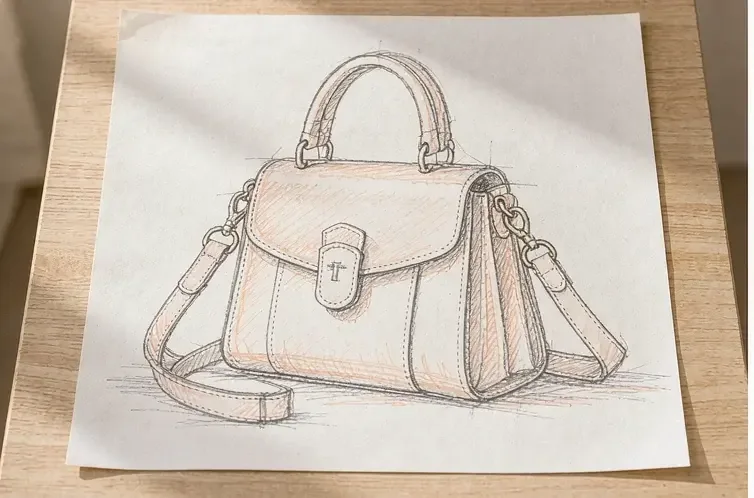
The Three Classes, Defined Before Anything Is Counted
Classification is administrative work performed in advance, not judgement exercised under pressure. A finding that was never defined at the specification stage becomes a negotiation at the audit table, and negotiation always favours whoever is holding the cartons. Three classes are enough; four invite argument, because the fourth is usually called cosmetic, and cosmetic is a matter of taste where the others are matters of arithmetic. Write your own examples under each heading before bulk opens rather than borrowing a generic list.
- Critical: a finding that makes the piece unsafe, unlawful or unsaleable, such as an unaccounted needle fragment in a panel or a handle that separates at its attachment under load. Zero tolerance applies, and one finding rejects the lot.
- Major: a finding a client would notice and return, such as a shade deviation above Delta E 1.5, a visible wave along the gusset seam, or an edge that has cracked at a corner. Counted against the accept number.
- Minor: a deviation inside tolerance that does not affect saleability, such as stitch tension variation that still measures 8-9 per inch. Counted, monitored and trended across lots rather than contested.
- Zero-tolerance items written separately: named findings that override the accept number entirely, such as a mis-spelled monogram or a missing interior component.
- Declared characteristics: natural markings accepted on the sealed reference, since a healed scar deliberately placed by the marker is character rather than a fault.
Twelve Codes That Survive Translation
Codes do three things words cannot. They keep the sheet short when four people are reading it in two languages, they let you tot up the same finding across lots, and they stop a description such as “edge not good” from being reinterpreted by whoever happens to be holding the pen. Twelve families cover most structural failures on a leather body with metal fittings; add style-specific codes only where a recurring failure earns one.
| Code | Finding | Class |
|---|---|---|
| MAT-01 | Shade deviation above Delta E 1.5 against the sealed swatch | Major |
| MAT-02 | Hide thickness outside 1.2-1.4 mm at the panel position | Major |
| MAT-03 | Loose grain or healed scar on a visible face, unplaced by the marker | Major |
| CUT-01 | Panel dimension more than 1 mm off pattern on any edge | Major |
| CUT-02 | Grain direction inconsistent between panels of the same unit | Major |
| ASM-01 | Stitch density below 8 per inch over a 25 mm gauge | Major |
| ASM-02 | Seam allowance wandering by more than 1 mm along the run | Minor |
| EDG-01 | Edge build below 0.35 mm or above 0.45 mm after cure | Major |
| HW-01 | Plating bloom after 24 hours neutral salt spray to ISO 9227 | Major |
| HW-02 | Turn-lock fails to engage after cycling 200 times | Critical |
| HW-03 | Sharp burr on a foot, plate edge or internal prong | Critical |
| SFT-01 | Broken needle fragment not recovered and logged | Critical |
Two of those codes do most of the damage in practice. HW-02 and HW-03 sit inside the unit where no client can see them until the day a lock will not close or a foot catches on silk, and SFT-01 is the one finding that no quantity of good stitching can compensate for.
The Zero-Tolerance List That Never Reaches a Vote
A critical finding stops the line rather than joining a tally. That distinction matters because a zero-tolerance defect discovered by the client is a recall, while the same defect discovered at the bench is a repair, and the distance between those two outcomes is measured in reputation rather than money. Write the list before sampling payment is made, ask for the line-stop procedure in writing, and name who may authorise a restart.
- Stop the affected operation and quarantine every unit touched since the last in-process check.
- Account for the physical cause: recover the whole needle before a replacement is issued, and log the event against the operation.
- Inspect the quarantine population unit by unit rather than by draw, since critical findings are rare and clustered.
- Correct the cause, not only the symptom, then record what changed in the specification for the next capsule.
- Release the restart on a written authorisation, with the reopened draw documented alongside the original finding.
Major Findings Against the Accept Number
Major findings are the working currency of the audit: common enough to appear on every lot, serious enough to decide whether the cartons travel. They are counted against the accept number set by lot size and inspection level, which is why the numbers below belong in the specification rather than in the memory of whoever attends the draw.
| Lot size (pcs) | Code letter, level II | Units drawn | Accept | Reject |
|---|---|---|---|---|
| 91-150 | F | 20 | 1 | 2 |
| 151-280 | G | 32 | 2 | 3 |
| 281-500 | H | 50 | 3 | 4 |
| 501-1200 | J | 80 | 5 | 6 |
| 1201-3200 | K | 125 | 7 | 8 |
| 3201-10000 | L | 200 | 10 | 11 |
A 500 pcs style therefore draws 50 units, or roughly one bag in ten, and passes with three major findings on the sheet. Founders read that as permission to ship imperfect goods; read correctly it is the tolerable process average of a continuing series of lots, and the correct response to a recurring finding is to change the specification, not to argue about the unit.
Minor Findings: Counted, Then Actually Used
Minors are where the return on record-keeping lives. Individually they change nothing; together they are the earliest signal that a pattern is drifting, a needle is dulling or a lot of hide is behaving differently from the last one. Three rules turn them from noise into a warning: a per-lot review threshold, a promotion rule across lots, and a reporting interval short enough for the information still to be actionable.
- Review threshold
- 12 minor findings of any single code on one 500 pcs lot triggers a process review
- Promotion rule
- The same minor code appearing in 3 consecutive lots is reclassified as major
- Recording unit
- Tallied per drawn unit, so per-100-unit rates compare across styles and seasons
- Reporting interval
- Sheet issued within 24 hours of the draw and before packing release
- Trend horizon
- Compared across the last 5 lots rather than against the previous one alone
Where Each Class Surfaces in the Sequence
Every finding has a least costly moment, and the multiplier below is the argument for inspecting early. The figures are relative: one unit of cost is a single skin replaced at incoming material, so the same failure intercepted at the final draw costs forty because it has travelled through cutting, assembly, finishing and packing on its way to becoming forty problems.
| Stage | Typical findings | Class usually assigned | Relative cost to correct |
|---|---|---|---|
| Incoming material | Shade, thickness, surface faults | Major | 1x |
| Cutting | Panel dimension, grain direction | Major | 3x |
| Assembly bench | Stitch density, alignment, reinforcement | Major | 8x |
| Edge finishing | Build thickness, corner cracking | Major | 12x |
| Hardware seating | Engagement, burrs, finish adhesion | Critical or major | 15x |
| Final audit draw | All of the above, plus packing accuracy | Any class | 40x |
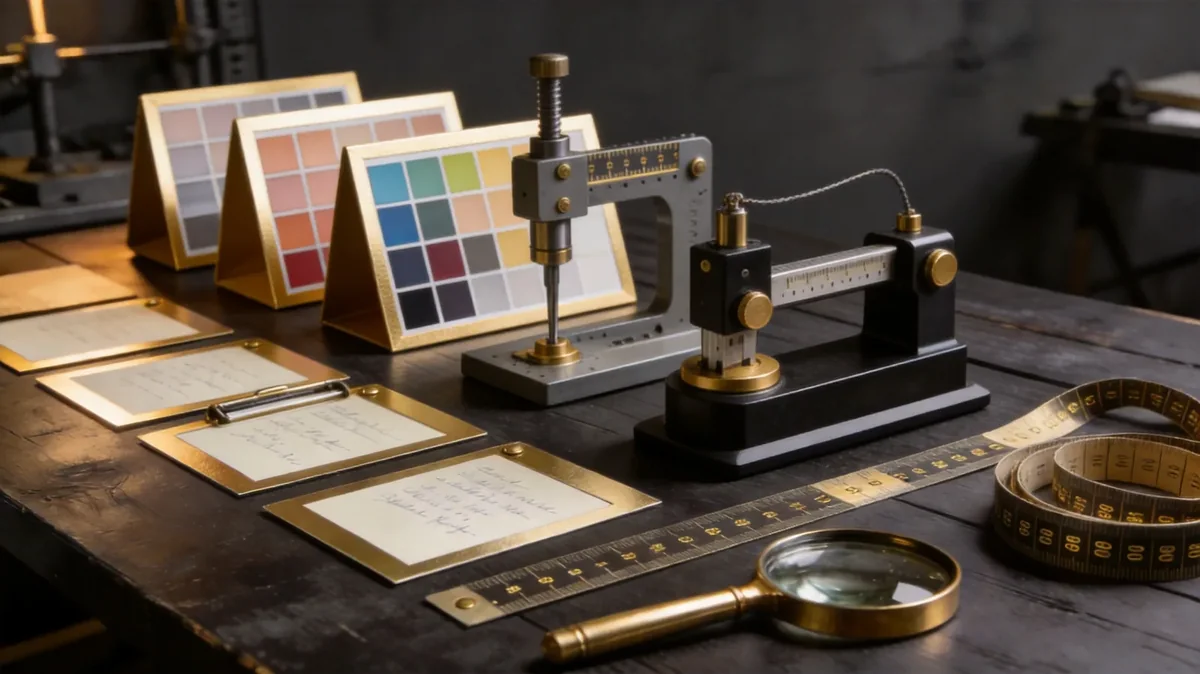
Zero-Tolerance Clauses Written Separately
Some findings are small in cost and enormous in consequence, and those belong in their own clause rather than inside a class. A wrong letter in a monogram costs nothing to correct before the parts are cut and everything afterwards; an interior component missing from one unit in fifty is statistically acceptable under most plans and commercially unacceptable to the client who receives that one. Name them, keep them outside the accept number, and check them at a higher rate than the rest of the draw.
- Monogram or foil detail incorrect in letter, position or kerning.
- Any interior component missing from a finished unit.
- Lining or dust cover supplied in the wrong specified colourway.
- Magnet closure reversed in polarity, so the flap will not stay closed.
- Barcode, care card or origin labelling mismatched against the style record.
Switching Rules Most Programmes Forget
A single lot is judged once; a series is judged by rules that tighten and loosen around the middle. ISO 2859-1 carries switching procedures that many programmes never mention, and they are the reason two brands can inspect the same numbers and end up with different long-run quality. Knowing them costs nothing and changes how a specification should be written.
- Normal to tightened when 2 of any 5 consecutive lots are rejected: the same sample size is kept while the accept number falls.
- Tightened back to normal once 5 consecutive lots have been accepted under the tightened plan.
- Discontinuation when 5 consecutive lots remain on tightened inspection, at which point all further lots stop until the process is corrected.
- Reduced inspection is available after a sustained run of accepted lots and with agreement on both sides, though it rarely suits a first capsule.
What Goes on the Sheet, Field by Field
The sheet is the artefact a retailer, an insurer or a marketplace will eventually ask for, and a sheet assembled afterwards is a reconstruction rather than a record. Nine fields make it usable: enough to identify the lot without a phone call, and few enough that it still gets filled in on a Friday afternoon.
- Lot identity
- Style reference, colourway, purchase order and quantity submitted
- Plan used
- Standard reference, AQL value, inspection level and code letter
- Units drawn
- Individual unit numbers, not merely a total count
- Per-unit tallies
- Each finding recorded by code against the unit it was found on
- Classification column
- Critical, major or minor assigned at the time of the finding
- Photographic set
- Images of every critical and every disputed finding
- Instrument readings
- Thickness, shade and build figures with the gauge used
- Decision line
- Accept, reject or accept-with-rework, signed and dated
- Re-check record
- Result of the second draw appended to the original finding
Cost, Records and the File You Keep
Documentation handling for a lot file starts at USD 4.80 and covers assembly of the set rather than the testing itself, which is quoted separately and only earns its fee when it is booked against a named lot. Our validated partner factory Quanzhou Yingming Bags, an SGS-validated site, has run export programmes since 2014 across 7 production lines at about 200,000 pcs per month, with sampling taking 6-10 working days and bulk 35-50 days. Minimum order quantities run at 500 pcs per style and colourway, which is also the lot size most of the plans above are quoted against.
Get the defect sheet for your own style
Send the style, the quantity and the markets you sell in. You receive the twelve codes with classes written for your construction, the accept and reject numbers for your lot size, and the zero-tolerance clause list used on your last capsule. Request a quote.
Frequently Asked Questions
What makes a handbag defect critical rather than major?
A critical finding makes the piece unsafe, unlawful or unsaleable, so it cannot be argued into either of the other classes. Examples include an unaccounted needle fragment in a panel, a handle that separates at its attachment under load, or a turn-lock that will not engage. One critical finding rejects the lot outright, and the affected population is rechecked unit by unit rather than by draw.
How many units are checked on a 500-piece lot?
Fifty, drawn at random from the finished lot. Under ISO 2859-1 the 281-500 band carries code letter H at general inspection level II, and code H at AQL 2.5 gives a sample of 50 with acceptance on 3 defects and rejection on 4. That is roughly one bag in ten, which is why the spread across a lot matters more than any single unit.
Can a minor defect be reclassified as major?
Yes, and doing so is how a programme improves. The rule used here promotes any minor code that appears in 3 consecutive lots to major, because repetition means the process average has moved rather than one unit being unlucky. A second trigger is volume: 12 findings of a single minor code on one 500 pcs lot calls for a process review regardless of trend.
Should every defect classification be written before production starts?
Yes, and specifically before the bulk deposit, because classification is a commercial agreement rather than a technical formality. Anything undefined at specification becomes a negotiation at the audit table, where whoever holds the cartons holds the advantage. Writing your own examples under each class also makes the sheet specific to your construction instead of generic.
What does zero tolerance mean if the standard already gives an accept number?
It means a named finding sits outside the counting plan entirely and rejects regardless of how few there are. The AQL accept figure describes an allowable number of major findings; it was never intended to permit a wrong monogram or a missing component. Those go in their own clause and are usually inspected at a higher rate than the rest of the draw.
Why use codes instead of written descriptions on a defect sheet?
Codes compress the sheet, keep it readable in two languages, and allow the same finding to be totalled across lots and seasons. A written note such as an edge not being acceptable is reinterpreted by whoever reads it next; CUT-01 or EDG-01 means one thing every time. Twelve families cover most structural failures on a leather body with metal fittings.
How quickly should an inspection sheet be delivered?
Within 24 hours of the draw and always before packing release, because the sheet authorises a decision rather than merely reporting one. A sheet produced after the goods have shipped describes a result nobody can act on. Ask for the delay spelled out in writing, along with who signs the decision line and what happens to units designated for rework.
What happens after a lot is rejected?
The lot is corrected or replaced and then drawn again at the same inspection level rather than at a relaxed one, with the result appended to the original finding. Switchover to tightened inspection follows when 2 of any 5 consecutive lots fail, raising the bar for the following capsule until 5 consecutive lots clear.
Do natural markings on leather count as defects?
Not when they are declared on the sealed reference. Healed scars, insect marks and loose grain are inherent to a natural hide, so they belong on the accepted-characteristics list rather than the defect list. The control lies in mapping each skin before cutting, so the marker can place a mark in a gusset rather than at the centre of a front panel.
How are hardware failures classified?
By consequence rather than appearance. A cosmetic variation inside tolerance is minor; plating bloom after 24 hours of neutral salt spray to ISO 9227 is major because it will surface within a season on the shelf; a lock that fails to engage after cycling, or a burr sharp enough to catch fabric, is critical because the piece cannot be used safely.
What belongs in a quality file for one lot?
Nine fields: lot identity, the plan used with its code letter, the individual unit numbers drawn, per-unit tallies by code, the classification column, photographs of every critical finding, instrument readings with the gauge named, a signed decision line, and the re-check record appended afterwards. Files are assembled as the lot progresses rather than compiled later.
What does maintaining the quality file cost?
Documentation handling runs from USD 4.80 per lot file, covering assembly of the set rather than any laboratory work. Testing itself is quoted separately and should be booked when the material lot is named, since certificates are issued against a lot and cannot be produced retrospectively once that lot has been cut and gone.
How does classification connect back to the approval sample?
The sealed approval sample is the reference every class is judged against, so anything measured at sampling should appear on the defect sheet with a number rather than an adjective. A dimension never agreed in writing at that stage cannot be classified at audit, which is effectively a decision to accept whatever arrives.
People Also Ask
What is a critical defect on a handbag?
One that makes the piece unsafe, unlawful or unsaleable: an unaccounted needle fragment, a handle that pulls free at its attachment, or a lock that will not engage. It carries zero tolerance, rejects the lot outright and stops the affected operation until written authorisation restarts it.
What is the difference between major and minor defects?
A major finding is one a client would notice and return, and it counts against the accept number of the plan. A minor finding sits inside tolerance, changes nothing about saleability, and is recorded and trended. A minor repeating across 3 consecutive lots is promoted to major.
What defect rate is acceptable in luxury handbags?
Under AQL 2.5 at general inspection level II, a 500 pcs lot accepts on 3 findings and rejects on 4, drawn from 50 units. Higher-varying programmes lower the level or add zero-tolerance clauses rather than simply tightening the number.
How do you write a defect classification list?
Start from the three classes, then write concrete examples from your own construction under each: stitch density below 8 per inch, edge build outside 0.35-0.45 mm, shade above Delta E 1.5. Give each a code so the finding can be totalled across lots and translated without reinterpretation.
Why is early inspection cheaper than a final audit?
Because the same finding costs progressively more to correct later. Relative to replacing one hide at incoming material, correcting it after cutting costs about 3x, at assembly 8x, at edge finishing 12x, at hardware seating 15x, and at the final draw roughly 40x once packing and shipping are involved.
Sources and further reading
Every figure on this page is either our own programme data or attributed below. Open the originals before you write them into a specification.
- ISO — International Organization for StandardizationISO Publisher of ISO 2859-1, the sampling standard that defines the accept and reject numbers, the code letters and the switching rules between normal and tightened inspection.
- ASQ — Acceptance sampling resourcesASQ Practitioner guidance on acceptance quality limits, sample size selection and the interpretation of lot acceptance decisions across successive lots.
- National Institute of Standards and TechnologyNIST Reference for measurement traceability of the dial gauges and gauges used to record thickness, build and stitch density readings on inspection sheets.
- CPSC — Consumer Product Safety CommissionU.S. Consumer Product Safety Commission Administrator of rules governing sharp points, small parts and product safety, which inform the assignment of the critical class to burrs and detached components.