Luxury Handbag Market Size and Growth Explained: What the Published Numbers Cover and What They Should Change in Your Order
How large is the luxury handbag market, and should its growth figures change what you order next season? Published headline numbers answer neither question directly, because every tracker draws its own boundary around personal luxury goods and around where leather goods stop. The practical move is to read three things instead: the published direction, the growth inside your own price band, and the arithmetic you actually control — 500 pcs per style and colourway, 6-10 working days for samples, 35-50 days to bulk, inspection at AQL 2.5, and despatch FOB Xiamen.
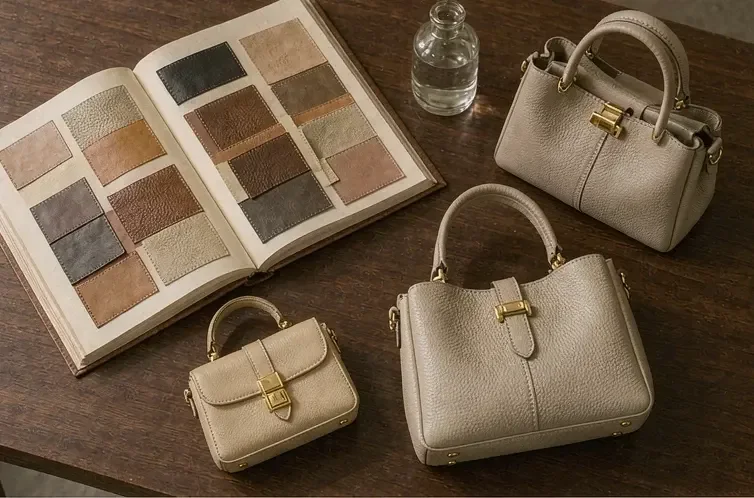
Read the decision path before the headline number
Market size is an input to four decisions, and only four: how many styles you launch, how deep each colourway is cut, how much calendar you leave for development, and how much risk you carry into a second season. Everything else in a published market figure is context for a pitch deck. The sequence matters. You settle the price band first, then size the drop, then set the calendar backwards from the delivery date, and only then commit quantities. Reversing that order is what turns a strong headline into an unsold corner of a warehouse.
A growth rate read out of context pushes teams the wrong way. Blended category growth includes entry price points your label does not compete in, and those price points move on different drivers than a structured calfskin top-handle does. So the first filter is always the same question, asked before any number enters a plan: does this figure describe the band we actually sell in, and the markets we actually ship to?
What the published market figures actually include
Every tracker that publishes a personal luxury goods total makes three choices that change the result: whether leather goods sits inside or beside apparel, whether small leather goods count as leather goods or as accessories, and whether revenue is recorded at retail value or at the value received by the brand. Those choices move the headline by a wide margin, so two entirely honest numbers can differ substantially without either being wrong.
That is why we do not reprint third-party headline totals in our own planning documents. Direction is safe to borrow; figures are not, because a number quoted away from its methodology becomes a commitment the moment it reaches a line sheet. We read direction from openly published sources — BoF Insights, FashionUnited market briefs and Sourcing Journal coverage — and re-derive anything we act on from our own sell-through.
One summary fact survives all the methodology differences and it is worth keeping. Leather goods is consistently placed as the largest single category inside personal luxury goods, at roughly a third of the total, and handbags account for the greater part of that third. The ranking has held across several reporting cycles, which makes it a genuinely useful anchor: structured leather bags are not a niche inside luxury, they are near the centre of it.
Where growth sits, and where it does not
Growth inside the category is not evenly spread, and treating it as though it were is the second most common planning error. Three movements are reported consistently across trackers: longer replacement cycles paired with higher accepted unit values, a steady shift from logo-led buying towards construction-led buying, and resale becoming a reference price rather than a curiosity. Each of these pushes a programme somewhere specific and none is captured by one blended percentage.
- Longer replacement cycles
- Higher unit value tolerance, so construction and hardware carry more of the argument than seasonal novelty
- Construction-led buying
- Stitch density, edge finish and internal reinforcement move from bench notes into the written specification
- Resale as reference price
- Archive-friendly proportion and repairable construction protect the secondary figure that anchors the primary one
- Slower rotation of novelty
- Fewer styles per season with deeper runs per style, which suits a 500 pc per colourway structure
- Material provenance questions
- Written declarations naming tannery and rating rather than verbal assurances at handover
Two of those five rows deserve an argument in writing before the first pattern is cut. They pull against each other. A deeper run per style means fewer development rounds but a much larger consequence for each mistake, and it rewards spending an extra six to ten working days on a corrected second sample rather than pushing straight to confirmation.
Reading a growth rate without being misled
A growth percentage has four failure modes, and any of the four can quietly rewrite a plan. It may be nominal rather than real, so price rises account for part of it. It may be measured in a currency that moved against you. It may be concentrated in one geography. And it may describe units rather than value, or value rather than units. Ask which one applies before the number goes near a commitment.
- Ask whether the figure is value growth or unit growth: value growth with flat units means the category is pricing up, not selling more pieces.
- Ask which currency it is reported in, and convert at today's rate rather than the rate printed in the report.
- Ask how much of it sits in a single region, because single-region growth is a distribution decision rather than a category signal.
- Ask whether the period includes a restatement, since trackers revise methodology and restate their own history.
- Ask what your own sell-through did across the same period, because that is the only figure you fully control.
Treat any single-year growth figure that arrives without a stated currency and a stated scope as directional only. It is useful for deciding whether to grow a category at all. It is not useful for deciding how many pieces to cut, and that second decision is the one that costs money.
What a growth year does to leather supply and calendar
When the category grows, demand for hides does not arrive evenly. Full-grain calfskin from European tanneries is booked by article and finish, and approved runs of a particular finish are finite, so the practical consequence of category growth is that a selected article is either reserved early or substituted later. Late substitution on a visible panel is the most common cause of a second round that nobody wanted.
Two numbers make that concrete. Cutting yield on a structured panel layout commonly lands between 45% and 55% of the hide once grain faults and the prime line are respected, so any calendar saving evaporates if the material is not held. Our own rhythm does not change in a growth year: 6-10 working days for a sampling round, 12-15 for complex constructions, then 35-50 days to bulk with the inspection basis agreed at AQL 2.5 before the line starts.
Four decisions a market-size figure should change
- Set the price band first. Leather grade, hardware finish, edge treatment and the minutes each of those buys on the bench all follow from where the piece will sit on the shelf.
- Choose the number of styles before the depth of each. Reported growth favours fewer, better-constructed silhouettes with deeper runs, which is also what a 500 pc minimum rewards.
- Work backwards from the delivery window. Sampling, confirmation, bulk, inspection and transit are fixed durations; only the start date is flexible.
- Decide how much of the drop is committed and how much is repeatable. Anything planned as a repeat needs its hides reserved alongside the first drop, not re-selected afterwards.
A realistic backwards plan for a European delivery reads like this. Six to ten working days for the first sample round, the same again if the piece needs correction, 35-50 days of bulk once both the sample and the materials are confirmed, then 30-35 days of sea transit from Xiamen to Rotterdam on the standard service, or 18-24 days from Xiamen to Los Angeles. Add a week at each end for pack-out and clearance and you are close to four months from first sketch to warehouse.
How growth reshapes minimum quantities and order structure
Minimums do not move with the market. A style is cut at 500 pcs per colourway, and every structure below is simply that number multiplied out, which is why the shape of the order matters more than the size of it. The table below shows what a capsule commits at different counts.
| Styles | Colourways | Committed pcs | Structure | Typical use |
|---|---|---|---|---|
| 2 | 2 | 2,000 | One hero silhouette plus one satellite | First season, single market |
| 3 | 2 | 3,000 | Hero plus two supporting shapes | First season, two markets |
| 4 | 3 | 6,000 | Recognisable family with a shared hardware set | Established label, multi-door retail |
| 6 | 2 | 6,000 | Wide shelf presence, shallow per style | Department concessions |
| 4 | 4 | 8,000 | Colour-led capsule on two shared bodies | Planned seasonal repeat |
Two rows in that table commit the same total and carry very different risk. The wide, shallow structure puts exposure into development: six sets of patterns, six sets of hardware tooling, six first rounds. The colour-led structure puts it into material, which is at least recoverable across bodies that share an article.
Regional demand changes the assortment, not only the volumes
Western Europe
Construction-led buying with a mature resale reference. Repairability and documented materials carry more weight than novelty, and proportion tends to stay conservative.
North America
Greater tolerance for volume and hardware presence, with a faster replacement cycle. Compliance papers need settling before pack-out rather than after it.
East and Southeast Asia
Strong appetite for recognised construction and restricted colourway runs. Grain-forward finishes travel well; treatments that depend on logo recognition travel less reliably.
Middle East
Occasion and evening constructions sit beside day bags, with demanding expectations on hardware finish and presentation.
Two consequences follow for the specification. First, compliance is regional and belongs in the order document: REACH Annex XVII governs restricted substances for the European market, while California Prop 65 carries its own warning obligations in the United States. Second, presentation expectations differ enough that the packaging specification belongs in the same document as the bag itself, not in a later email thread.
Turning a market figure into a two-season line plan
The six numbers that carry a season
- Minimum: 500 pcs per style and colourway, counted per colourway rather than across the style.
- Sampling: 6-10 working days for a standard round, 12-15 for complex constructions.
- Bulk: 35-50 days from confirmed sample and confirmed materials.
- Inspection: AQL 2.5 under ISO 2859-1, agreed in writing with a defect library before the line starts.
- Terms: FOB Xiamen, with CIF or DDP available where an account prefers landed pricing.
- Material: hides reserved against both drops whenever a repeat is planned, since re-selection is never guaranteed.
A season built on those six numbers rarely fails because a headline growth estimate was wrong. It fails when one of them was left verbal: a hide assumed rather than reserved, an inspection basis agreed after the goods existed, a colourway counted once across three drops instead of three times. The failures are procedural, and they are the ones nobody writes down.
The counterweight is short. Growth in this category is real and it is durable, but it reaches you as a specific order against a specific calendar, never as a percentage. Plan against the order, and let the market figure decide only whether the order should be a little larger than last year's.
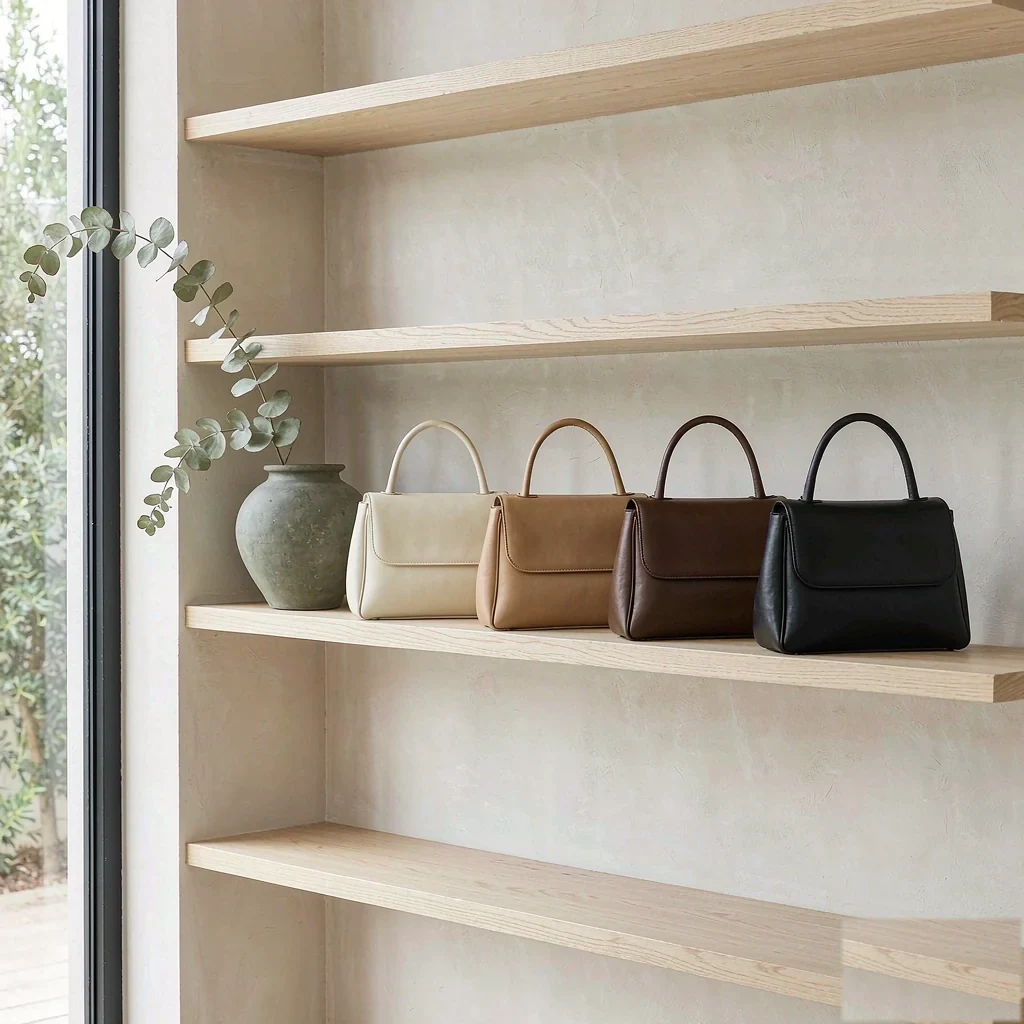
Turn the numbers into a dated plan
Send us the styles, colourways and delivery window and we will return a dated plan with the sampling rounds, the bulk calendar and the material reservation list, in writing, before development begins. Request a quote.
Frequently Asked Questions
How large is the luxury handbag market today?
Published totals differ by methodology rather than by accuracy. Leather goods is consistently described as the largest category inside personal luxury goods, at roughly a third, with handbags the greater part of that. For planning, take the direction from openly published trackers and derive your own figure from sell-through rather than importing someone else's headline.
Why do two reports publish different market sizes for luxury bags?
Because they make different boundary choices. Some include small leather goods within leather goods, some place them in accessories; some record at retail value, some at the value received by the brand; and they report in different currencies. None of those choices is wrong, but comparing two numbers built on different bases produces false conclusions every time.
Is the luxury bag category still growing?
Reported growth exists, and it is uneven: strongest where unit values rose and weak to flat in categories that depend on volume. Value growth with flat unit growth means pricing power, not additional demand, and those two things call for very different plans. Check which of the two a headline figure describes before quoting it internally.
What growth rate should I put in a business plan?
Use your own sell-through history across the markets you ship into, adjusted by the direction you read from published sources. A blended global figure includes price bands and regions you do not serve, so it systematically misleads. The honest number is less impressive and considerably more useful at the point where a plan becomes a purchase order.
Does category growth change the minimum order quantity?
No. The minimum stays at 500 pcs per style and colourway regardless of what the category does, because that threshold is set by how a run must be cut and finished rather than by demand. What growth changes is how many colourways a single style can support, and therefore where your total commitment lands.
How far ahead should a season be planned?
Work backwards from the delivery date. Six to ten working days for sampling, possibly twice, then 35-50 days of production 35-50 days from Xiamen to Rotterdam or 18-24 days to Los Angeles, with a week at each end. That is roughly four months from the first sketch, which surprises teams planning around a headline rather than a calendar.
What is AQL 2.5 and why does it appear in a market article?
AQL 2.5 is an acceptance quality limit under ISO 2859-1, and it appears here because demand growth is exactly when quality arguments start. The standard, the defect library and the sampling plan are agreed in writing before bulk begins, so that volume pressure does not quietly become the thing that decides finish tolerances later.
Which leathers become hardest to secure when demand rises?
Full-grain calfskin from rated European tanneries, and specifically the approved finishes rather than the substance classes. Grain-forward articles are booked by finish and finite once agreed, which is why a selected hide is reserved across two planned drops instead of being re-selected when the second is ordered.
Does resale really influence what a new collection can charge?
Yes, because resale figures now function as a reference price that shoppers check before buying at full price. Constructions that survive resale — repairable hardware, honest edge finishing, proportions that age — protect that reference, and a weak second-hand figure drags the primary price down with it.
Can I quote a market size number to my board?
Yes, if the quote carries its source, scope, currency and reporting date with it. Present it as direction and pair it with your own sell-through over the same period. A figure divorced from its methodology stops being evidence and becomes an assumption that someone will eventually have to defend.
People Also Ask
What is the largest category inside personal luxury goods?
Leather goods, consistently placed at roughly a third of the personal luxury total across several reporting cycles, with handbags making up the greater part of it. The exact figure moves between trackers, but the ranking itself is stable and useful for planning.
How do I turn a market growth rate into an order quantity?
Do not convert it directly. Set the price band, choose the style count, then apply your own sell-through to decide depth per colourway, and round each combination up to 500 pcs. The growth figure decides the direction of the adjustment, not the quantity itself.
Do exotic leather bags need CITES paperwork?
Many do. Species listed under CITES Appendix II or III require documentation that travels with the goods, and the requirements differ by destination market. Confirm the species and its listing before sampling, because paperwork cannot be retrofitted once a skin has been cut.
Why do bag prices rise faster than the number of bags sold?
Because value growth outruns unit growth in this category. Higher unit values come from better materials, more expensive constructions and deliberate restraint on volume, so a rising revenue line can conceal a flat or falling number of pieces actually sold.
How much leather does one structured bag use?
Cutting yield on a structured panel layout typically lands between 45% and 55% of the hide once grain faults and the prime line are respected, so usable area rather than hide count is the figure worth tracking. It is also why shape drives cost so directly.
Sources and further reading
Every figure on this page is either our own programme data or attributed below. Open the originals before you write them into a specification.
- Business of Fashion — research and The State of FashionBoF Insights Publishes the annual State of Fashion reporting used to read direction in personal luxury goods rather than to source a single headline total.
- FashionUnited — market news and dataFashionUnited Open trade coverage of luxury results and category movement, useful for checking whether reported growth is value or unit driven.
- Sourcing JournalSourcing Journal Covers material availability, tannery capacity and compliance developments that explain why lead times move ahead of demand figures.
- Leather Working GroupLeather Working Group Publishes the tannery audit protocol behind the environmental ratings referenced when an article is reserved against a specific tannery.
- CITES — Convention on International Trade in Endangered SpeciesCITES Secretariat Authority for the Appendix listings that determine which exotic skins require documentation before a piece enters production.