How to Choose Luxury Bag Silhouettes for Your Brand
Choosing a handbag silhouette is a sequence of five decisions taken in a fixed order: who carries the bag, what price band the piece has to hit, how it is carried, which material grade the shape needs, and how much construction depth the programme can carry. Taking them in any other order produces a beautiful drawing that cannot be produced at the target cost. This guide gives the decision order first, then works through each decision with the numbers a designer brand has to commit to before a tech pack is released.
The Decision Order
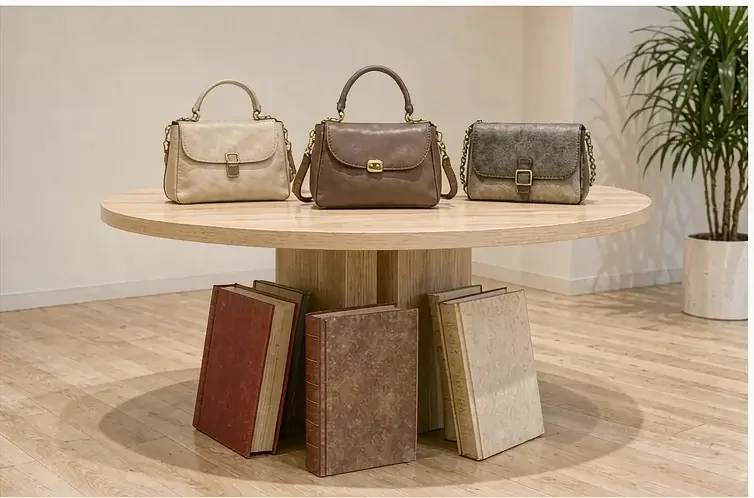
Most silhouette problems are sequencing problems. A brand that picks a shape first and then asks what it costs will redraw the shape; a brand that fixes the customer, the price band and the carry method first will find that only two or three silhouettes remain possible, and that all of them can be produced. The order below is the one we use in a first consultation, and each decision narrows the field for the next.
- Fix the customer: who carries the bag, where, and how often.
- Fix the price band: the landed cost the silhouette has to hit, and the construction allowance inside it.
- Fix the carry method: top handle, shoulder, crossbody or underarm.
- Fix the material grade: full-grain calfskin, lambskin, grained calf or a controlled exotic skin.
- Fix the construction depth: soft body, semi-structured or blocked frame.
Why the order matters
- Each decision removes options from the next one. Fixing the customer removes carry methods, fixing the price band removes material grades, and fixing the material grade removes construction depths. Working in this order turns an open-ended sketch into a specification that can be sampled in 6-10 working days rather than redrawn over three rounds.
Decision 1: Who Carries the Bag?
Every silhouette is a answer to a specific day. A city professional carries the bag to work, needs it to hold a laptop or a document sleeve, and will set it down on a floor, which means a structured body, a reinforced base and feet. An evening client carries the piece for three hours, needs almost no capacity, and will hold it, which means a slim gusset and a refined handle. A weekend traveller needs volume and soft structure.
City professional
Structured body, reinforced base, feet, gusset of 10-12 cm, and a shoulder drop of 25-30 cm.
Evening client
Slim gusset of 6 cm, handle drop of 9-11 cm, and a frame closure that reads as jewellery.
Weekend traveller
Soft or semi-structured body, gusset of 12 cm, and a wider 20-25 mm strap to spread the load.
Collector client
A signature shape repeated across seasons, specified as a fixed tolerance sheet rather than redrawn.
Decision 2: What Price Band Does the Silhouette Have to Hit?
Price band is a construction allowance expressed as a number. Specified programmes begin at USD 4.80 per unit, and the final figure is driven by three lines: the frame, the hardware and the leather grade. A blocked and laminated frame adds an operation, a form and an inspection gate. A cast brass turn-lock costs multiples of a stamped zamak one. Full-grain calfskin at 1.2-1.4 mm is the largest single material line on the sheet.
- Entry band: soft body, zamak hardware, corrected grain leather, entry point USD 4.80.
- Core band: semi-structured body, a concealed base plate, brass hardware, full-grain calfskin.
- Prestige band: blocked frame, cast brass hardware plated to 0.15-0.3 micrometres, hand-set lining.
- Above all three: a hand-corded trapunto panel or a controlled exotic skin, checked against CITES.
Decision 3: How Is the Bag Carried?
Carry method is the decision that fixes the silhouette most tightly, because it fixes the drop and the anchor. A top handle piece carries in the hand at a 9-11 cm drop or in the crook of the arm at 13-15 cm, and it needs a handle anchor closed at 8-9 stitches per inch over a hidden reinforcement plate. A shoulder piece carries at 25-30 cm and needs a 20-25 mm strap. A crossbody piece carries at 50-60 cm on a 12-15 mm strap.
- Top handle: 9-11 cm or 13-15 cm drop, handle width 12-15 mm, reinforcement plate mandatory.
- Shoulder: 25-30 cm drop, strap width 20-25 mm, load spread across the shoulder.
- Crossbody: 50-60 cm drop, strap width 12-15 mm, five adjustment holes at 25 mm pitch.
- Underarm: a short 15-20 cm drop on a soft body, the hardest of the four to get right.
Decision 4: Which Material Grade Does the Silhouette Need?
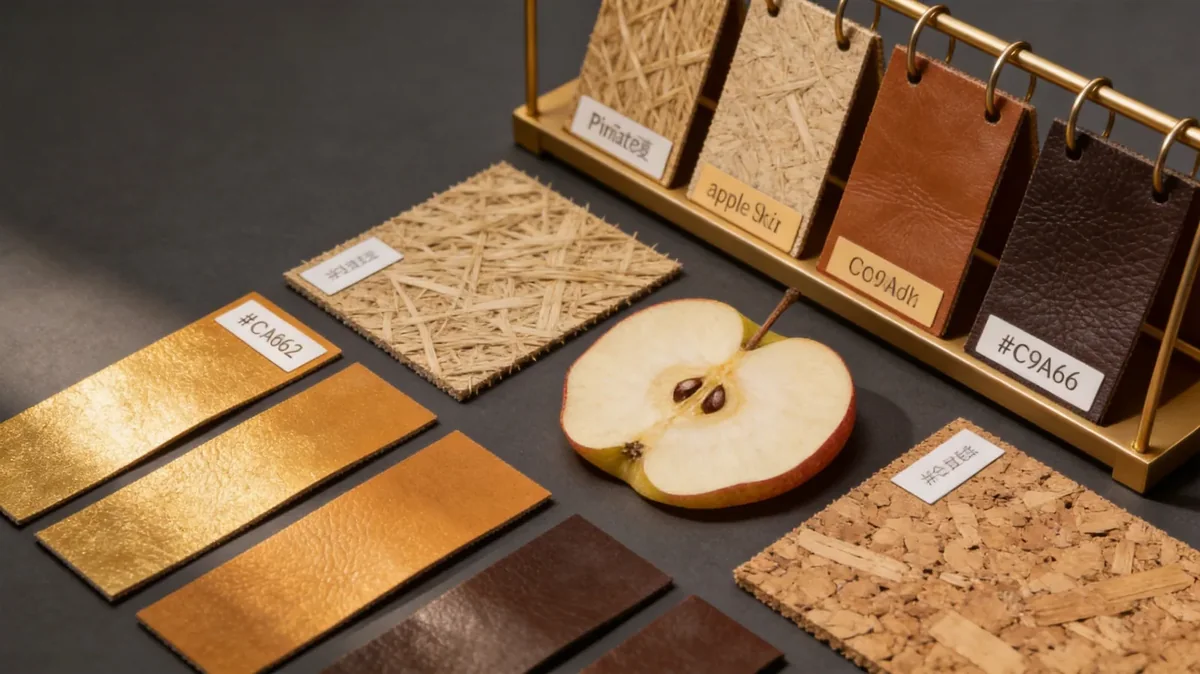
Material grade and silhouette are a matched pair, not two independent choices. Full-grain calfskin at 1.2-1.4 mm holds a blocked frame and is the default for a structured piece. Lambskin at 0.8-1.0 mm drapes beautifully and suits a soft or quilted body, but it will not hold a frame without reinforcement. Grained calf at 1.4-1.6 mm hides wear and suits a bag that will be used daily. Any exotic skin is checked against CITES before it is specified.
- Full-grain calfskin
- 1.2-1.4 mm, the default for a blocked and laminated frame
- Grained calf
- 1.4-1.6 mm, chosen when the piece will be used daily
- Lambskin
- 0.8-1.0 mm, chosen for drape on a soft or quilted body
- Lining
- 0.8-1.0 mm split suede or a 120 gsm jacquard weave
- Exotic skins
- Checked against CITES Appendices before specification
Decision 5: How Much Construction Depth Can the Programme Carry?
Construction depth is measured in operations, and operations are what a price band actually buys. A soft body is cut, skived, closed and edge-finished. A semi-structured body adds a concealed base plate and a reinforcement tape at every stress point. A blocked frame adds a lamination step, a heated form, an extra inspection gate and a tolerance sheet. Each step adds days to the sampling round and cost to the unit, which is why this decision comes last.
- Soft body: fewest operations, shortest sampling round, softest read, slumps by design.
- Semi-structured base plate: one extra operation, holds volume, suits a day bag.
- Blocked frame: four extra operations, holds geometry empty, suits a top handle piece.
- Hand-corded trapunto: the heaviest in labour and the lightest in material.
Where the Five Decisions Conflict
The five decisions conflict in three predictable places. A prestige price band with an entry construction allowance is the most common conflict, and it is resolved by simplifying the frame rather than by downgrading the leather, because a customer feels the leather and only sees the frame. A structured silhouette in lambskin is the second, resolved by reinforcing the panel rather than by changing the material. A crossbody drop on a large body is the third, resolved by widening the strap.
- Prestige look, entry allowance: simplify the frame, keep the leather grade.
- Structured shape, soft leather: reinforce the panel rather than change the material.
- Crossbody drop, large body: widen the strap to 20 mm and accept a change in register.
- Slim gusset, high capacity: impossible, and better resolved by widening the body.
What a Complete Silhouette Brief Contains
A brief that survives the sampling round without a redraw contains four things: a dimensioned drawing, a tolerance sheet, a physical colour standard and a carry-method statement. The drawing fixes body height, width, gusset depth and drop. The tolerance sheet fixes the bands we audit against. The colour standard is a physical swatch matched under D65 lighting rather than a screen reference. The carry-method statement says how the bag is meant to be held, which is what decides the anchor specification.
- Dimensioned drawing: body height, width, gusset depth and drop marked on the drawing itself.
- Tolerance sheet: the bands audited at AQL 2.5, agreed before sampling rather than after.
- Colour standard: a physical swatch matched under D65 lighting, not a screen reference.
- Carry statement: how the bag is held, which decides the anchor and the reinforcement plate.
- Material call-out: grade and thickness in millimetres, with the lining weight stated.
- Hardware call-out: base metal, plating thickness and the salt-spray duration required.
Decision Matrix: Matching Silhouette to Brand Position
The matrix below is the short form of the five decisions. Read across a row to see the silhouette, the construction and the price band that belong together.
| Brand position | Silhouette | Construction | Price band |
|---|---|---|---|
| Entry designer | Soft shoulder bag | Soft body, zamak hardware | From USD 4.80 |
| Contemporary designer | Semi-structured top handle | Concealed base plate, brass hardware | Core band |
| Established maison | Blocked frame top handle | Laminated frame, hand-set lining | Prestige band |
| Evening specialist | Frame minaudiere | Slim gusset, cast brass closure | Prestige band |
| Travel and resort | Soft weekender | Reinforced base, five feet | Core to prestige band |
| Collector label | Signature repeat shape | Fixed tolerance sheet, no redraw | Any band |
What Happens After the Decision: Sampling and MOQ
Once the five decisions are fixed, the tech pack writes itself. A first article takes 6-10 working days for a soft or semi-structured piece and 12-15 working days when the programme carries a blocked frame, a hand-set closure or a mixed-media panel. Minimum order quantity is 500 pcs per style / colourway, bulk production runs 35-50 days from an approved sample, and every shipment is offered FOB Xiamen.
Our validated partner factory Quanzhou Yingming Bags has delivered programmes on this decision sequence since 2014, running 7 production lines with a monthly output of about 200,000 pcs. Every shipment is audited at AQL 2.5 (ISO 2859-1) on a sample pulled from the cartons, measured against the approved first article rather than against the drawing.
Request a silhouette decision session
Send us your customer profile and target price band and we will return a shortlist of two or three silhouettes with a costed specification. Start your silhouette programme
Frequently Asked Questions
What is the first decision when choosing a handbag silhouette?
Fix the customer. Who carries the bag, where and how often determines the capacity, the carry method and the construction depth before any of them are chosen. A city professional needs a structured body and a reinforced base; an evening client needs a slim gusset and a refined handle.
Why should the price band be fixed before the shape?
Because the price band is a construction allowance. Once the landed cost is fixed, only certain frames, hardware specifications and leather grades remain possible, and the field of viable silhouettes narrows to two or three. Picking a shape first and costing it afterwards is what produces a redraw.
How many silhouettes should a first capsule contain?
Three: one structured top handle piece, one shoulder bag and one evening or occasion piece. That set covers the three carrying occasions a customer actually has, shares a single material and hardware language, and keeps the programme inside one tooling and setup allowance.
What is the entry price for a specified programme?
Specified programmes begin at USD 4.80 per unit for a soft body, zamak hardware and a corrected grain leather. The figure rises with the frame, the hardware specification and the leather grade, with full-grain calfskin at 1.2-1.4 mm being the largest single material line on the sheet.
Which leather suits a structured silhouette?
Full-grain calfskin at 1.2-1.4 mm, laminated to a 0.8 mm reinforcement board. It holds a blocked frame and keeps a corner radius. Lambskin drapes beautifully but will not hold a frame without reinforcement, and grained calf at 1.4-1.6 mm hides wear on a bag used daily.
Should a brand start with a soft or a structured silhouette?
A semi-structured piece, because it sits between the two. It carries a concealed base plate, holds volume without a full lamination step, and can be produced in 6-10 working days at sampling. A blocked frame is the right second step once the brand knows its customer.
How do I choose between a shoulder and a crossbody silhouette?
Ask whether the customer needs both hands free. A shoulder bag carries at a 25-30 cm drop on a 20-25 mm strap and reads as dressed; a crossbody carries at 50-60 cm on a 12-15 mm strap and reads as practical. Many brands offer a removable strap and sell one body twice.
What is the most common conflict in silhouette selection?
A prestige look on an entry construction allowance. It is resolved by simplifying the frame rather than by downgrading the leather, because a customer feels the leather immediately and only sees the frame. The second most common is a structured shape specified in lambskin.
How long does it take to sample a chosen silhouette?
Six to ten working days from a confirmed tech pack for a soft or semi-structured piece, and twelve to fifteen working days when the programme carries a blocked frame, a hand-set closure or a mixed-media panel. Bulk then runs 35-50 days from an approved sample.
What is the minimum order quantity for a brand capsule?
Five hundred pieces per style and colourway. A three-piece capsule in one colourway is therefore three qualifying runs. The threshold covers the frame setup, the hardware tooling and the pattern planning, and it holds for a first capsule and for a repeat order.
Can one silhouette be repeated across seasons?
Yes, and that is what a collector label does. The shape is frozen as a tolerance sheet covering body dimensions, drop, stitch density, plating and edge coats, so a reorder two seasons later matches the original. The alternative, redrawing each season, produces drift.
How is a chosen silhouette audited before shipment?
A sample is pulled from the cartons and measured against the approved first article at AQL 2.5 (ISO 2859-1). Body dimensions carry plus or minus 3 mm, gusset depth plus or minus 2 mm, handle drop plus or minus 3 mm, and every closure is cycled before the carton is released.
Do exotic skins change the decision sequence?
They add a compliance step rather than changing the sequence. Any exotic skin is checked against the CITES Appendices before it is specified, which adds lead time to the sampling round but not to the production window. The five decisions otherwise stay in the same order.
What should a silhouette brief contain?
Four things: a dimensioned drawing, a tolerance sheet, a physical colour standard matched under D65 lighting, and a statement of how the bag is carried. With all four the first article arrives in 6-10 working days; with a drawing alone the same calendar time is spent in correction rounds.
How do you brief a colour for a handbag programme?
With a physical swatch rather than a screen reference. Screens render grain and depth differently, and a colour approved on a display will not match the leather that arrives. We match under D65 lighting and keep the approved swatch as the standard for every subsequent run.
What is the difference between a tech pack and a tolerance sheet?
A tech pack says what the bag is; a tolerance sheet says how far each measurement may drift before a unit is rejected. The pack carries the drawing, the material and the hardware. The sheet carries the bands: plus or minus 3 mm on the body, plus or minus 2 mm on the gusset.
How early should a brand involve its atelier partner?
Before the drawing is frozen. A partner who sees the sketch at concept stage can say which frames, hardware and leather grades fit the target price band, which removes a redraw later. Involving a partner after the drawing is signed off usually costs one full sampling round.
People Also Ask
How do I design a handbag collection for a new brand?
Fix the customer, the price band and the carry method first, then choose three silhouettes that share one material and hardware language. A structured top handle, a shoulder bag and an evening piece cover the occasions a customer actually has and stay inside one setup allowance.
What makes a handbag silhouette look expensive?
Proportion and finish rather than size. A height-to-width ratio of 0.75-0.85, a handle drop that suits the carry method, 8-9 stitches per inch, a three-coat edge and hardware plated to 0.15-0.3 micrometres read as expensive at any price band.
Should a luxury bag be structured or soft?
Structured if it has to hold geometry when set down empty, which needs a blocked frame at 1.2-1.4 mm leather. Soft if drape is the point, which suits lambskin at 0.8-1.0 mm. A semi-structured body with a concealed base plate sits between the two.
How many bags should a capsule collection include?
Three. One structured piece, one shoulder or crossbody piece and one evening piece give a customer a reason to return without multiplying the tooling and setup cost. Each one is specified as a separate tolerance sheet but shares the hardware and lining language.
What is the difference between an entry and a prestige construction?
Operations. Entry runs a soft body with zamak hardware and a corrected grain leather from USD 4.80. Prestige adds a laminated and blocked frame, cast brass hardware, a hand-set lining and a three-coat edge, each of which is an extra gate in the build.
Sources and further reading
Every figure on this page is either our own programme data or attributed below. Open the originals before you write them into a specification.
- CITES Appendices on trade in animal speciesCITES Checked before any exotic skin is specified on a brand programme.
- ISO 2859-1 sampling procedures for inspection by attributesInternational Organization for Standardization The sampling standard behind the AQL 2.5 pre-shipment audit.
- Business of Fashion industry reportingBusiness of Fashion Used to track how brand positioning and handbag pricing bands move between seasons.
- Leather Working Group audit protocolsLeather Working Group Referenced for leather traceability across the material grades discussed above.
Five decisions taken in order turn an open-ended sketch into a specification that can be sampled in 6-10 working days. Taken out of order, the same sketch spends its calendar in redraws.
Send us a customer profile and a target price band and we will return a shortlist of two or three silhouettes with a costed specification within one working day. Request a silhouette decision session