Luxury Leather Handbag Hardware Pairing Guide: Nine Checks Before You Specify
How should hardware be paired with leather on a luxury handbag? Work nine checks in order: substance against hardware weight, leather finish against metal sheen, colour temperature of the dye against the metal, wear points where the two meet, fixing method and reinforcement, plating thickness and corrosion, edge and stitch interaction, tannin chemistry, and the lines that must reach the tech pack. A brass turn-lock on 0.8 mm lambskin without a backing plate fails the sixth check before it is ever worn.
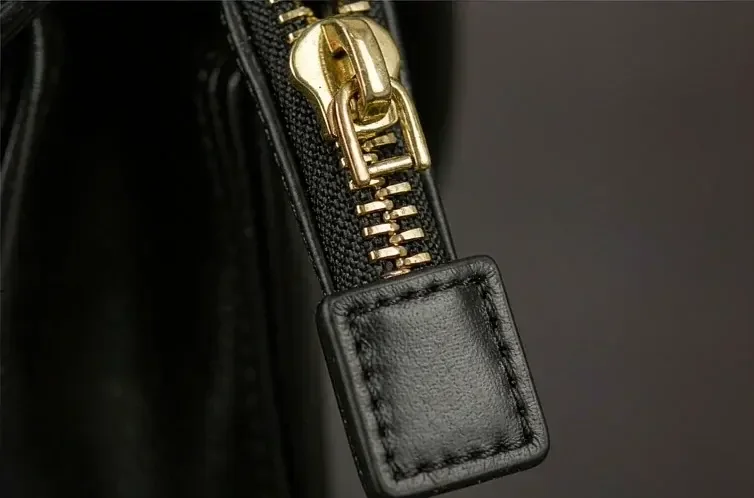
Check One: Set the Metal Against the Substance
Substance comes first because it decides everything downstream. A panel at 1.2-1.4 mm in calfskin will carry a cast fitting without complaint. The same fitting on 0.8-1.0 mm lambskin will dimple around its fixing points unless a reinforcement patch is drawn in. Pairing is therefore a structural decision before it is a visual one, and the check is simple: name the substance, then name the heaviest component on the body.
A useful rule of thumb is to relate component mass to panel substance rather than to bag size. Small, dense fittings concentrate load into a small area and are more demanding than a larger, lighter one spread across a seam. When a design calls for a heavy closure, the answer is usually to increase the local substance with a patch rather than to lighten the fitting and lose the look.
- Panel substance, calfskin
- 1.2-1.4 mm, carries cast fittings with a standard backing
- Panel substance, lambskin
- 0.8-1.0 mm, needs a reinforcement patch behind any cast fitting
- Reinforcement patch
- 0.8 mm non-woven or a second leather layer, drawn not implied
- Gold plating, decorative
- 0.15-0.3 µm over a nickel or palladium underlayer
- Corrosion check
- Neutral salt spray exposure of 24 or 48 hours, graded after
- Foot height
- 4-5 mm, enough to clear a base edge on a structured body
- Rivet flange
- Around 8 mm diameter to spread load on a soft panel
- D-ring wire
- Around 3.5 mm section for a strap that carries a full load
Check Two: Sheen Against Sheen
Match the reflectivity of the metal to the reflectivity of the leather, and the pairing reads as deliberate. A high-gloss crocodile belly already reflects light strongly, so a mirror-polished closure competes with it and a satin or brushed fitting calms it. A matte ostrich or suede surface absorbs light, so a fully matte fitting disappears and a lightly polished one gives the body a single point of focus.
Mismatched sheen is the most common pairing error and the least discussed, because it is rarely noticed on a component card. Hold the finished metal against the finished leather under the light the bag will be sold under and look at which one wins. If both compete, one has to be pulled back a step, and it is almost always cheaper to change the metal finish than the leather.
Check Three: Colour Temperature of Dye Against Metal
Warm metals and cool metals sit differently against dye families. Yellow gold reads warm and flatters cognac, tobacco, camel and any brown with an orange base. Palladium and rhodium read cool and flatter black, navy, grey and deep green. Light gold and champagne sit between them and are the safest choice when a collection mixes warm and cool colourways on the same body.
| Leather colour family | Metal that flatters it | Metal to avoid |
|---|---|---|
| Cognac, tobacco, camel | Yellow or light gold, antique brass | Palladium, which reads cold against orange |
| Black, charcoal, navy | Palladium, rhodium, black nickel | Yellow gold, which can look brassy |
| Grey, taupe, stone | Palladium or light gold depending on undertone | Antique finishes that muddy a neutral |
| Pastel and powder tones | Light gold or champagne | Dark antique finishes that overpower |
| Deep green and burgundy | Yellow gold, antique gold | Chrome, which reads too bright |
Check Four: Where Metal Meets Leather, and What Happens There
Every contact point is a wear point, and they behave differently. A strap passing through a D-ring abrades at the fold. A turn-lock tongue rubs the flap edge each time it opens. Feet scrape on a table. A zip pull swings against the panel. Each has a known failure mode, and each is managed by a small design decision: a rolled fold, a reinforced edge, a taller foot or a shorter pull.
D-ring and strap fold
Abrasion concentrates where the strap turns. Back the fold with a second layer and keep the wire section generous so the radius stays open.
Turn-lock tongue
Rubs the flap edge on every opening. Set the tongue so it clears the edge by a clear margin and reinforce the edge build beneath it.
Base feet
Scrape on hard surfaces. Four feet at 4-5 mm keep a structured base off the table and protect the panel corner.
Zip pull
Swings against the panel in transit. Specify a pull short enough to lie flat, and pack the body so the pull cannot press into the leather.
Check Five: Fixing Method and Reinforcement
The fixing decides whether the panel survives the fitting. Rivets and screws concentrate load at a point and need a patch; a sewn-on plate spreads load along a seam and needs matched stitch density; a snap set through two layers needs both layers to be thick enough to hold the setting. Name the fixing on the drawing, because the bench will otherwise choose the fastest one.
Reinforcement should be drawn, not implied. A patch of 0.8 mm non-woven, or a second leather layer in the same substance, sits behind the panel and spreads the load into the body. It is invisible in the finished article and it is the difference between a flap that stays flat and one that shows a ring around the closure after a season.
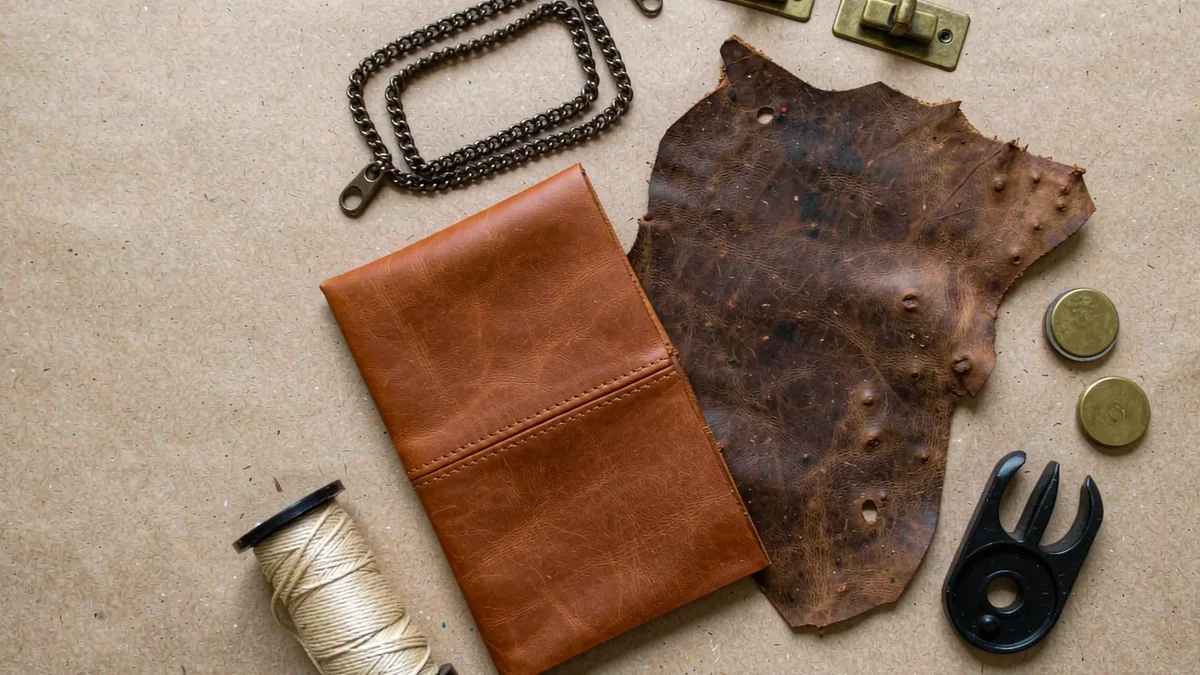
Check Six: Plating Thickness and Corrosion Behaviour
Decorative gold is commonly specified at 0.15-0.3 µm over a nickel or palladium underlayer, which is a thin film and behaves like one. It will wear through at contact points, and where it wears the underlayer shows. That is acceptable on a fitting that is mostly decorative and unacceptable on one that rubs, so thickness belongs in the tech pack with a note of which surfaces are contact surfaces.
Corrosion is checked by neutral salt spray exposure, commonly 24 or 48 hours, graded afterwards for spotting or bloom. Where a fitting sits against a damp panel or near a perspiration contact point, ask for the longer exposure. The metal must also be compatible with the market's restricted-substance rules, which for the United States means California Proposition 65 and for Europe REACH Annex XVII.
Where a component rubs constantly rather than occasionally, consider a harder surface route. A physical vapour deposition coating gives a denser, more wear-resistant film than a conventional electroplated one and holds its colour longer at a contact point, at a higher unit cost and usually with a longer lead time. It is worth specifying on feet, D-rings and any closure tongue, and unnecessary on a decorative plate that never touches anything.
Check Seven: Tannin Chemistry and the Metal
Vegetable-tanned leather carries tannins that react with iron and, more slowly, with untreated copper alloys, producing dark staining around a fitting. It is a chemical reaction rather than a defect, and it is managed by specifying a plated and sealed fitting rather than a raw one. On a vegetable-tanned body, insist on a fully sealed finish on every component that touches the panel, including the back of a plate.
Chrome-tanned leather is more forgiving chemically but carries its own consideration: residual moisture and salts in the leather can accelerate corrosion on an unsealed fitting. Ask for a sealed finish on both sides of any plate, and store finished bodies at stable humidity, because the combination of a damp panel and an unsealed back plate is how a rust bloom starts inside a dust bag.
Check Eight: Edge, Stitch and Trim Interaction
Hardware changes the edge build and the stitch line. A fitting that sits close to a seam forces the edge paint thinner than the standard three coats, and a thinner edge cracks sooner. A strap that passes through a ring needs its stitch line set back from the fold so the thread is not abraded by the metal. Both are drawing notes rather than bench habits.
- Keep a clear margin between a fitting and the nearest seam so the edge can be built properly.
- Set the strap stitch line back from the fold so metal does not abrade the thread.
- Match thread colour to the metal, not to the leather, when the stitch sits beside a fitting.
- Confirm the zip tape colour against the lining, since the two are seen together inside.
- Check that feet clear the base edge by a clear margin on a structured body.
Check Nine: What Reaches the Tech Pack
A pairing decision only exists once it is written down. The tech pack needs the base metal, the plating stack with thickness, the finish name and reference, the contact surfaces marked, the fixing type, the reinforcement drawing, the salt spray requirement and the restricted-substance statement. Nine lines, and every one of them prevents an argument that would otherwise happen at inspection.
Nine checks, one line each
- Substance first: name it before naming the fitting.
- Sheen against sheen: one of the two should lead.
- Colour temperature: warm dye takes warm metal, cool dye takes cool.
- Every contact point is a wear point; design for it.
- Fixing method and reinforcement are drawings, not habits.
- Plating thickness and salt spray belong in the pack.
- Seal fittings that touch vegetable-tanned leather.
- Edge and stitch notes follow the hardware, not the reverse.
- Write all nine into the tech pack before sampling starts.
Pairing hardware with a new leather?
Send the leather, the colourway and the fitting sketches. We will return a pairing recommendation and a reinforcement drawing. Request a quotation
Frequently Asked Questions
Which metal suits a cognac or tobacco leather best?
Yellow or light gold, and antique brass where the design can carry it. Warm dye families with an orange base sit naturally against warm metal. Palladium reads cold beside them and makes an expensive leather look slightly cheaper than it is. Test on the actual dyed panel, since undertone governs the result.
Should hardware match the leather sheen?
Yes, deliberately. A high-gloss crocodile belly already reflects light, so a mirror closure competes with it and a satin fitting calms it. A matte suede or ostrich surface absorbs light, so a fully matte fitting disappears. Decide which of the two should lead and pull the other back.
How thick should gold plating be on a bag fitting?
Decorative gold is commonly specified at 0.15-0.3 µm over a nickel or palladium underlayer. That is a thin film and it wears through at contact points, so state the thickness on the tech pack and mark which surfaces actually touch or rub. Wear surfaces deserve a thicker stack or a different finish.
Why does a fitting leave a ring mark on a soft leather flap?
Because the load was concentrated at a point with no reinforcement behind it. Lambskin at 0.8-1.0 mm cannot carry a cast closure on its own. Draw a reinforcement patch of 0.8 mm non-woven or a second leather layer behind the panel and the flap stays flat.
What is a neutral salt spray test used for?
It exposes a finished fitting to a controlled salt fog, commonly for 24 or 48 hours, and the surface is graded afterwards for spotting or bloom. It is a comparative corrosion check rather than a prediction of service life, and the longer exposure suits fittings near a perspiration or damp contact point.
Can hardware stain vegetable-tanned leather?
It can. Vegetable tannins react with iron and slowly with untreated copper alloys, producing dark staining around a fitting. Specify a fully plated and sealed component, including the back of any plate, and the reaction is prevented. This is a specification decision, not a material fault.
How high should base feet be on a structured bag?
Around 4-5 mm, which is enough to keep the base edge off a table surface and protect the panel corner. Feet also change how the body sits on a shelf, so check the silhouette with the feet fitted rather than assuming the drawing still reads the same.
Should thread colour match the leather or the metal?
The leather, in general, except where the stitch line runs immediately beside a fitting. In that position the eye reads the thread against the metal, so matching the metal keeps the area quiet. It is a small decision that visibly separates a considered body from an assembled one.
What reinforcement belongs behind a heavy closure?
A 0.8 mm non-woven patch or a second layer of the same leather, cut to the footprint of the fitting plus a margin all round. It spreads the load into the panel and is invisible in the finished body. Draw it, because an implied patch is the first thing dropped when a bench is under time pressure.
How does hardware affect the edge paint build?
A fitting sitting close to a seam forces the edge thinner than the standard three coats, and a thin edge cracks sooner. Keep a clear margin between any fitting and the nearest seam so the edge can be built to full thickness, and note the margin on the drawing rather than leaving it to be discovered at the bench.
Which restricted-substance rules apply to bag hardware?
REACH Annex XVII for the European market and California Proposition 65 for the United States, with nickel release and lead content the usual focus for metal components. Ask the fitting source for a written statement naming the markets, and keep it with the tech pack rather than the invoice.
Is palladium better than gold for a black leather body?
Usually, because palladium and rhodium read cool against black and keep the body quiet and architectural. Yellow gold on black can look brassy under retail lighting. Light gold or champagne is the compromise when a collection mixes black and warm colourways on the same silhouette.
What fails first on a paired leather and metal body?
The strap fold through a D-ring, because it combines abrasion, load and a tight radius in one place. Backing the fold with a second layer and keeping the wire section generous prevents most of it. Turn-lock tongues rubbing a flap edge and feet scraping a table come next.
How long does hardware add to a sampling round?
Standard bodies sample in 6-10 working days and complex ones in 12-15, and a custom fitting is what usually moves a body into the longer band. Where the calendar matters, choose from a stock trim set and put the custom work into the second season. Bulk then runs 35-50 days on FOB Xiamen terms.
People Also Ask
How do you match hardware to leather?
Work substance first, then sheen, then colour temperature. Calfskin at 1.2-1.4 mm carries cast fittings; lambskin at 0.8-1.0 mm needs a reinforcement patch. Warm dye families take gold, cool ones take palladium.
What hardware goes best with black leather?
Palladium, rhodium or black nickel. Cool metals keep a black body quiet and architectural, while yellow gold tends to read brassy under retail lighting on a saturated black dye.
Why does hardware leave marks on soft leather?
Point loading without reinforcement. A cast closure on 0.8-1.0 mm lambskin dimples around its fixing points unless a 0.8 mm patch is drawn behind the panel to spread the load.
How thick is plating on luxury bag hardware?
Decorative gold is commonly 0.15-0.3 µm over a nickel or palladium underlayer. It is thin enough to wear through where a component rubs, so thickness and contact surfaces belong on the tech pack.
Can metal fittings stain vegetable-tanned leather?
Yes. Vegetable tannins react with iron and untreated copper alloys. Specify a fully plated and sealed component, including the back of plates, and the staining is prevented entirely.
Sources and further reading
Every figure on this page is either our own programme data or attributed below. Open the originals before you write them into a specification.
- ASTM — standardsASTM International Publisher of the neutral salt spray practice widely used to compare corrosion behaviour of plated fittings.
- REACH legislationECHA The European regulation whose Annex XVII governs restricted substances in metal components, including nickel release.
- California Proposition 65OEHHA The California list applied alongside REACH for hardware sold into the United States, with lead content a common focus.
- ISO — international standardsISO Publisher of ISO 2859-1, the sampling standard behind the AQL 2.5 inspection applied to finished bodies.