Designer Handbag Production for Capsule Drops: Three Structures Compared, Gate by Gate
How should a designer plan production for a capsule drop? The workable unit is 500 pcs per style and colourway, which makes the three common capsule shapes 500 pcs, 1,000 pcs and 1,500 pcs. Sampling runs 6-10 working days, or 12-15 on a structured or framed build, and bulk occupies 35-50 days, so the realistic gap from approved sample to warehouse is 8-10 weeks. Choosing between the three is a question of cash exposure and sell-through confidence rather than unit price, and the comparison below sets them side by side.
What Makes a Capsule Different From a Seasonal Run
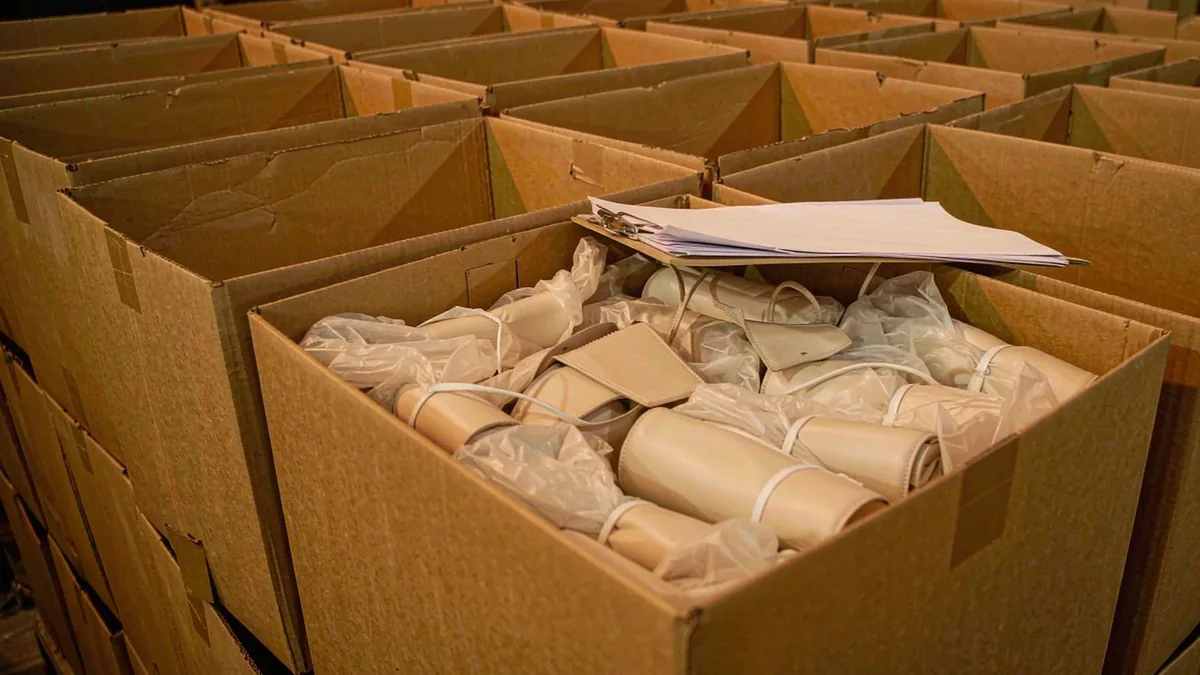
A capsule is defined by what it withholds rather than what it offers: a fixed quantity, a narrow material range and a release date that matters because the same form will not be repeated. That is a different object from a seasonal run, which is designed to be reordered and spreads its development across a longer horizon.
Three consequences follow from that difference. Material has to be reserved against a named lot before sampling begins, because a capsule cannot be re-cut from a second dyelot without breaking the edition. Presentation carries a minimum of its own, so boxes and dust bags belong in the same purchase order as the run. And the release date has to be built backwards from, since a drop that lands late has lost the reason it was limited in the first place.
The editions that work tend to be the ones where the limitation is visible on the piece itself — a numbered plate, a single-lot leather, a trim chosen for one release only — rather than a limitation that exists only in the stock record.
Scarcity also has to be true to be useful. A capsule announced as limited and then quietly re-cut from a second dyelot is a worse outcome than a larger run declared honestly, because the difference is visible to anyone who handles two pieces side by side, and boutique buyers do exactly that.
Three Capsule Structures, Compared Gate by Gate
Every capsule resolves into one of three structures. The comparison below sets each against the same nine gates, so the differences that matter — development share, lot count, calendar and exposure — appear in one place.
| Gate | A: 500 pcs, one colourway | B: 1,000 pcs, two colourways | C: 1,500 pcs, three silhouettes |
|---|---|---|---|
| Silhouettes covered | 1 | 1 | 3 |
| Colourways in the drop | 1 | 2 | 3 |
| Material lots to reserve | 1 | 2 | 3 |
| Development share per unit | Highest of the three | About half of A | About a third of A |
| Sampling window | 6-10 working days | 6-10 working days | 12-15 working days |
| Bulk window | 35-50 days | 35-50 days | 35-50 days |
| Presentation minimums | One box lot | Two box lots | Three box lots |
| Cash exposure at order | Lowest | Roughly double A | Roughly triple A |
| Sell-through risk | Lowest | Moderate | Highest |
The row that decides most first capsules is the development share. Structure A carries the whole pattern, grading and sampling cost on 500 pieces; structure C divides an only slightly larger development cost three ways. The difference is usually larger than any reduction obtainable on material.
Structure A: 500 Pcs, One Silhouette, One Colourway
The single-lot capsule is the right first release for a label without sell-through history. One silhouette, one shell leather at 1.2-1.4 mm, one colourway at MOQ 500 pcs. The piece carries the entire development cost, so the unit figure is the highest of the three structures, and the exposure is the lowest.
When structure A fits
- The silhouette has never sold and the read is still unknown.
- One strong colourway carries the idea better than a range would.
- Cash is better held for a reorder than committed to a second lot.
- The release date sits close enough that only one lot can be reserved in time.
The advantage that matters is optionality. If the piece sells through, a reorder placed inside three weeks still lands in the same season, because bulk occupies 35-50 days and the approved sample and archive set are already held.
Structure B: 1,000 Pcs Across Two Colourways
Two colourways is the structure most established labels choose, and it is the most efficient of the three when the shell leather is shared. Where both colourways sit on the same lot and differ only in lining, thread or hardware finish, the 500-pcs minimum is met by the pair rather than by each, which halves the development share without doubling exposure.
- Shared shell with different lining and thread: 1,000 pcs total, development shared across both.
- Two different shell leathers: 500 pcs each, two lots reserved and two matches approved.
- Two hardware finishes on a shared shell: 500 pcs per finish, since each bath is run as one lot.
- A strong plus a quiet colourway: the quiet one absorbs the slower weeks without a second run.
The structure fails in one specific way — when the second colourway is chosen late. A late colourway means a second match, a second approval gate and frequently a second round, which is how a 1,000-pcs drop loses the four weeks it could not afford.
Structure C: 1,500 Pcs Across Three Silhouettes
Three silhouettes at 500 pcs each is a collection in miniature, and it is the structure to choose once a label has one proven shape. Development is divided three ways, a single material direction can carry all three, and the drop reads as a considered range rather than a single piece with variants.
- One shell leather across all three, so a single lot serves 1,500 pieces.
- Three die sets, since each silhouette needs its own cutting tools and its own grading.
- A shared hardware language, which lets one plating bath serve the whole capsule.
- A shared presentation lot, so boxes, dust bags and inserts meet one minimum.
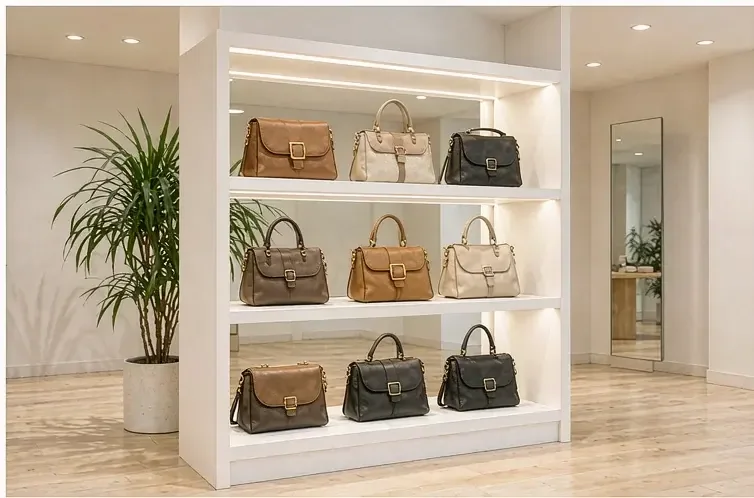
What makes this structure work is discipline about what is shared. One lot, one hardware language and one presentation lot; vary the pattern, not the supply.
Numbered Editions and the Details That Sell a Capsule
A capsule sells on the details that make the limitation legible. Numbering is the most direct of these, and it is a specification decision rather than a marketing one: the plate has to be placed, set and recorded before the body is closed.
- Interior edition plate
- Numbered 001/500, set on the interior facing panel before closing
- Box construction
- 1,200 gsm greyboard, wrapped, with a rigid lift-off lid
- Dust bag
- Cotton flannel with drawcord, printed in one colour
- Care card
- Printed insert carrying the lot reference and material notes
- Carton packing
- 6 pcs per inner carton, 2 inners per 5-ply export carton
The record matters as much as the plate. A numbered edition needs a list kept alongside the archive set, so a later enquiry about piece 118 can be answered from evidence rather than recollection.
One caution about numbering: it converts a bag into a documented object, which means the count has to reconcile. Pieces held back for press, inspection and the archive set should be numbered outside the sold sequence, or the edition will not add up at the end of the drop.
The other detail worth specifying early is the trim. A plated brass set chosen for one release only, quoted at USD 4.80 per bag, is a small line on the costing and a large part of why the piece reads as an edition.
The Drop Calendar: 8-10 Weeks From Approved Sample
The gap between an approved sample and goods in the warehouse is where most capsule calendars are won or lost. Eight to ten weeks is the realistic figure on a standard build, and it breaks down into four blocks.
- Material intake and cutting: 5-7 working days, assuming the lot was reserved before sampling.
- Preparation and assembly: 15-21 working days, governed by the number of operations in the pattern.
- Edge finishing and hardware setting: 10-15 working days, including three-coat edge work.
- Inspection at AQL 2.5 under ISO 2859-1, then packing and documents: 6-9 working days.
Add the 6-10 working days of sampling in front of those four blocks and the full capsule, from confirmed brief to warehouse, sits at roughly 12-14 weeks. Founders who plan for eight usually discover the gap in week nine.
Sequencing two drops is where the calendar earns its keep. If the second colourway is released after three weeks of sell-through on the first, its bulk window has to be reserved before that data exists — which is why the shared-shell structure works so well here. One lot serves both drops, and only the trim changes between them.
Packing and Presentation for a Limited Release
Presentation carries weight out of proportion to its cost in a capsule, because it is the first physical object a customer touches. It also carries its own minimums, which is why it belongs in the same order as the run rather than in a later one.
Rigid box
1,200 gsm greyboard, wrapped, with a rigid lift-off lid. Ordered with the run so the box lot matches the piece count rather than incurring a second minimum.
Dust bag
Cotton flannel with a drawcord, printed in one colour. The print lot is the binding constraint, so quantity is set by the print run rather than the bag count.
Care card and inserts
Printed insert carrying the lot reference and material notes, plus the edition number where the piece is numbered. Short runs cost more per unit than the box.
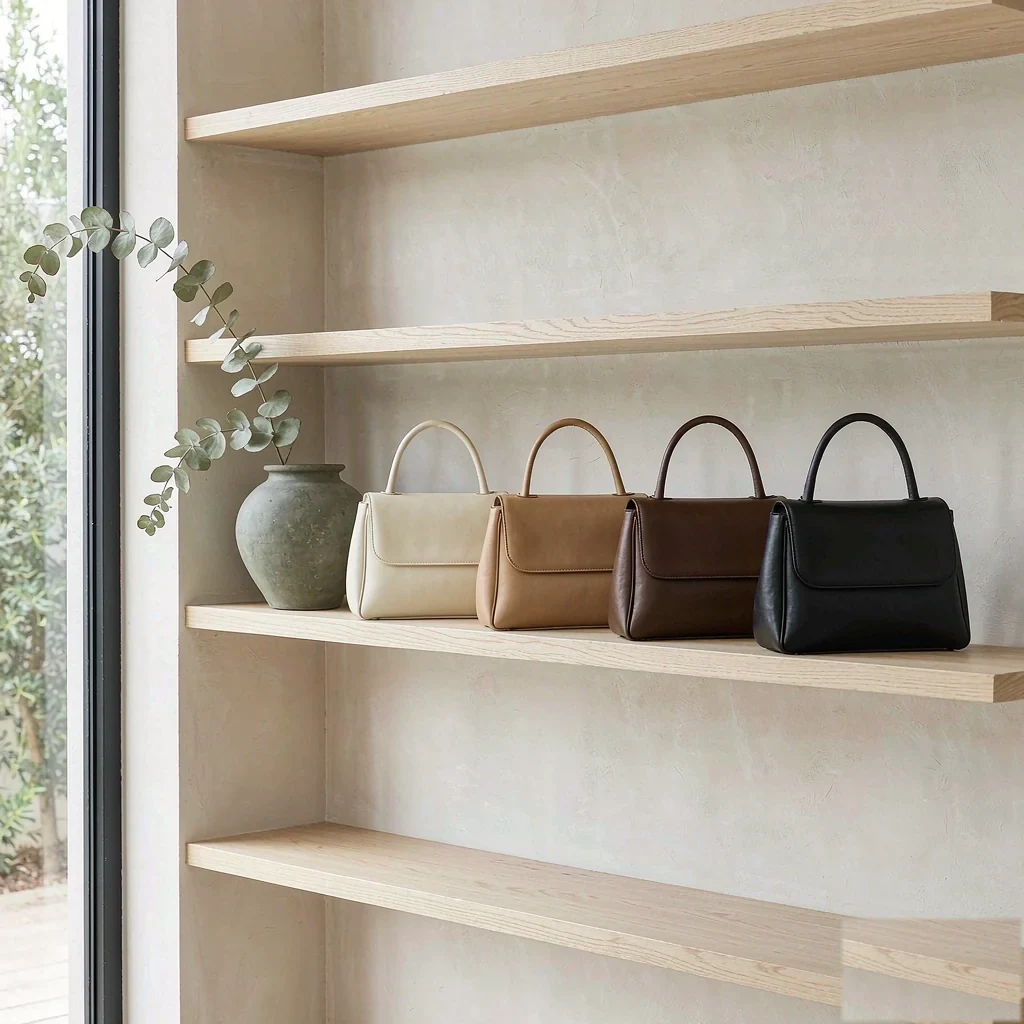
The costing consequence is modest — presentation typically sits at 4-6% of unit cost — but the calendar consequence of ordering it late is not. A second print lot can add three weeks to a drop that had none to spare.
How to Choose Between the Three Structures
The choice reduces to three questions about what you already know, and the answers usually make the decision obvious rather than difficult.
- Has the silhouette sold before? If not, choose structure A and hold the archive set.
- Is the material direction settled? If yes, structure B shares one lot across two colourways efficiently.
- Is there confirmed allocation from boutiques? If yes, structure C spreads development three ways.
- How much cash can sit in stock? A is 500 pieces, B is 1,000, C is 1,500 — the exposure scales directly.
- How far away is the release date? Under 14 weeks, choose A; the other two need the full calendar.
Most first capsules land on A or B, and the difference between them is whether the label wants one strong colourway or two. C is the second-season structure: it rewards a proven silhouette and punishes an untested one in equal measure.
The programme runs through our validated partner factory Quanzhou Yingming Bags, an SGS-validated site with 7 production lines and about 200,000 pcs per month of capacity, holding export experience since 2014. Inspection is drawn at AQL 2.5 under ISO 2859-1, with third-party inspection available alongside the internal audit, and terms default to FOB Xiamen.
Plan your capsule drop
Send the silhouettes, your material direction, the colourway count and the release date. You will receive a drop calendar built backwards from that date, with each gate and buffer marked. Request a quote.
Frequently Asked Questions
What quantity suits a capsule designer handbag drop?
MOQ 500 pcs per style and colourway sets the unit, so the three common capsule shapes are 500 pcs for one silhouette in one colourway, 1,000 pcs across two colourways, and 1,500 pcs across three silhouettes. Exposure and sell-through risk rise with each step. Exposure and sell-through risk rise with each step, which is what makes this a commercial choice.
How does a capsule differ from a seasonal run?
A capsule is defined by limitation: a fixed quantity, a narrow material range and a release date that will not repeat. A seasonal run is designed to be reordered and spreads development across a longer horizon, which changes how material is reserved and how the calendar is built. That difference changes how material is reserved and how the calendar has to be built backwards.
Why must the material lot be reserved before sampling?
Because a capsule cannot be re-cut from a second dyelot without breaking the edition. Confirming the lot before the first sample costs 3-5 working days and protects the whole run; confirming it afterwards restarts the approval gate against different leather. Confirming early costs three to five working days and protects every piece in the run.
Can two colourways share one 500-pcs minimum?
Usually, when both sit on the same shell leather and differ only in lining, thread or hardware finish. In that shared-shell construction the 500-pcs total can typically be divided 250/250. Two different exterior leathers are two separate buys. Two colourways on a shared shell can often be split inside the five-hundred-piece total.
How is a numbered edition specified?
An interior edition plate numbered 001/500, set on the interior facing panel before the body is closed. A record of the numbering is kept alongside the archive set so later enquiries can be answered from evidence rather than recollection. A record of the numbering is kept alongside the archive set for later enquiries.
How long does a capsule take from approved sample to warehouse?
Realistically 8-10 weeks: 5-7 working days on cutting, 15-21 on preparation and assembly, 10-15 on edge finishing and hardware setting, then 6-9 on inspection, packing and documents. Add 6-10 working days of sampling in front of that. Add sampling in front of that and the full capsule sits at roughly twelve to fourteen weeks.
Which capsule structure is right for a first release?
Structure A, one silhouette in one colourway at 500 pcs, unless there is sell-through history. It carries the highest unit figure and the lowest exposure, and a reorder placed inside three weeks still lands in the same season. The print lot is the binding constraint, so quantity is set by the print run.
How much does presentation add to a capsule?
Typically 4-6% of unit cost, covering a 1,200 gsm greyboard rigid box, a cotton flannel dust bag and printed inserts. The cost is modest; the calendar cost of ordering it late is not, since a second print lot can add three weeks. The difference usually exceeds anything obtainable by negotiating the material line.
What packing standard applies to a capsule shipment?
Six pieces per inner carton and two inners per 5-ply export carton, with packing lists and carton marks agreed before despatch. The carton count is set from the confirmed piece count so the packing lot is not split. Presentation is the first physical object a customer touches, before the bag itself.
When should a label move from structure A to structure C?
Once one silhouette has sold and the material direction is settled. Three silhouettes at 500 pcs each divide development three ways, but they also triple cash exposure, so the move should follow evidence rather than ambition. A second print lot can add three weeks, which most first capsules do not have spare.
Does the drop date constrain the structure choice?
Yes. Under about 14 weeks from confirmed brief to release, structure A is the only realistic option, because it needs a single lot, a single match and one approval sequence rather than two or three. Packing lists and carton marks are agreed before despatch rather than reconciled after.
What inspection level applies to a capsule run?
AQL 2.5 under ISO 2859-1, with a re-work reserve held so any defect finding is corrected on the bench rather than by airfreighting a partial shipment. Third-party inspection can be added alongside the internal audit. Changing the size set after tooling is cut is the most expensive revision available.
People Also Ask
What is a capsule drop in handbag terms?
A fixed, limited release built around one material direction and one release date, designed not to repeat in the same form. It differs from a seasonal run, which is built to be reordered.
How many pieces should a first capsule include?
500 pcs of one silhouette in one colourway is the standard first release. It meets the minimum, keeps exposure low and leaves the option to reorder inside the same season.
Why does a capsule need its own material lot?
Because the edition is defined by the dyelot. Re-cutting part of a limited run from a second lot produces a visible colour break across the edition, which defeats the point of limiting it.
How far ahead should a drop be planned?
About 12-14 weeks from confirmed brief to warehouse: 6-10 working days of sampling, then 8-10 weeks of cutting, assembly, finishing, inspection and packing. Build the calendar backwards from the delivery date rather than forwards from today.
Is a numbered edition worth specifying?
It is if the limitation is part of the appeal. An interior plate numbered 001/500 makes the edition legible on the piece, at a specification cost of one setting operation per unit.
Sources and further reading
Every figure on this page is either our own programme data or attributed below. Open the originals before you write them into a specification.
- ISO — International Organization for StandardizationISO Publisher of ISO 2859-1, the sampling standard behind the AQL 2.5 inspection gate used on capsule runs.
- CITES — Convention on International Trade in Endangered SpeciesCITES The convention whose Appendices determine which exotic shells require documentation before a limited release can be despatched.
- Leather Working GroupLeather Working Group Tannery audit protocol used to evidence hide traceability for a named lot reserved ahead of sampling.
- WWDWWD Coverage of limited-release and capsule strategies across designer accessories, used for the release structure discussion.