High-End Handbag Supplier for Boutique Retailers: The Numbers Behind a Workable Buy
What does a boutique retailer actually need from a high-end handbag programme? A buy sized to the floor rather than to a season: 500 pcs per style and colourway, sampled in 6-10 working days, produced in 35-50 days, inspected to AQL 2.5 under ISO 2859-1 and shipped on FOB Xiamen terms. The economics work when unit count, drop calendar and quality tolerance are agreed before the first sample is cut, not after.
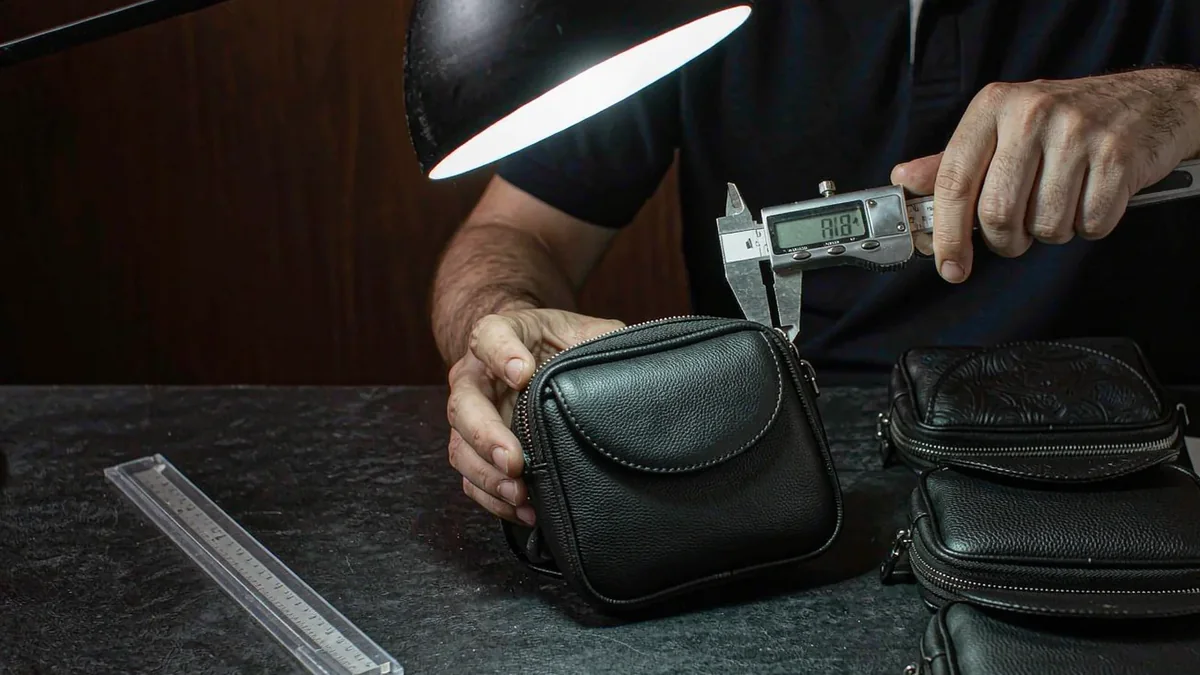
What a Boutique Buy Looks Like in Numbers
A boutique buy is small in units and unforgiving in timing. Eight to twelve units per door across four to six doors is a normal first drop, which puts the opening order somewhere between 40 and 70 pieces of a single style. That figure sits well under the 500 pcs per style and colourway minimum a serious programme works to, and the gap between the two numbers is the first thing a boutique buyer has to solve.
It is solved in one of three ways: a shared colourway across several doors, a grouped buy where two or three boutiques enter the same run, or a carry-over style that reorders across three seasons instead of one. All three work, and all three have been used by small doors for years. What does not work is asking for a one-off run of 40 pieces and expecting the same unit cost as a run of 500, or the same attention at the bench. A run that short still has to be patterned, still has to be sampled, and still has to be inspected, and those fixed steps are what the minimum is actually covering rather than an arbitrary hurdle set by the house.
The Unit Economics Behind a Boutique Ticket
The ticket a boutique charges is typically 2.6 to 2.9 times its first cost once duty, freight and the store's own overhead are counted. Working backwards from a planned retail figure is the fastest way to know whether a construction is feasible before any leather is cut.
| Line | Typical figure | Where it moves | Note for a boutique buy |
|---|---|---|---|
| First cost | USD 4.80 base reference unit | Leather grade, hardware metal, stitch count | Fix it in writing before sampling starts |
| Retail multiple | 2.6x to 2.9x | Brand strength and door positioning | Below 2.4x the buy stops paying for itself |
| Units per door | 8 to 12 per drop | Floor size and turnover rate | Below 6 the style reads as an accident |
| Sell-through target | 65% to 70% in one season | Price band and colour choice | Under 55% the reorder collapses |
| Markdown reserve | 10% to 15% of buy value | How far the season runs | Reserve it at the buy, not at the mark-down |
| Reorder window | 60 to 90 days from delivery | Bulk lead time plus freight | Miss it and the size curve breaks |
The fourth row is the one that kills most first drops. A style that sells 55% of its units in a season looks like a modest success and behaves like a failure, because the reorder never arrives and the remaining units sit in stock through the following season at a reduced price.
Drop Calendar and Reorder Windows Boutiques Work To
A boutique works to four drops a year, and each drop is a closed loop: buy, deliver, read the sell-through, reorder. The loop only closes if the reorder can still land inside the same season, which makes lead time a commercial variable rather than an operational one.
- Buy placed: day 0, with the tech pack and colour reference agreed.
- Sampling: 6-10 working days, or 12-15 for a complex construction.
- Approval and any second sample round: 5-8 working days.
- Bulk production: 35 to 50 days from approved sample and deposit.
- Inspection to AQL 2.5 under ISO 2859-1, plus packing: 3-5 days.
- Freight and customs clearance: 20 to 35 days by sea, 5-8 by air.
Read as one line, that is 70 to 105 days from a signed order to stock on the floor. A reorder raised at week six of a season therefore lands either just inside or just outside the window, depending entirely on whether the first sample was approved on the first round.
Assortment Math: Pieces per Door, Pieces per Drop
Assortment is where a boutique buy is won. Too few units and the style never reads as a story on the floor; too many and the cash is gone before the season proves itself.
- Units per door per drop
- 8-12 pieces
- Colourways per style
- 2-3, with one neutral anchor
- Sizes or silhouettes per buy
- 1-2, not a full range
- Carry-over share of the buy
- 30-40%, held for reorder
- Seasonal or experimental share
- 60-70%, written off if it fails
- Minimum run the programme works to
- 500 pcs per style and colourway
- Sampling window
- 6-10 working days, 12-15 complex
- Bulk window
- 35-50 days
The carry-over share does the most work. A programme that holds 30-40% of its buy in a construction and colourway that will run again next season converts a single drop into a three-season asset, and that is what eventually justifies the 500 pcs minimum.
Where Boutique Orders Break: Five Friction Points
Most failed boutique programmes break at one of five predictable places, and all five are visible before the order is placed if somebody looks.
The minimum is treated as negotiable
A run of 60 pieces costs disproportionately more per unit than 500, because leather is bought by the hide and hardware by the die. Asking for an exception usually produces a higher unit price rather than a lower one.
Colour is approved on a screen
A dye lot approved from a photograph will differ from the delivered piece. Approve against a physical swatch under controlled lighting, with a tolerance of delta E 1.0 or better against the reference.
The reorder is left undated
A style without a reorder date in the buy sheet is a style without a reorder. Write the reorder decision date at the time of the buy, 60 to 90 days from delivery.
The brief arrives without a tech pack
A mood board is not a specification. Without stitch count, leather substance and hardware list in writing, the sample that comes back is a guess, and each correction round costs 5-8 working days.
Landing cost is discovered late
Freight, duty and clearance add a material percentage to first cost. On FOB Xiamen terms the buyer controls freight, so the figure belongs in the buy sheet from the first conversation.
Minimums, Sampling and Bulk Timings Explained
The 500 pcs per style and colourway minimum is not arbitrary. Below it, the hide yield on a single colourway leaves too much unused leather, hardware dies cannot be amortised, and the line cannot be set up for a run that ends in a day.
Sampling runs 6-10 working days, extending to 12-15 for a complex construction with a frame, an exotic panel or a hand-set closure. Bulk runs 35-50 days from an approved sample and deposit. Those two windows, plus freight, are the entire calendar a boutique buyer has to plan against.
Quality Tolerance at a Boutique Price Point
A boutique price point does not buy a lower standard of finish; it buys a simpler construction. Stitch count, edge finish and hardware grade are what separate the two, and none of them are things a customer forgives.
- Stitch count of 8-9 stitches per inch, held even across the panel.
- Edge paint in three coats, sanded between, with no ridge at the fold.
- Leather substance of 1.2-1.4 mm on a structured calfskin body.
- Hardware plating of 0.5-1.0 micrometres over a stated barrier layer.
- Colour tolerance of delta E 1.0 or better against the approved swatch.
- Strap fixings pull tested at 150-250 N in position on a sample body.
Every line above is measurable, and every one of them costs little to hold at the sample stage and a great deal to correct at bulk. The sample is where a boutique programme is either specified properly or set up to fail quietly, and the correction that happens at bulk is the correction nobody budgets for.
How to Brief a Production Partner for a Boutique Programme
A boutique brief has to carry more per page than a large-brand brief, because there is no buying office to fill the gaps. Six items, sent as one document, is enough.
- Silhouette drawings with dimensions in millimetres and a stated capacity.
- Leather type, grade and substance, with the finish and the hand required.
- Hardware list naming the metal, the plating build and the finish per component.
- Colour references as physical swatch codes, with the tolerance stated.
- Retail price band, so the construction can be costed to it.
- Target delivery week, and the reorder decision date that follows it.
Payment, Freight and Landing Cost on FOB Xiamen Terms
On FOB Xiamen terms the buyer nominates the carrier and carries the freight and insurance, which means the landing cost is largely in the buyer's own hands rather than in the quotation.
- Quoted basis
- FOB Xiamen, with FOB, CIF and DDP available
- Typical deposit structure
- 30% at order, 70% before shipment
- Sea freight and clearance
- 20-35 days door to door
- Air freight and clearance
- 5-8 days, at a far higher rate
- Inspection before shipment
- AQL 2.5 under ISO 2859-1, third-party optional
- Duty and taxes
- Set by the destination market, not by the quotation
The fourth row is the escape route when a reorder has missed the sea window. Air freight on a small, high-value handbag buy is often defensible, because the units are light and the margin per piece is wide.
The Boutique Buyer's Checklist Before Signing
Eight lines, checked before the deposit is sent, remove most of what goes wrong later.
Eight lines to close before a boutique buy is placed
- Unit count per door and per colourway, written down.
- Retail ticket and the multiple it implies against first cost.
- Leather grade and substance, with a physical swatch reference.
- Hardware metal and plating build named per component.
- Sampling window and how many correction rounds are allowed.
- Bulk window and the delivery week it lands in.
- Inspection standard, AQL 2.5 under ISO 2859-1.
- Reorder decision date, 60-90 days from delivery.
Our programme works to MOQ 500 pcs per style and colourway, with sampling at 6-10 working days and 12-15 for a complex construction, bulk at 35-50 days on FOB Xiamen terms, inspected to AQL 2.5 under ISO 2859-1. It runs across 7 production lines with about 200,000 pcs per month of capacity and export experience since 2014, delivered through our validated partner factory Quanzhou Yingming Bags, an SGS-validated site. The sourcing framework sits under high-end handbag sourcing and the material detail under luxury materials.
Send the buy sheet and we will cost it
Tell us the doors, the units per drop and the ticket you need to hold. We will return the unit count, the sampling calendar and a costed construction, within two working days. Request a quote.
Frequently Asked Questions
What minimum order applies to a boutique handbag programme?
The programme works to 500 pcs per style and colourway. Boutique buyers reach it with a shared colourway across several doors, a grouped buy with other boutiques, or a carry-over style that reorders across three seasons. Below that figure the unit price rises rather than falls, because leather is bought by the hide and hardware by the die.
How long does a boutique order take from brief to floor?
Roughly 70 to 105 days. Sampling takes 6-10 working days, or 12-15 for a complex construction, approval and any correction round 5-8, bulk 35-50 days, inspection and packing 3-5, then 20-35 days sea freight and clearance. A second sample round is the single most common reason a drop misses its season.
How many units should a boutique buy per door?
Eight to twelve pieces per door per drop, in two or three colourways with one neutral anchor. Below six the style reads as an accident on the floor rather than a story. The figure moves with floor size and turnover rate, and it belongs in the buy sheet rather than being decided at delivery.
What retail multiple should a boutique plan for?
Between 2.6 and 2.9 times first cost once duty, freight and store overhead are counted. Below about 2.4x the buy stops paying for itself once markdown reserve and unsold stock are included. Work backwards from the ticket you need to hold, and the construction that fits it becomes obvious before sampling begins.
Can several boutiques share one production run?
Yes, and it is the commonest way a small door reaches a workable unit count. A shared run needs one colourway, one hardware specification and one delivery week agreed by everyone, which is why the shared colourway should be the neutral anchor rather than the seasonal shade.
What sell-through justifies a reorder?
Sixty-five to seventy per cent within the season. Under 55% the reorder usually collapses, because the remaining units carry into the following season and the cash is already committed. Set the reorder decision date at 60-90 days from delivery, at the time of the buy rather than when the season is half over.
How is colour approved on a boutique buy?
Against a physical swatch under controlled lighting, with a tolerance of delta E 1.0 or better against the reference. Colour approved from a screen will differ from the delivered piece, because a dye lot of 300-500 hides is never identical to the panel photographed at sampling.
What quality standard applies at a boutique price point?
The same finish standard as any premium programme, expressed through a simpler construction: 8-9 stitches per inch, edge paint in three coats, leather substance of 1.2-1.4 mm on a structured body, plating of 0.5-1.0 micrometres, and strap fixings pull tested at 150-250 N. Shipments are inspected to AQL 2.5 under ISO 2859-1.
What does FOB Xiamen mean for a boutique buyer?
The price covers the goods delivered to the vessel at Xiamen; the buyer nominates the carrier and pays freight and insurance. That puts landing cost largely in the buyer's control. FOB, CIF and DDP are all available, and DDP suits a buyer without a freight forwarder of their own.
How much should a boutique reserve for markdown?
Ten to fifteen per cent of buy value, reserved at the time of the buy rather than at the mark-down. A reserve held on the balance sheet is a decision; a reserve discovered in week ten of a season is a mark-down that eats the multiple the whole programme was costed against.
What belongs in a boutique tech pack?
Six items: dimensioned silhouette drawings in millimetres, leather type and substance with the hand required, a hardware list naming metal and plating build per component, physical colour references with the tolerance, the retail price band, and the delivery week with its reorder date.
Is air freight ever right for a handbag reorder?
Sometimes, when a reorder has missed the sea window and the units are light and high-value. Air brings 20-35 days down to 5-8, at a far higher rate per kilogram. On a small buy with a wide margin per piece it is often cheaper than losing the remaining weeks of a season.
People Also Ask
What is the minimum order for a boutique handbag buy?
Typically 500 pcs per style and colourway. Boutique doors reach it through a shared colourway, a grouped buy, or a carry-over style that reorders across three seasons rather than one.
How many bags should a boutique buy per style?
Eight to twelve per door per drop, across two or three colourways with one neutral anchor. Below six units the style does not read as a story on the floor.
How long does handbag production take for a small retailer?
Seventy to 105 days end to end: 6-10 working days of sampling, 35-50 days production 35-50 days inspection and packing, then 20-35 days sea freight and clearance.
What markup do boutiques use on handbags?
Usually 2.6x to 2.9x first cost, after duty, freight and store overhead. A multiple below 2.4x rarely survives once markdown reserve and unsold stock are counted.
Can small boutiques get lower minimums?
Rarely as a price concession. A run under the standard minimum costs more per unit, not less, since leather is bought by the hide and hardware tooling is spread across the quantity.
Sources and further reading
Every figure on this page is either our own programme data or attributed below. Open the originals before you write them into a specification.
- ISO — International Organization for StandardizationISO Publisher of ISO 2859-1, the sampling standard behind AQL 2.5 inspection at shipment.
- SGS — inspection, verification and testingSGS Third-party inspection and laboratory testing for finished leather goods and hardware.
- ICC — Incoterms rulesICC Authoritative reference for FOB, CIF and DDP and where cost and risk transfer between buyer and seller.
- Sourcing JournalSourcing Journal Trade coverage of apparel and accessories sourcing calendars, lead times and freight conditions.
- FashionUnitedFashionUnited Industry data on retail multiples, sell-through rates and boutique buying patterns.