High-End Handbag Supplier vs sourcing and programme-management company: Nine Tests That Show Which Model You Are Actually Buying
Which is better, a direct programme house or an intermediary? Run nine tests: how many days an answer takes, whether a margin layer is disclosed, whether the minimum stays at MOQ 500 pcs or rises towards 800, and whether anyone can name the tannery lot behind the sample. A direct programme answers a completed brief in two working days, quotes bulk at 35-50 days and hands over on FOB Xiamen terms. An intermediary routes each question through a third party, adding two to four days per cycle. Below, the nine tests, then the situations where each model genuinely wins.
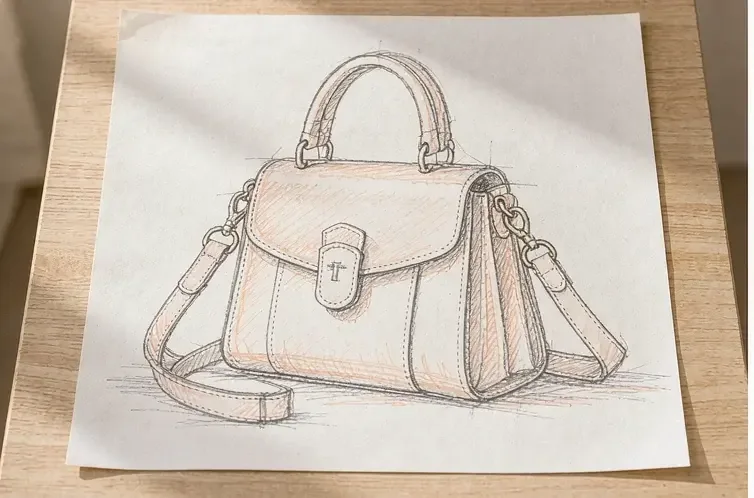
Nine Tests That Identify the Model
You are rarely told which model you are dealing with, but the model reveals itself within two weeks if you ask the right things. Nine tests do the job, and none of them requires a visit, an audit or a deposit.
The nine tests
- How many days does a technical answer take: two, or five to seven?
- Can anyone on the call name the tannery and the lot behind a sample?
- Is the minimum stated as 500 pcs per style and colourway, or higher?
- Are material, hardware, testing and inspection quoted as separate lines?
- Who signs the inspection record, and is that party the one making the bag?
- Is a margin layer disclosed, or is the price simply higher?
- Can you speak to the bench that cut your panels?
- Are corrections recorded by operation, or only by unit?
- Will patterns, reports and the correction history still exist in eighteen months?
Score one point for each favourable answer. Seven or more suggests a direct programme; four or fewer suggests that questions are being routed through a third party, and the calendar will behave accordingly.
What Each Model Does With Your Brief
A direct programme house reads your drawing, comments on skiving and tolerance, and quotes against the bench that will actually cut the panels. An intermediary reads the same drawing, forwards it, waits, translates the answer and returns it, usually with the technical detail flattened out in the process.
- Direct: the person answering your brief is the person who will set the line.
- Intermediary: your brief is reformatted and sent onwards, and the answer comes back in someone else's words.
- Direct: a technical question about turn-in width is answered the same day, from the bench.
- Intermediary: the same question enters a queue and returns two to four days later.
- Direct: corrections are discussed against the operation that produced them.
- Intermediary: corrections are discussed against the unit, because the operation is not visible from there.
The flattening matters more than the delay. A question about skiving at 0.6-0.7 mm over an 8-10 mm turn-in loses its specificity on the way through, and what comes back is an assurance rather than a number.
Where the Days Go: Answer Latency
Latency is the most measurable difference between the two models, and it compounds. Every question that takes two days directly takes five to seven through an intermediary, and a first capsule generates around fifteen such questions.
- Technical answer, direct
- Same day to two working days, from the bench
- Technical answer, routed
- Two to four working days added per cycle
- Sampling, direct
- 6-10 working days including one corrected round, 12-15 if complex
- Sampling, routed
- The same window plus the latency on every correction decision
- Material decision, direct
- A lot can be reserved the day the shade is settled
- Material decision, routed
- Reservation waits a cycle, and the 15-20 day window opens later
Fifteen questions at three extra days each is roughly six weeks of calendar, which is more than the entire bulk window on a small capsule. That is the real cost of the model, and it never appears on a quotation.
Where the Money Goes: The Margin Layer
An intermediary adds a margin on top of the bench price, which is a legitimate charge for coordination, consolidation and language. The problem is rarely the size of the margin; it is that the margin is invisible, so nobody can tell which part of the price is the bag.
Direct pricing
Material, hardware, construction, compliance testing, inspection and terms quoted as separate lines, so a change to one can be priced without disturbing the others.
Coordinated pricing
One figure covering the bag plus coordination. Convenient to compare, impossible to renegotiate, and opaque when a material changes.
What to ask for
Request the quotation with material and testing itemised. A house that refuses is telling you the figure is not decomposable, which is the whole problem in one sentence.
A disclosed coordination fee is a different thing entirely and can be worth paying. An undisclosed one means every future change is re-priced by someone who will not show you the arithmetic.
Traceability: Who Can Name the Tannery
This is the test that settles most cases. Ask which tannery and which lot the leather in the reference piece came from, and whether the site is audited by the Leather Working Group (LWG). A direct house answers in one message; a routed one comes back with a leather description instead of a lot.
- Ask for the tannery and the lot behind the sample, not the type of leather.
- Ask for test reports issued against that lot: ISO 3376, ISO 11644 and ISO 105.
- Ask for per-lot declarations under REACH Annex XVII and California Prop 65.
- Ask what happens if the lot runs out mid-run, which is where a reservation shows itself.
Reports are issued against a lot, so an untraceable hide means any substitution invalidates the compliance work you have paid for. That is a regulatory exposure rather than an aesthetic one, and it sits with you, not with the intermediary.
Quantity, Flexibility and the Minimum
The programme minimum is MOQ 500 pcs per style and colourway. Intermediary arrangements frequently quote nearer 800 to 1,000, because coordination economics improve with volume and because a routed order has to be attractive to the bench receiving it.
| Question | Direct programme | Coordinated route |
|---|---|---|
| Minimum per style and colourway | 500 pcs | Commonly 800-1,000 pcs |
| One colourway only | Acceptable at 500 | Often declined or surcharged |
| Change after the freeze | Re-priced line by line | Re-quoted as a whole |
| Access to the bench | Direct, during sampling | Routed, if at all |
| Reservation of a lot | Held under your name | Held under the coordinator's name |
The reservation row deserves a second look. A lot held under a coordinator's name is available to someone else, which is exactly the mechanism behind the shade drift buyers complain about between two deliveries of one style.
Inspection: Who Owns the Record
Inspection is drawn at AQL 2.5 under ISO 2859-1, and the useful question is not the standard but who holds the record. On a direct programme the record belongs to the bench, so a defect can be traced to an operation and prevented rather than merely repaired.
- Direct: defects are logged by operation, corrected at the station and re-checked before packing.
- Routed: defects are logged by unit, corrected at the end, and the cause remains unnamed.
- Direct: the plan is agreed before bulk, with accept and reject numbers written down.
- Routed: the plan is often described rather than stated, because the numbers belong elsewhere.
- Both: third-party inspection can be added, and it is worth doing once on a first capsule.
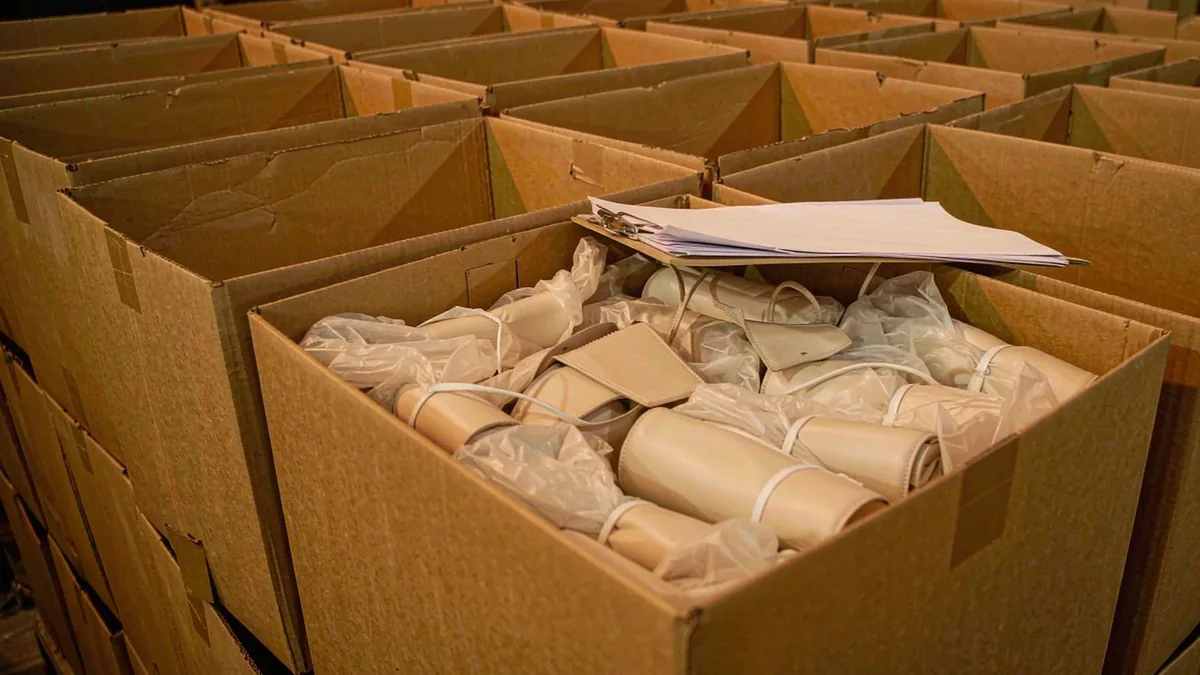
On 500 pcs at general inspection level II the plan draws 50 units, accept 3 and reject 4. Whatever the model, that tenth of the run will surface the line's real behaviour, and only a record kept by operation tells you what to do about it.
Risk Register: What Each Model Exposes You To
Neither model is risk-free, and the risks are different in kind. Naming them is more useful than ranking them, because a brand can mitigate some and not others.
| Risk | Direct programme | Coordinated route |
|---|---|---|
| Shade drift between deliveries | Low, if the lot is held under your name | Higher, where the lot is shared |
| Compliance exposure | Per-lot declarations from the named site | Declarations routed, sometimes generic |
| Answer latency | One to two working days | Adds two to four days per cycle |
| Re-order continuity | Patterns and reports retained | Depends on the coordinator continuing |
| Single point of failure | One house to manage | One coordinator, plus an unnamed bench |
The final row is worth stating plainly. An intermediary does not reduce the number of parties you depend on; it adds one, and the bench behind it remains unnamed, which means you cannot audit it, visit it or hold it to a correction history.
When a Coordinator Genuinely Makes Sense
There are four situations where paying for coordination is the better decision, and pretending otherwise would be dishonest. The test is whether the coordination buys something you cannot buy directly.
Consolidating many small lines
Where a buyer runs eight categories across several sites, one coordinator is genuinely simpler than eight direct relationships, and the saving is administrative rather than technical.
Language and time zone cover
Where a team has no one available during the working day of the bench, a coordinator who answers in your hours keeps decisions moving.
Consolidated freight
Where shipments from several sources are combined, consolidation saves real money on freight and clearance, which is a genuine service.
First exploration
Where a brand is still deciding whether to enter a category, a coordinator can survey options more inexpensively than a full direct development cycle.
In each of those four the service is visible and the fee is disclosed. That is the distinction worth holding on to: coordination is a service, and a service can be priced; opacity is not a service.
How to Move to a Direct Route Without Losing a Season
Switching mid-programme is where brands lose a season, and it is avoidable with a four-step sequence that keeps the calendar intact.
- Finish the current run. Changing horses during bulk costs far more than finishing and then switching.
- Take your records with you: the measurement sheet, the correction list and any reports issued against your lot.
- Re-sample rather than re-develop. A frozen pattern with a held lot re-samples in 6-10 working days, not in a full cycle.
- Reserve the lot before you switch, so the 15-20 working day window opens on the day you decide.
The third step is the one that saves the season. A brand arriving with a frozen pattern, a measurement sheet and a correction history is not starting again; it is re-sampling, which is a ten-day exercise rather than a three-month one.
Ask to speak, once, to the bench that cut your panels. A direct house arranges it in a day. A routed one explains why it is not possible. That single answer predicts everything else in this comparison.
Our programme runs across 7 production lines with about 200,000 pcs per month of capacity and has held export experience since 2014, carried out through our validated partner factory Quanzhou Yingming Bags, an SGS-validated site. Handover is on FOB Xiamen terms, swatch card sets are billed at USD 4.80 and credited against the first order, and answers to a completed brief are returned within two working days. Inspection detail sits under luxury quality control, material provenance under luxury materials, and the full route on the high-end handbag sourcing page.
Run the nine tests on your shortlist
Send your drawing, quantity and the nine questions. You will receive an itemised answer, a named lot and a calendar, within two working days. Request a quote.
Frequently Asked Questions
How can I tell whether I am dealing with a direct house or an intermediary?
Run nine tests: answer latency, whether the tannery lot can be named, the stated minimum, itemised quotation lines, who signs the inspection record, whether a margin is disclosed, access to the bench, how defects are logged, and whether patterns and reports are retained. Seven favourable answers indicates a direct programme.
How much delay does an intermediary add?
Typically two to four working days per question, because each one is forwarded and translated. A first capsule generates around fifteen technical questions, so the compounded effect can approach six weeks of calendar, which is more than the bulk window on a small run.
Why does the minimum order differ between the models?
A direct programme quotes MOQ 500 pcs per style and colourway, because a lot and a line are committed per combination. Coordinated routes often quote 800 to 1,000, since coordination economics improve with volume and the receiving bench has to find the order attractive.
What is the single most revealing question to ask?
Ask which tannery and which lot the leather in the reference piece came from, and whether the site is audited by the Leather Working Group. A direct house answers in one message; a routed one returns a leather description instead of a lot, because the lot belongs to someone else.
Is a higher price through an intermediary unfair?
Not inherently. Coordination, consolidation and language cover are real services and can be worth paying for. The problem is an undisclosed margin, which makes the quotation impossible to decompose, so every later material change is re-priced by arithmetic you cannot see.
How does inspection differ between the two models?
Both should work to AQL 2.5 under ISO 2859-1, drawing 50 units on a 500 pcs lot at level II with accept 3 and reject 4. The difference is the record: a direct house logs defects by operation so the cause is corrected, while a routed one logs them by unit and repairs at the end.
Can an intermediary hold a material lot for me?
It can, but usually under the coordinator's name rather than yours, which means the lot may be available to another brand. That is the mechanism behind shade drift between two deliveries of one style, and it is why the reservation row matters in the comparison.
When does using an intermediary make sense?
When it buys something you cannot buy directly and the fee is disclosed: consolidating many small lines across sites, cover outside your working hours, consolidated freight and clearance, or a first exploration before committing to development.
How do I switch to a direct route without losing a season?
Finish the current run first, then take your measurement sheet, correction list and reports with you. Re-sample rather than re-develop: a frozen pattern with a held lot re-samples in 6-10 working days. Reserve the lot before switching so the 15-20 day window opens immediately.
What compliance documents should either model provide?
Per-lot test reports under ISO 3376, ISO 11644 and ISO 105, plus declarations under REACH Annex XVII for the European Union and California Prop 65 for the United States. Substituting material after testing invalidates them, which is why lot discipline matters in both models.
How long does sampling take on a direct programme?
Six to ten working days, covering a first built unit, measurement against the drawing within ±0.5 mm, a written correction list and one corrected round. Complex builds take 12-15 days, mainly to prove a bespoke closure or set a framed body.
What does a direct programme quote include?
Six itemised lines: material with the lot named, hardware with plating at 0.15-0.3 µm and salt spray proving, construction including interlining and stitch density, compliance testing per lot, inspection at AQL 2.5, and trade terms on FOB Xiamen.
Is an intermediary one less relationship to manage?
No, it is one more. The bench behind it remains unnamed, so you cannot audit it, visit it or hold it to a correction history, while you now also manage the coordinator. That is the risk most often overlooked in this comparison.
What should I send to test a shortlisted house?
A dimensioned drawing or reference piece, quantity per style and colourway, the material direction with destination markets, and the immovable date. Then ask the nine questions. A direct house returns a scoped answer within two working days.
People Also Ask
Should I work directly with a bag house or through an intermediary?
Directly, unless the intermediary buys something specific: consolidation across many lines, cover outside your hours, combined freight, or a first exploration. Otherwise you add latency, an undisclosed margin and one more relationship to manage.
How do I know if a company is an intermediary?
Ask to speak once to the bench that cut your panels, and ask which tannery and lot the leather came from. A direct house arranges both quickly; a routed one explains why neither is possible.
Why do intermediaries quote higher minimums?
Coordination economics improve with volume, and the receiving bench has to find the order attractive. Expect 800-1,000 pcs per style and colourway against a direct programme minimum of 500.
What is the biggest hidden cost of an intermediary?
Answer latency. Two to four extra days per technical question, across roughly fifteen questions in a first capsule, compounds to about six weeks of calendar that never appears on any quotation.
Can I switch to a direct route mid-programme?
Finish the run first, then re-sample rather than re-develop. Arriving with a frozen pattern, a measurement sheet and a held lot reduces the switch to 6-10 working days of sampling instead of a full development cycle.
Sources and further reading
Every figure on this page is either our own programme data or attributed below. Open the originals before you write them into a specification.
- ISO — International Organization for StandardizationISO Publisher of ISO 2859-1 for AQL sampling plans and the ISO 3376, ISO 11644 and ISO 105 test methods cited in the traceability tests.
- Leather Working GroupLeather Working Group Tannery audit protocol behind lot qualification, the reference used in the test that most reliably separates the two models.
- European Chemicals AgencyECHA Administrator of REACH, including the Annex XVII restrictions that require a per-lot declaration rather than a general certificate.
- California Office of Environmental Health Hazard AssessmentOEHHA The authority behind California Proposition 65, which governs warning requirements for listed substances in goods sold in that state.
- Sourcing JournalSourcing Journal Reporting on sourcing structures, traceability and intermediary arrangements in the leather goods supply chain.