What Materials Does a Luxury Handbag Maison Source: Six Checklists From Hide to Documentation
A luxury handbag maison sources six material groups: the outer, the laminate beneath it, hardware and findings, threads and edge finish, regulated exotic skins where the design calls for them, and the documentation that lets all of it cross a border. Each group carries its own approval gate and its own checklist below. The programme runs from 500 pcs per style and colourway, samples in 6-10 working days, ships bulk in 35-50 days and inspects at AQL 2.5 under ISO 2859-1, quoted FOB Xiamen.
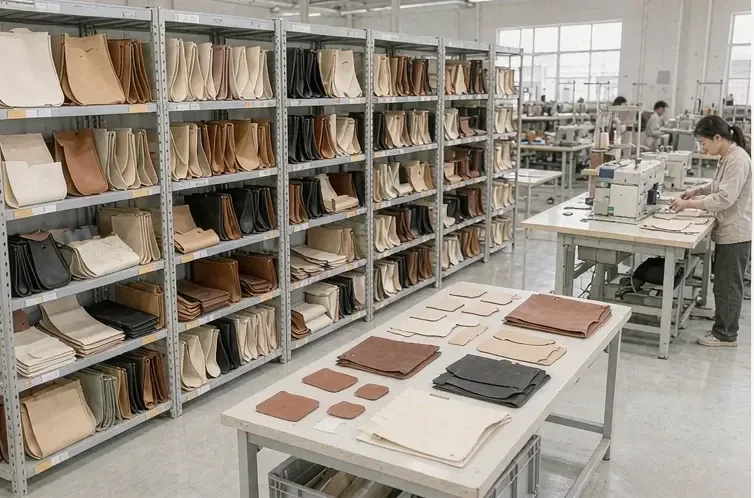
The Material Set: What Gets Sourced for One Bag
A finished bag is a laminate, a frame of metal and a set of consumables, and the reason to split it that way is that each group is sourced on a different clock. The outer has to be booked against a tannery lot months before cutting. Hardware has to be tooled before the first prototype is built. Consumables — thread, adhesive, edge paint — are specified once and held for the season. Treating all six as one shopping list is how a material decision ends up taken after the gate it belonged to.
| Material group | What is specified | When it is decided | What can go wrong |
|---|---|---|---|
| Outer | Hide type, substance, temper, finish | Before the first pattern | A lot that is not booked drifts in season two |
| Laminate | Lining, interlining, reinforcement | With the outer, as one set | A panel that collapses by month three |
| Hardware | Closure route, plating, findings | Before the first prototype | 8-12 days of tooling inserted late |
| Consumables | Thread, adhesive, edge paint | Once, held for the season | An edge that lifts after a few weeks |
| Regulated skins | Species, permit chain, appendix | Before the quote is prepared | A shipment held at the border |
| Documentation | Declarations per material | Before dyeing and plating | A remedy that is a re-run, not a form |
Checklist — Outer Materials, by Substance and Temper
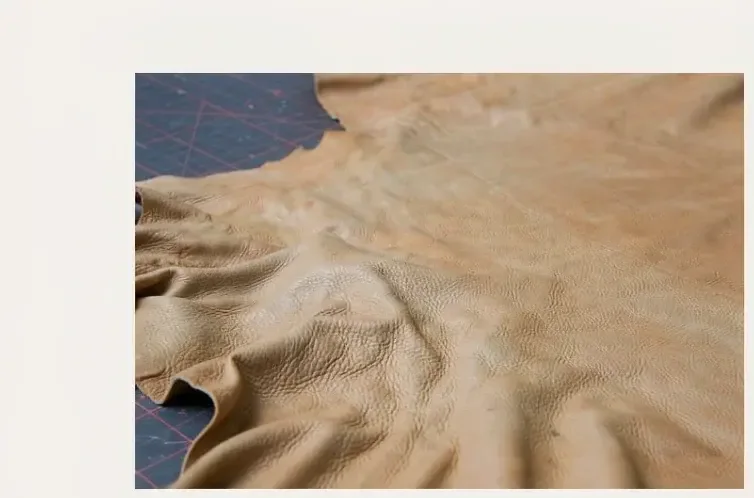
The outer is chosen by hand rather than by name, which is why the checklist below pairs each material with the substance it is normally specified at. Substance and temper together decide what a silhouette can do: a structured gusseted body wants a firm full grain at 1.2-1.4 mm, and a soft hobo wants something that will fall rather than hold.
- Full-grain calfskin at 1.2-1.4 mm for a structured body — the default where the silhouette has to hold its shape.
- Soft-temper calfskin at 1.0-1.2 mm for a hobo or a slouched body, where the panel is meant to fall rather than stand.
- Goatskin at 0.8-1.0 mm where abrasion resistance matters more than hand; it takes a scuff better than calf at the same weight.
- Lambskin at 0.6-0.8 mm for an evening bag, accepting that it marks — specify it where marking is part of the intended patina.
- LWG-audited tannery status, requested by name, with the lot of 300-500 hides booked against the season and a swatch retained.
- A named alternative finish approved at the same time, in case the first is discontinued mid-season.
Two tests belong at approval rather than later. Tensile strength to ISO 3376 and finish adhesion to ISO 11644 catch the two failure modes that appear after a season of use rather than on a first inspection. Both are run on the material set before dyeing, and both cost very little next to a re-run.
Checklist — Linings, Interlinings and Reinforcements
The laminate is where a bag either holds its shape or does not, and it is the group most often reduced to a line item. Specify it as one material rather than three layers: the hand of a finished panel is a property of the outer, the lining and the interlining together, and changing any one of them changes the other two.
Reinforcement is the item most often left out and most often visible in a finished piece. A 0.8 mm interlining under the panel carrying a closure stops the metal pulling the leather out of shape. A 1.8 mm veg-tanned strip along a top edge holds the mouth of a soft body through a season. A 2.0 mm foam laminate behind a large soft panel gives a body presence without adding weight, and costs very little per unit.
Checklist — Hardware, Plating and Findings
Hardware is decided second only to the outer because it carries a tooling lead time, and the metal part has to exist before the first prototype can be assembled. Specify the closure route, the finish family and the plating, then the findings — the small parts that fail first. A zip pull that swings loose after a month is a finding problem rather than a closure problem, and it is specified separately.
- Closure route
- House fitting, or custom-cast clasp and turn-lock
- Custom tooling charge
- USD 450-900 per mould, one-off and reusable
- Tooling lead time
- 8-12 days before the first prototype is built
- Plating thickness
- 0.15-0.3 µm over a nickel-free undercoat
- Salt spray resistance
- 24 hours standard, 48 hours for humid markets
- Zipper specification
- #5 metal chain for a structured flap, lighter for a soft body
- Zip pull swing test
- 5,000 cycles on the finished unit, recorded per lot
- Magnet pull on a flap
- 1.2 kg minimum, tested after the bag is stuffed
Checklist — Threads, Adhesives and Edge Finish
Consumables are specified once per season and then held, which is exactly why a change mid-season causes trouble: the specification on file is no longer the specification in the bag. Three items carry the group. Thread is chosen by size and by what it is colour-matched to — the hide, not the lining. Adhesive is chosen for what it is bonding and for the restricted-substance declaration attached to it. Edge finish is chosen by how it is applied and how many coats it takes.
- Thread: Tex 40 bonded nylon for machine work at 8-9 stitches per inch; Tex 30 for a finer seam on a light body.
- Hand work: 0.45 mm waxed linen for a saddle stitch at 6-7 stitches per inch, two needles, on visible seams.
- Colour match: thread matched to the hide rather than the lining, and colour-fastness checked to ISO 105.
- Adhesive: water-based where the declaration allows it, with a restricted-substance declaration filed before bonding begins.
- Edge paint: three coats, each roughly 0.12 mm wet film, sanded between coats and cured at bench temperature.
- Edge alternative: a turned and skived edge with no paint at all, where the design wants the leather to show its cut.
Checklist — Exotic and Regulated Materials
Exotic skins are legitimate and heavily regulated, and the regulation is the reason to decide them early rather than to avoid them. Most species used in fine leather goods are listed under CITES, which means every shipment travels with a permit chain and the chain has to be requested before the skin is cut. A design that names an exotic at the quote stage is straightforward; the same design naming it after approval is a shipment held at a border.
CITES-listed species
Alligator, crocodile, python and lizard all travel with appendix status attached. A re-export permit is required per shipment, and the permit chain has to be requested before the skin is cut rather than after.
Appendix II and III
Most species used in fine leather goods sit in Appendix II, which permits trade under a controlled permit system. Confirm the appendix per species rather than assuming, because it changes between species and between countries.
Ostrich and non-CITES skins
Ostrich and most farmed skins are not CITES-listed, which simplifies the paperwork considerably. They still carry ordinary REACH and Prop 65 obligations on finish and dye.
Tannery provenance
For any exotic, ask which tannery and which country of origin, and confirm it in writing. The permit chain is only as good as the accuracy of the origin stated on it.
Testing before booking
Tensile strength to ISO 3376 and finish adhesion to ISO 11644 run on the exotic before the lot is booked, because exotics vary more between lots than calf does.
Checklist — Compliance Documentation per Material
Documentation is collected per material rather than per bag, which is the only way it is accurate. The tannery issues the hide declaration, the plating house issues the hardware declaration, and each is valid against a lot rather than against a season. Collect them before dyeing and plating begin, because the remedy for a failed screen after packing is a re-run rather than a form.
The market sets the pack, so state the destination before the quote is prepared. European Union: REACH Annex XVII covering chromium VI, azo dyes, nickel release and phthalates. California: a Prop 65 assessment, since lead in plated hardware is the usual trigger. United States: CPSIA limits and a tracking label. Fibre naming: EU Regulation 1007/2011. This is covered in more depth under Luxury Materials.
Checklist — Approving and Retaining the Set
Approval is physical. The outer, the lining, the interlining, the closure and the plating are approved as one set, held together, and retained — because a material approved separately from the parts it sits against will be approved wrong. A swatch card carrying the hide, the lining and the clasp together is worth more than three approvals taken on three different days.
What a completed material file contains
- Outer named to a tannery with substance, temper and an LWG audit reference; the lot booked and a swatch retained; laminate specified as one set; hardware tooled with the mould number recorded; thread and edge finish specified per season; exotic skins with their permit chain; and declarations per material, per lot, filed before dyeing. Inspection at AQL 2.5 under ISO 2859-1, FOB Xiamen.
Approve the set together, not item by item. A hide approved against a lining it will never sit against, or a clasp approved against a swatch from a different lot, is an approval that will fail in the finished bag.
Send the material set you have in mind
Tell us the hide, the hand you want and the hardware route, and our team will return a sourcing plan, a sampling schedule and a costed first order through our quotation desk.
Frequently Asked Questions
What materials does a luxury handbag maison source?
Six groups: the outer hide, the laminate beneath it, hardware and findings, thread and edge finish, regulated exotic skins where the design calls for them, and the compliance documentation for each. Each group carries its own approval gate and its own lead time.
What leather is used for a structured handbag?
Full-grain calfskin at 1.2-1.4 mm is the default where a silhouette has to hold its shape. Soft-temper calfskin at 1.0-1.2 mm suits a body that is meant to fall, goatskin at 0.8-1.0 mm resists abrasion, and lambskin at 0.6-0.8 mm suits an evening bag.
Why does the hide lot have to be booked?
Because a tannery lot runs roughly 300-500 hides and will not repeat exactly — the hand moves, the finish takes dye a shade differently and the substance drifts. Booking the lot and retaining a swatch is what stops a successful bag returning different in season two.
What is the interlining for and how thick should it be?
It gives a panel body without adding visible weight. A 0.8 mm interlining sits under any panel carrying a closure, a 1.8 mm veg-tanned strip reinforces a top edge, and a 2.0 mm foam laminate backs a large soft panel that would otherwise collapse.
How is hardware specified before sampling?
State the closure route, the finish family and the plating thickness at 0.15-0.3 µm over a nickel-free undercoat, then the findings separately. Custom casting adds USD 450-900 per mould and 8-12 days, and the part must exist before the first prototype.
What thread and stitch specification is used?
Tex 40 bonded nylon at 8-9 stitches per inch for machine work, Tex 30 for a finer seam on a light body, and 0.45 mm waxed linen for a hand-set saddle stitch at 6-7 per inch on visible seams. Thread is matched to the hide, not the lining.
How is an edge finished on a luxury bag?
Either three coats of edge paint, each roughly 0.12 mm wet film, sanded between coats and cured at bench temperature, or a turned and skived edge with no paint where the design wants the leather to show its cut. Specifying which is the whole decision.
Are exotic leathers allowed and what is required?
Yes, where the species is legally traded. Most species used in fine leather goods are CITES-listed, generally in Appendix II, so each shipment travels with a permit chain. Request the chain before the skin is cut, and confirm the appendix per species rather than assuming.
Which material tests are run before a lot is booked?
Tensile strength to ISO 3376 and finish adhesion to ISO 11644, run on the material set before dyeing. Colour-fastness is checked to ISO 105 and shade held at ΔE ≤ 1.0 under D65 against a retained swatch.
What compliance documentation is needed per material?
REACH Annex XVII declarations from the tannery covering chromium VI, azo dyes and phthalates; a nickel-release and lead declaration from the plating house; a Prop 65 assessment for California; CPSIA limits for the United States; and EU Regulation 1007/2011 for fibre naming.
When should compliance declarations be collected?
Before dyeing and plating begin, not after packing. Declarations are issued per lot rather than per season, and the remedy for a failed screen once goods are packed is a re-run rather than a form.
How should the material set be approved?
Physically and together. The hide, the lining, the interlining, the closure and the plating are approved as one set and retained on a swatch card, because a material approved separately from the parts it sits against will be approved wrong.
What is the minimum order when sourcing a specific hide?
500 pcs per style and per colourway, quoted FOB Xiamen. A hide chosen for a line is booked as a lot against that volume, which is why the minimum sits where it does — below it the lot cannot be bought economically.
How does material choice affect the sampling window?
The outer and the hardware are the two groups that carry lead times. A hide that is already booked and a house fitting keep sampling at 6-10 working days; a made-to-order frame, a cast clasp or an exotic needing a permit chain moves it to 12-15.
People Also Ask
What leather is best for a luxury handbag?
Full-grain calfskin at 1.2-1.4 mm for a structured body that has to hold its shape; soft-temper calf at 1.0-1.2 mm for a body meant to fall; goatskin at 0.8-1.0 mm where abrasion resistance matters.
Why must a leather lot be booked in advance?
A lot runs 300-500 hides and will not repeat exactly. The hand, the dye uptake and the substance all drift, so an unbooked lot means season two comes back marginally different from season one.
Are exotic skins legal to use in handbags?
Yes, where the species is legally traded. Most are CITES-listed, generally Appendix II, so each shipment needs a permit chain requested before the skin is cut. Confirm the appendix per species.
What is interlining in a handbag?
A layer bonded behind the outer panel that gives it body — typically 0.8 mm behind a closure panel, a 1.8 mm veg-tanned strip on a top edge, or 2.0 mm foam behind a large soft panel.
How are handbag edges finished?
With three coats of edge paint, each roughly 0.12 mm wet film, sanded between coats and cured at bench temperature — or turned and skived with no paint, where the design wants the cut edge of the leather to show.
Sources and further reading
Every figure on this page is either our own programme data or attributed below. Open the originals before you write them into a specification.
- Leather Working GroupLeather Working Group Tannery audit protocol used to evidence hide provenance and to confirm a tannery before a lot is booked.
- CITES Appendices I, II and IIICITES Secretariat Appendix listing per species, which determines the permit chain required for exotic skins used in fine leather goods.
- ISO — International StandardsInternational Organization for Standardization Publisher of ISO 3376 tensile strength, ISO 11644 finish adhesion and ISO 105 colour fastness, used at material approval.
- Understanding REACHEuropean Chemicals Agency Annex XVII restrictions on chromium VI, azo dyes, nickel release and phthalates in leather, coatings and plated hardware.