What Is a Luxury Handbag Pilot Run: Definition, Size, What It Measures, Who Receives the Pieces and When It Is Worth Running
What is a luxury handbag pilot run? It is a short run, typically 30 to 50 pieces, made on the bulk tooling by the bulk team from the bulk material, before the full order starts. Its purpose is not to produce saleable stock but to answer four questions the sample cannot: whether the line holds the specification across many hands, what the real cycle time is, which defect dominates, and whether the packing survives transit. Most styles answer all four in one pass.
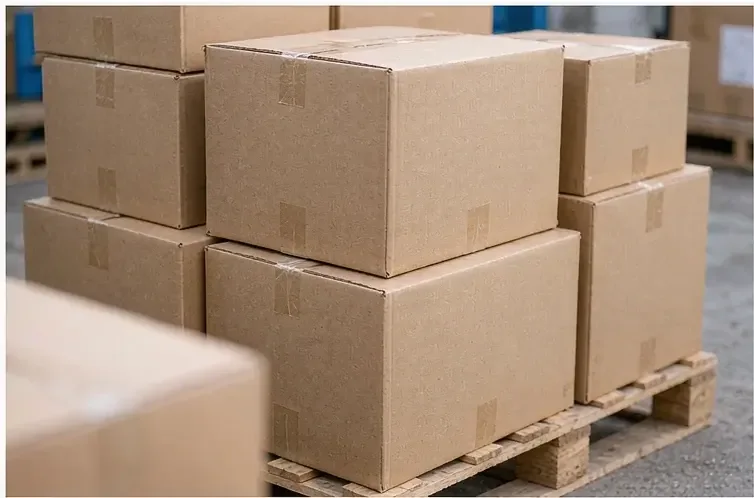
What Exactly Is a Pilot Run?
A pilot run is a dress rehearsal at small scale: the same tooling, the same material, the same operators and the same packing that bulk will use, run at 30 to 50 pieces rather than at 500.
That definition has four load-bearing words. Bulk tooling excludes the bench methods used for a sample. Bulk material excludes the best hide in the store. Bulk team excludes the single strongest hand. Bulk packing excludes the presentation box a sample is sent in. Change any one of those and the run stops being a pilot and becomes an expensive batch of samples.
How Is It Different from a Sample?
A sample asks whether the piece can be made well; a pilot run asks whether it can be made well repeatedly. The second question is the one that decides the outcome of an order, and no sample can answer it.
- Sample
- One piece, one hand, bench methods, trial material permitted, the question is can it be made
- Pre-production reference
- One sealed piece on bulk tooling from bulk material, the standard bulk is measured against
- Pilot run
- 30-50 pieces, the full team, bulk sequence, the question is can it be made repeatedly
- Bulk
- 500 pcs per style and colourway, 35-50 days, inspected at AQL 2.5 under ISO 2859-1
The pre-production reference and the pilot run are frequently confused, and the difference is worth stating plainly: the reference is an object, the pilot is an event. The reference sits on a shelf and settles arguments; the pilot produces data and settles processes.
How Is It Different from Bulk?
Physically, hardly at all. Commercially and procedurally, entirely.
| Attribute | Pilot run | Bulk |
|---|---|---|
| Quantity | 30-50 pieces | 500 pcs per style and colourway |
| Purpose | To generate data and expose the dominant defect | To fulfil the order |
| Measurement | One piece in three measured in full against the drawing | Inspected at AQL 2.5 under ISO 2859-1 |
| Pace | Deliberately unhurried, with the cycle timed at each station | At the rate the calendar requires |
| Outcome | A written list of corrections and a confirmed cycle time | Finished goods, packed and handed over on FOB Xiamen terms |
That difference in pace is deliberate and it is the whole value of the exercise. A line running at full speed hides its own problems; the same line running at half speed while someone times each station shows them immediately. It is also why the pilot should not be used as a threat against the bulk date: the pace is a measurement condition, not a capacity figure, and the two get confused when a buyer sees the run happening slowly and assumes the order will run slowly too.
How Many Pieces Should a Pilot Run Be?
Thirty to fifty is the working range, and the number is chosen to expose variation rather than to produce stock.
- Below 30 the run does not cross enough hands to show operator variation, which is usually the dominant defect source.
- Above 50 it stops being a rehearsal and starts being a partial shipment, with the commercial questions that follow.
- 30 suits a simple construction with stock hardware and a settled pattern.
- 50 suits a framed opening, an exotic skin or an engineered closure, where the operations are longer and the failure modes more numerous.
- Where a style has three colourways, run the pilot in the most difficult one rather than in the easiest.
The last point is counter-intuitive and worth insisting on. Piloting the easiest colourway produces a clean result and a false sense of security; piloting the hardest produces the defect list while there is still time to act on it.
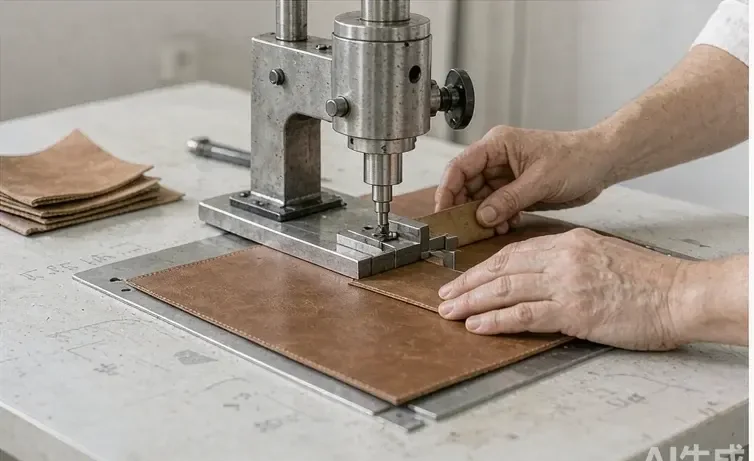
What Should Be Measured During It?
Five things, and all five should be recorded on one sheet rather than remembered.
- Cycle time at each station, timed rather than estimated, which is what makes the bulk date credible.
- Dimensional variance on one piece in three, against the drawing, at the tolerances agreed at approval.
- The defect tally, sorted by type, because the commonest defect is the one worth fixing first.
- Material yield per piece, since a panel that wastes leather changes the cost of the run.
- Packing outcome after a transit test, which is the defect most often discovered by the customer instead.
The defect tally deserves a note on method. A list of forty faults across fifty pieces is far more useful arranged by type, because a Pareto view almost always shows one or two causes accounting for most of them, and those are the ones whose correction actually moves the number.
What the Report Should Look Like
A pilot produces one sheet, and the sheet has a fixed shape. A report that arrives as prose is a report that cannot be compared with the next one, and comparability across styles is where most of the value accumulates over a season.
| Section | What it carries | Who acts on it |
|---|---|---|
| Cycle times | Elapsed time per station, in seconds, with the slowest station named | Planning, which sets the bulk date from it |
| Dimensional report | One piece in three measured against the drawing at the approved tolerances | The pattern holder, where drift is outside ±1 mm |
| Defect tally | Every fault by type and count, sorted descending, with the top cause named | The line leader, who owns the correction |
| Material yield | Panels per hide and the waste figure, against the estimate used at quotation | Buying, where the yield changes the cost of the run |
| Transit result | Packed pieces after a drop and vibration test, with photographs of any damage | Packing, before the first carton leaves |
The owner column is the part that gets dropped, and dropping it is why some pilots change nothing. A finding without a name against it is a finding that will be discussed at the next style instead of fixed on this one.
We also ask that the sheet be kept and compared. Two or three pilot reports across a season will usually show the same top defect recurring, and that repetition is the clearest available signal about where a line needs attention rather than a style.
What Does a Pilot Run Decide?
Four decisions come out of a well-run pilot, and each has an owner on the buyer's side as well as on ours.
Whether the specification holds
If dimensional variance stays inside the agreed ±1 mm across the run, the specification is real. If it drifts, the drawing was optimistic rather than the work careless.
What the true capacity is
Cycle time at each station sets what the line can deliver per day, which is what turns an estimated bulk date into a committed one.
Which correction comes first
The dominant defect, by count. Fixing the second commonest while the first remains is the usual reason a run does not improve.
Whether packing survives
A transit test on packed pieces finds crushed corners and scuffed hardware before a customer does, and it costs an afternoon.
Two of those four, capacity and packing, are invisible at sample stage and are the reason a pilot run earns its place even on a style that sampled cleanly.
What a Pilot Run Does Not Decide
Being clear about what a pilot cannot do is what stops it being used as a substitute for a decision someone should have made earlier. In practice most disappointment with a pilot comes from expecting it to rescue a style whose specification was never settled, and no amount of measurement will do that.
- It does not decide the design. A silhouette still in question at pilot stage is a silhouette whose sampling was stopped too early.
- It does not decide the material. The hide was approved at sampling; a pilot that reopens the question is a pilot run on the wrong style.
- It does not reduce the MOQ. The commercial minimum of 500 pcs per style and colourway is unchanged.
- It does not replace inspection at AQL 2.5. Bulk is still inspected under ISO 2859-1 at handover.
- It does not produce saleable stock as its primary purpose, even where some pieces are fit to sell.
Its output is a sheet of data and a short list of corrections. Treating it as the first slice of the shipment is the mistake that turns a useful exercise into a commercial argument.
Where It Sits in the Calendar
A pilot run occupies a narrow and specific place, and putting it anywhere else removes most of its value.
- Tech pack complete, with the seven numbers written: leather 1.2-1.4 mm, stitch 8-9 per inch, thread 0.45 mm, three edge coats, plating 0.15-0.3 microns, interlining 0.8 mm, #5 zip.
- Sampling in 6-10 working days, or 12-15 for a framed opening, an exotic skin or engineered hardware.
- Sealing: three references, one held by each side and one held back.
- Pilot run of 30-50 pieces on the bulk tooling, with the cycle timed and one piece in three measured.
- Corrections written up and applied, normally inside a few days.
- Bulk in 35-50 days, inspection at AQL 2.5, handover on FOB Xiamen terms.
Placed there, a pilot costs a few days and returns a committed bulk date. Placed after bulk has started, it is a crisis; placed before the sample is sealed, it is a second sampling round wearing a different name.
When a Pilot Run Is Not Worth Running
Three situations argue against one, and saying so is part of advising properly rather than selling more work.
- A repeat style already proven across two or more runs, where the cycle time and the defect profile are known.
- A very small first order at or near the 500 pcs minimum, where the rehearsal is a large fraction of the run itself.
- A programme so late on its calendar that the correction time does not exist, in which case the honest advice is to move the date.
The third case is the one that gets argued with, and the argument is usually lost. A pilot whose findings cannot be acted on is a report nobody reads, and moving the delivery date by a week is almost always the better of the two outcomes. A buyer who is offered a pilot on a programme with no correction time left should ask for the date to move instead, because the alternative is a rehearsal whose results arrive after the performance.
From Pilot Findings Into Bulk
Once the corrections are applied, the programme runs on fixed terms: MOQ 500 pcs per style and colourway, bulk in 35-50 days, inspection at AQL 2.5 under ISO 2859-1 with third-party inspection available, and handover on FOB Xiamen terms. Export experience on this programme runs since 2014 across 7 production lines with about 200,000 pcs per month of capacity, delivered through our validated partner factory Quanzhou Yingming Bags.
Ask whether your style needs a pilot run
Send the drawings, the material direction and the quantity, and we will tell you whether a pilot is worth running and what size it should be. Request a quote.
Frequently Asked Questions
What is a luxury handbag pilot run?
A short run of 30 to 50 pieces made on the bulk tooling, by the bulk team, from the bulk material and with the bulk packing, before the full order starts. Its purpose is data rather than stock.
How is a pilot run different from a sample?
A sample asks whether the piece can be made well by one skilled hand using bench methods. A pilot asks whether it can be made well repeatedly by the whole team using the bulk sequence.
How many pieces should a pilot run be?
Thirty to fifty. Below thirty the run does not cross enough hands to expose operator variation, and above fifty it stops being a rehearsal and becomes a partial shipment with questions attached.
Why should the pilot use the hardest colourway?
Because piloting the easiest produces a clean result and false confidence. The hardest colourway produces the defect list while there is still time to act on it, which is the whole point.
What should be measured during a pilot run?
Five things: cycle time at each station, dimensional variance on one piece in three, the defect tally sorted by type, material yield per piece, and the outcome of a transit test on packed goods.
Why is cycle time timed rather than estimated?
Because it is what makes the bulk date credible. A line running at full speed hides its own problems, so the pilot is run deliberately slower with each station timed and recorded.
Does a pilot run reduce the minimum order quantity?
No. The commercial minimum of 500 pcs per style and colourway is unchanged, and the pilot is an additional exercise rather than a way of ordering less than the minimum.
Can pilot pieces be sold?
Some may be fit to sell, but that is not their purpose. Treating the pilot as the first slice of the shipment turns a useful rehearsal into a commercial argument about what counts as stock.
Does a pilot run replace inspection at bulk?
No. Bulk is still inspected at AQL 2.5 under ISO 2859-1 at handover, with third-party inspection available. The pilot informs the process; inspection verifies the output.
When is a pilot run not worth running?
On a proven repeat style, on a first order at or near the 500 pcs minimum, or where the calendar has no room for corrections. In the last case, moving the date is the better outcome.
Where does a pilot run sit in the calendar?
After the references are sealed and before bulk starts. Run earlier it becomes a second sampling round under another name, and run later it becomes a crisis rather than a rehearsal.
What is the difference between a reference and a pilot?
The pre-production reference is an object that settles arguments about shade, grain and finish. The pilot is an event that produces data and settles the process. Both are needed.
What comes out of a well-run pilot?
A sheet with cycle times, a dimensional report, a defect tally sorted by type, a material yield figure and a transit result, plus a short written list of corrections with an owner for each.
What are the commercial terms after the pilot?
MOQ 500 pcs per style and colourway, bulk in 35-50 days, inspection at AQL 2.5 under ISO 2859-1, and handover on FOB Xiamen terms, with third-party inspection available.
People Also Ask
What is a pilot run in handbag production?
A rehearsal of 30-50 pieces on bulk tooling that generates cycle times, a defect tally and a packing result before the full order begins.
Why not just start bulk after the sample?
Because a sample proves one piece can be made well, not that five hundred can. A pilot exposes operator variation and real capacity before the calendar is committed.
How long does a pilot run take?
A few days for the run itself plus the write-up. It sits between sealing the references and the 35-50 day bulk window.
What is the most useful output of a pilot?
The defect tally sorted by type. One or two causes usually account for most faults, and fixing those is what actually moves the number.
Should a pilot be run on every new style?
On most new constructions, yes, particularly those with a frame, an exotic skin or an engineered closure. Proven repeat styles rarely need one.
Sources and further reading
Every figure on this page is either our own programme data or attributed below. Open the originals before you write them into a specification.
- ISO — International Organization for StandardizationISO Publisher of ISO 2859-1, the sampling procedure behind AQL 2.5 inspection at bulk handover.
- SATRASATRA Technology Centre Independent testing organisation for leather and accessories, covering transit, flex and hardware testing of packed pieces.
- Leather Working GroupLeather Working Group Tannery audit protocol behind the hide traceability and batch records used in pilot and bulk material release.
- OEKO-TEXOEKO-TEX Testing and certification system for leather, lining and interlining against restricted substance lists.
- Sourcing JournalSourcing Journal Reporting on production planning, capacity and pilot practice across the accessories trade.