Vegetable Tanned Luxury Leather Handbags: What a Natural Hide Does in Twelve Months
Are vegetable tanned leathers right for a luxury handbag? Yes, where the piece is designed to change: vegetable tannage takes 30-45 days in pit, produces a hide at 1.4-1.8 mm with a shrinkage temperature above 75°C under ISO 3380, and darkens visibly over 6-12 months of handling. It is the wrong choice where colour must stay identical across three seasons of re-orders, and the right one where patina is the selling point.
The Order That Started With a Natural Hide
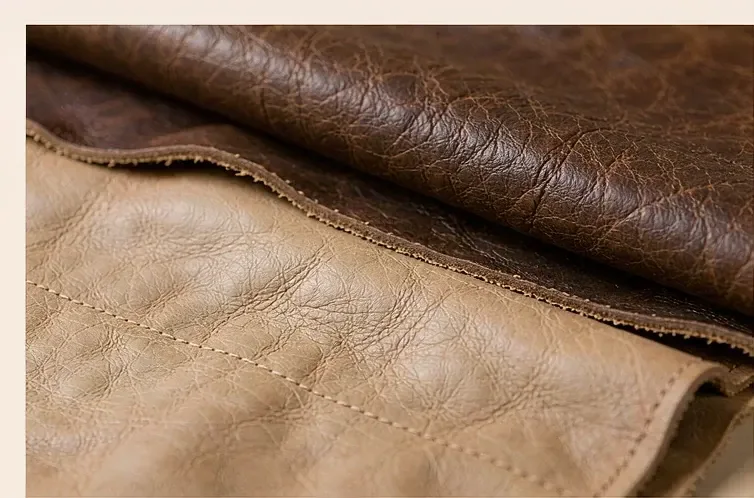
A designer arrives with a structured top-handle in a pale natural hide and one instruction: it should look better in a year than it does now. The first sample comes back exactly right, the second sample comes back two shades darker, and the third comes back with a handle that has darkened faster than the body. Nothing was made wrong.
What happened is the property of the material. Vegetable tanned leather changes under light, handling and oil from the hand, and it changes at different rates on different parts of one unit. The brief asked for that change; the specification had not recorded which parts were allowed to change and by how much.
The fix was not a different tannage. It was three numbers written into the specification: a starting shade range measured by spectrophotometer, an acceptance band for darkening after a defined exposure, and a note that the handle and the body darken at different rates by design.
What Vegetable Tannage Actually Does to a Hide
Vegetable tannage converts raw hide into leather using tannins drawn from bark, wood and leaves rather than chromium salts. The process is slow: 30-45 days in pit for a full vegetable tannage against a matter of hours for a chrome cycle, and the slowness is what produces the firm, full hand the category is bought for.
The result is a hide that is firmer and less extensible than chrome tanned leather of the same substance, with an open grain that accepts oil and water rather than repelling it. That openness is the mechanism behind patina, and it is also the mechanism behind staining.
Reading a Veg Tan Specification: Six Numbers
A vegetable tanned specification is enforceable when it is six numbers rather than a mood. Each converts into something measurable at intake, and each is the figure a disagreement after delivery will turn on.
- Tannage
- Full vegetable, 30-45 days in pit, declared rather than blended
- Substance
- 1.4-1.8 mm for a structured body; 1.0-1.2 mm for a softer one
- Shrinkage temperature
- ISO 3380, minimum 75°C, which confirms the tannage is complete
- pH and acid content
- ISO 4045, pH 3.5-4.0, since a drifting pH predicts long-term fibre damage
- Tensile strength
- ISO 3376, minimum 15 N/mm² in the load-bearing direction
- Finish
- Unfinished or wax finished; a film above 5 µm defeats the purpose
The third row is the one most often missing and the one that matters most. Shrinkage temperature is the laboratory test that distinguishes a fully tanned hide from a rushed one, and it is far more reliable than the word vegetable on an invoice.
Why Veg Tan Moves in Shade: Patina by Design
Patina is oxidation plus oil plus abrasion, and all three act unevenly. A handle darkens fastest because it is touched; a base panel darkens slowest because it is not; a fold brightens before it darkens because abrasion lifts the surface before the oil settles into it.
Handles and straps
Darken fastest, often visibly within 8-12 weeks of regular handling, because oil from the hand transfers at every use. Expect the handle to read one to two shades darker than the body after the first season.
Body panels
Darken slowly and evenly under ambient light. On a structured body at 1.4-1.8 mm, the change is noticeable across 6-12 months rather than weeks, and it is most visible on pale natural shades.
Folds and gussets
Brighten first, then darken. Abrasion at the crease lifts the surface before oil settles in, which is why a gusset looks lighter than its neighbour early in the life of the piece.
Base and feet
Darken least and scuff most. A base panel in vegetable tanned leather benefits from feet at 4-5 mm and, where the design allows, a doubling at the corners.
Where Vegetable Tanned Leather Works, and Where It Does Not
Vegetable tanned leather suits a piece sold on change: a structured top-handle, a travel piece, a belt-and-bag set, an unlined interior where the flesh side is the finish. It suits a collection with one core shade rather than six, because matching across shades is where the material is hardest.
- Right for: structured bodies sold on patina, natural shades, unlined interiors.
- Right for: pieces whose customer expects a hide to acquire a history.
- Wrong for: an exact shade repeated across three seasons of re-orders.
- Wrong for: pale pieces intended to stay pale under strong retail lighting.
- Wrong for: interiors exposed to cosmetics, where openness means staining.
Colour Fastness: The Trade a Natural Finish Makes
An unfinished vegetable tanned hide trades colour stability for character, and the trade should be written down rather than discovered. Light fastness on a pale natural shade typically sits at 3 on the blue wool scale under ISO 105-B02, against 4 or better for a pigmented finish.
| Property | Method | Veg tan, unfinished | Pigmented leather |
|---|---|---|---|
| Fastness to light | ISO 105-B02 | 3 on the blue wool scale | 4 or better |
| Fastness to rub, dry | ISO 11640 | 3-4 on the grey scale | 4 or better |
| Fastness to rub, wet | ISO 11640 | 2-3 on the grey scale | 3-4 or better |
| Water absorption | ISO 5403 series | Absorbs; marks before it dries | Largely repels |
| Shrinkage temperature | ISO 3380 | 75°C or above when fully tanned | Generally higher |
Read the wet rub row carefully before specifying a pale vegetable tanned hide on a piece that will be carried in rain. A mark that dries out unevenly is not damage in a technical sense and is still a complaint from a customer who expected a finished surface.
Matching and Cutting a Hide That Varies
Vegetable tanned hides vary more within a lot than corrected leathers do, because nothing has been applied to make them uniform. Cutting discipline therefore carries more of the matching burden: every panel of one unit from one hide, and the hide sorted by shade before the pattern is placed.
- Sort the delivery into three shade bands before cutting, and keep a unit inside one band.
- Cut every visible panel of a unit from a single hide rather than from a dye lot.
- Place the pattern away from the neck and belly, whose fibre structure is looser.
- Record the hide reference against the unit range so a re-order can be matched.
- Expect a lower yield: around 58-65% of purchased area on matched panels.
The fifth item is worth pricing before the hide is bought rather than after the cutting is done. A band that runs short mid-order forces a choice between opening a second band, which shows on the shelf, and stopping the run short of quantity.
Care, Repair and What to Tell the Customer
Vegetable tanned leather is maintainable in a way finished leather is not, and the care card should say so plainly. A mark can often be lifted or evened out; a scuff can be burnished back; a dried water spot can be dampened and blended into the surrounding shade.
That maintainability is the argument for the material in a luxury context, and it belongs in the presentation rather than only in the specification. A care card that tells a customer the piece is meant to change converts the anxiety of a first mark into the reason they bought it.
Say the same thing at the point of sale and in the retail training, because the failure mode here is commercial rather than technical. Most complaints about vegetable tanned leather come from a customer who was never told the piece would move, and who reads the first mark as damage rather than as the beginning of a surface.
Schedule and Cost: What a Natural Hide Adds
Vegetable tanned leather adds time in two places and money in one. The tannage itself is slower, so hide availability is booked further ahead; shade sorting at the bench adds a step before cutting; and the lower matched yield of 58-65% raises the leather share of unit cost.
On a medium structured body at 500 pcs, the leather share typically sits a few points above an equivalent corrected leather, driven by yield rather than by hide price. Presentation packing runs separately at about USD 4.80 per unit.
Vegetable tanned hides are sorted by shade on arrival, and the shade band you need may not exist in the delivery that exists. Reserve against the specification early, because shade is the variable that moves the schedule rather than the cutting.
The Specification Sheet for a Veg Tan Programme
A vegetable tanned programme is ready to place when the specification records the starting shade, the accepted movement and the tannage evidence. Without those three, the first disagreement after delivery is unresolvable, because a hide that changed is not defective and one that changed too much is.
Nine lines before you place a vegetable tanned order
- Tannage declared as full vegetable, with the pit duration stated.
- ISO 3380 shrinkage temperature, minimum 75°C, as evidence of complete tannage.
- ISO 4045 pH between 3.5 and 4.0, tested per lot.
- Substance in millimetres, with the skived dimension recorded separately.
- Finish declared as unfinished or wax finished, with no film above 5 µm.
- Starting shade range measured by spectrophotometer, with ΔE tolerance within a unit.
- Accepted darkening after a defined light exposure, stated as a band.
- Shade sorting into bands before cutting, with a unit kept inside one band.
- Intake inspection to AQL 2.5 under ISO 2859-1, with a retained sample per lot.
Our programme works to MOQ 500 pcs per style and colourway, with sampling at 6-10 working days and 12-15 for a complex construction, bulk at 35-50 days on FOB Xiamen terms, inspected to AQL 2.5 under ISO 2859-1. It runs across 7 production lines with about 200,000 pcs per month of capacity and export experience since 2014, delivered through our validated partner factory Quanzhou Yingming Bags, an SGS-validated site. The material framework sits under luxury materials and the bench detail under craftsmanship.
Tell us the shade you want and where it should go
Send the silhouette, the target starting shade and how much movement you will accept after twelve months. We will return the tannage specification, the shade banding plan and a sampling calendar, within two working days. Request a quote.
Frequently Asked Questions
What makes a leather genuinely vegetable tanned?
Tannins drawn from bark, wood and leaves, and a cycle of 30-45 days in pit rather than hours. The reliable evidence is a shrinkage temperature above 75°C under ISO 3380, which confirms the tannage ran to completion. A blend of chrome and vegetable tannins behaves differently and should be declared as one.
How long does vegetable tanned leather take to develop patina?
Handles and touch points darken within 8-12 weeks of regular use. Body panels move more slowly, across 6-12 months under ambient light. Folds brighten first from abrasion and then darken as oil settles, so a gusset can look lighter than the panel beside it early in the life of the piece.
Is vegetable tanned leather strong enough for a structured body?
Yes, at 1.4-1.8 mm with a tensile strength of at least 15 N/mm² under ISO 3376. Vegetable tanned leather is firmer and less extensible than chrome tanned leather of the same substance, which is why it holds a structured silhouette well and why it needs careful skiving at folds.
Why does shrinkage temperature matter so much?
It is the laboratory test that distinguishes a fully tanned hide from a rushed one. Under ISO 3380 a properly tanned vegetable hide reaches 75°C or above. The figure is far more reliable than the word vegetable on an invoice, and it predicts how the hide will behave in service.
Do vegetable tanned handbags stain easily?
More readily than finished leather. The open grain accepts oil and water rather than repelling them, so water marks before it dries and cosmetics transfer into the interior. Wet rub fastness typically sits at 2-3 on the grey scale against 3-4 or better for a pigmented leather.
Can a vegetable tanned hide be matched across re-orders?
Partially. Hides vary within a lot because nothing is applied to make them uniform, so the discipline is shade sorting on arrival, keeping one unit inside a band and recording the hide reference. An exact shade across three seasons is the hardest request the material can be given.
What pH should a vegetable tanned hide be tested at?
Between 3.5 and 4.0 under ISO 4045. pH matters as a predictor rather than as a fault in itself: a reading drifting outside that window warns of long-term fibre damage that will not show on the bench but will show in the second year of use.
Should a vegetable tanned bag be finished at all?
A wax finish is compatible; a pigmented film above 5 µm is not. The point of the material is an open grain that responds to light and handling, and a film thick enough to protect it also removes the character the material was specified for.
What cutting yield should be expected?
Around 58-65% of purchased hide area when panels are matched and shade sorted, against 65-72% for a corrected leather. The difference comes from sorting into bands and keeping a unit inside one band, which is a design decision rather than a cutting inefficiency. Write the figure into the specification, since an unrecorded figure cannot be enforced at intake.
How should a customer care for a vegetable tanned piece?
The care card should say plainly that the piece is meant to change. Minor marks can be evened out, scuffs burnished back and a dried water spot dampened and blended into the surrounding shade. Stating that up front converts a first mark from anxiety into the reason for buying.
Does vegetable tanned leather meet REACH requirements?
It can, and compliance is shown with a test report per lot rather than with the tannage description. REACH Annex XVII restricts certain substances in articles placed on the European Union market, and California Prop 65 governs warnings in that state; both are checked per lot.
How much does vegetable tanned leather add to unit cost?
Mostly through yield rather than hide price. At a matched yield of 58-65% against 65-72%, the leather share of FOB cost rises by a few points on a medium structured body at 500 pcs. Presentation packing sits separately at about USD 4.80 per unit.
People Also Ask
Is vegetable tanned leather better for the environment?
It avoids chromium salts and the tannins come from plant sources, but the cycle uses more water and time. The honest answer is a tannery rating: ask for the Leather Working Group rating of the site that supplied the lot.
Why is my vegetable tanned bag darker in some places?
Patina follows touching. Handles darken first from oil transferred by the hand, body panels change slowly under light, and folds brighten from abrasion before darkening. Uneven darkening is the material behaving as specified.
Can vegetable tanned leather be used for a bag interior?
Yes where the interior is dry and light in duty, and the flesh side can serve as the finish. Avoid it where cosmetics or moisture are expected, since the open grain absorbs rather than repels.
How do you confirm a hide is fully tanned?
Measure shrinkage temperature to ISO 3380 and expect 75°C or above, and check pH to ISO 4045 at 3.5-4.0. Both are laboratory tests on a retained sample, and neither can be judged by eye at the bench.
Does vegetable tanned leather work in a rainy climate?
It works, with a caveat the customer should hear in advance. Water marks before it dries and the mark may dry unevenly, which is a characteristic of an open grain rather than a defect in the hide.
Sources and further reading
Every figure on this page is either our own programme data or attributed below. Open the originals before you write them into a specification.
- ISO — International Organization for StandardizationISO Publisher of ISO 3380 on shrinkage temperature, ISO 4045 on pH, ISO 3376 on tensile strength and ISO 2859-1 on sampling.
- Leather Working GroupLeather Working Group Tannery audit protocol covering environmental performance, water use and traceability at the tannery supplying the lot.
- ECHA — European Chemicals AgencyEuropean Chemicals Agency Administrator of REACH, including the Annex XVII restrictions that apply to substances in leather articles sold into the EU.
- United Nations Industrial Development OrganizationUNIDO Technical literature on leather tannage cycles, effluent load and the environmental profile of vegetable tannage.
- Sourcing JournalSourcing Journal Reporting on hide availability, tannery capacity and the traceability expectations placed on luxury material chains.