Trunk Shows for Luxury Handbag Brands: Five Questions, One Table and the Numbers That Make the Day Pay
A trunk show is an order-taking event, not a marketing one, and it is designed rather than hosted. Three days, thirty-minute slots and sixteen appointments a day give forty-eight conversations; 35-45% of them place an order and half the ticket is taken as a deposit on the day. The table carries eight to twelve pieces, one sealed reference and one lamp at 2,700-3,000 K. Once pre-orders reach 500 pcs per style and colourway the bulk is booked at 35-50 days, and every name who did not buy goes into the follow-up that runs for 72 hours after the last appointment.

What a Trunk Show Is For
A trunk show exists to take orders against a sealed reference in a room where a client can touch the object. That is a different event from a launch party, and confusing the two is why most of them underperform. The measure of the day is the number of orders placed and deposits taken, not the number of people who attended, and every decision about the room follows from that.
The second purpose is to learn. Forty-eight conversations in three days tell a house more about its collection than a season of sell-through reports, because clients say things in a room they would never write in a review. Recording what was asked, what was handled longest and what was refused is the output nobody budgets for and the one that shapes the next capsule. A house that runs two shows a year effectively runs a research programme it did not have to pay for, and the notes from the first one are usually the reason the second capsule is better than the first.
Question One: How Many Appointments?
Sixteen a day, in thirty-minute slots, across three days. Thirty minutes is long enough for the three acts, origin, material and bench, and short enough that a client who has decided does not have to wait. Sixteen is the number one person can work properly; beyond it the appointment holder stops listening and starts presenting, which is where the conversion drops.
- Event length
- Three days, with a quiet first day for press and regulars
- Slot length
- 30 minutes, with 10 minutes between to reset the table
- Appointments
- 16 per day, 48 across the event
- Order conversion
- 35-45% of appointments place an order
- Deposit
- 50% of the ticket taken on the day
- Follow-up
- 72 hours after the last appointment, to every name
The fifth line is what separates an order from an intention. A deposit taken in the room, at the moment the client is holding the bag, converts at a far higher rate than an invoice sent that evening. It also funds the commitment: forty-eight appointments at 35-45% conversion is roughly seventeen to twenty-two orders, which is usually enough to book a run with confidence.
Question Two: What Is on the Table?
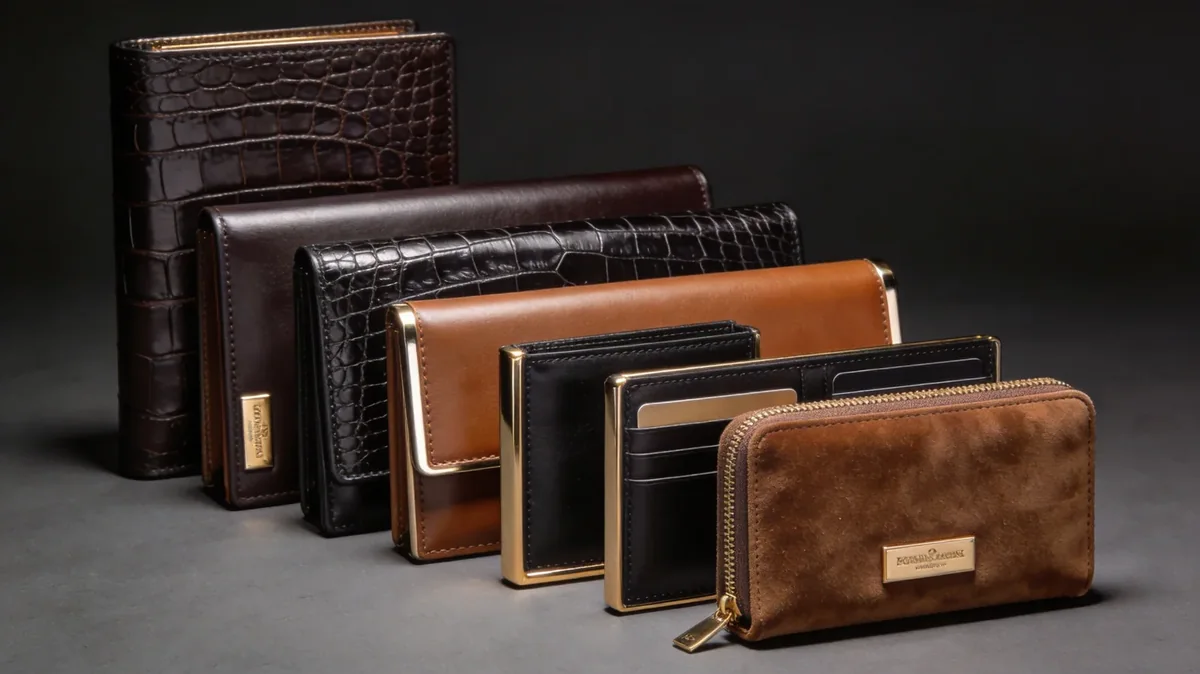
Eight to twelve pieces, one sealed reference, one lamp and a material card at every place. Not the whole collection and not a single hero. Too many pieces and the client cannot decide; too few and the day looks like a shop. The sealed reference sits at the end of the table, away from the pieces being handled, so there is always something unhandled to compare against.
The lamp matters more than the linen. A table lit at 2,700-3,000 K shows the hide at the shade that was approved at ΔE ≤ 1.0 under D65, and a boutique's overhead lighting, usually cooler, will argue with it. One lamp per table, positioned at 45° so the closure catches the light, is the whole of the lighting specification.
Question Three: Who Works the Room?
One person who knows the specification, not the most senior person available. The appointment holder has to answer four questions without looking anything up: where the hide came from and its lot, what the bag is made of in millimetres, how the closure was cast and plated, and what happens if the client needs a repair in five years. A person who has to check a script loses the room in the first five minutes, because the client is not comparing the answer against a leaflet, they are comparing it against the confidence of the person standing in front of them. If the house has only one person who can carry the specification, run one table rather than two.
- The tannery, the lot and the approved alternative, if the lot is discontinued.
- The substance, 1.2-1.4 mm structured or 0.9-1.1 mm slouched, and why.
- The stitch density at 8-9 SPI and the edge in three coats at 0.8 mm build.
- The closure: brass or zamak, plating at 0.15-0.3 µm, and the mould held for the house.
- The care covenant: what is refurbished, what is replaced and who answers.
Question Four: What Converts on the Day?
Three things convert, in order: the closure, the edge and the answer to a question the client did not expect to have answered. The closure because it is the signature and it is the only element they cannot buy elsewhere. The edge because three coats sanded between is the first thing a client feels when they run a thumb along the gusset. The answer because it is what makes the ticket defensible to whoever is not in the room.
| Moment | What happens | The number behind it | What breaks it |
|---|---|---|---|
| First five minutes | The client handles the bag unprompted | One card at their place | A bag behind glass or under a cover |
| Minutes 5-15 | Origin and material, spoken from memory | 20-30 words for act one | A holder reading from notes |
| Minutes 15-25 | The bench: stitch, edge, closure, alignment | Four figures, no more | A specification sheet recited aloud |
| Minutes 25-30 | The order and the deposit | 50% taken on the day | An invoice promised for later |
| After the event | Follow-up to every name | Within 72 hours | A week of silence, then a mailshot |
The last row is the one that decides whether a second trunk show happens. A follow-up inside 72 hours, addressed to the person and referencing what they handled, converts a proportion of the sixty percent who did not buy on the day. A mailshot a week later converts almost none of them and trains the list to ignore the house.
Question Five: What Happens After the Show?
The orders are counted by style and colourway against the 500 pcs per style and colourway commitment, and the shortfall is decided deliberately rather than absorbed. If pre-orders reach the commitment, the bulk is booked and lands in 35-50 days. If they reach 300 pcs in a colourway, the house has three honest options: hold the run until the next show, consolidate two colourways, or open the balance to the site.
The sixth line is the least costly and the most valuable. Written the same evening, while the room is still in the head, it becomes the brief for the next capsule. Written a week later it becomes a summary nobody reads, and the house finds itself making the same collection again with the same unanswered questions in it.
Question Six: What Does the Door Get Out of It?
The boutique hosting the show is risking its room, its Saturday and its client list, and it has to be paid in one of two ways. The usual arrangement is a share of the orders taken during the three days, agreed in writing before the invitations go out, or a flat fee for the room and the staff. What matters is that the arrangement is settled before the show rather than after it, because a negotiation conducted afterwards is a negotiation about money conducted in front of a client list.
The second thing the door gets, and the one usually forgotten, is the leftover names. Clients who wanted an appointment and could not get one, and clients who did not buy, are the most valuable output of the day, and they belong to whoever hosted it unless the agreement says otherwise. A house that leaves with forty-eight conversations and no list has paid for the room twice. Decide in writing who holds the names, what the house may send them afterwards and under what consent, and record it alongside the settlement terms.
Mistakes That Ruin a Trunk Show
- Treating it as a launch party, so the measure becomes attendance rather than orders.
- Booking 24 appointments a day, at which point the holder stops listening.
- Letting the boutique light the table, so the hide argues with the sealed reference.
- Putting the whole collection out, which produces no decision at all.
- Sending an invoice instead of taking 50% on the day.
- Waiting a week to follow up, then mailing the whole list the same message.
Sixteen appointments, not twenty-four. Sixteen is what one person who knows the specification can work properly. Beyond it the holder starts presenting instead of listening, and the conversion falls by more than the extra appointments add.
The Figures Behind a Working Trunk Show
- MOQ
- 500 pcs per style and colourway
- Event
- Three days, 30-minute slots, 16 appointments a day
- Table
- 8-12 pieces, one sealed reference, one lamp at 2,700-3,000 K
- Conversion
- 35-45% of appointments place an order
- Deposit
- 50% of the ticket taken on the day
- Bulk
- 35-50 days from the approved sample
- Re-order
- 28-35 days against a sealed reference
- Trim set
- About USD 4.80 per piece
- Incoterm
- FOB Xiamen
The first and sixth lines are the pair that matter. A show that clears 500 pcs per style and colourway books a bulk at 35-50 days, and a show that clears a colourway in a second season re-orders against the same sealed reference in 28-35 days. That is what turns a three-day event into a repeatable part of the calendar rather than an exception.
Design the show before you book the room
If you are planning a trunk show and want the table specified, send your silhouette shortlist and target quantity per colourway. Our team will return a presentation specification and a sampling calendar through our quotation desk.
How a trunk show programme is supported in practice
- Across 7 production lines running about 200,000 pcs per month, our validated partner factory Quanzhou Yingming Bags holds the sealed reference the table is built around and the lot record every card is printed from. Export experience since 2014, FOB Xiamen and an inspection at AQL 2.5 under ISO 2859-1 mean the piece a client ordered is the piece that arrives.
Frequently Asked Questions
What is a trunk show for a luxury handbag brand?
An order-taking event built around a sealed reference, designed rather than hosted. Three days, thirty-minute slots and sixteen appointments a day produce forty-eight conversations, of which 35-45% place an order. The measure is orders and deposits, not attendance, and every decision about the room, the table, the lighting and the number of appointments, follows from that single choice of what the day is for.
How many appointments should a trunk show have?
Sixteen a day in thirty-minute slots, forty-eight across three days. Thirty minutes covers the three acts, origin, material and bench, without forcing a decided client to wait. Beyond sixteen the appointment holder stops listening and starts presenting, and the conversion falls by more than the extra slots add.
How many pieces should be on a trunk show table?
Eight to twelve, plus one sealed reference kept away from the handling and one lamp at 2,700-3,000 K. The whole collection produces no decision, and a single hero makes the day look like a shop. A card at every place is what lets a client read while the holder speaks.
What conversion rate should a trunk show achieve?
35-45% of appointments placing an order, with 50% of the ticket taken as a deposit on the day. Forty-eight appointments at that rate is roughly seventeen to twenty-two orders, which is usually enough to book a run at 500 pcs per style and colourway with confidence.
Who should work a trunk show?
One person who knows the specification rather than the most senior person available. They must answer four things without looking anything up: the tannery and lot, the substance in millimetres, how the closure was cast and plated, and what happens if a client needs a repair in five years.
Why does the lighting on the table matter?
Because the hide was approved at ΔE ≤ 1.0 under D65 and a boutique's overhead lighting is usually cooler. One lamp per table at 2,700-3,000 K, positioned at 45° so the closure catches the light, keeps the table agreeing with the sealed reference.
Should a deposit be taken at a trunk show?
Yes, 50% of the ticket, in the room, while the client is holding the bag. A deposit taken at that moment converts at a far higher rate than an invoice sent that evening, and it funds the commitment before the bulk is booked at 35-50 days.
How soon should a brand follow up after a show?
Within 72 hours of the last appointment, addressed to the person and referencing what they handled. That window converts a proportion of the majority who did not buy on the day. A mailshot a week later converts almost none of them and teaches the list to ignore the house.
What happens if pre-orders fall short of the commitment?
Decide deliberately rather than absorbing it. At 300 pcs in a colourway there are three honest options: hold the run until the next show, consolidate two colourways into one, or open the balance to the site. The one thing not to do is book a run nobody has ordered.
How long after a trunk show do orders arrive?
35-50 days from the approved sample, which is the bulk window once pre-orders clear 500 pcs per style and colourway. A second season, ordered against the same sealed reference, lands in 28-35 days, which is short enough to run a show and a re-order inside one quarter.
What should be recorded after the event?
The orders by style and colourway, and the learnings: what was asked, what was handled longest and what was refused. Written the same evening it becomes the brief for the next capsule; written a week later it becomes a summary nobody reads. Forty-eight conversations produce more usable evidence than a season of reports, provided somebody writes it down before the room is cleared.
What is the biggest trunk show mistake?
Treating it as a launch party. The measure becomes attendance rather than orders, the room is designed for standing rather than sitting, and no deposit is taken. An order-taking event needs a table, a lamp, a card and a person, in that priority. Sixteen appointments in thirty-minute slots is what one person who knows the specification can work properly, and beyond that the holder becomes a presenter.
People Also Ask
How long should a trunk show run?
Three days, with a quiet first day for press and regulars. Three days is long enough for forty-eight appointments and short enough that one person can hold the specification in their head throughout.
How long is a trunk show appointment?
Thirty minutes, with ten between to reset the table. Ten minutes for the client to handle the bag, ten for origin and material, ten for the bench, and the order at the end.
Do trunk shows work for a young brand?
Yes, particularly in someone else's boutique. The door supplies the room and the clients, the house supplies the object, the cards and one person who knows the specification, and the deposit funds the run.
What should be on the table besides the bags?
A material card at every place, one sealed reference away from the handling, one lamp at 2,700-3,000 K and a printed care covenant. Nothing else, because everything else competes for attention.
Should prices be shown at a trunk show?
Yes, one figure per piece on the card. A client who has to ask the price in front of others has been put in an awkward position, and at this ticket that discomfort ends the sale more often than the number itself.
Sources and further reading
Every figure on this page is either our own programme data or attributed below. Open the originals before you write them into a specification.
- National Retail FederationNational Retail Federation Retail research on in-store events, appointment selling and the conversion rates behind them.
- ISO — International StandardsInternational Organization for Standardization Publisher of ISO 2859-1 sampling procedures and ISO 105 colour fastness methods behind an approved shade.
- Leather Working GroupLeather Working Group Tannery audit protocol behind the lot record printed on every card on the trunk show table.
- Federal Trade CommissionFederal Trade Commission Guidance on advertising claims and on deposits, refunds and cancellation terms at selling events.