How to Price a Luxury Handbag Brand for Retail: Three Methods Compared, the Landed Cost Sheet and the Multipliers Behind the Ticket
Price a luxury handbag for retail from the construction outward, not from the ticket inward. The three workable methods are cost-plus at 4.6-5.0× landed cost, position-led pricing set against the two houses you intend to sit beside, and comparable-led pricing read off the shelf. The landed cost sheet underneath all three splits roughly into hide at 28-34%, hardware and trim at 10-14%, bench time at 24-30%, freight and duty at 8-12% and presentation at 4-6%. A trim set of zip, feet and plated hardware sits at about USD 4.80 per piece. Houses that set the ticket first then squeeze the specification to fit it lose the archive.
The Pricing Answer in One Sentence
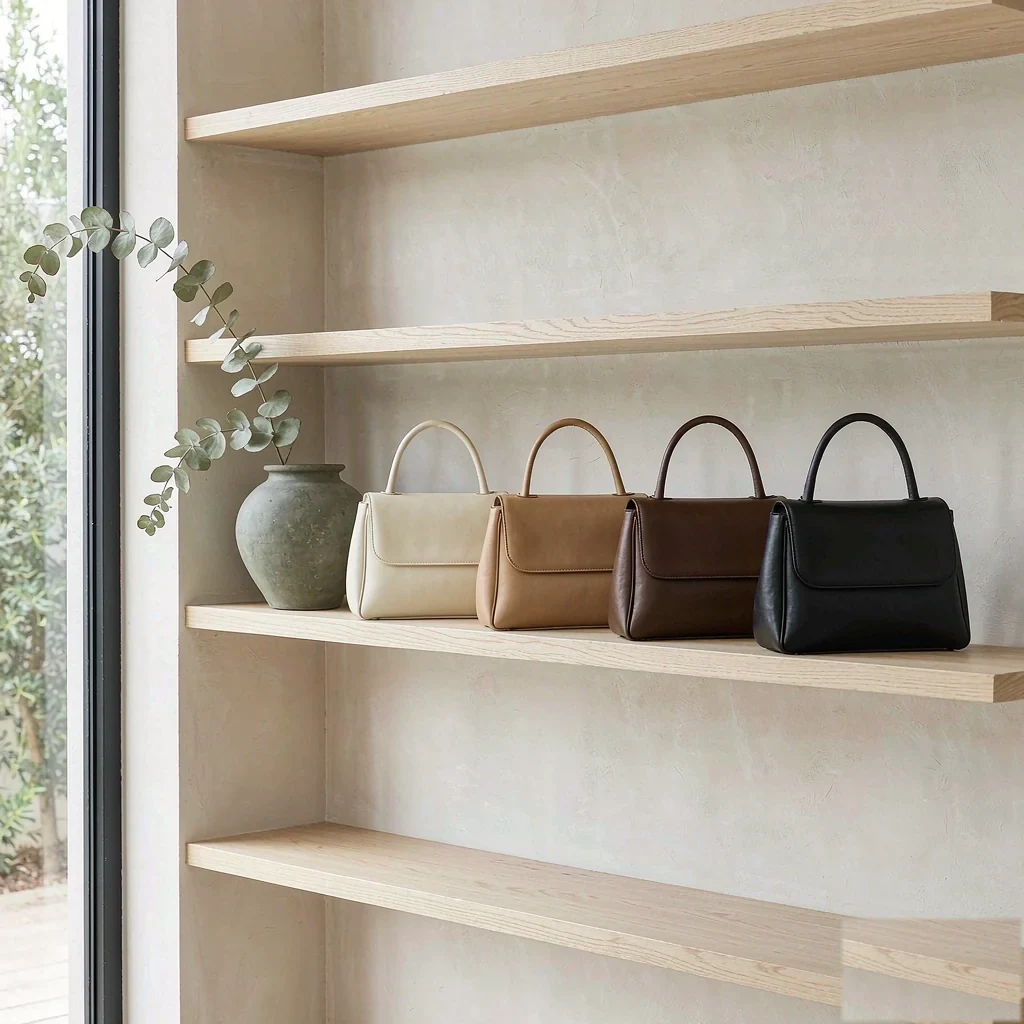
A luxury handbag ticket is the landed cost of the unit multiplied by 4.6-5.0, then tested against the two houses you intend to sit beside on a shelf. That is the whole method. Everything else in pricing is a defence of it: protecting the multiplier from being reduced later, and protecting the landed cost from being quietly raised by a specification that was never written down.
The order matters because the two directions are not symmetrical. Price outward and the bag is whatever the construction costs, with the margin declared afterwards. Price inward and the construction is squeezed until it fits a number a founder picked in a meeting, which produces a thinner lining, a stock clasp and a one-coat edge. The compromise is visible in the hand within seconds.
The Three Methods, Compared
Cost-plus
Landed cost multiplied by 4.6-5.0. Honest and repeatable; blind to what the shelf will bear.
Position-led
The ticket set by the two houses you intend to sit beside, then the construction specified to be worthy of it.
Comparable-led
The ticket read off what is already on the shelf at your tier, adjusted for your silhouette and material.
No house uses one method alone. Cost-plus sets the floor, because it tells you what you cannot go below; position-led sets the ceiling, because it tells you what the market will accept from a house with your story; comparable-led tells you where the shelf already is, which is usually somewhere between the two. The pricing decision is which of the three you let win a disagreement.
Method One: Cost-Plus and Its Floor
Cost-plus is the only method that cannot be argued with, because every number in it comes from an invoice. Add the hide, the hardware and trim, the bench time, the freight and duty and the presentation, and you have the landed cost of one unit. Multiply by 4.6-5.0 and you have the entry ticket. The method's weakness is that it says nothing about whether anyone will pay it.
- Hide
- 28-34% of landed cost, full grain, priced by lot and by grade
- Hardware and trim
- 10-14% of landed cost; the trim set about USD 4.80 per piece
- Bench time
- 24-30% of landed cost; the part a client can feel
- Freight and duty
- 8-12% of landed cost under FOB Xiamen terms
- Presentation
- 4-6% of landed cost: carton, dust bag, material card
- Multiplier
- 4.6-5.0× landed cost for the entry ticket
- Capsule size
- 6-8 SKUs, with 60-65% of units at the entry ticket
The trim line is the one founders misread. A #5 metal zip, four base feet and a plated trim set come to about USD 4.80 per piece, which looks small next to the hide and the bench time, and is. That is the point: the parts are not the value. A house that publishes the trim figure is telling the client where the money actually went.
Method Two: Position-Led and Its Ceiling
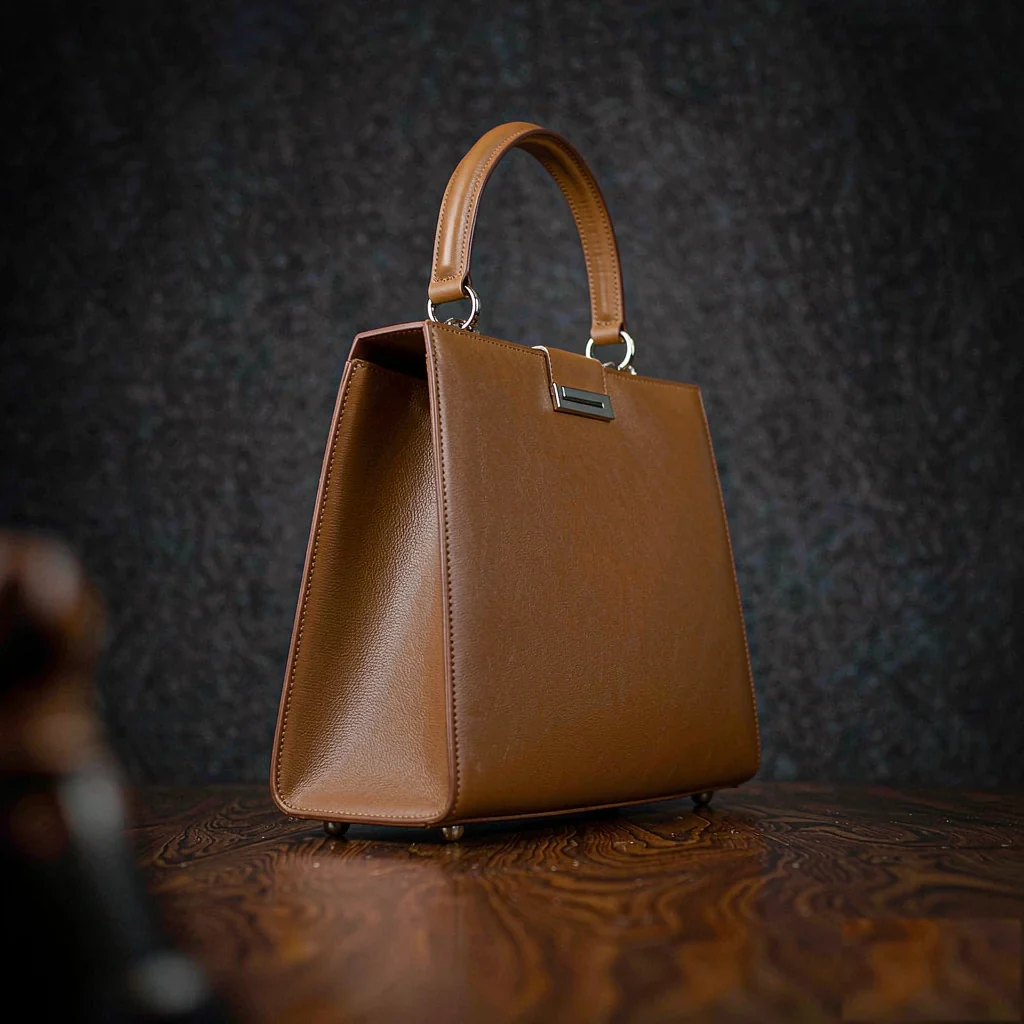
Position-led pricing starts with a sentence rather than a spreadsheet. Decide which two houses you intend to be shelved beside, then set your ticket inside the band they occupy and justify it with the construction. This method produces the strongest tickets, because the justification is the object: the tannery, the substance, the stitch density, the closure alloy and the bench time.
Its weakness is discipline. A position-led ticket can be set at a number the construction cannot honour, and the house then has two bad options: raise the specification to meet the ticket, which costs the margin, or leave the specification alone and sell a bag that does not deserve the number. The second is how a house becomes a permanent promotion, one season at a time.
Method Three: Comparable-Led and Its Trap
Comparable-led pricing reads the shelf: what the three bags nearest your silhouette are marked at, in the four doors you want to be in. It is the fastest method and the most accurate about today. Its trap is that it prices you against the product rather than against the position, so a house using it alone ends up permanently one notch below whichever competitor it happens to be standing near.
The Three Methods, Item by Item
| Line item | Cost-plus | Position-led | Comparable-led |
|---|---|---|---|
| What sets the ticket | The invoice, multiplied by 4.6-5.0 | The two houses you intend to sit beside | The three bags nearest yours on the shelf |
| What it protects | The floor; you cannot sell below it | The ceiling; the market will accept it | Today's sale; it matches what is there |
| What it ignores | Whether the shelf will bear the number | What the construction actually costs | Where you will be in three seasons |
| Failure mode | A defensible ticket nobody pays | A ticket the object cannot honour | Permanent drift one notch below |
| Best used for | Setting the entry ticket on a first capsule | Setting the top of the ladder | Sanity-checking a season before it ships |
| House that suits it | A launch capsule with a real specification | A house with a recognition asset | A house entering a crowded tier |
The recommendation that follows from the matrix is unglamorous. Use cost-plus to set the entry ticket, because it is the only number with an invoice behind it. Use position-led to set the top of the ladder, because that is where the margin lives. Use comparable-led once, before the season ships, as a sanity check rather than as a source.
Where the Construction Sets the Floor
The landed cost is decided on the specification sheet, months before anyone argues about the ticket. A body at 1.2-1.4 mm in full-grain calfskin costs differently from one at 0.9-1.1 mm; a custom-cast closure costs differently from a stock fitting, and carries a tooling line the stock fitting does not. The controls below are what keep the landed cost from drifting between the sample and the bulk.
Every one of those is a cost decision as well as a quality decision. Moving from 8-9 stitches per inch to 6-7 saves bench time and lowers the ticket; it also removes the one figure a client can count on the bag. Pricing and construction are the same conversation held at different points in the calendar, and the houses that do well hold it once, in writing.
Building the Ladder Above the Entry Ticket
A capsule needs a ladder, not a single ticket. The usual shape is three rungs: 60-65% of units at the entry ticket, 25-30% one rung above it and 8-12% at the top, where an exotic skin, a hand-stitched handle or a numbered interior plate sits. The top rung is not there to sell in volume; it is there to make the entry ticket look reasonable beside it.
The ladder also protects the re-order. A capsule priced on one rung has nowhere to go when the hide lot rises, so the house either absorbs the increase or raises the ticket visibly. A capsule with a ladder can move the mix upward quietly, shipping more of the upper rung in the second drop and letting the entry ticket stand for longer.
Raising the Ticket Without Breaking the Archive
Raise the ticket rarely and by a stated amount: one increase of 5-8% every 12-18 months, applied to new drops rather than to stock already on the shelf. Clients accept a rise they can see a reason for, particularly when the reason is a tannery lot that cost more and is named on the material card. What they do not accept is a rise followed by a sale, which teaches them to wait.

The Margin After Everything
The multiplier is not the margin. After the retail cut, a boutique door working to a 2.5× markup over the price charged to it leaves the house around 45-50% of the ticket; a sale on the house's own site retains 68-72% after carriage, presentation and payment fees. Both then absorb 2-4% returns through a door and 6-9% online, plus the cost of the sample cycle and the tooling.
Defend the landed cost, not the ticket. A specification written once and held against a sealed reference keeps the cost predictable across three seasons, which is what makes the multiplier credible. A ticket defended while the specification drifts is a number with nothing under it.
Mistakes in Pricing a First Capsule
- Setting the ticket before the construction, then squeezing the lining and the closure to fit a number nobody defended.
- Pricing by comparable alone, which places the house permanently one notch below whoever it happens to stand near.
- Using a single rung, so the first rise in hide lot has nowhere to go but the entry ticket.
- Absorbing every cost increase until the margin is gone, then raising the ticket by 20% in one step.
- Raising the ticket and following it with a sale, which trains clients to wait for the reduction.
- Forgetting the sample cycle and the tooling in the cost sheet, then discovering them after the ticket is published.
- Pricing the whole capsule at the top rung because the founder only wants to make the best bag.
The last one deserves a note. A house that prices every SKU at the top rung has not built a ladder; it has built a wall. The entry ticket is what makes the archive possible, because it is the unit a client buys first, and the one they replace two seasons later with a piece from the upper rung.
The Figures to Fix Before the Ticket Is Published
- MOQ
- 500 pcs per style and colourway
- Sampling
- 6-10 working days, 12-15 for frame or exotic work
- Bulk
- 35-50 days from the approved sample
- Re-order
- 28-35 days against a sealed reference
- Trim set
- About USD 4.80 per piece
- Multiplier
- 4.6-5.0× landed cost at the entry rung
- Price rise
- 5-8% every 12-18 months, on new drops only
- Inspection
- AQL 2.5 under ISO 2859-1, report held with the cost sheet
- Incoterm
- FOB Xiamen
Two of those decide whether a pricing model survives. The 4.6-5.0× multiplier only holds if the landed cost is stable, which is what the sealed reference delivers; and the 28-35 day re-order is what lets a house move its mix up the ladder inside a season rather than waiting for the next one. Pricing is a calendar discipline as much as an arithmetic one.
Build the ticket from the cost sheet, not the other way round
If you are setting prices for a first capsule, send your silhouette shortlist, target materials and quantity per colourway. Our team will return a landed cost sheet and a sampling calendar through our quotation desk.
How a pricing model is supported in practice
- Across 7 production lines running about 200,000 pcs per month, our validated partner factory Quanzhou Yingming Bags holds a capsule to one sealed reference, so the landed cost of the second drop matches the first. Export experience since 2014, FOB Xiamen and a final inspection at AQL 2.5 under ISO 2859-1 are what make a 4.6-5.0× multiplier defensible three seasons later.
Frequently Asked Questions
How do you price a luxury handbag for retail?
From the construction outward. Build a landed cost sheet, hide, hardware and trim, bench time, freight and duty, presentation, then multiply by 4.6-5.0 for the entry ticket and test the result against the two houses you intend to sit beside. Pricing inward, from a ticket a founder picked, squeezes the specification until the compromise is visible in the hand.
What multiplier should a luxury handbag brand use?
4.6-5.0× landed cost for the entry rung of a capsule. The band is wide because presentation and duty differ by market, and because a custom-cast closure carries a tooling line a stock fitting does not. Below 4.6 the house cannot absorb a 6-9% return rate and the sample cycle on the next drop.
What are the three pricing methods for a bag brand?
Cost-plus, position-led and comparable-led. Cost-plus sets the floor from an invoice, position-led sets the ceiling from the two houses you intend to stand beside, and comparable-led reads what is already on the shelf. Use the first for the entry ticket, the second for the top of the ladder, and the third once as a sanity check.
How much of the cost is the leather?
Around 28-34% of landed cost for a full-grain hide priced by lot and by grade. That share rises with an exotic skin and falls with a slouched body at 0.9-1.1 mm. The hide is the largest single line and the one most exposed to a tannery discontinuing a finish, which is why an approved alternative is named before the first drop.
How often should a luxury brand raise its prices?
Once every 12-18 months, by 5-8%, applied to new drops rather than to stock already on a shelf. A rise accompanied by a reason, a named tannery lot that cost more, is accepted. A rise followed by a sale is not, because it teaches the client to wait for the reduction.
Should a first capsule have one price or a ladder?
A ladder three rungs deep: 60-65% of units at the entry ticket, 25-30% one rung up and 8-12% at the top. The top rung is not there to sell in volume; it makes the entry ticket look reasonable beside it and gives the house somewhere to move when a hide lot rises.
What is the difference between price and margin?
The multiplier sets the ticket; the margin is what remains after everyone else is paid. A boutique door working to a 2.5× markup over the price charged to it leaves the house around 45-50%, while a sale on the house's own site retains 68-72% after carriage, presentation and payment fees.
How does the construction change the price?
Every specification line is a cost line. A body at 1.2-1.4 mm costs more than one at 0.9-1.1 mm, a custom-cast closure carries tooling a stock fitting does not, and dropping from 8-9 stitches per inch to 6-7 saves bench time while removing the one figure a client can count.
What trim costs should a brand expect?
A #5 metal zip, four base feet and a plated trim set come to about USD 4.80 per piece, roughly 10-14% of landed cost. Publishing that figure is disarming: it shows the client that the money went into the hide and the bench time rather than into parts.
Is cost-plus pricing enough on its own?
No. It sets a floor that cannot be argued with, but it says nothing about whether the shelf will bear the number. It needs the position-led ceiling to keep the ticket credible and the comparable-led read to keep it sane, and it needs a sealed reference to keep the cost itself stable.
How does a brand protect its price in a re-order?
With one sealed reference and a tolerance ledger. The second drop then matches the first, so the landed cost does not move and the ticket can stand. Without it, each re-order is a fresh negotiation and the price is defended drop by drop, which is how an archive becomes a sequence of compromises.
What is the biggest pricing mistake a new house makes?
Setting the ticket before deciding the construction. The specification is then squeezed to fit a number nobody can defend, and the compromise shows up as a thinner lining, a stock clasp or a one-coat edge. Decide what the bag is made of first, then let the construction set the ticket.
People Also Ask
How much markup do luxury bag brands apply?
Commonly 4.6-5.0× landed cost at the entry rung, with the upper rungs of a ladder carrying more. The multiplier is defended by a stable landed cost, which is what a sealed reference and a tolerance ledger deliver across three seasons.
Why do handbag prices rise every year?
Hide lots, plating baths and bench time all move. A rise of 5-8% every 12-18 months, applied to new drops and explained with a named lot, is accepted; a rise followed by a sale is not.
Should a bag brand publish its cost breakdown?
Selectively. Publishing the trim set at about USD 4.80 per piece and the tannery lot builds trust, while publishing the multiplier does not. The client wants to know where the money went, not what the margin is.
How many price points should a capsule carry?
Three. A single rung leaves nowhere to go when costs rise, and a capsule with more than three becomes a price list rather than a collection. 60-65% of units should sit at the entry rung.
Does a custom closure justify a higher ticket?
It justifies it better than anything else, because it carries a tooling cost and cannot be bought by a competitor. A mould cut for the house and held against the brand is also the element clients recognise before they know the name.
Sources and further reading
Every figure on this page is either our own programme data or attributed below. Open the originals before you write them into a specification.
- Bain & CompanyBain & Company Publisher of the annual luxury goods study tracking price movement and demand across the personal leather goods sector.
- WWDWomen's Wear Daily Trade reporting on retail ticket levels and on price rises across the leather goods category.
- Leather Working GroupLeather Working Group Tannery audit protocol behind lot-level hide sourcing, which is the largest line in a landed cost sheet.
- ISO — International StandardsInternational Organization for Standardization Publisher of ISO 2859-1 sampling procedures and the ISO 105 colour fastness methods referenced in a specification held across drops.