Boutique vs Ecommerce for Luxury Handbag Brands: Two Checklists, Eleven Line Items and the Production Consequences of Each
The choice between boutique accounts and your own site is a cash and calendar decision, not a marketing one. A boutique shelf pays on 45-day settlement terms and expects 65% sell-through across a season; your own site pays at checkout but carries the cost of a page that loads in 2.5 seconds and a six-image gallery. Both are supplied from the same commitment: 500 pcs per style and colourway, sampling in 6-10 working days, bulk in 35-50 days. Most young houses should open one channel and add the second in year two, and the two checklists below decide which comes first.
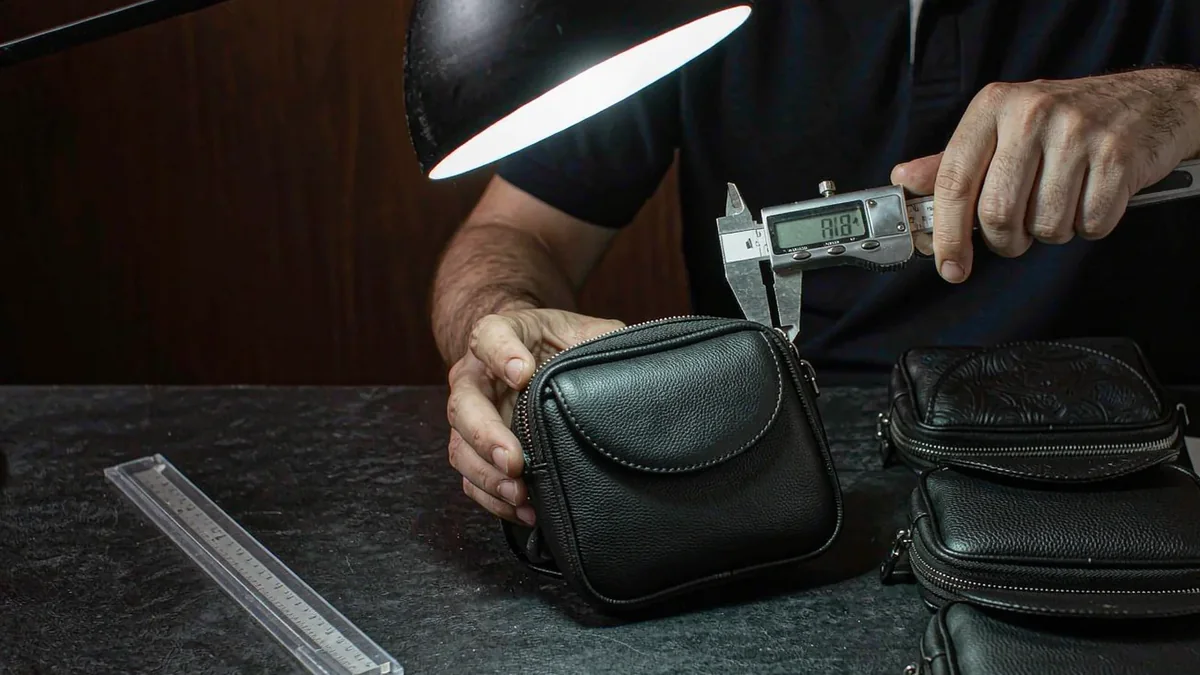
The Decision in One Sentence
Open the channel that can tell your story without you standing in the room. If your capsule depends on a client feeling the edge and hearing the tannery lot spoken aloud, the boutique appointment wins first; if your narrative is carried in photography and a construction record a reader can check on a page, your own site wins first. Houses that skip this question open both and tell half a story in each.
The second sentence is about cash. Boutique doors take a margin and settle in 45 days; your own site keeps the margin and pays for logistics, returns and content. Neither is more profitable in the abstract. The one that matches your working capital and your production calendar is the one that will still be open in year three.
What Each Channel Actually Demands
A boutique door demands
A shelf-ready presentation: 350-400 mm shelf pitch, lighting at 2,700-3,000 K, a material card per unit and an appointment holder who can recite the construction record.
Your own site demands
A page that carries the whole narrative: six images per SKU, a 24-frame spin, a Largest Contentful Paint under 2.5 seconds and a three-step checkout.
The asymmetry is easy to miss. A boutique supplies the room, the light and the person; the house supplies the object and the card. A site supplies nothing but the object and the page, so the page has to do the work of a room and a person. That is why the ecommerce checklist is longer, and why most first capsules are better served by a door.
Checklist Before You Commit to a Boutique
- Confirm the door sells bags at your ticket, not two tiers below it, by standing in the room on a Saturday.
- Agree the shelf pitch: 350-400 mm between shelves so a structured shape is not compressed by the one above.
- Agree the lighting: 2,700-3,000 K at 300-500 lux, because warm light flatters tan and cool light turns it grey.
- Supply a material card per unit, printed with the tannery, the lot, the substance and the approved alternative.
- Train one appointment holder on the three proofs a client can perform in hand before you ship the first drop.
- Fix the settlement term in writing at 45 days and the sell-through benchmark at 65% for a season.
- Decide the returns route for a faulty unit before one occurs, including who pays carriage.
Item three sounds cosmetic and is not. A tan calfskin body photographed and lit at 3,000 K will read as a different colour under the 4,000 K lighting many multi-brand doors install, and the client will compare it against the sealed reference you approved at ΔE ≤ 1.0 under D65. Agreeing the lamp is agreeing the shade.
Checklist Before You Commit to Your Own Site
- Six images per SKU: three-quarter, front, base, interior, closure detail and a scale shot with a recognisable object.
- A 24-frame spin of the closure, because a turn-lock is the one element still images never explain.
- Largest Contentful Paint under 2.5 seconds on mobile, measured on a throttled connection rather than on office wifi.
- A three-step checkout, with the size of the bag stated before the payment step, not after it.
- The construction record on the page in 120-160 words: tannery, lot, substance, stitch density, alloy, plating.
- A returns policy stating the window, the condition required and who pays carriage, on the product page itself.
- One named human answering the contact address within one working day, because the ticket justifies it.
Item four is where luxury sites lose sales they have already won. A client who has read the construction record, watched the closure spin and decided to buy will abandon at a form that asks nineteen fields. Three steps, a stated size and a stated delivery window convert; anything else trains the client to wait for a boutique appointment.
The Numbers Each Channel Has to Hit
- Sell-through, boutique
- 65% across a season before the door re-orders
- Settlement, boutique
- 45 days from delivery, fixed in writing
- Markup, boutique
- 2.4-2.6× the price charged to the door; the house retains 45-50%
- Margin, own site
- 68-72% after carriage, packaging and payment fees
- Page speed, own site
- Largest Contentful Paint under 2.5 seconds on mobile
- Returns
- 2-4% in a boutique; 6-9% online, largely for shade and size
- Images per SKU
- Six stills plus a 24-frame closure spin
- Shared commitment
- 500 pcs per style and colourway, 6-10 working days to sample, 35-50 days to bulk
Read those eight together and the trade is clear. The door costs roughly half the ticket but hands the story to a trained person and the light to a room you did not pay for. The site keeps the margin and the data but has to buy the room, the light and the person in the form of photography, page performance and a named respondent.
Boutique vs Own Site, Item by Item
| Line item | Boutique door | Own site |
|---|---|---|
| Reach | 800-1,200 appointment-grade visitors per door each month | 20,000-40,000 sessions each month at maturity |
| Cash timing | 45 days from delivery | At checkout |
| Unit economics | 2.4-2.6× markup; house retains 45-50% | House retains 68-72% |
| Who tells the story | A trained appointment holder in the room | The page, alone, at 2.5 seconds |
| Returns | 2-4%, handled in person | 6-9%, handled by carriage and policy |
| Photography | Three shots per SKU for the lookbook | Six stills plus a 24-frame spin per SKU |
| Packaging role | Often removed on the shelf | The arrival moment; it is photographed |
| Data | A sell-through report each season | Full funnel data daily, including the abandoned cart |
| Production effect | 500 pcs split across doors, re-ordered per door | 500 pcs held in one place, re-ordered centrally |
The ninth row is the one founders rarely price. A boutique programme splits the 500 pcs commitment across doors, which means five doors each taking 100 pcs and each re-ordering on its own calendar. A site holds the same 500 pcs in one place and re-orders centrally in 28-35 days against a sealed reference. The first is five relationships; the second is one inventory.
The Production Consequences of the Channel Choice
The channel decides what you ask the bench for. A boutique drop needs shelf-ready presentation: a material card per unit, a dust bag that survives being opened in the room, and an outer carton that arrives undamaged because a marked box is a returned box. A site drop needs the outer carton to be the arrival moment, which changes the board, the foil and the wrap.
What does not change between the channels is the tolerance set. A body at 1.2-1.4 mm, a stitch density at 8-9 SPI, an edge in three coats, a closure aligned within 0.5 mm of the flap axis and a shade deviation of ΔE ≤ 1.0 under D65 apply in both. The channel changes the presentation; it must never be allowed to change the object.
Where the Two Channels Meet
The strongest arrangement for a young house is not either channel but the hinge between them: a trunk show held in the boutique, with the site carrying the leftover appointments and the waitlist afterwards. The door supplies the room and the clients; the house supplies the object, the card and one person who can speak to the construction record. The site then takes the names nobody reached on the day.
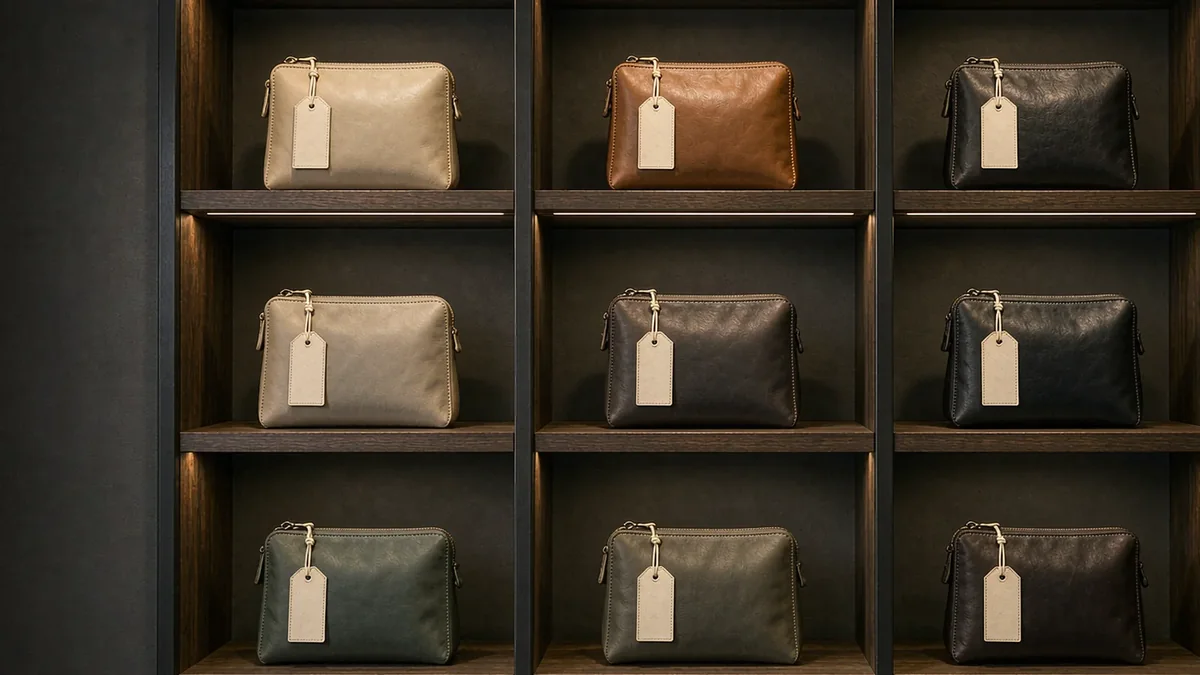
The hinge also solves the data problem. A boutique tells you what sold; a site tells you what was looked at, added and abandoned. Houses running both see the abandoned cart on the site and the sell-through report from the door, and those two together say more about the next capsule than either does alone.
Mistakes in Channel Choice
- Opening both in year one and telling half a story in each, because the narrative was written once and not twice.
- Choosing a door two tiers below your ticket, which trains clients to read your price as negotiable.
- Shipping to a shelf without agreeing the shelf pitch, so a structured shape arrives compressed.
- Letting the door install 4,000 K lighting, then arguing about a shade that was approved at ΔE ≤ 1.0 under D65.
- Building the site before the photography exists, and filling six slots with three images taken twice.
- Treating returns as an afterthought, then discovering the policy costs more than the margin it protects.
- Re-ordering the whole capsule centrally when the doors each wanted different colourways.
The seventh is the one that quietly ends boutique programmes. Doors sell different colourways, and a central re-order that ignores that sends every door the mix it did not ask for. Recording sell-through by door and by colourway, then re-ordering per door, is what keeps a shelf relationship alive into a third season.
Which Channel First, and When to Add the Second
Open with the door if your capsule depends on touch: a three-coat edge, a custom-cast turn-lock, a hide whose hand changes with the lot. Open with the site if your capsule is carried by a construction record a reader can verify and a silhouette that photographs at its true scale. Add the second in year two, once one channel is producing a sell-through report or a funnel you can read.
One sealed reference, presented two ways. The object does not change between the shelf and the page; only the presentation does. Houses that hold that rule can open a second channel without re-sampling, because the tolerance ledger and the material card already exist.
The Figures That Decide It
- MOQ
- 500 pcs per style and colourway, shared by both channels
- Sampling
- 6-10 working days, 12-15 for frame or exotic work
- Bulk
- 35-50 days from the approved sample
- Re-order
- 28-35 days against a sealed reference
- Presentation
- Material card per unit; outer carton built to arrive unmarked
- Trim set
- About USD 4.80 per piece
- Inspection
- AQL 2.5 under ISO 2859-1
- Incoterm
- FOB Xiamen
Two of those decide the timing of a channel launch. The 35-50 day bulk means a boutique door must be signed four months before the season it sells in, and the 28-35 day re-order is what lets a site restock a colourway while it is still being searched for. Both are only available to a house with a sealed reference on file.
Choose the channel with the calendar in front of you
If you are deciding between doors and your own site, send your capsule plan and target quantity per colourway. Our team will return a presentation specification and a sampling calendar for the channel you open first through our quotation desk.
How both channels are supplied in practice
- Across 7 production lines running about 200,000 pcs per month, our validated partner factory Quanzhou Yingming Bags builds one presentation specification and two presentation routes: shelf-ready cards and unmarked cartons for doors, arrival cartons with foil and wrap for a site. Export experience since 2014, FOB Xiamen and a final inspection at AQL 2.5 under ISO 2859-1 sit underneath both.
Frequently Asked Questions
Should a luxury handbag brand start in boutiques or online?
Start with the channel that can tell your story without you in the room. If the capsule depends on touch, a three-coat edge or a custom-cast turn-lock, the boutique appointment wins first. If the narrative is carried by a construction record a reader can verify, your own site wins first. Open one, then add the second in year two.
What margin do boutiques take on handbags?
Doors typically work to a 2.4-2.6× markup over the price charged to them, leaving the house with 45-50% of the ticket. In exchange the door supplies the room, the light, the appointment holder and the client list. Against that, a house selling directly retains 68-72% but pays for content, carriage, returns and payment fees.
How long do boutiques take to pay?
Commonly 45 days from delivery, and the term should be fixed in writing before the first drop. That settlement window is why a boutique programme needs working capital rather than only a good product, and why the production calendar has to be signed four months ahead of the season it sells in.
What sell-through should a boutique achieve?
Around 65% across a season before a door re-orders. Below that, the remaining stock ties up the commitment and the door loses interest in the shelf. Recording sell-through by door and by colourway is what makes the next re-order accurate rather than a central guess.
How fast should a luxury bag website load?
A Largest Contentful Paint under 2.5 seconds on mobile, measured on a throttled connection rather than on office wifi. Six images per SKU and a 24-frame closure spin have to fit inside that window, which is a compression discipline as much as a design one.
How many images does a handbag product page need?
Six stills: three-quarter, front, base, interior, closure detail and a scale shot beside a recognisable object, plus a 24-frame spin of the closure. The spin exists because a turn-lock is the one element still images never explain, and it is the asset most often missing from a first site.
What lighting should a boutique use for handbags?
2,700-3,000 K at 300-500 lux. Warm light flatters tan calfskin and cool light turns it grey, which matters commercially because the unit was approved at ΔE ≤ 1.0 under D65. Agreeing the lamp with the door is agreeing the shade the client will see.
Does the channel choice change the bag itself?
No. The tolerance set is identical: a body at 1.2-1.4 mm, 8-9 stitches per inch, an edge in three coats, a closure aligned within 0.5 mm and a shade deviation of ΔE ≤ 1.0 under D65. Only the presentation changes, carton, card and wrap, and it should never be allowed to change the object.
How does a trunk show fit between the two channels?
It is the hinge. The door supplies the room and the clients, the house supplies the object, the material card and one person who can speak to the construction record, and the site afterwards carries the names nobody reached on the day. It is the strongest arrangement for a young house.
What return rate should a luxury bag brand expect?
Around 2-4% through a boutique, handled in person, and 6-9% online, largely for shade and size. Publishing the construction record, the bag's true dimensions and a scale photograph on the product page is what keeps the online figure at the lower end of that band.
When should a brand add its second channel?
In year two, once the first is producing a document you can read: a sell-through report by door and colourway, or a funnel with an abandoned cart. Opening both in year one usually means telling half a story in each, because the narrative was written once and not twice.
What is the most common channel mistake for new houses?
Re-ordering centrally when each door wanted different colourways. A central re-order sends every door the mix it did not ask for and quietly ends the shelf relationship. Recording sell-through by door and re-ordering per door is what keeps a boutique programme alive into a third season.
People Also Ask
Is selling through boutiques better than selling direct?
Neither is better in the abstract. A door hands the story to a trained person and costs about half the ticket; a site keeps 68-72% but has to buy the room, the light and the person in photography and performance.
Can a new handbag brand survive on its own site?
Yes, if the construction record is published and the page loads in 2.5 seconds. The narrative has to be strong enough to be read alone, since nobody will be standing in the room to speak it.
How many doors should a first capsule open?
One to three, chosen for ticket alignment rather than reach. Five doors each taking 100 pcs creates five calendars, five re-orders and five sets of presentation problems for a house that has not yet sealed a second reference.
What does a boutique need from the brand before a drop?
A material card per unit, a dust bag that survives being opened in the room, an outer carton built to arrive unmarked and one trained appointment holder who can recite the construction record.
Why does shelf pitch matter for structured bags?
Below 350-400 mm between shelves a structured shape is compressed by the one above and loses the shoulder line it was cut for. Agreeing the pitch with the door protects the silhouette the client approved.
Sources and further reading
Every figure on this page is either our own programme data or attributed below. Open the originals before you write them into a specification.
- ISO — International StandardsInternational Organization for Standardization Publisher of ISO 2859-1 sampling procedures and the ISO 105 colour fastness methods used when a shade is approved for a shelf.
- National Retail FederationNational Retail Federation Retail operating benchmarks, including the sell-through and settlement practice referenced in boutique agreements.
- Federal Trade CommissionFederal Trade Commission Guidance on advertising claims and on return and refund disclosure for a brand's own site.
- Understanding REACHEuropean Chemicals Agency Annex XVII substance restrictions applying to finishes, edge coatings and plated hardware on goods sold in the EU.