The Role of Craft in Luxury Handbag Brand Story: One Buyer, One Bench, Six Claims You Can Prove
What role should craft play in a luxury handbag brand story? Only a provable one. A craft claim earns its place when it can be tied to a number a buyer can check: 4.5-6 hours of bench time on a structured top-handle, saddle stitching at 7 stitches per inch against a machine's 9, three edge coats cured 24 hours, and 60-70% A-grade yield from a full hide. Craft described without a figure is decoration; craft described with one is a specification.
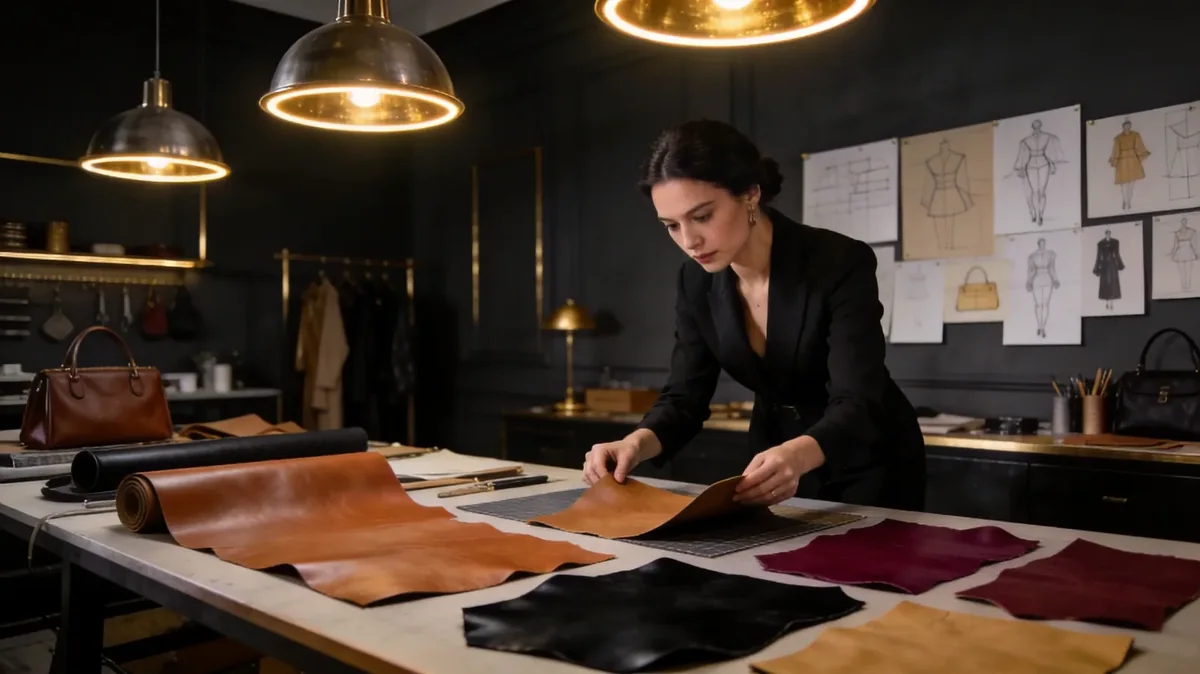
The Visit: A Buyer, a Bench and One Repeated Question
The buyer arrived on a Tuesday with a flight to catch at six and a showroom in Milan to report to on Thursday. She had a list of eleven houses and a rule she applied to all of them: she asked one question at every bench, and she asked it again in a different form twenty minutes later to see whether the answer moved. The question was always the same underneath — what, exactly, is done by hand here, and what is done by a machine.
The first house answered with adjectives. Everything was meticulous, every piece was hand-finished, and the heritage ran deep. The buyer wrote one word in her notebook after that visit: nothing. She had heard the same three sentences eleven times that season and she could not tell the eleven houses apart, which is the real failure of a craft story told without numbers.
The second house answered with figures. Four and a half to six hours at the bench per structured top-handle. Saddle stitching at 7 stitches per inch on the handle roots, machine at 9 on the long runs. Three edge coats at 0.12-0.15 mm each, sanded between coats, cured 24 hours. Sixty to seventy per cent A-grade yield from a full hide. She stayed ninety minutes instead of forty, photographed the bench, and ordered a sample set on the spot.
That ninety-minute visit is the whole argument for craft as a narrative device. It is not that one house made a better bag — she could not have proved that in an afternoon. It is that one house gave her something she could repeat to her own colleagues, and a buyer who can repeat your claim will sell your bag for you in a room you will never enter.
What She Was Really Testing
Buyers are not testing whether a house is sincere. They are testing whether a claim will survive contact with a customer who has a complaint in nine months, a journalist who asks for a source, and a stockist who wants to know why the bag costs what it costs. A craft story made of adjectives fails all three tests at once, because it cannot be defended, cited or repeated.
A craft story made of numbers passes them. It can be defended because the figure is on a specification sheet. It can be cited because the method behind it is published by a standards body. It can be repeated because a number is short enough to survive being passed along three times. The buyer's real question was never how much hand work there is; it was whether the house knows its own work well enough to describe it precisely.
Rule 1: Name the Hand Only Where a Hand Is Used
The most common dishonesty in a craft story is not invention; it is imprecision. A house writes hand-finished across a card when one of fourteen operations is performed by hand, and the claim is technically defensible and practically misleading. Buyers have learned to distrust the phrase precisely because it is almost always doing that work, and a single imprecise phrase is enough to make them doubt the other six claims.
The correction is an operation-level map: list the fourteen steps of the build and mark which are hand, which are machine, and which are both. Then write the story from the map rather than from the marketing instinct. On a structured top-handle the honest map is usually four hand operations out of fourteen, and four honest operations are worth more than fourteen claimed ones.
| Operation | Hand or machine | Number behind it | Safe claim |
|---|---|---|---|
| Hide selection and grading | Hand | 60-70% A-grade yield from a full hide | Every panel is cut from an A-grade selection |
| Panel cutting | Machine, guided by hand | 1.2-1.4 mm body, 0.8 mm reinforcement | Cut to a written tolerance, not a target |
| Skiving at the turn-edge | Hand | 0.6-0.8 mm over a 6-8 mm width | The fold is skived by hand so it closes without bulk |
| Handle root saddle stitch | Hand | 7 SPI, 0.55 mm waxed linen thread | Handle roots are saddle stitched at 7 stitches per inch |
| Long seam runs | Machine | 9 SPI, 0.45 mm bonded thread | Long runs are machine sewn at 9 stitches per inch |
| Edge finishing | Hand | 3 coats at 0.12-0.15 mm, sanded, 24 h cure | Three edge coats, sanded between, cured 24 hours |
| Hardware setting | Hand, with a press | 3.5 mm brass rivet, 6 mm cap | Rivets are set by hand at the bench |
| Final inspection | Hand | AQL 2.5 under ISO 2859-1 | Every lot is inspected to a published standard |
Rule 2: The Number Is the Story
Every craft claim should reduce to a sentence with a figure in it. Not hand-stitched with care but saddle stitched at 7 stitches per inch with 0.55 mm waxed linen. Not finished by hand but three edge coats at 0.12-0.15 mm, sanded between coats, cured 24 hours. The figure does the persuasive work because it implies measurement, and measurement implies that somebody was checking.
- Bench time, structured top-handle
- 4.5-6 hours per unit
- Bench time, soft hobo
- 2.5-3 hours per unit
- Saddle stitch, handle roots
- 7 SPI with 0.55 mm waxed linen thread
- Machine seam, long runs
- 9 SPI with 0.45 mm bonded thread
- Skive at the turn-edge
- 0.6-0.8 mm over a 6-8 mm width
- Edge finish
- 3 coats at 0.12-0.15 mm, sanded between coats, 24 h cure
- Burnishing sequence
- 600 grit then 1,200 grit, edge sealed after cure
- Hide yield at A grade
- 60-70% of a full hide; the balance goes to small leather goods and panels
- Hardware
- 3.5 mm brass rivet with a 6 mm cap; gold plating 0.15-0.3 µm
Two of these nine lines carry disproportionate weight in a buyer conversation. Bench time is the one that justifies price most directly, because a buyer can convert hours into a wage and compare it against the retail figure. Hide yield is the one that surprises people: the fact that roughly a third of a full hide will not make A-grade panels is the clearest explanation a house can give for why a bag costs what it costs.
Rule 3: Craft Has to Cost Something Visible
A craft claim that costs nothing is a craft claim a buyer will set aside. If hand saddle stitching appears in the story but not in the cost sheet, she will conclude it is decoration and treat the rest of the sheet with suspicion. The honest approach is to make the cost visible: a hand-saddle-stitched seam across the handle roots and gusset adds bench time that references at USD 4.80 per unit against a machine run, and saying so strengthens rather than weakens the price conversation.
Visibility also protects the house. When the cost of a hand operation is on the sheet, a later request to remove it is recognisable as a specification change rather than a quiet saving, and the house can say plainly what the customer will lose: 7 SPI waxed linen becomes 9 SPI bonded thread, and the seam that used to fail at the strap root in month eighteen now fails in month nine.
If a hand operation appears in your story but not in your cost sheet, a buyer will treat it as decoration and set aside everything else you say. Put the bench time on the sheet, referencing at USD 4.80 per unit against a machine run, and the price conversation gets easier rather than harder.
Rule 4: Prove It With a Standard, Not an Adjective
Craft becomes verifiable when it is tied to a published method. Four methods cover most of a handbag: ISO 11640 for colour fastness to rubbing, ISO 105-B02 for colour fastness to light, ISO 3376 for tensile strength and elongation of the leather, and ISO 11644 for finish adhesion. Each returns a number, and each can be re-run on a retained sample years later if a claim is challenged.
Two bench tests sit alongside them and are the ones worth showing a visitor. The loaded handle test, 12 kg held for 60 seconds with no more than 2 mm permanent elongation after a 30-minute recovery. And the closure cycle test, 5,000 open and close operations on a zip and 3,000 on a turn-lock, with no measurable change in pull force. Both take minutes, both are visible, and both turn a craft story into a demonstration.
Inspection closes the loop. AQL 2.5 under ISO 2859-1, with critical defects at zero tolerance and third-party inspection available on request, is what allows a house to say that the fourteenth bag matches the first. Craft that is true of one sample is a demonstration; craft that is true of 500 pcs per style and colourway is a claim.
Rule 5: The Story Must Survive the Second Bag
Craft narratives are usually written about the sample and read about the run. The buyer's second question, asked in a different form twenty minutes after the first, was whether the bag she photographed at the bench would match the bag delivered in eleven weeks. That question is answered by a retained golden sample, a written tolerance on every specification line, and an inspection level — not by a story about the bench.
The mechanism is dull and it works. One approved unit stays at the bench, one travels with the paperwork, every run is compared against the golden sample rather than against the previous run, and every specification line carries a range: 1.2-1.4 mm rather than 1.3 mm, 7 SPI rather than about 7. A house with those four habits can make a craft claim that survives contact with a second season.
Rule 6: Where Craft Copy Becomes Dishonest
Six habits turn a legitimate craft story into an indefensible one. None of them involves inventing anything, which is exactly why they are common: each one is a true statement used in a way that misleads. Buyers recognise all six, and one of them is usually enough to end the conversation.
- Hand-finished applied to a build where one operation is performed by hand.
- Heritage described in years when the house has no continuous record to point to.
- A named tannery or region used without a documented supply relationship.
- Single artisan implied for a piece that passes through fourteen stations.
- A number quoted without the method that produced it, so it cannot be checked.
- Silence about which operations are machine, which reads as concealment.
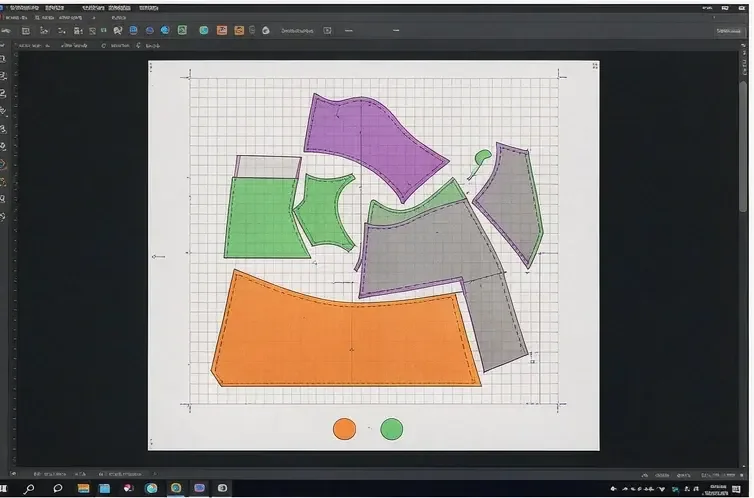
Turning the Bench Into Six Sentences
A craft story does not need to be long. Six sentences, each with a figure, will serve a card, a website, a buyer meeting and a press pitch without rewriting, and that consistency is itself part of the impression. Write them once, from the operation map, and use them everywhere for a season.
The selection sentence
Every panel is cut from an A-grade selection, which takes 60-70% of a full hide; the balance goes to smaller leather goods.
The bench sentence
A structured top-handle spends 4.5-6 hours at the bench, a soft hobo 2.5-3 hours, across fourteen operations.
The stitch sentence
Handle roots and gussets are saddle stitched by hand at 7 SPI with 0.55 mm waxed linen; long runs are machine sewn at 9 SPI.
The edge sentence
Three edge coats at 0.12-0.15 mm, sanded between coats and cured 24 hours, then burnished 600 to 1,200 grit.
The test sentence
Handles are loaded at 12 kg for 60 seconds; closures run 5,000 cycles on a zip and 3,000 on a turn-lock.
The consistency sentence
One retained golden sample per colourway, written tolerances on every line and inspection at AQL 2.5 under ISO 2859-1.
What the Buyer Took Away
She took away four lines she could repeat without notes: 4.5 to 6 hours at the bench, saddle stitch at 7 stitches per inch on the handle roots, three edge coats cured 24 hours, and inspection at AQL 2.5. Those four lines became the explanation she gave her showroom for why the bag sat at the price it did, and they are the reason the sample set became a first order eight weeks later.
None of them were advertising lines. All four were specification lines that happened to be interesting, which is the useful test for any craft claim: if the sentence would be equally at home on a technical sheet as on a card, it is probably worth saying. If it would look absurd on a technical sheet, it probably is.
The craft story test
- Write the operation map first: fourteen steps, marked hand or machine. Attach a figure to every claim — 4.5-6 h bench time, 7 SPI saddle stitch, 3 edge coats, 60-70% hide yield. Tie each figure to a published method: ISO 11640, ISO 105-B02, ISO 3376, ISO 11644. Put the bench cost on the sheet rather than only in the story. Retain one golden sample per colourway and inspect at AQL 2.5 under ISO 2859-1.
Writing Your Own Version
Start at the bench with a stopwatch and a notebook rather than at a desk with a thesaurus. Time one unit end to end, count the operations, mark which are hand, and write down every number the bench already produces because it has to: tolerance, temperature, coat count, cycle count, cure time. A house that does this for one style will find it has more craft story than it knew, and none of it needs an adjective.
Turn your build into six provable sentences
Send the silhouette, leather grade and hardware finish. Our team returns an operation map, a written specification with tolerances, a sampling plan at 6-10 working days and bulk at 35-50 days for 500 pcs per style and colourway, FOB Xiamen, inspection at AQL 2.5 under ISO 2859-1. Our validated partner factory Quanzhou Yingming Bags runs 7 production lines at about 200,000 pcs per month with export experience since 2014. Start at the quotation desk.
Frequently Asked Questions
What role should craft play in a luxury handbag brand story?
A provable one. Craft earns its place when each claim carries a figure a buyer can check: 4.5-6 hours of bench time, saddle stitching at 7 stitches per inch, three edge coats cured 24 hours and 60-70% A-grade yield from a full hide. Craft described without figures is decoration, and buyers set it aside.
How much of a luxury handbag is actually made by hand?
On a structured top-handle, roughly four of fourteen operations: hide selection and grading, skiving at the turn-edge, saddle stitching at the handle roots, and edge finishing. Cutting is machine-guided, long seam runs are machine sewn at 9 SPI, and hardware is set by hand with a press.
What is the difference between saddle stitching and machine stitching?
Saddle stitching runs two needles through the same hole in opposite directions at about 7 stitches per inch with 0.55 mm waxed linen, so a broken stitch does not unravel the seam. Machine stitching runs at 9 SPI with 0.45 mm bonded thread and is faster but fails progressively if one stitch breaks.
How long does it take to make one structured handbag?
Between 4.5 and 6 hours at the bench for a structured top-handle across fourteen operations, and 2.5 to 3 hours for a soft hobo with fewer panels and no reinforcement. Bench time is the figure that justifies price most directly, because a buyer can convert hours into a wage.
What does hide yield mean and why does it matter?
It is the share of a full hide that reaches A-grade panels, typically 60-70%. The balance goes to smaller leather goods and interior panels. It is the clearest explanation a house can give for price, because the customer pays for the whole hide while receiving only the select part.
How should a house describe an operation that is partly machine?
Say so. Machine-guided cutting with hand selection, or a machine seam at 9 SPI with hand saddle stitching at the stress points, are both credible claims. A blanket hand-finished over a partly machine build is the single fastest way to lose a buyer's trust in every other claim.
Which published methods verify a craft claim?
Four cover most of a handbag: ISO 11640 for colour fastness to rubbing, ISO 105-B02 for colour fastness to light, ISO 3376 for tensile strength and elongation, and ISO 11644 for finish adhesion. Add a 12 kg for 60 s handle test and a 5,000-cycle closure test.
How does a house keep a craft story true across a full run?
Retain one golden sample per colourway, write a tolerance rather than a target on every specification line, compare each run against the golden sample rather than the previous run, and inspect every lot at AQL 2.5 under ISO 2859-1 with critical defects at zero.
Should the cost of hand work appear in the price conversation?
Yes. A hand-saddle-stitched seam across handle roots and gussets adds bench time that references at USD 4.80 per unit against a machine run. Naming it makes the price defensible, and it turns any later removal of the operation into a visible specification change rather than a quiet saving.
How many sentences should a craft story be?
Six, each with a figure: the selection sentence at 60-70% hide yield, the bench sentence at 4.5-6 hours, the stitch sentence at 7 SPI, the edge sentence at three coats, the test sentence at 12 kg and 5,000 cycles, and the consistency sentence at AQL 2.5.
What makes craft copy dishonest rather than just imprecise?
Six habits: hand-finished applied where one operation is by hand; heritage described without a continuous record; a named tannery without a documented relationship; a single artisan implied across fourteen stations; a number quoted without its method; and silence about which operations are machine. None of the six involves inventing anything, which is exactly why they are common, and one is usually enough to end a buyer conversation.
How should a house handle hardware in a craft story?
Name the substrate, the plating thickness and the setting method: a 3.5 mm brass rivet with a 6 mm cap, gold plating at 0.15-0.3 µm, set by hand at the bench. Substrate and thickness are what determine whether the finish survives twelve months at contact points.
What is a turn-edge skive and why is it done by hand?
It is the thinning of the leather at a folded edge, taken down to 0.6-0.8 mm over a 6-8 mm width so the fold closes without bulk. It is done by hand because the required thickness varies across a single hide and a fixed machine setting will cut through in the thinner areas.
How does inspection support a craft claim?
Craft true of one sample is a demonstration; craft true of 500 pcs per style and colourway is a claim. Inspection at AQL 2.5 under ISO 2859-1, with critical defects at zero and third-party inspection available on request, is what lets a house say the hundredth bag matches the first.
People Also Ask
Do buyers actually care about craft details?
They care about repeatable details. A buyer who can repeat four figures to her showroom will sell your bag in a room you never enter; adjectives cannot be repeated and cannot be defended when a customer asks.
Is hand stitching always better than machine stitching?
Not always. Hand saddle stitching at 7 SPI resists unravelling at stress points; a machine run at 9 SPI is stronger per unit length on a long seam. Use each where it belongs.
Can a house claim heritage without a long history?
Only if it names what it actually has. Founding year, a continuous technique or a documented technique lineage is defensible; a vague depth of heritage with nothing behind it is not.
What is the shortest credible craft sentence?
Handle roots saddle stitched by hand at 7 stitches per inch with 0.55 mm waxed linen. One operation, one method, one figure, and it would look at home on a technical sheet.
Should the same craft story appear on the card and the website?
Yes, unchanged, for a full season. Consistency across the card, the site, the pitch and the care card is itself part of the impression a buyer forms about whether a house knows its own work.
Sources and further reading
Every figure on this page is either our own programme data or attributed below. Open the originals before you write them into a specification.
- ISO — International StandardsInternational Organization for Standardization Publisher of ISO 11640, ISO 105-B02, ISO 3376, ISO 11644 and ISO 2859-1, the methods behind verifiable craft claims.
- Leather Working GroupLeather Working Group Tannery audit programme referenced when a house documents hide provenance and grade in its craft narrative.
- Business of FashionBusiness of Fashion Trade reporting used to benchmark how houses talk about craft, provenance and price.
- WWDWWD Accessories trade coverage referenced for context on craft narratives and buyer behaviour in the sector.
- Sourcing JournalSourcing Journal Reporting on bench capacity, sampling rounds and lead times behind craft-led accessories lines.