Premium Leather Bag Matching: Six Questions From the Hide Store to the Cutting Table
How are hides matched to production on a premium leather bag? A delivery is sorted in four passes, by grade, temper band, shade band and usable area, then every visible panel of one unit is cut from a single hide. Shade within a unit is held to ΔE 1.0, across a lot to ΔE 2.0, and one calf hide yields 4.5-5.2 matched units on a medium structured body. Matching costs yield: 65-72% of purchased area rather than the 78-85% an unmatched layout reaches.
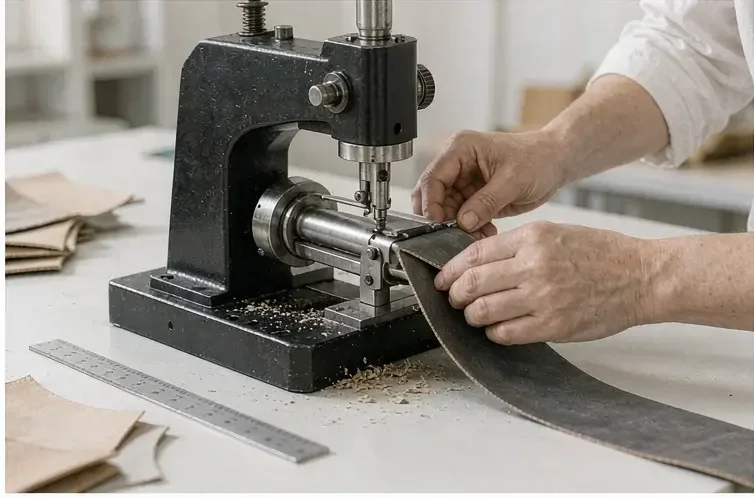
What Does Matching Actually Mean on a Hide?
Matching means that every visible panel of one unit comes from one hide, and that the panels are placed so grain direction and character run the same way across the body. It is not the same as colour matching: two hides from one dye lot can be the same colour and still not match.
The difference is grain character, which is the pattern of pores, scars and fibre density that varies across a hide and between hides. Across a large front panel, two hides in the same dye lot read differently from two metres away, and no amount of colour correction removes that.
So matching is a cutting discipline before it is a buying discipline. The buying decision is whether the delivery is graded and banded well enough for the cutting table to keep a unit inside one hide without wasting area.
How Many Sorts Does a Hide Need Before Cutting?
Four passes, in this order, and each one removes work from the next. Sorting once by grade is the common practice and it is not enough, because grade says nothing about temper or shade.
- Grade: usable area after defects, typically 85-90% at grade I and 55-65% at grade III.
- Temper band: three bands, sorted by bending a strip rather than by feel, so a body behaves consistently.
- Shade band: three bands measured by spectrophotometer, held to ΔE 1.0 within a band.
- Usable area: whether the hide can yield the panel sizes the pattern needs, before the pattern is placed.
The second pass is the one most often skipped and the one that produces inconsistent bodies. Two hides at the same substance and finish behave differently on the same pattern because of temper, and the difference shows as a body that stands up on one unit and slumps on the next.
Which Panels Have to Match, and Which Do Not?
Not every panel carries the same weight, and treating them equally is what makes matching expensive. Three tiers are enough: panels that must match, panels that should, and panels where it does not matter.
| Tier | Panels | Requirement | Why |
|---|---|---|---|
| Must match | Front and back body panels, flap, exterior pocket facing | One hide, same grain direction, ΔE 1.0 | Seen together and read as one surface |
| Should match | Gussets, base panel, handle facing | Same hide where possible; same band always | Adjacent to a must-match panel |
| Match irrelevant | Linings, internal facings, hidden reinforcements | Same band only | Not seen together with the exterior |
| Graded by use | Neck and belly sections | Used for gussets and internal parts, or avoided | Looser fibre structure than the prime area |
The fourth row is where yield is recovered without visible cost. The neck and belly have a looser fibre structure than the prime area of the hide, which makes them wrong for a body panel and right for a gusset or an internal part.
How Is a Unit Kept Inside One Hide?
By numbering. Pattern pieces are numbered in panel sequence, the hide is marked with that sequence before cutting, and the numbered pieces travel together in a bundle to the bench. A bundle that contains pieces from two hides is a unit that will not match.
- Number the pattern pieces in panel sequence, 1 through 8 on a medium structured body.
- Mark the hide with the sequence before the first cut, not after the pieces are off the table.
- Bundle the pieces per unit and keep the bundle intact through skiving and assembly.
- Record the hide reference against the unit range on the cutting record.
- Reject any bundle that mixes hides, at the bench rather than at final inspection.
The third item is where discipline usually breaks. Pieces separated after cutting to be skived in batches come back in a different order, and the assembler takes what is nearest rather than what belongs together.
Matching is achieved at the cutting table and lost in the twenty metres between the table and the bench. Bundle by unit, label the bundle, and reject a mixed bundle at the bench rather than discovering it at inspection.
What Does Matching Cost in Yield?
Matching costs area, and the cost is worth pricing before the hide is bought. A matched layout on a medium structured body converts 65-72% of purchased hide area into first-quality panels; an unmatched layout on the same pattern reaches 78-85%.
The gap is not waste in the ordinary sense. It is the area given up to keep every panel of a unit inside one hide, in one grain direction, away from 8-12 marked defects, and out of the neck and belly.
- Defect markers per hide
- 8-12, marked before the pattern is placed
- Matched units per calf hide
- 4.5-5.2 on a medium structured body
- Unmatched units per hide
- 6.0-6.8 on the same pattern
- Matched yield
- 65-72% of purchased hide area
- Unmatched yield
- 78-85% of purchased hide area
- Shade tolerance in a unit
- ΔE 1.0 or below, measured by spectrophotometer
- Shade tolerance across a lot
- ΔE 2.0, measured against the retained sample
- Temper bands
- Three, sorted by measurable deflection rather than by feel
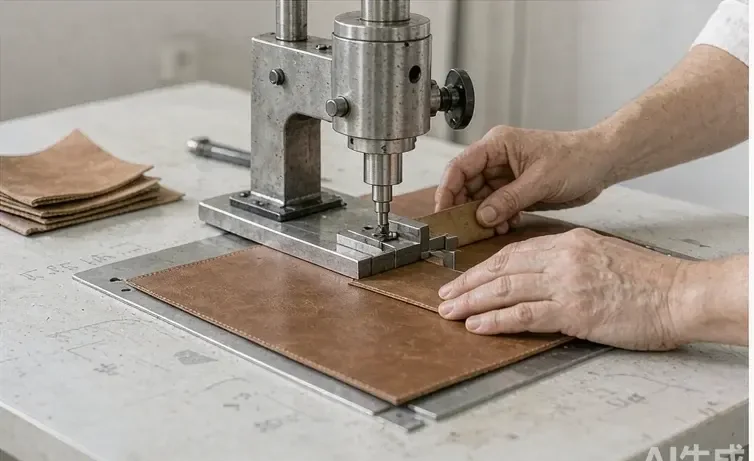
How Is the Match Repeated on a Re-Order?
A re-order matches the first run only if the first run was recorded. Three records do the work: the hide reference and band, the retained sample, and the shade figures measured against it at the time.
Without the retained sample, a re-order is matched by eye against a piece that has already aged, and leather ages differently in storage than it does in use. The retained sample is held in the dark for exactly that reason.
- Hold one finished body per lot, indexed to the lot reference and stored away from light.
- Record the shade band and the ΔE figures measured at approval, not the shade name.
- Reserve hides against the original lot reference where the tannery allows it.
- Re-measure the new delivery against the retained sample before cutting begins.
- Accept a small band shift in writing rather than discovering it on the shelf.
Where Does Matching Break Down in Production?
Matching breaks in four predictable places, and all four are process failures rather than material failures. Knowing them is most of the control, because each has a check that takes seconds.
Batch skiving
Pieces from several units are skived together and return out of order. The check is a bundle label that survives the operation, and a bench rule that a mixed bundle goes back rather than forward.
Replacement panels
A damaged panel is replaced from whatever hide is nearest. The check is a small reserved stock of panels cut from the same hide reference, held against the lot for exactly this purpose.
Top-up hides
A lot runs short and a second delivery is opened mid-run. The check is a band comparison before the new hide enters production, and a written acceptance if the band differs.
Final assembly substitutions
A unit is completed from two bundles to hit a daily target. The check is a unit count reconciled against bundle count at the end of each day.
The second of these is the most damaging and the least visible. A replacement panel from a different hide looks correct at the bench and is wrong on the shelf, and the customer standing in a store is looking at exactly that panel.
How Does Matching Interact With Skiving and Assembly?
Skiving and assembly are where a matched layout is either honoured or quietly undone. A gusset skived to 0.7-0.8 mm comes back from the machine as a loose piece, and unless it carries the unit reference it goes into the nearest bundle rather than its own.
The control is physical rather than procedural. Every piece leaving the cutting table carries the unit reference on a tag or on the reverse in pencil, and the tag survives skiving, edge preparation and assembly. A reference written on a piece that is later skived away is a reference that disappears exactly when it is needed.
- Tag every piece with the unit reference on the reverse, in pencil, at the cutting table.
- Skive in unit bundles rather than in batches across units, even at a cost in machine time.
- Return skived pieces to their own bundle, and check the bundle count before it moves on.
- Edge paint and prepare within the bundle, so pieces are never loose on the bench.
- Reconcile bundle count against unit count at the end of each working day.
The second of these costs machine time and is worth it. Batch skiving is faster and it is the single most common reason a matched unit ends up assembled from two hides, because the pieces come back in the order the machine happened to release them.
What Goes on the Cutting Record?
A cutting record that supports matching is six fields long. It is not an administrative artefact; it is the document that makes a re-order possible and a claim answerable.
Six fields on a cutting record
- Hide reference, traceable to the tannery and the delivery date.
- Grade, temper band and shade band for that hide.
- Unit range cut from the hide, with the panel sequence used.
- Defect count marked on the hide before the pattern was placed.
- Yield achieved, expressed against purchased hide area.
- Reserved panels held back against the lot for replacement use.
The sixth field is the quiet one. Reserving two or three panels per ten units costs yield at cutting and saves a replacement from the wrong hide later, which is the single most expensive matching failure to put right.
Our programme works to MOQ 500 pcs per style and colourway, with sampling at 6-10 working days and 12-15 for a complex construction, bulk at 35-50 days on FOB Xiamen terms, inspected to AQL 2.5 under ISO 2859-1. It runs across 7 production lines with about 200,000 pcs per month of capacity and export experience since 2014, delivered through our validated partner factory Quanzhou Yingming Bags, an SGS-validated site. The material framework sits under luxury materials and the bench detail under craftsmanship.
Send the pattern and we will quote the matched yield
Tell us the silhouette, the panel count and the leather you have in mind. We will return the matched yield, the units per hide, the banding plan and a sampling calendar, within two working days. Request a quote.
Frequently Asked Questions
Is matching the same as colour matching?
No. Matching means every visible panel of a unit comes from one hide with grain running the same way. Two hides in one dye lot can be the same colour and still fail to match, because grain character, pore structure and fibre density vary between hides and read across a large front panel.
How many sorting passes does a delivery need?
Four: grade, temper band, shade band and usable area against the pattern. Sorting by grade alone is the common practice and it is not enough, since grade says nothing about how the hide bends or how its shade sits against the next one. Write the figure into the specification, since an unrecorded figure cannot be enforced at intake.
Why does temper need its own pass?
Because two hides of identical substance and finish behave differently on the same pattern, and temper is why. Sort into three bands by bending a strip rather than by feel, and the bodies in a lot will stand or slump consistently instead of varying unit to unit.
What shade tolerance should a specification set?
ΔE 1.0 or below within a unit and ΔE 2.0 across a lot, measured by spectrophotometer and recorded against the retained sample. A shade name is a description, and a description cannot resolve a disagreement about whether the second delivery matched the first.
Which panels must come from the same hide?
The front and back body panels, the flap and any exterior pocket facing, because they are seen together and read as one surface. Gussets and the base should match where possible. Linings, internal facings and hidden reinforcements need only sit in the same band. Confirm it at sampling, which runs 6-10 working days, or 12-15 for a complex construction.
How many units does one calf hide yield?
Between 4.5 and 5.2 on a medium structured body when panels are matched, against 6.0-6.8 when the same pattern is cut for maximum economy. The difference is area given up to keep a unit inside one hide and away from marked defects.
What yield should a matched layout reach?
Around 65-72% of purchased hide area into first-quality panels. That is a good result rather than a poor one, because a hide is an irregular outline with 8-12 marked defects and a looser neck and belly before a single pattern piece is placed. Check it per lot at intake, inspected to AQL 2.5 under ISO 2859-1.
How do you stop a unit being assembled from two hides?
Number the pattern pieces in panel sequence, bundle them by unit, and keep the bundle intact through skiving. The failure happens when pieces from several units are skived in batches and return to the bench out of order, so a mixed bundle is rejected at the bench.
What happens when a panel is damaged at assembly?
It is replaced from a reserved panel cut from the same hide reference and held against the lot. Reserving two or three panels per ten units costs yield at cutting and prevents the costliest matching failure, which is a replacement from whatever hide is nearest.
How is a re-order matched to the first lot?
Against a retained sample stored away from light, plus the shade band and ΔE figures recorded at approval. Leather ages differently in storage than in use, so matching by eye against a piece that has already been carried produces a different result every time. Our programme works to MOQ 500 pcs per style and colourway, with bulk at 35-50 days.
What is the neck and belly of a hide used for?
Gussets and internal parts, or avoided entirely. The fibre structure there is looser than in the prime area, which makes it wrong for a body panel that has to hold shape and right for a piece that has to fold or that nobody sees. Keep the result with the retained sample so a re-order can be checked against it.
What belongs on a cutting record?
Six fields: hide reference, grade and bands, unit range with panel sequence, defect count marked before cutting, yield achieved against purchased area, and the panels reserved for replacement. Those six make a re-order possible and a later claim answerable. Agree the detail before the order is placed and hold it across the life of the style.
People Also Ask
Why do two panels on the same bag look different?
They came from different hides, or from the same hide with the grain running in different directions. Matching keeps every visible panel of a unit inside one hide with grain aligned, which is why the panels read as a single surface.
How is grain direction decided?
By the pattern, before cutting. Grain direction is marked on each pattern piece and the layout is placed on the hide so all pieces of one unit run the same way, which also affects how the leather stretches at a fold.
Does matching increase the cost of a bag?
Yes, through yield. A matched layout converts 65-72% of purchased hide area into panels against 78-85% unmatched, so more hide is bought for the same unit count. The alternative is visible on the front panel.
Can a hide be matched across two units?
Rarely, and only on small bodies. One hide yields 4.5-5.2 matched units on a medium structured body, so matching operates within a unit rather than across the lot, with shade bands keeping units consistent with each other.
How should retained samples be stored?
Away from light, indexed to the lot reference and held for the life of the style. Light changes leather, and a sample left on a shelf becomes a reference that no longer describes what was approved.
Sources and further reading
Every figure on this page is either our own programme data or attributed below. Open the originals before you write them into a specification.
- ISO — International Organization for StandardizationISO Publisher of ISO 2589 on leather thickness, ISO 3376 on tensile strength and ISO 2859-1 on sampling procedures.
- Leather Working GroupLeather Working Group Tannery audit protocol covering traceability and the hide records that make lot references resolvable.
- International Council of TannersICT / Leather Panel Industry body publishing technical reference on hide grading, defect classification and cutting yield.
- ECHA — European Chemicals AgencyEuropean Chemicals Agency Administrator of REACH, including the Annex XVII restrictions that apply to substances in leather articles.
- Sourcing JournalSourcing Journal Reporting on hide availability, grading practice and the matching expectations placed on luxury materials.