Luxury Leather Handbag Lining Materials: How to Choose What Goes Inside
Which lining material belongs inside a luxury leather handbag? Choose in a fixed order: abrasion duty first, then substance, then colour fastness to ISO 11640, then hand feel, and only then cost. A structured calfskin body takes pig suede at 0.6-0.8 mm; a soft, slouched body takes lambskin nappa at 0.5-0.7 mm; a high-traffic interior takes a 180-220 gsm twill or 0.6 mm microfibre. Choosing in that order is what keeps a light lining light after one season of use.
The Decision Order: Five Choices Before You Look at a Swatch
A lining is not chosen by colour. It is chosen by duty, and duty is decided by where in the body the lining sits and what will be rubbed against it. A base panel lining that carries keys and a phone has a different job from a gusset lining that only ever folds against itself.
Work the five choices in this sequence and the rest of the specification settles without argument. Teams that begin with a swatch book end up re-cutting lining panels after the first wear test, because the colour was right and the duty was not.
- Name the duty: abrasion, fold, moisture barrier, or structure. One lining rarely does all four well.
- Set substance in millimetres, with the skived dimension at folds written separately from the panel substance.
- Set colour fastness to ISO 11640 with dry and wet figures, and to ISO 105-B02 where the body is pale.
- Set seam construction: allowance, stitch density and whether the lining seam is taped or turned.
- Only then price it, and price it per finished unit rather than per metre of cloth.
Leather Linings: Pig Suede, Nappa and Lambskin
A leather lining is the default on a structured body, and pig suede is the workhorse of that category. It runs at 0.6-0.8 mm, takes a clean fold after skiving to 0.4-0.5 mm, and holds a nap that hides the scuffs an interior collects in the first months. It is also the most forgiving of the three at the bench.
Lambskin nappa at 0.5-0.7 mm is the choice where the interior is meant to be felt as much as seen: an unlined-feel slip pocket, a soft body whose shell and interior move together. It costs more per unit and marks more readily, so it belongs in bodies whose interiors see light duty.
Textile Linings: Twill, Jacquard and Microfibre
A textile lining earns its place where weight, abrasion or a woven identity matters more than the feel of leather. Twill at 180-220 gsm is the standard duty option; jacquard carries a house monogram at the cost of abrasion resistance; microfibre at 0.6 mm carries the highest rub count of the three and the least character.
Pig suede, 0.6-0.8 mm
The default for structured bodies. Skives cleanly to 0.4-0.5 mm at folds, hides early scuffs in its nap, and costs less than nappa at equal grade. Sheds loose nap for the first few weeks of use.
Lambskin nappa, 0.5-0.7 mm
Chosen where the interior is felt. Drapes with the shell on a soft body and takes a fine turned seam. Marks under nail pressure and needs a higher grade to avoid visible defects inside the body.
Cotton or viscose twill, 180-220 gsm
The textile standard. Stable on the cutting table, printable, and cheaper per unit than leather at any grade. Needs a bound or turned seam because a raw woven edge frays at the mouth of a pocket.
Microfibre, 0.6 mm
Highest abrasion performance of the four and the most uniform roll to roll. Used where the interior carries hardware, cosmetics or tech. Carries the least tactile character and reads as technical rather than atelier.
What a Lining Actually Has to Survive
Four duties account for almost every lining failure reported after delivery. Each has a measurable form, and each points to a different material choice, so naming the duty is more useful than naming the material.
| Duty | Where it occurs | What fails | Material answer |
|---|---|---|---|
| Abrasion | Base panel, pocket mouth, under hardware | Nap wears through, weave pills, print lifts | Pig suede at 0.8 mm or microfibre at 0.6 mm |
| Fold fatigue | Gusset, turned mouth, flap hinge | Cracking at the crease, seam grin | Nappa skived to 0.4 mm with a taped seam |
| Colour transfer | Pale lining under a dark shell or trim | Dye migration onto the interior | Pale lining tested to ISO 11640, wet 4 or better |
| Moisture and cosmetics | Interior base and slip pockets | Staining that will not lift | Microfibre or a finished twill with a soil-release treatment |
Substance, Skiving and the Fold That Fails First
Substance governs how a lining behaves at a fold, and the fold that fails first is almost always the turned mouth at the top of the body. A lining left at full panel substance will not turn; a lining skived too far shows the skive line as a ridge on the outside of the shell.
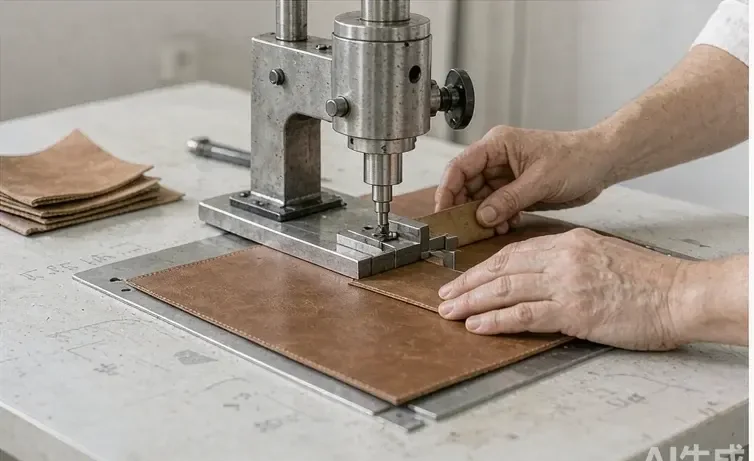
The working rule is a skive to 40-50% of panel substance across a 10-12 mm width, set on a machine with the setting recorded against the style reference rather than adjusted by eye at the bench.
- Panel substance: 0.6-0.8 mm suede, 0.5-0.7 mm nappa, 0.6 mm microfibre.
- Skive at folds: 0.4-0.5 mm across a 10-12 mm width, setting recorded per style.
- Seam allowance: 8-10 mm on a lining seam, trimmed to 5-6 mm after closing.
- Stitch density: 8-9 stitches per inch on a lining seam, finer than the shell seam at 6-7.
- Interlining: 0.3-0.4 mm non-woven where a pocket mouth needs to hold its line.
Matching Lining Shade to Shell and Hardware
A lining shade is chosen against two references: the shell leather and the metal the interior will sit beside. A warm cognac shell with a pale gold closure wants a lining one to two steps lighter in the same family; the same shell with palladium wants a cooler, greyer shade.
Keep the tolerance explicit. Within one unit, shade difference between two lining panels should sit at ΔE 1.0 or below; across a production lot, ΔE 2.0 is workable. Beyond that, the mismatch reads as a fault rather than as depth.
Interior Architecture: Pockets, Slots and Load Points
The lining carries the interior architecture, and every pocket is a load path back into the shell. A slip pocket holding a phone puts repeated pull on the lining-to-shell seam, which is why pocket depth and reinforcement are specification items rather than drawing details.
- Slip pocket depth 130-150 mm, with the mouth bound or turned, never left raw.
- Zipped pocket set on a #3 coil zipper with a 12-15 mm tape and a lined zip garage.
- Card slots cut on the straight grain of the lining, with a 2 mm ease per slot.
- Load points backed at 0.4-0.6 mm before the pocket is set, so pull spreads into the panel.
- Base panel doubled or backed where the interior carries weight against the shell.
Colour Fastness: The Test That Keeps a Light Lining Light
Colour transfer is the failure that reaches a customer rather than a QC bench, and it is the one a specification most often omits. A pale lining under a dark shell is the highest-risk pairing in the whole body, and it needs a figure rather than an assurance.
| Property | Method | Programme minimum | Where it matters most |
|---|---|---|---|
| Fastness to rub, dry | ISO 11640 | 4 on the grey scale | Pale lining under a dark shell or trim |
| Fastness to rub, wet | ISO 11640 | 3-4 on the grey scale | Interiors that meet cosmetics or moisture |
| Fastness to light | ISO 105-B02 | 4 on the blue wool scale | Pale linings on an open-topped body |
| Fastness to perspiration | ISO 11641 | 4 on the grey scale | Handles and any lining the hand rests on |
Testing a Lining Before Bulk Is Released
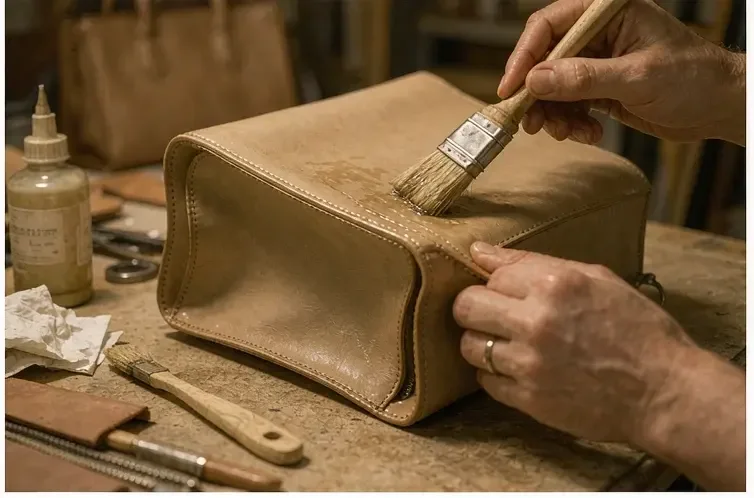
A lining should be tested as an assembled interior, not as a flat swatch, because most lining failures are seam failures. Rub, fold and load the completed body through a wear cycle before the lot is released, and record what changed.
- Rub cycles
- 500 dry and 100 wet to ISO 11640, on the assembled pocket mouth
- Fold cycles
- 300 open-close cycles at the gusset, inspected for cracking at 10× magnification
- Load test
- 3 kg in the slip pocket for 24 hours, seam inspected for grin afterwards
- Seam strength
- Minimum 120 N on a lining-to-shell seam, tested on a retained sample
- Shade tolerance
- ΔE 1.0 within a unit, ΔE 2.0 across the lot, measured by spectrophotometer
- Skive setting
- Recorded per style reference, verified at the bench before the first cut
- Intake inspection
- AQL 2.5 under ISO 2859-1 on lining panels before they enter the line
- Retained sample
- One finished body per lot held for the life of the style
Cost, Schedule and the Lining Line on the Spec Sheet
Lining sits inside the trims line of a cost sheet rather than the leather line, and it typically runs 9-14% of FOB cost on a medium structured body once pocket construction and interlining are counted. A change of lining material rarely changes the unit cost by more than two or three points, but it changes the wear result considerably.
Schedule is where lining bites. A monogram jacquard is a woven development with its own lead time and its own minimum, and it is ordered alongside the shell leather rather than after it. Presentation packing runs separately at about USD 4.80 per unit.
Eight lines before you sign a lining specification
- Material family named, with substance in millimetres.
- Skive dimension at folds, and the width the skive runs across.
- Seam allowance and stitch density, with the seam type stated.
- ISO 11640 dry and wet figures, and ISO 105-B02 where the shade is pale.
- ΔE tolerance within a unit and across the lot.
- Pocket depth, mouth construction and reinforcement at load points.
- Woven or printed development lead time, if the lining carries a monogram.
- Intake inspection to AQL 2.5 under ISO 2859-1, with a retained sample per lot.
Our programme works to MOQ 500 pcs per style and colourway, with sampling at 6-10 working days and 12-15 for a complex interior, bulk at 35-50 days on FOB Xiamen terms, inspected to AQL 2.5 under ISO 2859-1. It runs across 7 production lines with about 200,000 pcs per month of capacity and export experience since 2014, delivered through our validated partner factory Quanzhou Yingming Bags, an SGS-validated site. The wider framework sits under luxury materials and the bench sequence under craftsmanship.
Send the drawing and we will specify the interior
Tell us the silhouette, the shell leather and how the interior will be used. We will return the lining family, the substance and skive settings, the fastness figures and a sampling calendar, within two working days. Request a quote.
Frequently Asked Questions
What is the best lining material for a structured luxury handbag?
Pig suede at 0.6-0.8 mm. It skives cleanly to 0.4-0.5 mm at folds, its nap hides the scuffs an interior collects in the first months, and it costs less than nappa at the same grade. Lambskin nappa suits a soft body better, while a high-traffic interior is better served by microfibre at 0.6 mm.
How thick should a handbag lining be?
Panel substance of 0.6-0.8 mm for pig suede, 0.5-0.7 mm for lambskin nappa and 0.6 mm for microfibre. Folds are skived to roughly half of that, 0.4-0.5 mm, across a 10-12 mm width. Leaving a lining at full substance at a turned mouth is the commonest cause of a ridge showing through the shell.
Why does a lining crack at the gusset?
Because the fold was made at full panel substance, or the skive was cut far enough to weaken the grain. A gusset fold needs 0.4-0.5 mm across a 10-12 mm width, set by machine with the setting recorded. Verify with 300 open-close cycles on a sample before the lot is released.
Which ISO test governs lining colour transfer?
ISO 11640 measures colour transfer onto a dry and wet cloth. Ask for 4 on the grey scale dry and 3-4 wet, tested on the assembled pocket mouth rather than on a flat swatch. Where the lining is pale and the body is open-topped, add ISO 105-B02 for fastness to light.
Should a lining match the shell or contrast with it?
It should sit one to two steps lighter than the shell in the same colour family, or contrast deliberately against the hardware rather than the leather. A warm cognac shell beside pale gold wants a warm lining; the same shell beside palladium wants a cooler, greyer shade.
How much shade variation is acceptable in a lining?
Within one unit, ΔE 1.0 or below between two lining panels; across a production lot, ΔE 2.0 is workable. Beyond that the difference reads as a fault rather than as depth. Measure it with a spectrophotometer and record the figures against the lot reference.
What stitch density should a lining seam use?
8-9 stitches per inch, which is finer than the 6-7 used on a shell seam. The finer density keeps a light lining flat at the seam and reduces grin when the pocket is loaded. Pair it with an 8-10 mm allowance, trimmed to 5-6 mm after the seam is closed.
Does a jacquard lining affect the production schedule?
Yes. A monogram jacquard is a woven development with its own lead time and its own minimum, so it is ordered alongside the shell leather rather than after it. A stock twill or suede adds no development time and keeps sampling at 6-10 working days.
How is a lining inspected before bulk is released?
Lining panels are inspected to AQL 2.5 under ISO 2859-1 before they enter the line, and the assembled interior is wear tested: 500 dry and 100 wet rub cycles, 300 fold cycles at the gusset and a 3 kg load in the slip pocket for 24 hours.
What seam strength should a lining-to-shell seam reach?
A minimum of 120 N, tested on a retained sample from the lot. The figure matters because every slip pocket is a load path back into the shell, and a pocket carrying a phone puts repeated pull on that seam. Backing the load point at 0.4-0.6 mm spreads the pull.
How much does lining add to the unit cost?
Lining sits inside the trims line and runs about 9-14% of FOB cost on a medium structured body once pocket construction and interlining are counted. Changing lining material rarely moves unit cost by more than two or three points, but it changes the wear result considerably.
When should a brand choose microfibre over suede?
When the interior carries hardware, cosmetics or tech, or when uniformity across a large lot matters more than tactile character. Microfibre at 0.6 mm carries the highest rub count of the common lining families and the most consistent shade from roll to roll. Write the figure into the specification, since an unrecorded figure cannot be enforced at intake.
People Also Ask
What is the most durable handbag lining?
Microfibre at 0.6 mm, followed by pig suede at 0.8 mm. Both survive 500 dry rub cycles to ISO 11640 with minimal change. Durability is only half the question: the lining also has to fold without cracking, which is a substance and skiving decision.
Is a leather lining worth the extra cost?
On a structured body, yes, because the interior is felt every time the piece is used and leather skives and folds better than cloth. On a high-abrasion interior, cloth outperforms leather and costs less, so the answer depends on duty.
Why does my pale lining pick up dye from the shell?
Dye migration from a dark shell or trim onto a pale lining under pressure and warmth. It is prevented with a fastness figure rather than an assurance: ISO 11640 at 4 dry and 3-4 wet, tested on the assembled pocket mouth before bulk is released.
How deep should an interior slip pocket be?
About 130-150 mm for a phone-sized pocket, with the mouth bound or turned rather than left raw. Deeper pockets put more pull on the lining-to-shell seam, so the load point is backed at 0.4-0.6 mm before the pocket is set.
Does REACH apply to handbag linings?
Yes. REACH Annex XVII restricts certain substances in articles placed on the European Union market, and California Prop 65 governs warnings in that state. Both are checked against a test report per lot rather than against a swatch card.
Sources and further reading
Every figure on this page is either our own programme data or attributed below. Open the originals before you write them into a specification.
- ISO — International Organization for StandardizationISO Publisher of ISO 11640 on rub fastness, ISO 105-B02 on fastness to light and ISO 2859-1 on sampling procedures.
- Leather Working GroupLeather Working Group Tannery audit protocol covering environmental performance, traceability and the substance controls behind hide and lining records.
- ECHA — European Chemicals AgencyEuropean Chemicals Agency Administrator of REACH, including the Annex XVII restrictions applying to substances in leather and textile articles sold into the EU.
- Office of Environmental Health Hazard AssessmentOEHHA The California agency that administers Proposition 65 and its warning requirements for listed substances in consumer articles.
- Textile ExchangeTextile Exchange Standards body behind recycled and preferred-fibre claims used in lining and interlining specifications.