Luxury Handbag Sampling in Xiamen Explained: The Numbers, the Supply Routes, FOB Terms and What Location Really Changes
What does sampling in Xiamen actually mean for a luxury handbag programme? Four numbers set the shape: 6-10 working days for a sample, 35-50 days for production 35-50 days of sea transit to Northern Europe after handover, and FOB Xiamen as the default term. Location determines how fast material reaches the bench and when title passes. It does not determine leather at 1.2-1.4 mm or stitch at 8-9 per inch.
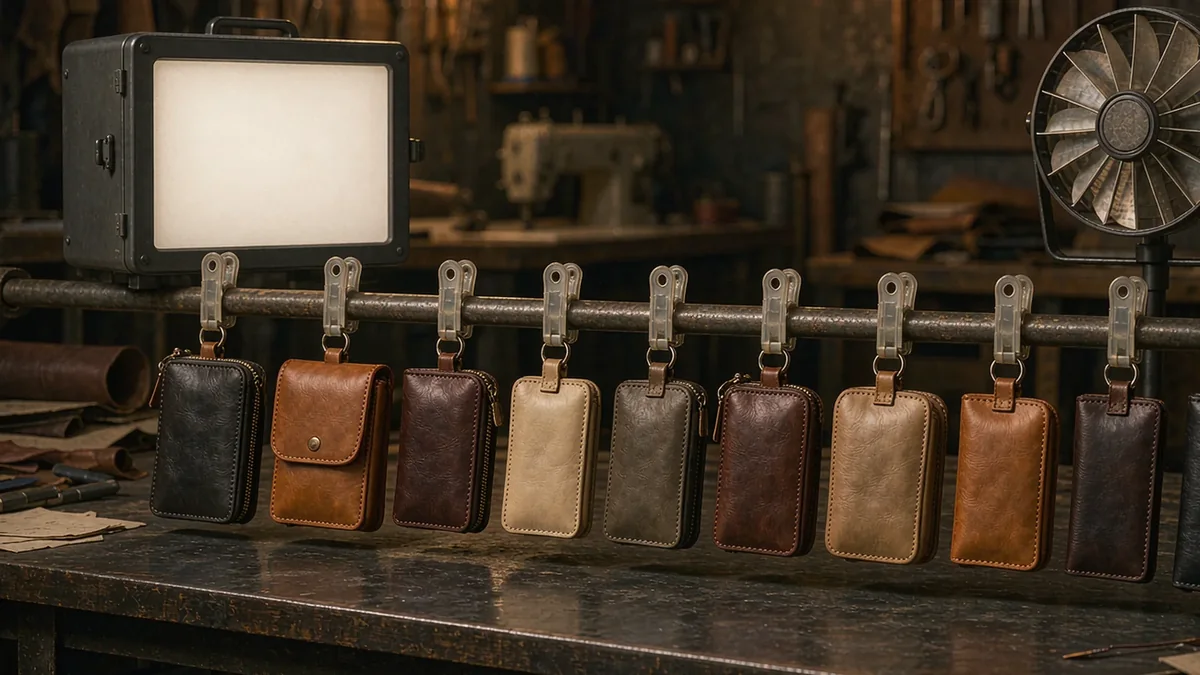
Four Numbers Set the Shape
Programmes are planned around four figures, and everything else about location is commentary on them.
The last two are the ones buyers forget when they set a delivery date. A bulk order handed over on FOB Xiamen terms has not arrived; it has left. Any launch date should be counted backwards from the arrival port rather than forwards from the sample approval. A house that sets its trunk show date by adding 35-50 days to the approval date will find itself presenting photographs of goods that are still at sea, and the correction to that arithmetic is the single least costly piece of planning available.
What the Location Actually Contributes
Xiamen contributes three things to a sampling programme, and all three are about proximity rather than about skill.
- Material proximity
- Tanneries, lining houses and interlining houses within a short haul, so a hide can be re-selected without a week of freight
- Hardware proximity
- Fitting houses nearby, which is what makes a stock closure a same-week decision rather than a month-long one
- Port proximity
- A deep-water port on the same island, which is why FOB Xiamen is the default term rather than an exception
- Export experience
- Programmes shipped since 2014 across 7 production lines with about 200,000 pcs per month of capacity
The first of those is worth more than it sounds. A sample rejected for shade can be re-cut within days if the tannery is a short haul away, and it costs a fortnight if the replacement has to be imported. That difference is usually the whole gap between a programme that runs to two rounds and one that runs to three, and it is the reason we ask about material origin at the same time as we ask about the drawing rather than after the first sample has been rejected.
Where the Material Comes From
Material for a programme here is sourced three ways, and the choice between them is the largest influence on both the sample window and the cost of the run.
| Source | Typical use | Effect on the calendar |
|---|---|---|
| Domestic tannery, held stock | Volume programmes where a consistent grain matters more than a named origin | Fastest route: a hide can be selected and cut inside the sample window |
| Imported European hide | Programmes where the tannery is specified by the brand or by the design | Adds procurement lead time before the first cut, so it must be ordered early |
| Exotic skin | Graded and tagged individually, with documentation required for shipment | Longest route, and the grade question must be settled before the sample |
Where a programme specifies a European tannery, the practical advice is to order the hide at the same time as the first sample is commissioned. The two run in parallel and the second sample is then cut from the real material rather than from a stand-in.
What Travels and How Long It Takes
Two clocks run in a programme and confusing them causes more missed launches than any other single error.
- The sample clock: 6-10 working days on the bench, plus 3-5 days of air courier to your studio.
- The bulk clock: 35-50 days of production, plus customs clearance, plus 25-35 days of sea transit.
- Air freight for bulk is possible and shortens the second clock sharply, at a cost that has to be weighed against the margin.
- Consolidation: a small first order may wait for a sailing, which can add days that are not production days.
- Customs and documentation: exotic skins and any CITES-listed material carry paperwork that must be prepared before sailing.
The last item is the one that surprises people. A style using a CITES-listed skin is not simply a longer production job; it is a documentation job, and the paperwork should start when the skin is selected rather than when the cartons are packed.
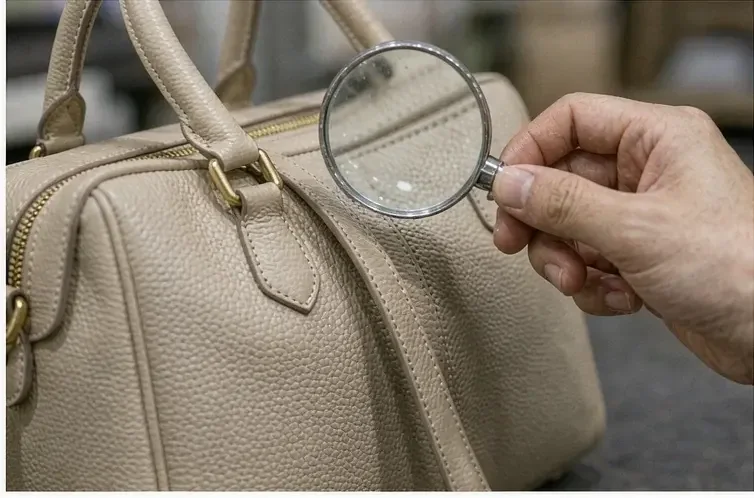
FOB Xiamen, and What the Term Covers
FOB Xiamen is the default term, and the important thing about it is what it does not include rather than what it does.
Included
The goods, export packing, inland haulage to the port, export clearance and loading onto the vessel at Xiamen.
Not included
Sea freight, insurance, import clearance and inland delivery at the destination, all of which sit with the buyer or their agent.
Where title passes
At the ship's rail at the port of loading, which is the moment the buyer's risk begins and the reason insurance is theirs to arrange.
Alternatives
CIF adds freight and insurance to the destination port; DDP extends the obligation to delivered duty paid, where it is available.
Most programmes at this level stay on FOB and appoint their own freight partner, because it keeps the buyer's relationship with the carrier direct. Where a house has no freight partner, CIF to the destination port is the usual step before DDP.
A Week Here, in Numbers
A sample week on the bench breaks down roughly as follows, and the shape of it explains why the first two days produce nothing visible.
| Days | What is happening | What the buyer sees |
|---|---|---|
| 1-2 | Pattern work, first cutting of the shell, material preparation | Nothing, which is normal and should not be chased |
| 3-4 | Shell assembled on the bench, hardware fitted, first silhouette review | Photographs of the shell and usually one question |
| 5-7 | Piece finished in the specified material, edge work and stitching set at 8-9 per inch | The first prototype photographed from six angles |
| 8-10 | Internal review, corrections, packing as bulk would pack it | The parcel, with a written list of anything provisional |
| 12-15 | Additional range for a framed opening, an exotic skin or engineered hardware | A further revision before the pre-production reference |
What the buyer can usefully do in the invisible days is prepare: confirm the hardware decision, settle the lining, and decide who will review the piece and by when. Those three decisions cost nothing in advance and days if deferred.
What Does Not Depend on Location
It is worth being plain about this, because the reverse assumption is what produces disappointment on both sides.
- Leather at 1.2-1.4 mm on a structured piece is a specification decision, not a geographical one.
- Stitch at 8-9 per inch in 0.45 mm thread is a bench standard, and it is either held or it is not.
- Three thin edge coats rather than one thick one is a method, and it costs the same everywhere.
- Plating at 0.15-0.3 microns carrying 24 to 48 hours of salt spray is a hardware specification.
- Inspection at AQL 2.5 under ISO 2859-1 is a procedure, applied identically wherever the goods are made.
Location buys proximity, a port and an established export routine. It does not buy craft, and a house that promises craft on the strength of its postcode is selling the wrong thing. The reverse holds as well: a specification written in numbers travels perfectly well, and a house that writes its seven numbers down can hold them anywhere. What does not travel is an unwritten standard, and that is the thing to insist on before geography enters the conversation at all.
What to Look At If You Visit
A visit is worth making if a programme is large or long, and it is worth planning rather than turning up to.
- Ask to see a piece being made on the bulk tooling rather than a showcase piece, which tells you what the run will look like.
- Ask to see the sealed references for a style currently in bulk, and check they are still sealed and dated.
- Ask how a dimensional variance was handled on a recent style, which tells you more than any presentation.
- Ask to see the material store and how hides are identified and batched against a programme.
- Ask what happens when a piece fails an inspection gate, and who signs the correction.
The third question is the most revealing and the least asked. Every programme has a variance somewhere; what distinguishes a good partner is whether the variance was written down, corrected and communicated, rather than whether it never happened. A house that answers it with a document rather than with a reassurance is a house whose records will survive a dispute, and that is worth more than any showroom.
Two further things are worth doing while on site. Take your own photographs of the sealed reference for your style under your own light, because the reference is the object that will settle any later argument about shade, and a photograph taken under the studio conditions you use is more useful than one taken under ours. And ask to see the packing line rather than the sample bench, since packing is where a large share of transit damage originates and it is the part of a programme least often inspected by a visitor.
How the Port Routine Works
The port end of a programme is procedural, and knowing the order of it prevents the two common surprises: a booking missed and a document wrong.
- Cartons are packed and counted, and the tally is reconciled against the order rather than against the packing list alone.
- Inspection at AQL 2.5 under ISO 2859-1 is completed and the report is released before booking.
- Export clearance is filed, including any permit required for listed material used in the style.
- The vessel is booked and the container is gated in before the cut-off, which is the date most often missed.
- The bill of lading is issued after loading, and it is the document the buyer's agent needs at the destination.
The fourth step is where programmes slip. A container gated in after the cut-off waits for the next sailing, and the wait is a week rather than a day, because sailings are weekly rather than daily. It is also the step over which the buyer has least influence once goods are ready, which is why the booking date should appear on the programme plan alongside the bulk date rather than being left to the week of handover.
When Location Stops Mattering
Three developments reduce the importance of where the bench sits, and all three are now ordinary.
- A settled specification: once the seven numbers are written and a style is proven, the distance matters far less.
- A repeat programme: the second season of a style runs on records rather than on conversation.
- Digital review: photographs at 5000 K and about 30 cm, plus a measurements sheet, resolve most questions without travel.
A bulk order handed over on FOB Xiamen terms has left, not arrived. Add clearance and 25-35 days of sea transit to Northern Europe before you commit a launch date.
Booking a Sampling Slot
Once a style is approved, the programme runs on fixed terms: MOQ 500 pcs per style and colourway, bulk in 35-50 days, inspection at AQL 2.5 under ISO 2859-1 with third-party inspection available, and handover on FOB Xiamen terms. Export experience on this programme runs since 2014 across 7 production lines with about 200,000 pcs per month of capacity, delivered through our validated partner factory Quanzhou Yingming Bags.
Plan your sampling calendar with real transit numbers
Send the drawings, the material direction and the quantity, and we will return a sampling plan with dates and transit figures for your market. Request a quote.
Frequently Asked Questions
How long does sampling take in Xiamen?
Six to ten working days from a complete tech pack, or 12-15 for a framed opening, an exotic skin or engineered hardware. Add 3-5 days of air courier for the parcel to reach a European or North American studio.
Why is Xiamen used for luxury handbag programmes?
Three reasons: tanneries and lining houses within a short haul, hardware houses close enough for same-week decisions, and a deep-water port on the same island, which is why FOB Xiamen is the default term.
What does FOB Xiamen cover?
The goods, export packing, inland haulage to the port, export clearance and loading onto the vessel. It does not cover sea freight, insurance, import clearance or inland delivery at the destination.
When does title pass under FOB terms?
At the ship's rail at the port of loading. From that moment the buyer's risk begins, which is why insurance is arranged on their side rather than included in the term.
Should I choose FOB, CIF or DDP?
FOB suits a buyer with an established freight partner. CIF adds freight and insurance to the destination port, and DDP extends the obligation to delivered duty paid where it is available.
How long is sea transit from Xiamen to Europe?
Roughly 25-35 days to Northern Europe after the vessel sails, plus customs clearance. Launch dates should be counted backwards from arrival rather than forwards from handover.
Does the material origin change the sample window?
Yes, and more than geography does. A hide held in stock can be selected and cut inside the window, while an imported European hide adds procurement lead time and should be ordered alongside the first sample.
What is happening on the first two days of sampling?
Pattern work, first cutting of the shell and material preparation. Nothing visible is produced, which is normal, and chasing it is the least useful thing a buyer can do during those days.
Are exotic skins handled differently?
Yes. They are graded and tagged individually, the grade question must be settled before the sample, and any CITES-listed material carries documentation that should be prepared long before the cartons are packed.
Does location affect the craft standards?
No. Leather at 1.2-1.4 mm, stitch at 8-9 per inch in 0.45 mm thread, three thin edge coats and plating at 0.15-0.3 microns are specifications, and they are either held or they are not.
What should I ask if I visit?
To see a piece made on the bulk tooling, the sealed references for a style in bulk, how a recent dimensional variance was handled, how hides are batched, and who signs a correction after a failed gate.
Can a sample be reviewed without travelling?
Usually. Photographs at 5000 K and about 30 cm, a measurements sheet against the drawing and a materials card resolve most questions, and the sealed reference settles anything that remains.
What capacity sits behind a programme here?
Export experience since 2014 across 7 production lines with about 200,000 pcs per month of capacity, delivered through our validated partner factory Quanzhou Yingming Bags.
What are the commercial terms after approval?
MOQ 500 pcs per style and colourway, bulk in 35-50 days, inspection at AQL 2.5 under ISO 2859-1 with third-party inspection available, and handover on FOB Xiamen terms.
People Also Ask
Why is FOB Xiamen the default term?
Because the port is on the same island as the bench. It keeps export clearance and loading with the seller and freight with the buyer.
How long does shipping take after handover?
Around 25-35 days to Northern Europe by sea, plus clearance. Air freight is available and much faster at a cost worth weighing against margin.
Does where a bag is made change its quality?
No. Quality follows the written specification: leather thickness, stitch pitch, thread gauge, edge coats and plating thickness, all held or not.
Should I visit before placing an order?
For a large or long programme, yes. Ask to see bulk tooling, sealed references and how a recent variance was handled.
What adds the most time to a sampling programme?
Material procurement. A specified imported hide or a graded exotic skin must be ordered early, ideally alongside the first sample.
Sources and further reading
Every figure on this page is either our own programme data or attributed below. Open the originals before you write them into a specification.
- ISO — International Organization for StandardizationISO Publisher of ISO 2859-1, the inspection procedure applied at handover before shipment.
- ICC — Incoterms rulesInternational Chamber of Commerce Publisher of the Incoterms rules that define FOB, CIF and DDP obligations and the point at which risk passes.
- CITES — Convention on International Trade in Endangered SpeciesCITES The permit and documentation regime that applies to listed exotic skins used in luxury bags.
- Leather Working GroupLeather Working Group Tannery audit protocol behind hide traceability, batch identification and the records kept for each programme.
- Sourcing JournalSourcing Journal Reporting on freight, transit times and sourcing geography across the accessories trade.