Luxury Handbag Sampling MOQ and Fees Explained: Where 500 pcs Applies, Three Fee Types and What Comes Back at Bulk
Sampling has no minimum order quantity of its own; the 500 pcs figure applies to bulk, per style and per colourway. Sampling carries three fee types instead: a development fee for the pattern and first prototype, a revision fee for each further round, and a tooling deposit where hardware is custom. Against a bench cost of around USD 4.80 for one finished piece in a normal run, a first sample is priced as a multiple of that figure rather than as a unit, and the development fee is credited in full against the first bulk order of 500 pcs.
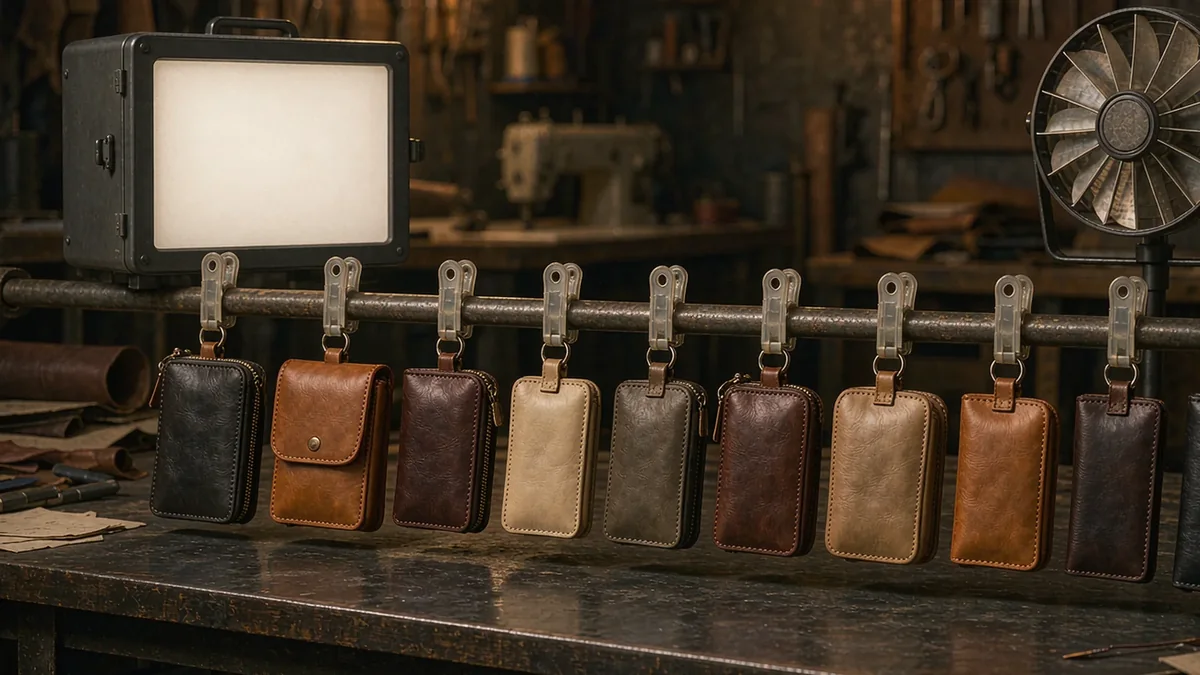
Does Sampling Have an MOQ at All?
No. Sampling is not an order and carries no minimum quantity. You commission one piece, or three, and you pay for the development work rather than for volume. This distinction is worth stating plainly because the two numbers get conflated constantly, and the conflation is what makes sampling feel like a commitment when it is really a test.
What sampling does carry is a fee structure. That structure exists because the expensive part of a first piece is not the leather in it; it is the pattern, the grading and the bench time of a single skilled hand working without the economies of a run. One piece has to carry what five hundred would otherwise share.
The useful way to think about it is this: the fee buys information. It buys the knowledge that a gusset depth of 90 mm reads differently on the body than on a drawing, and that a magnet specified by diameter alone will not hold. Both are inexpensive to learn at one piece and expensive to learn at five hundred.
Where the 500 pcs Figure Actually Applies
The 500 pcs minimum applies to bulk, and it applies per style and per colourway. Understanding exactly what that means before quoting is the difference between a plan and a surprise.
| Reading of the minimum | What it means in practice | Consequence for the order |
|---|---|---|
| Per style | Each distinct construction is its own programme | Two silhouettes that share hardware still count as two |
| Per colourway | Each colour of one style carries its own quantity | Four colours at the minimum total 2,000 pieces |
| Across colourways of one style | The pattern and tooling are shared, so only material is new | Shorter development and a single pattern cost |
| On a reorder | The specification is already held on file | production 35-50 days rather than 35-50 |
| On a pilot run | A reduced first run made on bulk tooling | Used to prove the line before the full quantity is committed |
What a Sample Fee Covers
A development fee covers four things, and buyers who can name all four are the ones who stop arguing about the number.
- Pattern development and grading, which is the file that defines every panel and which outlives the sample.
- Bench time for a single skilled hand building one piece without the rhythm of a run.
- Material minimums: a hide is bought by the hide, not by the panel, and one piece consumes the offcuts of a booking.
- Internal review, photography and the measurements sheet that travels in the parcel.
The pattern is the item to notice. It is a deliverable you keep, and it is the reason a second colourway or a reorder is cheaper: the file already exists and only the material changes.
Three Fee Types, and Which Ones Come Back
Three fee types appear on a sampling quotation, and they behave differently when you proceed to bulk.
- Development fee
- Pattern, first prototype, photography and measurements sheet. Credited in full against the first bulk order of 500 pcs.
- Revision fee
- Each further round beyond the first. Charged because a second round repeats the bench work, not the pattern work. Usually partially credited.
- Tooling deposit
- Charged only where hardware is custom: a mould for a lock, a pull or a plate. Credited once the bulk quantity is placed, and the tool remains available for later drops.
- Courier
- Three to four working days door to door, tracked, and never credited because it is a third-party cost.
- Exotic skin surcharge
- Where a graded skin is used, the skin is charged at cost with its CITES documentation and is not credited.
The pattern across all three is consistent: you pay for work that is specific to you, and that work is refunded when you convert it into an order. You are not paying for the privilege of asking; you are paying for a file, a piece and a decision.
Why a Sample Costs More Than a Unit
The arithmetic is simple and worth seeing once. In a normal run, the bench cost of one finished piece sits around USD 4.80 in parts and labour, with the pattern, the tooling and the material minimums spread across the quantity.
A single sample carries all of those fixed costs alone. The pattern is written for one. The hide is bought for one. The bench time is that of one skilled hand working slowly and correcting as it goes, because a first piece is made to be argued with rather than repeated. Priced as a multiple of the unit figure, the sample looks costly; priced against the cost of discovering the same fault across five hundred pieces, it is the most economical diagnostic in the programme.
That is not a rhetorical point. A pattern correction made on one piece costs an email. The same correction made after bulk has started costs the run, and it is usually the same correction, because dimensional errors do not correct themselves at volume.
How Colourways Change the Arithmetic
A second colourway of an approved style costs a fraction of the first, because the pattern, the structure and the hardware are settled and only the material is new.
What still has to be paid for is a hide submission, one piece in the new material and a sealed reference in that hide. What does not have to be paid for is pattern work, which is why a four-colour range costs far less than four separate styles and reads to a buyer as a much deeper collection.
The caution is shade. Approving a second colourway from a photograph rather than from a sealed piece cut in the actual hide is the most reliable way to generate a dispute at bulk. The saving on the sample is real; the saving on the sealed reference is false.
What Happens to the Fee When You Proceed
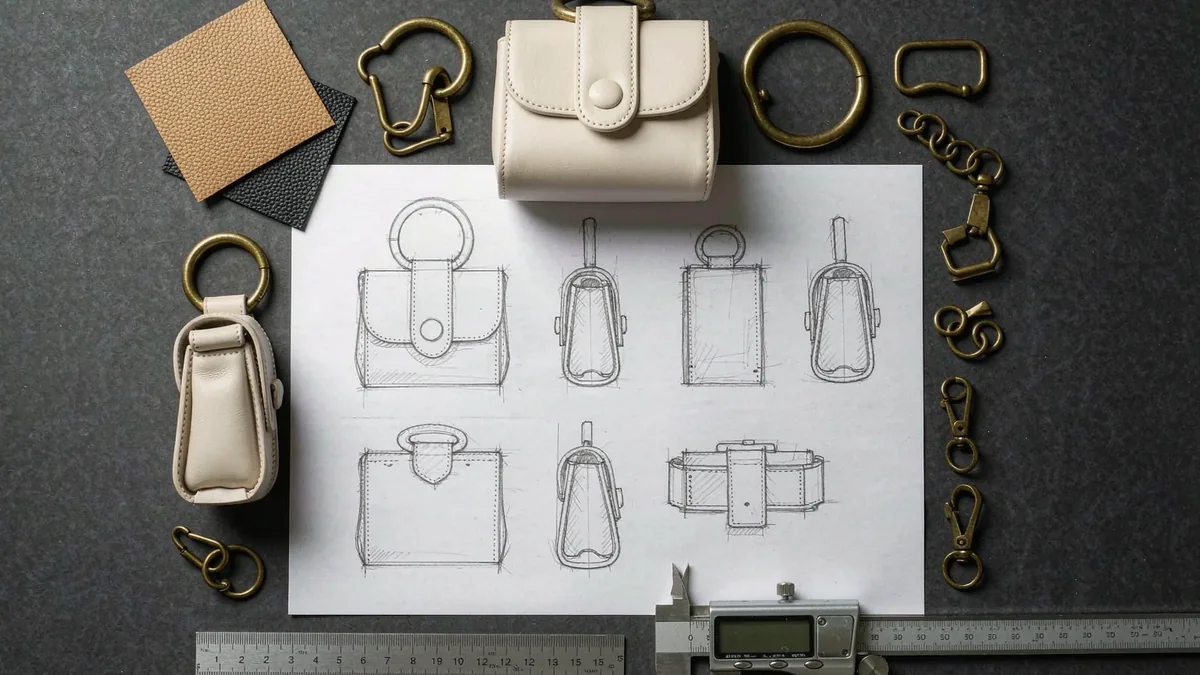
On conversion to bulk, the development fee is credited against the first order of 500 pcs, and the tooling deposit is credited against the same order while the tool stays on file for later drops.
Two conditions usually attach. The credit applies to the first bulk order, so a programme that samples and then waits two seasons does not carry the credit indefinitely. And the credit applies to the style sampled, not to a different silhouette, because the pattern work is specific to the piece it was written for.
Neither condition is unreasonable and both should be in writing before the first cut, since a verbal understanding of a credit produces two different memories at exactly the moment the money matters.
When a Fee Is Not Worth Paying
There are three situations in which paying for a full sample round is the wrong move, and naming them is more useful than pretending every enquiry should proceed.
- The silhouette is not yet decided. Sampling settles a specification; it does not choose a direction. Settle the direction first, on paper.
- The material has not been chosen. A sample made in a substitute hide approves a colour that bulk cannot be cut from.
- There is no route to 500 pcs. If the quantity will never be placed, the credit is worthless and the development fee is simply a purchase.
In all three cases the money is better spent earlier in the process, on a hide submission, on a material swatch card, or on a pattern review before anything is cut.
What a Quotation Should Show, Line by Line
A sampling quotation worth signing shows five lines, and the presence or absence of each tells you more about the house behind it than the total does.
| Line | What a clear quote shows | What a vague quote shows |
|---|---|---|
| Development | Named as development, with the credit against bulk stated on the same line | A single figure labelled sample cost with no credit mentioned |
| Rounds | How many rounds are included, and the fee that applies after them | No mention of rounds, so a third round arrives as an invoice |
| Material | Hide at cost, with the lot booked and the grade named | Material included, without grade, substance or lot reference |
| Hardware | Stock or custom stated, with the tooling deposit and its credit | Hardware included, with no drawing reference or deposit term |
| Bulk | Quantity, days, inspection level and handover terms on the same page | We will quote bulk later, which means the sampling figure cannot be judged |
The fifth line matters most. A sampling fee is only ever reasonable or unreasonable relative to what follows it, and a house that cannot yet say what follows has not priced your programme; it has priced your curiosity.
Nine Questions to Ask Before Signing
Nine questions separate a clear sampling quotation from an ambiguous one, and all nine should have written answers before the first cut.
Nine questions before the first cut
- Is the development fee credited in full against the first bulk order, and does the credit expire?
- How many revision rounds are included before a further fee applies?
- Is the tooling deposit credited, and does the tool stay available for later drops?
- Are material minimums charged at cost, and is the hide lot booked and tagged?
- What exactly arrives in the parcel, and is a line-by-line measurements sheet included?
- How many sealed references are produced at approval, and who holds them?
- What is the feedback window, and what happens to the calendar if it is missed?
- Does the sample carry any provisional component, and is that declared in writing?
- What are the bulk figures once approved: quantity, days, inspection level and handover terms?
The eighth question does the most work. A provisional component is one used because the specified one has a longer lead time than the sample window, and an undeclared provisional is the commonest cause of a third round.
How to Read a Sampling Quote
Read the quote as three lines rather than one number: what is being made, what is being credited, and what the bulk figures will be once it is approved.
Those bulk figures should be on the same document, because sampling is only ever a step towards them. On our programme they are MOQ 500 pcs per style and colourway, bulk in 35-50 days, inspection at AQL 2.5 under ISO 2859-1 and handover on FOB Xiamen terms. Sampling itself runs 6-10 working days, or 12-15 for a complex construction. Export experience runs since 2014 across 7 production lines with about 200,000 pcs per month of capacity, delivered through our validated partner factory Quanzhou Yingming Bags.
A development fee credited against the first bulk order is a commercial term, not a courtesy. If it is not on the quotation, it does not exist, and the conversation about it will happen at exactly the point where neither side wants to have it.
Get the fees and the calendar in one document
Send the style, the colourways and the quantity you have in mind and we will return a sampling quotation with the credit terms and the bulk figures on the same page. Request a quote.
Frequently Asked Questions
Is there a minimum order quantity for sampling?
No. Sampling is not an order and carries no minimum quantity. You commission one piece or three and pay for development work, not volume. The 500 pcs minimum applies to bulk, per style and per colourway.
What does 500 pcs per style and colourway mean?
Each distinct construction is its own programme and each colour of one style carries its own quantity. Four colourways of a single silhouette at the minimum therefore total 2,000 pieces, though they share one pattern.
What is a development fee?
It covers pattern development and grading, bench time for one skilled hand, material minimums and internal review with photography and a measurements sheet. It is credited in full against the first bulk order of 500 pcs.
Why does a sample cost more than one bag?
Because the pattern, the tooling preparation and the material minimums are carried by one piece instead of spread across a run. Against a bench cost of around USD 4.80 per finished piece in a normal run, the sample is a multiple.
Is the sample fee refunded if I proceed?
The development fee is credited in full against the first bulk order, and a tooling deposit is credited against the same order while the tool stays available for later drops. Courier is a third-party cost and is not credited.
What is a revision fee?
A charge for each further round beyond the first. It is lower than the development fee because the pattern already exists and only bench work repeats, and it is usually partially credited at bulk.
When is a tooling deposit charged?
Only where hardware is custom: a mould for a lock, a pull or a plate. Stock hardware carries no tooling charge and is the fastest route to a short sampling window, which is why it is often specified for the first drop.
How do colourways affect the cost?
A second colourway costs a fraction of the first because the pattern, structure and hardware are settled. What remains is a hide submission, one piece in the new material and a sealed reference in that hide.
Does the credit expire?
The credit applies to the first bulk order and to the style sampled, so a programme that samples and then waits two seasons does not carry it indefinitely. Both conditions belong in writing before the first cut.
When should I not pay for a sample round?
When the silhouette is undecided, when the material is not yet chosen, or when there is no route to the bulk quantity. In those cases a hide submission, a swatch card or a pattern review is the better purchase.
What is a pilot run?
A reduced first run made on the bulk tooling and from the bulk material, used to prove the line before the full quantity is committed. It is the practical middle step between a sealed reference and a full order.
How fast is a reorder once the specification exists?
production 35-50 days against a sealed reference rather than 35-50 days for a first run. Sampling reduces to a confirmation round of 3-5 working days and tooling already paid is reused at no charge.
People Also Ask
How much does a handbag sample cost?
It is priced as a multiple of the bench cost of one piece rather than as a unit, because pattern work, material minimums and skilled bench time are carried by a single item. The development portion is credited at bulk.
Do you get the sample fee back?
Yes, on the style sampled and against the first bulk order. Tooling deposits are credited the same way and the tool remains on file. Courier and exotic skins bought at cost are not credited.
What is the minimum order for luxury handbags?
Five hundred pieces per style and per colourway for bulk. Sampling itself has no minimum, which is why the two figures are worth stating separately in any quotation.
Can I split the quantity across colourways?
Not below the minimum per colourway. What you can do is share one pattern across colourways, which keeps development to a single cost while each colour still meets its own quantity.
Why is sampling cheaper on a reorder?
Because the pattern, tooling and material approvals are already on file. Only a new dye lot needs a fresh shade reading, so the round becomes a confirmation rather than a development.
Sources and further reading
Every figure on this page is either our own programme data or attributed below. Open the originals before you write them into a specification.
- ISO - International Organization for StandardizationISO Publisher of ISO 2859-1, the inspection standard referenced in bulk handover terms that follow an approved sample.
- Leather Working GroupLeather Working Group Tannery audit protocol behind hide lot booking and traceability records used when pricing material minimums.
- CITES - Convention on International Trade in Endangered SpeciesCITES Permit framework under which exotic skins are bought at cost with documentation travelling alongside the skin.
- Sourcing JournalSourcing Journal Reporting on development calendars, sampling economics and minimum quantity practice across the accessories trade.
- SATRASATRA Technology Centre Independent testing organisation whose methods underpin hardware and material testing charged alongside development.