Luxury Handbag Hardware Lead Times Explained: Where the Days Go, What Adds Them and What a Rush Actually Costs
Hardware lead time is not a single number, it is a chain, and the chain is only as fast as its slowest link. A stock fitting can be in hand in 2-4 working days and a fully custom one with a new die takes 20-28 days of tooling before sampling even starts. Plating adds days when it is subcontracted, a vapour-deposited finish adds more because it waits for a chamber, and chemical testing cannot be compressed at all. This piece sets out the standard calendar in numbers, identifies the six variables that add days to it, shows which stages can run in parallel and which cannot, and puts a figure on what a rush actually buys, because in most programmes the rush is bought at the wrong link in the chain and saves nothing.
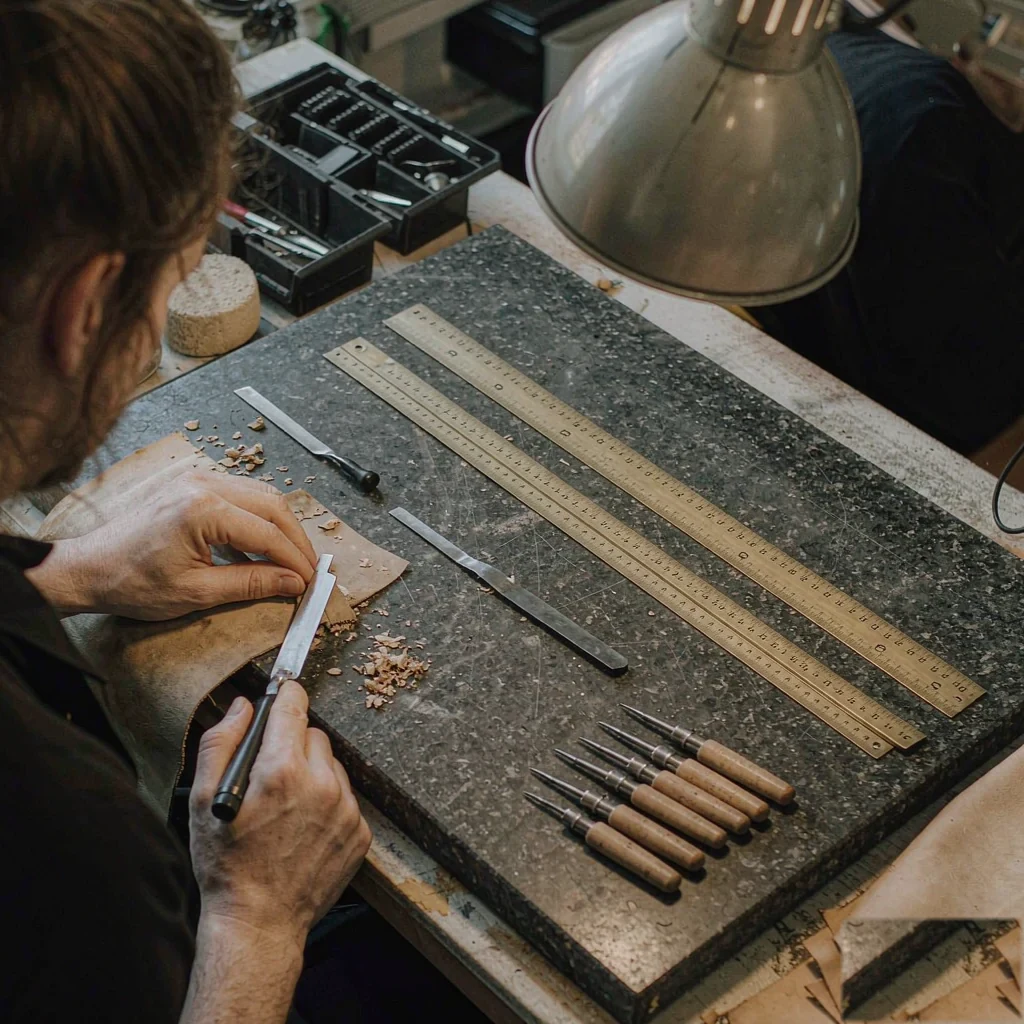
Where the Time Actually Goes
A hardware calendar has five stages: route decision and drawing, tooling where there is tooling, first shots and sampling, finish and testing, and bulk run. Four of the five have published figures; the first one is the variable nobody plans for.
The decision stage is where most calendars are lost. A drawing that is revised twice after it is issued costs more days than any single production stage, and it is the stage with no published figure at all.
Read the rest of this piece as a chain. Saving three days at a fast link does nothing; saving three days at the slow link moves the whole programme.
The Numbers: A Standard Calendar
These are the figures for a line running at 500 pcs per style and colourway, and they are the ones to build a schedule around.
- Stock fitting to hand
- 2-4 working days to hold a sample from an existing catalogue
- Modified stock fitting
- 6-10 working days, including a new finish or a branded plate
- Sampling window
- 6-10 working days, or 12-15 for a complex construction
- Bulk run
- 35-50 days from the approved sample
- Inspection
- AQL 2.5 (ISO 2859-1), usually 1-2 working days on a standard lot
- Handover
- FOB Xiamen, with the lot identified before it is booked
Note that the bulk figure is a range rather than a promise. Thirty-five days is a clean run on a settled specification; fifty is what a run takes when a fitting has to be reworked or a plating line is shared.
Tooling Time by Route
Tooling is the largest single block in a custom hardware calendar and the one most often underestimated, because it is invisible until it is commissioned.
| Route | Tooling | Calendar | What it buys |
|---|---|---|---|
| Stock fitting | None | 2-4 working days to hold a sample | Speed, at the cost of distinctiveness |
| Modified stock | Partial: a plate, a stamp or a new finish | 6-10 working days | An existing form with a house finish and branded plate |
| New die, die-cast form | Steel die | 20-28 days | A form that belongs to the house |
| New die, machined brass form | Programme and fixtures | 12-18 days | Tight tolerance and a milled face |
| Wax pattern and lost-wax casting | Pattern and tree | 15-22 days | A sculptural form that cannot be die-cast |
| Branded stamp die | Hardened steel stamp | 8-12 days for a brass die, 15-22 for hardened steel | A logo struck into an existing form |
The dependency is what catches programmes out. A die at 20-28 days does not fit inside a 6-10 working days of sampling window, so the die must be commissioned before sampling opens, which means the drawing has to be final before that.
Six Variables That Add Days
Six things reliably extend a hardware calendar, and five of them are known in advance and can be planned for.
- Plating is subcontracted rather than in house: add 5-8 working days for transport and queueing at the plating line.
- A vapour-deposited finish: add 7-12 days, because the chamber is booked rather than run on demand.
- A chemical test: 7-10 working days from submission, longer in peak season, and it cannot be shortened.
- A second or third sample round: 4-6 working days per round, which is why the first round should be complete.
- Peak season, roughly the third quarter: add 6-10 working days across plating and assembly alike.
- A revised drawing after tooling has started: the most expensive one, since it restarts the tooling clock.
The last of these is the only one that is genuinely avoidable, and it is also the most common. Everything else is a scheduling problem; a drawing revised after tooling is a decision problem.
Plating and Finish Time
Finish is the stage most likely to be omitted from a first draft of the schedule, because it sits between sampling and bulk and belongs to neither.
- Standard electroplating, in house
- 1-3 working days once the shots exist
- Electroplating, subcontracted
- Add 5-8 working days for transport and queue position
- Vapour deposition
- Add 7-12 days: the chamber schedule governs, not the order
- Hand-worked patina
- Add 3-5 working days, and it scales with quantity rather than with batches
- A second finish on one fitting, such as a two-tone effect
- Add 4-7 working days and a masking operation
- Re-plating a rejected batch
- The full finish time again, plus 2-3 days to strip the first attempt
A two-tone fitting is the least understood of these. Masking a part, plating it, unmasking it and plating again is two complete passes with a manual step between them, not one pass with an extra bath.
Testing Time: What Cannot Be Compressed
Testing is the one stage where no amount of money buys meaningful time, because exposure hours cannot be shortened.
- Salt spray exposure: 48 hours of running time, which is two calendar days at minimum, plus 2-3 days for the report.
- Humidity exposure: 96 hours at 40 °C and 93 percent relative humidity, which is four calendar days.
- Chemical testing: 7-10 working days from submission at an accredited laboratory.
- Abrasion cycling: 1,000 to 5,000 cycles, usually completed in a single day on a bench instrument.
- Dimensional and thickness checks: a day, and the fastest item on the list.
This is why the chemical declaration is requested with the plating trial. Seven to ten working days is short when it runs in parallel with tooling and invisible when it runs after the goods are packed.

The Critical Path and What Can Run in Parallel
Roughly a third of a hardware calendar can be overlapped, and doing so is the only free acceleration available.
| Stage | Can it overlap? | With what |
|---|---|---|
| Drawing and specification | No | It gates everything and should be finished first |
| Tooling | Yes | Chemical testing on a stock fitting of the same finish |
| First shots and sampling | Partly | Salt spray and humidity exposure on trial pieces |
| Plating and finish | No | It follows the shots and gates the bulk run |
| Chemical declaration | Yes | Run it with the plating trial and it costs no calendar time |
| Bulk run | No | It begins only at the approved sample |
The trick behind both is testing a stock fitting in the intended finish while the custom die is being cut. The finish is approved on the stock part, and when the custom shots arrive only the form is new.
What a Rush Actually Costs
A rush is bought at a specific link, and buying it at the wrong one is the most common way programmes spend money and save nothing.
- Express tooling
- Adds 40-60 percent to the die cost and saves 5-8 days
- Overtime on assembly
- Adds 10-20 percent to the labour element and saves 2-4 days
- Priority plating slot
- Adds 20-35 percent to the plating cost and saves 3-5 days
- Air freight instead of sea
- Four to six times the freight cost, and it saves 20-28 days on a Xiamen to northern Europe routing
- Chemical testing
- Cannot be rushed: the exposure and the laboratory queue are fixed
- Bulk production itself
- Cannot be rushed below about 35 days without removing inspection or cure time
Air freight is the honest rush. It costs real money and it saves real weeks. Express tooling is the dishonest one more often than not, because it saves five days at a link that was rarely the critical one.
How to Shorten the Calendar Without Cutting Quality
Six moves shorten a hardware calendar, and none of them involves removing a test or reducing an inspection level.
Six moves that shorten the calendar
- Finalise the drawing before tooling is commissioned, which removes the single largest source of lost days.
- Approve the finish on a stock fitting while the custom die is being cut, so the form is the only new thing.
- Request the chemical declaration with the plating trial rather than with the packing list.
- Choose a finish that does not need a booked chamber if the calendar is tight: electroplate rather than vapour deposit.
- Hold the sample round to one by sending a complete specification, since each extra round costs 4-6 working days.
- Book the freight before the lot is finished, and decide sea or air on the calendar rather than on the invoice.
The third and fifth of these together are worth two to three weeks on a typical first programme, and both cost nothing.
How the Calendar Changes with Quantity
Quantity changes the shape of the calendar rather than only its length, because a larger lot occupies a plating bath and an assembly line for longer while the fixed stages stay exactly as they were.
- At 500 pcs
- Tooling dominates: the fixed days are a large share of the total
- At 2,000 pcs
- The fixed stages are unchanged and the run extends by 6-10 working days
- At 10,000 pcs
- Plan for a staged delivery, since a single lot would occupy a line for an unreasonable span
- Several colourways of one fitting
- Each colourway is a separate plating batch, adding 3-5 working days per additional colour
- Several fittings on one bag
- They run in parallel, so the longest fitting sets the calendar rather than the sum of them
The last two lines are the ones that surprise a first collection. Adding a second colourway of the same fitting costs more calendar time than adding a second fitting, because the fitting runs in parallel while the plating batch does not.
What to Put in the Schedule Clause
A schedule clause is six dated lines, and it is the document that turns a forecast into a commitment.
- Drawing freeze date, with the revision policy stated: after this date a change costs the tooling clock.
- Tooling completion date, and what happens if it slips by more than five working days.
- First shots date, with the number of pieces that will be submitted, commonly three.
- Finish approval date, tied to the sealed reference rather than to a description.
- Test submission date, with the exposure hours stated and the report date following it.
- Bulk completion and handover date, at FOB Xiamen, with the inspection level named as AQL 2.5 (ISO 2859-1).
Add a buffer of ten percent of the total calendar, placed at the end rather than distributed through the stages. A buffer distributed through the stages is consumed by the first slip; one held at the end survives it.
Our programme runs export experience since 2014 across 7 production lines with about 200,000 pcs per month of capacity, delivered through our validated partner factory Quanzhou Yingming Bags, an SGS-validated site, with inspection at AQL 2.5 (ISO 2859-1) and handover on FOB Xiamen terms.
Get a dated hardware calendar for your programme
Send the drawing, the finish and the date the bags need to land. We will return the staged calendar, the critical path and a piece price at 500 pcs. Request a quote.
Frequently Asked Questions
How long does custom bag hardware take to produce?
A new die takes 20-28 days before sampling starts, sampling itself runs 6-10 working days, and the bulk run is 35-50 days from the approved sample. A modified stock fitting with your own finish takes 6-10 working days and needs no die at all.
Can I get hardware faster than 35-50 days?
Not for bulk production, because around 35 days is the floor once inspection and cure time are included. What can be shortened is everything before it: approve the finish on a stock fitting while the die is cut, and run the chemical test alongside, which together remove two to three weeks.
How long does hardware tooling take?
A die-cast steel die takes 20-28 days, a machined brass form 12-18 days, a wax pattern and casting route 15-22 days, and a hardened steel logo stamp 15-22 days. A brass stamp die is quicker at 8-12 days.
What adds the most days to a hardware order?
A revised drawing after tooling has started, because it restarts the tooling clock. After that, a booked vapour-deposition chamber at 7-12 days and a chemical test at 7-10 working days, neither of which can be compressed.
How long does a plating finish add?
One to three working days in house, 5-8 more if it is subcontracted, and 7-12 if a vapour-deposited finish is required because the chamber must be booked. A hand-worked patina adds 3-5 working days and scales with quantity.
Can chemical testing be rushed?
No. Testing commonly takes 7-10 working days from submission and longer in peak season, and neither the exposure hours nor the laboratory queue can be shortened. The only answer is to run it in parallel with tooling rather than after packing.
Is express tooling worth paying for?
Sometimes. It adds 40-60 percent to the die cost and saves 5-8 days, which matters only if tooling is on the critical path. More often the critical path is the finish or the freight, and the same money buys more time spent there.
How much does air freight save on hardware?
Around 20-28 days against a sea routing from Xiamen to northern Europe, at four to six times the freight cost. It is the only rush that reliably converts money into weeks, which is why the sea or air decision belongs on the calendar.
How many sample rounds should I plan for?
One, and plan for two. Each additional round costs 4-6 working days, and the rounds usually happen because the specification was incomplete rather than because the work was poor. A complete drawing is the most cost-effective accelerator available.
What is the peak season surcharge in days?
Add 6-10 working days across plating and assembly in the third quarter of the year, when lines are shared and queues form. Book plating slots before the rush rather than during it, since the queue position is what costs the days.
Should I add a buffer to the hardware calendar?
Yes, ten percent of the total, held at the end rather than distributed across the stages. A buffer spread through the stages is consumed by the first slip; one held at the end survives the slip and still protects the handover date.
When should the chemical declaration be requested?
With the plating trial. It costs nothing at that point because it runs in parallel with tooling, and it is the one document a retailer asks for first. Requested at the packing list, the same 7-10 working days become a delay to the shipment.
People Also Ask
Why does custom hardware take so long?
Because tooling comes first. A new die-cast die takes 20-28 days before any sampling begins, and the die cannot start until the drawing is frozen. The bulk run itself, at 35-50 days, is the shorter half of the calendar.
What is the fastest way to get branded hardware?
Modified stock: an existing form with your finish and a stamped logo. That runs 6-10 working days with a brass stamp die at 8-12 days, against 20-28 days for a new die, and it is the right route for most first collections.
Can I run testing while tooling is being cut?
Yes, and it is the single best accelerator available. Plate a stock fitting in the intended finish, submit it for testing, and when the custom shots arrive only the form is new. That removes up to three weeks.
How do I avoid losing weeks to hardware?
Freeze the drawing before tooling is commissioned. Every other saving on this list is worth days; a drawing revised after tooling starts is worth weeks, because it restarts the longest stage in the chain.
Does inspection add time to the schedule?
One to two working days on a standard lot at AQL 2.5 (ISO 2859-1), which is a small figure against the risk it removes. It is the one line on the calendar that should never be traded away to save a day.
Sources and further reading
Every figure on this page is either our own programme data or attributed below. Open the originals before you write them into a specification.
- ISO — International Organization for StandardizationISO Publisher of ISO 2859-1 sampling and ISO 9227 salt spray, the two standards whose durations appear on a hardware calendar.
- ICC — Incoterms rulesInternational Chamber of Commerce Publisher of the Incoterms rules that define FOB handover and therefore the point at which a hardware calendar ends.
- ASTM InternationalASTM International Publisher of the corrosion and abrasion practices whose exposure periods cannot be compressed in a schedule.
- ECHA — REACHEuropean Chemicals Agency Administrator of REACH Annex XVII, whose nickel testing adds 7-10 working days to a hardware calendar.
- Sourcing JournalSourcing Journal Trade reporting on lead times, freight and production planning across the accessories industry.