Luxury Bag Brand: First Drop Planning Guide — 24 Checks From Design Freeze to On-Sale Date
How do you plan a first luxury bag drop? Run 24 checks inside six gates across 180 days: freeze the range at 4-6 styles in 2-3 colourways at T-180, book leather at T-150, close sampling in 6-10 working days at T-120, approve a golden sample at T-90, shoot 40-60 frames at T-60, run bulk for 35-50 days and inspect at AQL 2.5 under ISO 2859-1, then launch. Hold 14 days of buffer, because the buffer is the only item on the list that saves a season.
How to Use This Checklist: 24 Items Inside Six Gates
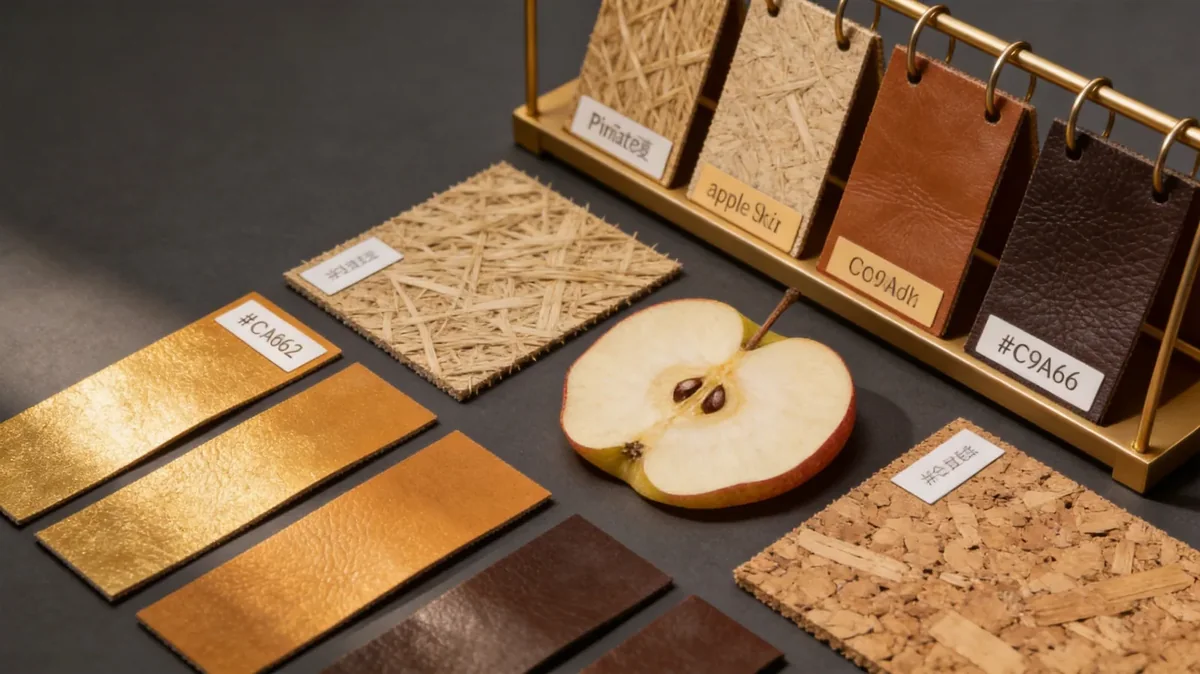
A first drop is not a creative problem; it is a sequencing problem. Every house that has launched badly did so because two of six gates overlapped — photography started before the golden sample was approved, or doors were briefed before the production date was confirmed. The checklist below puts 24 items into six gates, and each item carries a reason rather than a tick box, because a checklist without reasons gets skipped under pressure.
The rule for using it is simple: a gate is either closed or it is not. Do not open gate four while gate three is still moving, even when the calendar is tight. A house that compresses gates saves ten days in month two and loses six weeks in month four, when the sample that was photographed turns out not to be the bag that ships.
Six gates, 180 days, 24 items. Most houses find that gates one and two absorb more time than planned and gates five and six absorb less, so build the plan on the assumption that the design phase will slip and the launch phase will not.
Gate 1, T-180 to T-150: Design Freeze and Range Architecture
The first gate is the only one where changing your mind is free. After design freeze, every change costs money and time in escalating amounts: a colourway swap at T-150 costs a leather booking, at T-90 costs a reshoot, and at T-30 costs the season. Freeze hard and freeze once.
- Freeze the silhouette: one hero shape and two or three supporting shapes. Why: a first drop needs one memorable outline, and three competing outlines give a buyer nothing to repeat.
- Cap the range at 4-6 styles. Why: below four the drop reads as a sample set; above six the 500 pcs per style and colourway minimum fragments and no single style gets a full run.
- Limit colourways to 2-3 per style. Why: each colourway is a separate minimum of 500 pcs, and a debut house rarely has the capital to carry four colourways of six styles.
- Write a one-page brief per style: leather grade, hardware finish, dimensions, closure, lining. Why: a brief is what makes the sampling round answerable rather than conversational.
- Set the target retail price before costing the build, then cost to it. Why: designing first and pricing later produces a bag the house cannot sell at the figure the market will carry.
- Confirm the on-sale date and write it on every document. Why: every later gate is dated backwards from this figure, and a moving date makes the whole plan unenforceable.
Gate 2, T-150 to T-120: Leather, Hardware and Sampling
Leather is booked in this gate, not later, because tanning and finishing are the longest lead items in the chain and no amount of goodwill at the bench compresses them. If a house has one date to protect in the entire plan, it is the leather booking date. Book it, get the grade confirmed in writing, and only then open the sampling round.
- Leather booking
- T-150, grade and finish confirmed in writing before sampling opens
- Body leather
- Full-grain calfskin at 1.2-1.4 mm; A-grade yield 60-70% of a hide
- Reinforcement
- 0.8 mm bonded at handle roots, strap roots and base corners
- Hardware
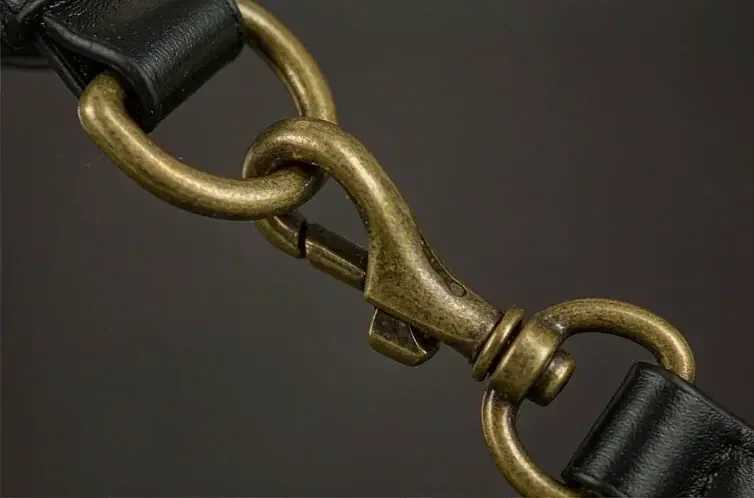
- Brass substrate, gold plating 0.15-0.3 µm; 24 h salt spray, 48 h coastal
- Stitch density
- 8-9 SPI with 0.45 mm bonded thread; 12 mm back-tack at stress points
- Edge finish
- 3 coats at 0.12-0.15 mm, sanded between coats, 24 h cure
- Sampling window
- 6-10 working days standard, 12-15 for complex builds
- Sample count
- 2 per style: one for approval, one retained as the reference
Two samples per style is the figure that matters here. One is cut open, pulled, loaded and photographed; the other is never touched and becomes the reference the run is judged against. A house that approves from a single unit has nothing to compare against in month three, when the question of what was agreed becomes a dispute rather than a lookup.
Gate 3, T-120 to T-90: Sample Approval and the Golden Sample
Approval is the moment a drop either becomes real or becomes a story about a delay. It takes twenty minutes in a room and it decides six months. Six questions, written answers: leather thickness and tolerance, stitch density and thread gauge, edge coats and thickness, plating thickness and substrate, tests run and their results, and the inspection level.
- Approve against a written specification with tolerances, not against a feeling. Why: a tolerance is inspectable and a feeling is arguable in month three.
- Retain one golden sample per colourway, sealed and dated. Why: it is the only artefact that settles a dispute about what was agreed.
- Run the four named methods: ISO 11640, ISO 105-B02, ISO 3376, ISO 11644. Why: each returns a number that can be re-run years later.
- Load the handles at 12 kg for 60 seconds and cycle the closure 5,000 times. Why: these two catch what laboratory methods miss.
- State the inspection level in the order: AQL 2.5 under ISO 2859-1. Why: an unstated level becomes a negotiation at the worst possible moment.
- Sign the sample card and photograph it beside the specification sheet. Why: a signed, dated record turns approval from a conversation into a document.
Gate 4, T-90 to T-60: Photography, Copy and Assets
Assets are made in this gate and they take longer than founders expect, because a first drop has no archive to draw on. Three studio days produce 40-60 final frames across the range, and that is the honest figure for six styles in three colourways with detail shots. Book the studio before the samples exist if the calendar is tight, and hold the date.
| Asset | Quantity | Specification | Used for |
|---|---|---|---|
| Hero silhouette still | 3-4 per style | 300 dpi, 4,200 px long edge, white ground | Line sheet, press, product page |
| On-body frame | 2 per style | 300 dpi, two heights of model | Website, lookbook, social |
| Hardware detail | 2-3 per style | 300 dpi, macro, closure worked | Product page, stockist training |
| Interior and lining frame | 1 per style | 300 dpi, bag opened and stuffed | Product page, returns reduction |
| Vertical cut | 2 per style | 1,080 x 1,920 px, 9:16 | Social, creator seeding |
| Lookbook page | 12-16 looks | Print-ready, 300 dpi | Buyer meetings, doors |
| Specification sheet | 1 per style | Eight lines with tolerances | Doors, press, internal record |
Shoot the bag that will ship. This sounds obvious and it is the item most often missed: photography taken from a pre-production sample will differ from the run in edge tone, hardware finish and stitch tension, and the differences are visible enough for a customer to notice and a stockist to query. If the run has not landed, use the retained golden sample rather than an earlier prototype.
Gate 5, T-60 to T-20: Bulk, Inspection and Packaging
Bulk is 35-50 days and it is the gate that decides whether the on-sale date holds. Open it only when the golden sample is signed, the leather is in hand and the packaging is ordered, because a bulk run started without packaging is a finished product with nowhere to go and a warehouse bill attached.
- Bulk window
- 35-50 days from approval, at 500 pcs per style and colourway
- Inspection
- AQL 2.5 under ISO 2859-1, critical defects at zero tolerance
- Third-party inspection
- Recommended on the first two runs of a new silhouette
- Packaging set
- Rigid box in 2.5 mm board, dust bag, acid-free tissue, care card; referencing USD 4.80 per unit
- Packing order
- Box, tissue, dust bag, care card, then the bag stuffed and handled in gloves
- Terms
- FOB Xiamen, with FOB, CIF or DDP available on request
- Buffer
- 14 days between the inspection sign-off and the on-sale date
Packaging deserves more attention than a first drop usually gives it. The rigid box is the first object a customer touches and the last thing she remembers, and a 2.5 mm board that collapses in transit undoes the impression the bag itself made. Cost it at USD 4.80 per unit, order it with the bulk rather than after it, and pack the bag stuffed so it arrives in shape.
Gate 6, T-20 to T-0: Doors, Launch and Replenishment
The final gate is commercial and it is where a first drop either converts into a second one or dies quietly. Three to five doors is the right number for a debut: enough to establish the line, few enough that each one gets a proper installation, a training session and a day-90 review. Ten doors means ten half-installed facings and no sell-through data worth reading.
- Brief 3-5 doors, not 10. Why: each door needs installation, training and a day-90 review; ten means ten half-done facings.
- Agree the margin in writing at 52-58% before stock moves. Why: a margin discovered late ends the account regardless of sell-through.
- Install before the launch date, not during launch week. Why: a door mid-season will put the stock in the stockroom for three weeks.
- Train one session per door team: 45 minutes, 6-8 units. Why: a team that can name the leather sells the line without moving price.
- Define sell-through and set the trigger at 65% by day 90. Why: without a definition the day-90 review becomes an argument.
- Place the replenishment order before the launch sells out. Why: bulk is 35-50 days, so a reorder placed at day 90 arrives after the season.
The Range Architecture Decision: How Many Styles Is Right
Four to six styles is the band, and the deciding variable is capital rather than ambition. Each style in each colourway carries a 500 pcs minimum, so four styles in two colourways is eight minima and six styles in three is eighteen. A debut house that can fund eight minima comfortably will usually sell through; a house that stretches to eighteen will carry stock into the following season.
Four styles, two colourways
The safest shape. Eight minima at 500 pcs each, one clear hero, and enough breadth to fill one facing in a door.
Six styles, two colourways
The standard shape. Twelve minima, one hero and two supporting silhouettes, enough for a full wall in a specialist door.
Six styles, three colourways
Ambitious. Eighteen minima, and the third colourway usually becomes the carry-over that funds the following season's leather.
Eight styles or more
Avoid on a first drop. Too many minima, and no single style gets a run large enough to learn anything about demand.
Unit Economics for a First Drop
A first drop is usually mispriced in one of two directions: the founder prices to recover development and the bag sits, or prices to win doors and the season makes no money. The correction is to build the unit from the bottom up and check it against the retail figure the market will carry before the range is frozen, not after.
| Line | First drop | Why it matters |
|---|---|---|
| Leather | Full-grain calfskin at 1.2-1.4 mm, booked at T-150 | Longest lead item; the booking date protects the season |
| Trim and hardware | Brass substrate, 0.15-0.3 µm gold; set references at USD 4.80 per unit | The most visible upgrade nine months later |
| Bench time | 4.5-6 h on a structured top-handle, 2.5-3 h on a soft hobo | Converts directly into the price defence a buyer needs |
| Packaging | 2.5 mm rigid board box, dust bag, tissue, care card at USD 4.80 per unit | First object the customer touches; order it with the bulk |
| Inspection | AQL 2.5 under ISO 2859-1; third-party on the first two runs | Cheaper than a defective unit reaching a buyer's desk |
| Retail markup | 2.4-2.6x the landed cost to the door | Sets the door margin at 52-58% and the reorder economics |
The Buffer Nobody Plans and Everyone Needs
Fourteen days is the buffer and it sits between inspection sign-off and the on-sale date. It exists because something always moves: a leather delivery ships a week late, a colourway fails rub testing and needs a second pass, or a door asks for an installation date two weeks later than planned. A plan with no buffer is a plan that announces a delay.
Hold 14 days between inspection sign-off and on-sale date. Sampling at 6-10 working days is fast enough that founders assume everything else is; bulk is 35-50 days, inspection follows, and FOB Xiamen terms add booking and transit. Without a buffer, the first thing to break is the launch date.
Six Mistakes That Break a First Drop
The same six mistakes account for most failed debuts, and none of them is about design. They are sequencing, documentation and capital errors, which is encouraging: all six are preventable with a checklist and the discipline to close one gate before opening the next.
Photographing a pre-production sample
The run differs in edge tone, hardware finish and stitch tension. Shoot the retained golden sample or wait for production; customers notice and doors query.
Booking leather after sampling
Tanning and finishing are the longest lead items. Book at T-150 and confirm the grade in writing before the sampling round opens.
Opening too many doors
Ten doors means ten half-installed facings and no usable sell-through data. Brief three to five and give each a proper installation and training session.
Skipping the golden sample
Without a sealed reference per colourway, month three turns every question about what was agreed into an argument instead of a lookup.
Ordering packaging after bulk
Finished bags with nowhere to go accrue storage costs and miss the installation date. Order the box with the bulk and pack stuffed.
Reordering after the shelf empties
Bulk runs 35-50 days. Place the replenishment order when the launch sells through, not when the stockroom runs dry.

The 24 Checks in One View
Below is the whole plan on one screen. Print it, date it at the top, and review it fortnightly with the production calendar beside it rather than separately. Where the two disagree, the launch date moves; leather, tanning and inspection windows do not.
| Gate | Window | Checks | Exit condition |
|---|---|---|---|
| 1 — Range | T-180 to T-150 | 6 items: silhouette, 4-6 styles, 2-3 colourways, brief, price, date | Range frozen and the on-sale date written |
| 2 — Materials | T-150 to T-120 | 4 items: leather booked, hardware, two samples per style, specification | Sampling round closed in 6-10 working days |
| 3 — Approval | T-120 to T-90 | 6 items: tolerances, golden sample, four methods, load test, AQL, signed card | Golden sample sealed and dated |
| 4 — Assets | T-90 to T-60 | 4 items: 40-60 frames, vertical cuts, lookbook, specification sheet | Assets delivered at 300 dpi |
| 5 — Bulk | T-60 to T-20 | 3 items: 35-50 days, AQL 2.5 inspection, packaging at USD 4.80 | Inspection signed off |
| 6 — Launch | T-20 to T-0 | 3 items: 3-5 doors, installation and training, sell-through trigger | On-sale date held with 14 days of buffer |
Start the Clock on Your First Drop
The first drop in one paragraph
- Freeze 4-6 styles in 2-3 colourways at T-180, book leather at T-150 and close sampling in 6-10 working days, seal a golden sample at T-90, shoot 40-60 frames at T-60, run bulk for 35-50 days at 500 pcs per style and colourway and inspect at AQL 2.5 under ISO 2859-1, then launch three to five doors. Hold 14 days of buffer. Every date in the plan is a production date in different clothes.
Put your first drop on a dated plan
Send the styles, colourways and the on-sale date you are targeting. Our team returns a gated plan with sampling at 6-10 working days, 12-15 for complex builds, bulk at 35-50 days for 500 pcs per style and colourway, FOB Xiamen and inspection at AQL 2.5 under ISO 2859-1. Our validated partner factory Quanzhou Yingming Bags runs 7 production lines at about 200,000 pcs per month with export experience since 2014. Begin at the quotation desk.
Frequently Asked Questions
How far ahead should a first luxury bag drop be planned?
About 180 days, in six gates: range at T-180, materials at T-150, approval at T-90, assets at T-60, bulk from T-60 to T-20 and launch from T-20. Most houses underestimate gates one and two and overestimate the launch phase, so plan on the assumption that design slips.
How many styles should a first drop contain?
Four to six, in two or three colourways. Each style and colourway carries a 500 pcs minimum, so four styles in two colourways is eight minima and six in three is eighteen. Below four reads as a sample set; above six fragments the capital and no style gets a full run.
When should leather be booked for a first drop?
At T-150, before the sampling round opens, with the grade and finish confirmed in writing. Tanning and finishing are the longest lead items in the chain and no goodwill at the bench compresses them. This single date protects the whole season more than any other.
How many samples should be made per style?
Two. One is cut open, loaded, cycled and photographed; the other is sealed, dated and retained as the golden reference the run is judged against. A house that approves from a single unit has nothing to compare against when a question about what was agreed arises later.
How long does bulk production take for a first order?
Between 35 and 50 days from approval, at 500 pcs per style and colourway, followed by inspection at AQL 2.5 under ISO 2859-1. Add booking and transit under FOB Xiamen terms, and hold 14 days of buffer between inspection sign-off and the on-sale date.
What should photography deliver for a first drop?
Three studio days producing 40-60 final frames: three or four hero stills per style at 300 dpi with a 4,200 px long edge, two on-body frames, two or three hardware details, one interior frame, two vertical cuts at 1,080 x 1,920 px, and a 12-16 look lookbook.
Should photography use the sample or the production unit?
The production unit, or the sealed golden sample if the run has not landed. A pre-production sample differs in edge tone, hardware finish and stitch tension, and those differences are visible enough for a customer to notice and for a door to query in writing.
What should packaging cost on a first drop?
A rigid box in 2.5 mm board with a dust bag, acid-free tissue and a care card references at USD 4.80 per unit. Order it with the bulk rather than after it, and pack the bag stuffed so it arrives in shape rather than collapsed.
How many doors should a debut house open at once?
Three to five. Each door needs an installation, a 45-minute training session and a day-90 sell-through review. Ten doors means ten half-installed facings and no data worth reading, which is worse than five done properly and reordered. Add doors in the second season, once the day-90 figure tells you which styles actually moved.
What margin should a first drop offer a door?
Between 52% and 58% of the recommended retail price, which implies a retail markup of 2.4 to 2.6 times the landed cost. State the retail figure, the door price and the resulting margin on one line before stock moves, and agree who authorises a markdown.
How is sell-through defined and triggered for a first drop?
Units sold to a client at full price or an agreed markdown, as a share of units delivered, excluding returns, inter-door transfers and staff purchases. Agree the definition before shipping, put it in writing and set the reorder trigger at 65% sold by day 90.
When should the replenishment order be placed?
When the launch sells through, not when the stockroom empties. Bulk runs 35-50 days, so a reorder placed at day 90 arrives after the season has passed. Trigger at 70% sold or twelve weeks of cover and place the order the same week the trigger fires.
What is the most common reason a first drop misses its date?
Overlapping gates. Photography starting before the golden sample is approved, or doors briefed before the production date is confirmed. Close one gate before opening the next, even when the calendar is tight, and hold 14 days of buffer before the on-sale date. The second most common cause is leather booked after the sampling round opened.
How much bench time goes into a first drop style?
Between 4.5 and 6 hours per unit for a structured top-handle across fourteen operations, and 2.5 to 3 hours for a soft hobo. Bench time is the figure a buyer can convert into a wage, which makes it the most useful line in a price defence.
People Also Ask
What is the single most important date in a first drop plan?
The leather booking at T-150. Tanning and finishing are the longest lead items, and missing this date pushes every gate behind it regardless of how fast sampling and bulk run.
Can a first drop be planned in under 180 days?
Rarely without risk. Sampling is 6-10 working days, but bulk is 35-50 days plus inspection, assets need three studio days, packaging must be ordered with the bulk, and doors need installation and training before launch.
Should a debut house launch online or through doors first?
Doors first in most cases, three to five of them. A door gives training, installation and a day-90 sell-through figure, which is more useful than a first-party channel with no benchmark.
Why does a first drop need a sealed golden sample?
Because month three always asks what was agreed. A sealed, dated reference per colourway turns that question into a lookup instead of an argument with the bench about edge tone, hardware finish or stitch tension.
How much buffer should sit before the on-sale date?
Fourteen days between inspection sign-off and launch. It absorbs a late leather delivery, a failed rub test needing a second pass, or a door moving its installation date by two weeks.
Sources and further reading
Every figure on this page is either our own programme data or attributed below. Open the originals before you write them into a specification.
- ISO — International StandardsInternational Organization for Standardization Publisher of ISO 2859-1, ISO 11640, ISO 105-B02, ISO 3376 and ISO 11644, the methods named in a drop specification.
- Leather Working GroupLeather Working Group Tannery audit programme referenced when a house books and documents a leather grade for a first drop.
- Business of FashionBusiness of Fashion Trade reporting used to benchmark drop cadence, launch timing and door economics in premium accessories.
- WWDWWD Accessories trade coverage referenced for context on first collections and seasonal launch calendars.
- Sourcing JournalSourcing Journal Reporting on sampling rounds, bulk lead times and replenishment patterns across the premium accessories sector.