Launching a Luxury Bag Brand: First Collection Strategy — How Many Styles, Which One Carries the Season
What is the right first collection strategy for a luxury bag brand? Three to five styles, built around one hero that carries roughly 60% of the opening spend, plus two supporting shapes and one evening piece, each cut in no more than two colourways at 500 pcs per style and colourway. Sampling closes in 6-10 working days, or 12-15 where frame work is involved, and bulk runs 35-50 days. A debut season fails far more often from having too many styles than from having too few.
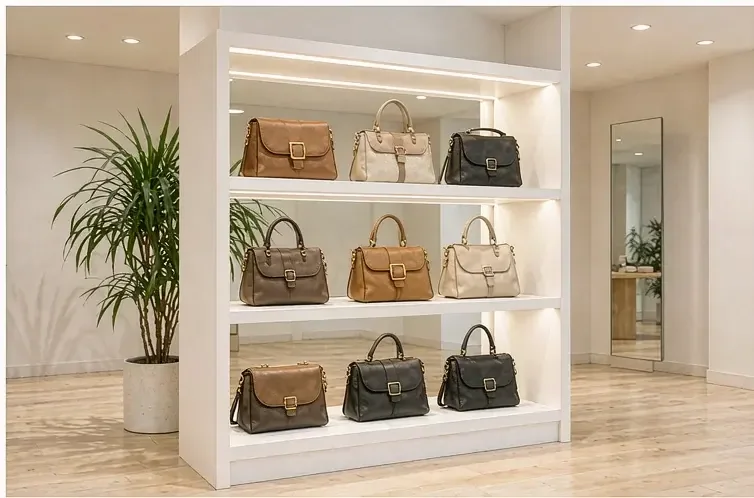
How Many Styles Should a Debut Collection Contain?
Three to five. That range is wide enough for a buyer to read a point of view and narrow enough that every style can be properly developed. Below three, a buyer reads a single product rather than a house; above five, the sampling spend is spread so thin that no style receives the two rounds it needs, and the season ships with five adequate bags instead of one excellent one.
The practical constraint is not money but attention. Each style needs a pattern, a material approval, a hardware decision, a sample round and a photography set. At 500 pcs per style and colourway, five styles in two colourways is already ten production units of work in the first season. Houses that debut with twelve styles almost always end the season with two winners and ten pieces of unsold inventory that tie up cash for a year.
Which Style Should Carry the Season?
One style carries the season, and it is chosen before the others are designed. The hero is the shape the house wants to be known for in year three — usually a structured day bag with a closure that can be custom-cast, because a signature closure is the most durable asset a debut house can own. Roughly 60% of the opening production spend goes into the hero, in both colourways, and the remaining styles exist to make the hero read as part of a collection rather than as a one-off.
The hero
Structured day bag, 1.2-1.4 mm full-grain calfskin, custom-cast closure, both colourways, about 60% of opening spend.
Supporting shape one
A softer shoulder or hobo silhouette in the same leather family, sharing the hardware finish and the edge colour.
Supporting shape two
A top-handle or frame bag that shows the highest level of bench work, used for press and for the appointment table.
The evening piece
A minaudière or small frame bag in a single colourway, carrying the exotic or metallic option the house wants to be known for.
How Much Leather and Hardware Variety Is Sensible?
One leather family and one hardware finish. A debut season that specifies three leathers and four finishes is commissioning three times the material approval work and multiplying the chance of a shade mismatch. Full-grain calfskin at 1.2-1.4 mm in two colourways, with brass hardware plated at 0.15-0.3 µm from a single bath, gives a collection coherence and keeps every later re-order measurable against one sealed sample.
- Styles in season one
- 3-5, with one named hero
- Colourways per style
- Maximum 2 in the debut season
- Minimum per style
- 500 pcs per style and colourway
- Leather
- Full-grain calfskin 1.2-1.4 mm, single tannery lot
- Hardware
- Brass, 0.15-0.3 µm plating, one bath, one finish
- Sampling
- 6-10 working days, 12-15 for frame or custom-cast work
- Bulk
- 35-50 days from approved sample, FOB Xiamen
The same discipline has to reach the small components, which is where a coherent collection most often comes apart. Zippers are specified once by size and chain type — a #5 metal chain on the exterior, a finer coil for interior pockets — and used across every style. Feet, rivets and strap ends are bought from the same finish lot as the main closure so the colour family stays aligned. Edge paint is mixed to one recorded formula by weight, applied in three coats and dried on a fixed cycle rather than mixed by hand at the bench.
How Many Sample Rounds Does a First Collection Need?
Two, and occasionally three. The first round tests proportion and construction: does the shape stand up unstuffed, does the handle rise correctly, does the closure meet at the right tension. The second tests finish: shade against the sealed reference, edge paint density, stitch density at 8-9 per inch and the plating colour. A third round is warranted only where frame work or a custom-cast closure is involved, and those run 12-15 working days rather than 6-10.
- Round one is a construction check — pattern, proportion, handle rise, closure tension, interior layout.
- Round two is a finish check — shade at ΔE ≤ 1.0, edge paint, stitch density, hardware colour, lining fit.
- A third round is justified for frame bags, custom hardware or any construction the bench has not run before.
- Photography is shot against the approved sample from the final round, never against an earlier unit.
- The approved unit is sealed and becomes the reference every later drop is measured against.
- Every round is recorded in the specification ledger, so season two starts from a written reference rather than a memory.
How Is the Opening Order Allocated Across Styles?
Concentrate rather than spread. The hero takes roughly 60% of the opening quantity across both colourways; the two supporting shapes take about 30% between them; the evening piece takes the remainder, usually a single colourway at the minimum quantity. Concentration does two useful things: it gives the hero enough units to satisfy a first stockist without a second production run, and it produces a sell-through figure per style that is large enough to read.
| Style role | Share of opening quantity | Colourways | Why this share |
|---|---|---|---|
| Hero structured day bag | About 60% | 2 | Enough units to supply a first stockist and still read as the house signature |
| Supporting shoulder shape | About 18% | 2 | Extends the collection without competing with the hero |
| Supporting top-handle | About 14% | 1-2 | Carries the press story and shows bench capability |
| Evening minaudière | About 8% | 1 | Adds an exotic or metallic option and a second press angle |
What Does the Ninety-Day Calendar Look Like?
A debut season fits inside ninety days if the sequence is respected. Weeks one to three are specification and material selection. Weeks four to six are sampling and the two rounds, with photography shot against the approved sample. Weeks seven to thirteen are bulk at 35-50 days, with inspection at AQL 2.5 under ISO 2859-1 before release. Photography and marketing assets are built during bulk rather than after it, which is what makes a launch date hold.
- Weeks 1-3: write the specification, choose the leather family, the hardware finish and the two colourways.
- Weeks 4-6: run sampling at 6-10 working days, or 12-15 for frame work, and complete two rounds.
- Week 6: approve and seal the reference sample, then ship it for photography.
- Weeks 7-13: bulk at 35-50 days, with inspection at AQL 2.5 and a pre-shipment report.
- Weeks 10-13: build product pages, the line sheet and the press kit from the finished photography set.
- Week 13 onward: release to stockists, with spare hardware at 2% of unit quantity held for repairs.
What Goes Wrong in a Debut Season, and Why
Four failures account for most troubled debuts. The first is style inflation — the collection grows from four styles to nine during sampling, and none is properly finished. The second is colourway enthusiasm, where six colourways are approved and each one is too small to re-order economically. The third is skipping the sealed sample, which means season two has no reference. The fourth is launching before inspection results are reviewed, which is how a house discovers a plating problem through a customer.
None of these are exotic risks, and all four are preventable with the same instrument: a written specification ledger maintained from the first sample round. The ledger records substance, stitch density, plating thickness, closure cycle count and shade tolerance, and it is the document that turns a debut season from a gamble into a repeatable process. Houses that keep one find season two dramatically easier, because most of the specification work is already done.
The debut season in one paragraph
- Three to five styles, one hero taking about 60% of the opening quantity, maximum two colourways per style, one leather family at 1.2-1.4 mm and one hardware finish at 0.15-0.3 µm. Minimum 500 pcs per style and colourway. Sampling 6-10 working days, 12-15 for frame or custom-cast work, two rounds, sealed reference sample. Bulk 35-50 days, inspection at AQL 2.5 under ISO 2859-1, FOB Xiamen, spare hardware at 2%.
Seal the reference sample before bulk cutting starts. Without it, a re-order is a new project: the hide comes from a different dye lot, the plating from a different bath, and nobody can agree what season one actually looked like. One sealed unit prevents all of it.
Plan your first collection with a written specification
If you are preparing a debut season, send your sketches or reference pieces and the quantity you intend per style. Our team will develop them through sampling in 6-10 working days and return a season plan with tolerances, inspection level and FOB Xiamen timing through our quotation desk.
How the First Collection Sets the Re-Order Pattern
The purpose of a first collection is not the season's revenue; it is the data that shapes season two. Sell-through per style, return reasons, which colourway outsold the other, and which closure generated service requests are the four outputs that matter. A concentrated collection produces clean answers to all four. A scattered collection produces ambiguous ones, and ambiguity is the most expensive thing a debut house can buy.
Houses that read this data well usually find the same thing: the hero outsold its allocation, one supporting shape did nothing, and the evening piece generated press disproportionate to its quantity. Season two then writes itself — a deeper hero, one shape dropped, one new supporting style tested at the minimum quantity. The specification work from season one carries over — the pattern, the tolerance ledger, the material approvals and the sealed reference all still exist — which is why a second season can be developed in a fraction of the time and with far less risk than the first. Houses that skip the ledger discover this the hard way: season two takes as long as season one and produces a shade deviation that nobody in the house can explain to a buyer.
Frequently Asked Questions
How many styles should a first handbag collection have?
Three to five. That is wide enough for a buyer to read a point of view and narrow enough that each style gets the two sample rounds it needs. Debut seasons with nine or more styles usually end with two winners and a year of tied-up inventory, because the development work was spread too thin to finish anything properly.
What is a hero style and why does it matter?
The hero is the shape the house wants to be known for in year three, usually a structured day bag with a closure that can be custom-cast. It takes about 60% of the opening quantity across both colourways. A signature closure is the most durable asset a debut house can own, far more than a logo.
How many colourways are sensible for a debut season?
Two per style, and only one for the evening piece. Six colourways across a small collection means each is too small to re-order economically and each needs its own material approval, dye lot record and photography session. One extra colourway costs more in coordination than it returns in choice.
What is the minimum order per style?
500 pcs per style and colourway. That quantity is what makes a structured bag economical to develop: the pattern, the tooling, the material approval and the inspection plan are all fixed costs that a smaller run cannot absorb without compromising either the specification or the finishing standard.
How long does a first collection take from sketch to delivery?
About ninety days if the sequence is respected. Three weeks for specification and material selection, two to three weeks for sampling at 6-10 working days with two rounds, and 35-50 days for bulk. Photography and marketing assets are built during bulk so the launch date holds.
How many sample rounds does a debut line need?
Two, occasionally three. The first checks construction: proportion, handle rise, closure tension and interior layout. The second checks finish: shade at ΔE ≤ 1.0, edge paint density, stitch density at 8-9 per inch and hardware colour. A third is warranted for frame work or custom-cast closures.
Should a first collection include an evening bag?
Yes, one, in a single colourway and usually at the minimum quantity. A minaudière or small frame bag gives the house a second press angle and lets it test an exotic or metallic material without committing the whole season to it. Press coverage from that piece often exceeds its share of the order.
How should the opening quantity be split across styles?
Roughly 60% to the hero across both colourways, about 18% and 14% to the two supporting shapes, and around 8% to the evening piece. Concentration gives the hero enough units to supply a first stockist without a second run and produces a sell-through figure large enough to read.
Why is a sealed reference sample important for a debut?
Because without one a re-order becomes a new project. The hide comes from a different dye lot, the plating from a different bath, and nobody can agree what the first season looked like. One sealed unit, held by both sides, is the least costly insurance a debut house can buy.
What leather substance suits a first structured collection?
Full-grain calfskin at 1.2-1.4 mm, from a single tannery lot and recorded by batch. That range holds a structured shape without excessive weight and takes edge paint and skiving cleanly at 0.6 mm. Specify the tolerance rather than a single figure so a later lot can be checked against it.
What are the most common debut season mistakes?
Style inflation during sampling, too many colourways, skipping the sealed sample, and releasing goods before inspection results are reviewed. All four are prevented by one instrument: a written specification ledger maintained from the first sample round through to bulk release.
How does the first collection shape season two?
Through four data points: sell-through per style, return reasons, colourway performance and service requests by closure type. A concentrated collection gives clean answers to all four; a scattered one gives ambiguous answers. Season two then deepens the hero, drops the weakest shape and tests one new style at the minimum quantity.
People Also Ask
What is a capsule collection in luxury handbags?
A small, tightly edited group of styles built around one idea and one material family. For a debut it usually means three to five styles in two colourways, concentrated around a single hero shape.
Why do debut collections have few styles?
Because each style needs a pattern, material approval, hardware decision, two sample rounds and a photography set. Spending that work across four styles finishes all four; spreading it across twelve finishes none.
What is a hero product in a fashion launch?
The single style that carries the season's identity and most of its quantity. In handbags it is typically a structured day bag with a custom-cast closure, because the closure is what customers recognise later.
How long is a handbag sampling round?
6-10 working days for a structured style, extending to 12-15 where frame construction or a custom-cast closure is involved. Two rounds is normal for a debut, with the second focused on finish rather than construction.
Should a new brand offer exotic leather in season one?
Only in one evening piece, with CITES documentation in place. Testing an exotic on a single small style gives the house a distinctive press angle without committing the whole season's material approval work to it.
Sources and further reading
Every figure on this page is either our own programme data or attributed below. Open the originals before you write them into a specification.
- Leather Working GroupLeather Working Group Tannery audit protocol referenced when a debut collection names a single hide source that must remain available across seasons.
- CITES AppendicesCITES Appendix listings that determine whether an exotic material in an evening piece may be traded and documented.
- ISO — International StandardsInternational Organization for Standardization Publisher of ISO 2859-1 sampling procedures and ISO 11644 finish adhesion used in a debut specification ledger.
- Regulation (EU) No 1007/2011 on textile fibre names and labellingEuropean Union Fibre name and labelling rules applied to linings and textile components of a handbag collection.