How to Craft a Luxury Handbag Brand Narrative: Five Beats, One Physical Artefact Each
How do you craft a luxury handbag brand narrative? Build it from five beats — origin, atelier, material, ritual and keeper — and attach one physical artefact to each claim so the story survives contact with the product. A narrative that names 1.2-1.4 mm full-grain calfskin, 8-9 stitches per inch and 0.15-0.3 µm plating is defensible in a showroom; one that only says 'hand-finished' is not. Write the beats before the first drop and test them in a ninety-second verbal read with buyers, because a commitment of 500 pcs per style and colourway is far too expensive to hang on a sentence nobody can verify.
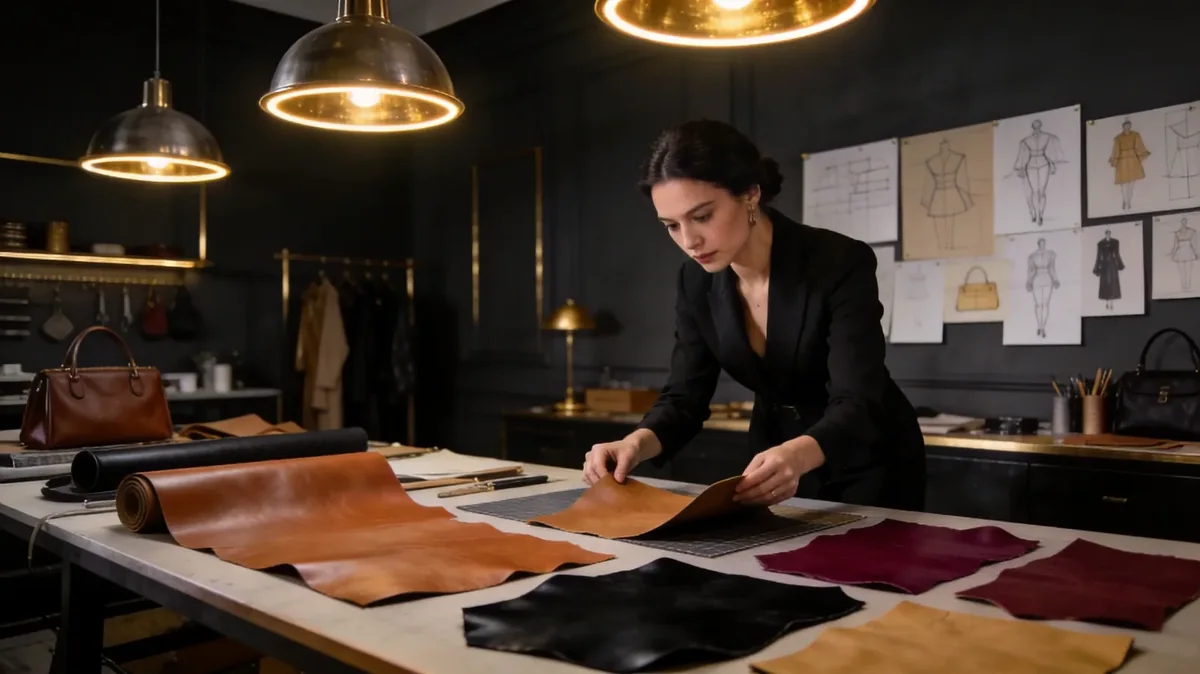
Why a Handbag Narrative Has to Be Provable Before It Is Beautiful
A brand narrative in this category is not a mood; it is a set of claims a buyer can check with her hands. The test is simple: read one sentence of your story, then point at the thing on the bag that makes it true. If the sentence is 'the leather is chosen for how it ages', the artefact is a hide specification with a tannery name and a substance figure. If there is no artefact, the sentence is decoration, and decoration is what gets cut when a buyer has twelve minutes and forty other appointments.
This is why narrative work belongs next to specification work rather than after it. The beat structure below was written for houses running structured calfskin at 1.2-1.4 mm with brass turn-locks plated to 0.15-0.3 µm, but the logic holds for any premium line: every claim carries a number, a name or an object, and the object is photographed and filed. Houses that do this find that press coverage writes itself, because a journalist can quote a fact instead of paraphrasing an adjective.
Case: A Five-Style Label With a Story Nobody Could Repeat
A label preparing its debut season had a founder note, a manifesto paragraph and three adjectives — 'timeless', 'artisanal', 'considered'. At a trade appointment the buyer asked one question: what makes this different from the eleven other debut lines she had seen that week? The founder answered with the adjectives again. The appointment ended without an order, and the post-mortem identified the real problem: nobody inside the label could repeat the same story twice, because the story had no nouns.
The rebuild took three weeks and cost nothing. The team wrote five beats, attached one artefact to each — a tannery name, a stitch gauge photograph, a plating thickness reading, a skiving sample, a repair card — and cut every adjective that did not have an object behind it. The same buyer, revisited two months later with the same five styles, placed an opening order. The product had not changed at all; what changed was that every sentence could now be verified on the sample in her hand.
The Five Beats: Origin, Atelier, Material, Ritual, Keeper
Five beats is enough to carry a house and few enough to be memorised by everyone who speaks for it. Origin says where the idea came from and refuses the invented ancestry. Atelier says who makes it and shows the bench. Material says what it is made of, in the language of substance and finish. Ritual says what happens to the object in use. Keeper says who inherits it and what the house will do for them in ten years. Each beat earns one paragraph, one artefact and one photograph.
Origin
Where the idea started — a specific object, place or commission — stated without borrowed heritage or invented dates.
Atelier
Who cuts, skives and closes the bag, shown by the bench itself rather than by a studio portrait of the founder.
Material
Substance, finish and source: 1.2-1.4 mm full-grain calfskin, named tannery, recorded dye lot.
Ritual
What the owner does — how the bag is packed, carried, rested and refreshed across a season of use.
Keeper
What the house still owes the object in year ten: spare hardware, edge refinishing, a repair path.
One Artefact per Beat: What Physically Carries the Claim
An artefact is a physical thing that makes a sentence checkable. It can be a swatch card, a gauge reading, a pattern piece, a photograph of an operation, or a card that ships with the bag. The rule is one artefact per beat and no beat without one. Artefacts also solve a practical problem: they are the assets a photographer, a buyer and a journalist all need, and they are far cheaper to produce at sampling than to reconstruct after launch.
- Leather substance
- 1.2-1.4 mm full-grain calfskin, recorded by tannery lot
- Stitch density
- 8-9 stitches per inch, bonded Tex 40 thread
- Edge finish
- Three coats, weight-based formula, dried on a fixed cycle
- Hardware plating
- 0.15-0.3 µm over brass, filed XRF reading per lot
- Closure test
- 500 pull cycles on a #5 metal chain
- First drop
- 500 pcs per style and colourway, FOB Xiamen
Writing the Material Beat Without Exaggeration
The material beat is where debut houses most often overreach. 'Finest Italian calfskin' is not a claim; it is a genre. 'Full-grain calfskin at 1.2-1.4 mm from a single tannery lot, finished for a slow patina and tested to ISO 11644 for coating adhesion' is a claim, and it can be checked. The same discipline applies to hardware: name the alloy, the plating thickness and the cycle count rather than describing the closure as 'jewellery-grade'.
- Name the tannery or the tannery audit protocol — Leather Working Group rating — rather than the country alone.
- Give substance in millimetres and state the tolerance, because 'about 1.3 mm' and '1.2-1.4 mm' are different promises.
- Quote the fastness and adhesion standards used: ISO 105-X12 for rubbing, ISO 11644 for finish adhesion.
- State the plating thickness at 0.15-0.3 µm and the salt spray hours, 24 as standard and 48 for humid destinations.
- Declare substance compliance — REACH Annex XVII and California Prop 65 — as a fact, not as a virtue.
- Say what the material will do over time. Patina is a promise, and promises are what a keeper beat is built on.
Where the Narrative Meets the Spec Sheet
A narrative that contradicts the specification sheet destroys trust faster than no narrative at all. The reconciliation is mechanical: take each beat, find the line in the tech pack that supports it, and confirm the two use the same number. Where a beat has no supporting line, either the line is missing from the pack or the beat is marketing. Both are fixable before sampling closes, and neither is fixable after 500 pcs have been cut.
| Beat | Claim sentence | Artefact | Spec line that proves it |
|---|---|---|---|
| Origin | The shape came from a 1970s doctor's case in the founder's family | Photograph of the reference piece beside the pattern | Pattern reference noted in the tech pack header |
| Atelier | Every panel is skived and closed by hand at the bench | Photograph of skiving to 0.6 mm | Skiving tolerance 0.6 mm ± 0.1 recorded |
| Material | Full-grain calfskin chosen to darken slowly | Swatch card with tannery lot | 1.2-1.4 mm, lot recorded, ISO 11644 result filed |
| Ritual | The bag is designed to be rested, stuffed and refreshed each season | Care card shipped in the dust bag | Care card artwork listed as a packing item |
| Keeper | Spare hardware and edge refinishing for ten years | Repair card with a style reference | 2% spare hardware holding recorded on the order |
Testing the Story: The Ninety-Second Verbal Read
Before the narrative goes into a lookbook, it has to survive being spoken. The ninety-second verbal read is a test, not a pitch: the founder or the sales lead says the five beats aloud without notes, and a colleague who has never heard them writes down what she remembers. If she can repeat two beats and one number, the story is working. If she repeats adjectives, it is not.
- Say the five beats aloud in ninety seconds, with no slide and no note card.
- Ask the listener to write down everything she remembers without being prompted.
- Count the nouns and the numbers she captured — you want at least four nouns and one figure.
- Cut every sentence that produced no recall. Do not rewrite it; cut it.
- Repeat the read with a buyer or a stockist within two weeks of the first test.
- Lock the surviving text as the house boilerplate and use it unchanged in the about page, the line sheet and the press kit.
Photography, Proofing and the Archive Room
Narrative artefacts have to be photographed under the same discipline as the product, because a swatch card shot in warm light undermines every colour claim attached to it. Proofing happens under D65 with a reference card in frame, and shade is held at ΔE ≤ 1.0 against the sealed sample. The finished frames go into an archive room — physical or digital — alongside the sealed golden sample, so that year three's story can still be checked against year one's object.
- Shoot artefacts at the same colour temperature as the product set, with a reference card in the first frame of every session.
- Hold ΔE ≤ 1.0 between the photographed swatch and the sealed sample measured under D65.
- File one archival photograph per beat, named by style and season, with the specification version attached.
- Keep a physical archive shelf for sealed samples, swatch cards and hardware lots — the story is easier to defend with objects present.
- Reuse the same artefact frames in the about page, the line sheet and the press kit so the house looks like one voice.
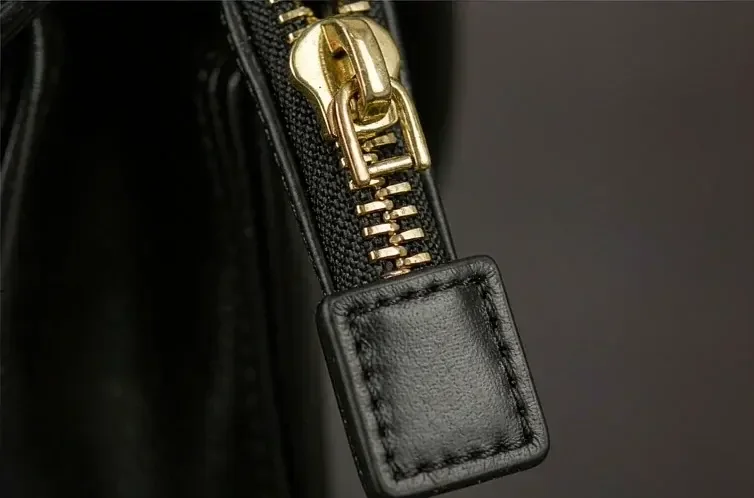
Rolling the Narrative Into a 500-Piece First Drop
The narrative has to survive the production calendar, which is where most debut houses lose it. Sampling runs 6-10 working days for a structured style and 12-15 where frame work or a custom-cast closure is involved; bulk runs 35-50 days. The beats are written during sampling, the artefacts are produced in the same round, and the photography is shot against the approved sample — not against a digital render — so that every claim in the story matches the unit that ships.
What the narrative costs and when it is written
- Write the five beats before sampling, produce the five artefacts during the 6-10 working days of sampling round, and shoot them against the approved sample. Bulk runs 35-50 days at 500 pcs per style and colourway, inspected at AQL 2.5 under ISO 2859-1, FOB Xiamen. A swatch card printed for a buyer appointment costs about USD 4.80 each, which is small against the cost of a first drop whose story nobody can repeat.
Take any sentence from your about page and ask which object on the bag proves it. If the answer is a photograph of a founder rather than a panel, a gauge reading or a swatch card, the sentence is decoration. Boilerplate that fails this test is the first thing a serious buyer sets aside.
Build your narrative against a sample you can hold
If you are preparing a debut season, send your sketch or reference piece and the quantity you plan per colourway. Our team will develop it through sampling in 6-10 working days, produce the artefacts that carry each claim, and return a drop plan with a written tolerance set through our quotation desk.
Common Ways a Debut Narrative Breaks
Four failures account for most weak narratives. The first is borrowed heritage: a founding date or a place the house has no connection to, which collapses the moment a journalist checks. The second is unverifiable scale — adjectives like 'rare' or 'few' with no number attached. The third is a material claim the spec sheet contradicts, usually discovered at the sample appointment. The fourth is a keeper promise the house has no repair path for, which turns the strongest beat into a liability.
All four are avoidable with the same discipline: a noun, a number and an object behind every sentence. Houses that adopt it find the narrative gets shorter, not longer, and that the shorter version travels further — into the line sheet, into the buyer's own notes, and into the press release a journalist can quote without calling back to check a fact.
Frequently Asked Questions
How do you craft a luxury handbag brand narrative?
Write five beats — origin, atelier, material, ritual and keeper — and attach one physical artefact to each. Every claim should carry a noun and a number: 1.2-1.4 mm calfskin, 8-9 stitches per inch, 0.15-0.3 µm plating. Then test the whole thing in a ninety-second verbal read and cut every sentence that produces no recall from the listener.
Why does a brand story need physical artefacts?
Because buyers, stockists and journalists check. A swatch card, a gauge reading or a photograph of an operation turns an adjective into a fact that survives questioning. Artefacts are also the reusable assets a photographer and a sales team both need, and they cost far less to produce during sampling than to reconstruct after a 500-piece drop has shipped.
What are the five beats of a handbag brand narrative?
Origin covers where the idea came from without invented ancestry. Atelier covers who makes the bag, shown by the bench rather than a portrait. Material covers substance, finish and source. Ritual covers how the object is carried, rested and refreshed. Keeper covers what the house still owes the owner in year ten, including spare hardware and a repair path.
How long should a brand narrative be?
Short enough to be spoken in ninety seconds without notes and long enough to carry four nouns and at least one figure. In practice that is five short paragraphs plus a line sheet. Most debut houses write far too much; the recall test reliably cuts the text by a third and makes what remains considerably stronger.
What is the ninety-second verbal read?
It is a recall test, not a pitch. The founder speaks the five beats aloud with no slides, and a colleague who has never heard them writes down what she remembers. Count the nouns and numbers she captured: four nouns and one figure means the story works. Anything that produced no recall is cut rather than rewritten.
How do you write the material beat honestly?
Name the substance in millimetres with a tolerance, the finish, and the tannery or its Leather Working Group audit status. Quote the standards used — ISO 105-X12 for rubbing, ISO 11644 for finish adhesion — and declare REACH Annex XVII and California Prop 65 compliance as a fact rather than a virtue.
How does the narrative connect to the tech pack?
Every beat must map to one line in the specification. If a beat has no supporting line, either the line is missing from the pack or the beat is marketing. Reconciling the two before sampling closes is straightforward; discovering a mismatch at the sample appointment, with a buyer in the room, is not.
When should narrative work happen in the development calendar?
Before sampling. Sampling runs 6-10 working days for a structured style and 12-15 where frame work or a custom-cast closure is involved, and the artefacts should be produced inside that same round. Bulk runs 35-50 days, so the photography can be shot against the approved sample well before the drop ships.
How important is colour accuracy to brand storytelling?
Critical, because a swatch shot in warm light quietly contradicts every colour claim attached to it. Proof under D65 with a reference card in the first frame of each session and hold shade at ΔE ≤ 1.0 against the sealed sample. Archive those frames beside the sealed sample so year three's story still matches year one's object.
What is the most common mistake in debut brand narratives?
Borrowed heritage — a founding date or place the house has no connection to, which collapses the moment anyone checks. Close behind it is unverifiable scale: 'rare' or 'few' with no number attached. Both are fixed by the same discipline of putting a noun, a figure and an object behind every sentence.
How do you keep a narrative consistent across channels?
Lock the surviving text as house boilerplate and use it unchanged in the about page, the line sheet and the press kit. Reuse the same artefact photographs across all three. When a house sounds like one voice everywhere, a buyer meeting the line for the second time recognises it immediately, and recognition is what converts to an opening order.
Can a small house tell a credible craft story?
Yes, provided the claims are specific and checkable. A house with five styles and 500 pcs per colourway can name its tannery, publish its stitch density and show its bench more convincingly than a large house can, because specificity is available to anyone willing to do the specification work rather than buy adjectives.
People Also Ask
What is a brand narrative in luxury handbags?
It is the short, repeatable account of where a house came from, who makes its bags, what they are made of, how they are used and who inherits them. In luxury it must be provable: each claim needs an object or a figure behind it.
How many claims should a debut collection make?
Five, one per beat. More than that and nothing is remembered; fewer and the line looks generic. Each claim carries a number — substance, stitch density, plating thickness or a test cycle count.
Why do buyers distrust adjectives like artisanal?
Because they are used by every debut line and verified by none. A buyer can check 8-9 stitches per inch or a 0.15-0.3 µm plating reading in seconds; she cannot check a mood, so the mood is set aside.
Should a founder appear in the brand story?
Briefly, and only where the founder is the source of the design decision. The stronger artefact is usually the object itself — the reference piece, the pattern, the bench — rather than a portrait.
How do you prevent the story drifting across seasons?
Keep a sealed golden sample per style and colourway, archive the artefact photographs with the specification version, and reuse the locked boilerplate. Drift starts when a season is written from scratch instead of from the archive.
Sources and further reading
Every figure on this page is either our own programme data or attributed below. Open the originals before you write them into a specification.
- Leather Working GroupLeather Working Group Tannery audit protocol referenced when a material beat names a hide source and its environmental rating.
- ISO — International StandardsInternational Organization for Standardization Publisher of ISO 11644 finish adhesion, ISO 105 colour fastness and ISO 2859-1 sampling procedures.
- Understanding REACHEuropean Chemicals Agency Annex XVII restrictions that apply to leather finishes, coatings and plated hardware on the EU market.
- Proposition 65California OEHHA Substance and warning requirements for handbags and metal hardware sold into California.