Launching With a Handbag Maison: Step by Step — Seven Steps, Two Routes Each
Launching with a handbag maison takes seven steps: choose the range shape, set the specification, approve materials, decide hardware, run sampling, release bulk, and plan the re-order. Each step offers two routes, and the route chosen matters more than the step. The working figures hold throughout — 500 pcs per style and colourway, sampling in 6-10 working days, bulk in 35-50 days, inspection at AQL 2.5 under ISO 2859-1, quoted FOB Xiamen.
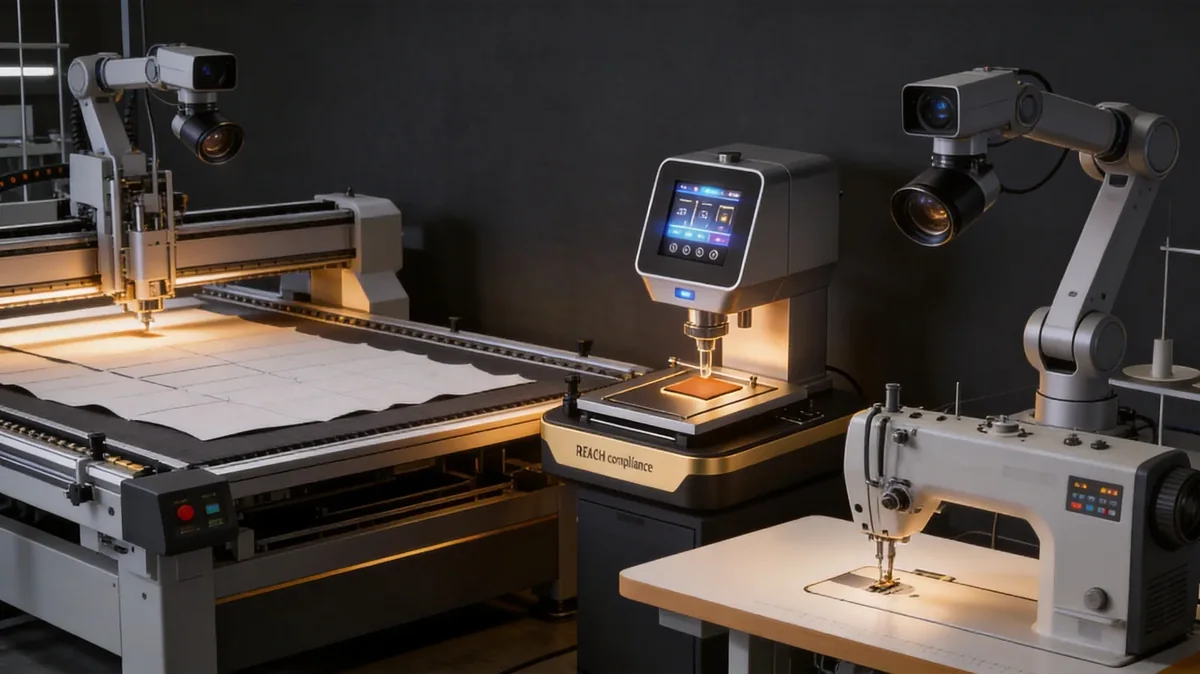
Step 1 — Choose the Range Shape: Three Options Compared
The first decision is how many styles and how many colourways the launch carries, and it is a decision about risk rather than about volume. One style is the smallest order but the largest bet, because the whole season sits behind a single silhouette and it fills nothing on a rail. Three styles in two colourways is the working answer, at six production units of 500 pieces.
| Range shape | Production units | Total pieces | What it suits | What it risks |
|---|---|---|---|---|
| 1 style, 1 colourway | 1 | 500 pcs | Testing a single hero silhouette | The whole season behind one bet |
| 2 styles, 2 colourways | 4 | 2,000 pcs | A tight first rail on a limited spend | Thin presence across two price points |
| 3 styles, 2 colourways | 6 | 3,000 pcs | Three price points and two colour stories | The standard; requires the most brief work |
| 4 styles, 3 colourways | 12 | 6,000 pcs | An established house with proven demand | Twelve dye lots to approve and hold |
Note the asymmetry between styles and colourways. An extra colourway costs more than an extra silhouette, because colour carries a fresh dye lot, a fresh shade approval and its own 500 pcs minimum, whereas an extra style in an existing colourway reuses the material approvals already on file. Include one flat envelope among the three: at one pattern and four panels it absorbs a late decision better than a structured gusseted body does.
Step 2 — Set the Specification: Open File vs Locked File
The second step is deciding how much of the file is fixed before sampling begins. An open file leaves strap drop, gusset depth and interlining weight to be resolved on the bench; a locked file states them. The locked file takes longer to write and it removes a round of questions, which is the trade. The figures worth locking are the ones that are hard to change later.
Lock the panel tolerances at ±1.5 mm cut and ±3 mm on a finished stuffed bag, the gusset at ±2 mm, the strap drop at ±5 mm on a 220 mm length, and the stitch density at 8-9 per inch. Leave the edge finish open until the first prototype, because the decision between three coats of edge paint and a turned skived edge is easier to make with a sample in hand than with a drawing. The sequence of stages the file feeds into is described on the Handbag Maison Programme pillar page.
Step 3 — Approve Materials: Booked Lot vs Available Hide
Material approval is the step with the longest shadow, because the choice made here is the one a customer notices in season two. The available-hide route chooses a material from what the tannery has and re-chooses next season. The booked-lot route names a lot of 300-500 hides, buys it against the season and retains a swatch from it. The second costs a little more administration and removes the most common cause of a mismatched re-order.
Whichever route, specify the laminate as one material. A 1.2-1.4 mm full-grain calfskin outer over a 0.6 mm suede lining with a 0.8 mm interlining behaves as one thing, and the hand of the finished panel is a property of the three together. Request Leather Working Group audit status at the tannery by name, run tensile strength to ISO 3376 and finish adhesion to ISO 11644, and approve a named alternative finish in case the first is discontinued.
Step 4 — Decide Hardware: House Fitting vs Custom Cast
Hardware is the step that cannot be deferred, and the two routes are genuinely different propositions rather than two prices. A house fitting costs nothing in tooling and keeps the schedule short. A custom-cast closure costs USD 450-900 per mould and 8-12 days, and it is the only component on a bag that cannot be copied without a fresh mould. For a launch, that is usually the argument that settles it.
- Custom tooling charge
- USD 450-900 per mould, one-off and reusable
- Tooling lead time
- 8-12 days before the first prototype is built
- Plating thickness
- 0.15-0.3 µm over a nickel-free undercoat
- Salt spray resistance
- 24 hours standard, 48 hours for humid markets
- Zipper specification
- #5 metal chain for a structured flap, lighter for a soft body
- Zip pull swing test
- 5,000 cycles on the finished unit, recorded per lot
- Magnet pull on a flap
- 1.2 kg minimum, tested after the bag is stuffed
- Foot studs
- 4 mm height, four per base, set on a reinforced panel
Step 5 — Run Sampling: Sequential vs Parallel
The fifth step is the one where a launch is most often lost, and the choice is deceptively simple. Sampling sequentially feels orderly: finish one style, then start the next. Sampling in parallel feels risky and is not, because the pattern work and the bench time are separate. Three styles sampled together finish inside the same 6-10 working day window as one.
| Route | Calendar for three styles | Correction rounds | What it suits |
|---|---|---|---|
| Sequential | 20-30 working days | 2-3 per style, in series | A single hero style with heavy development |
| Parallel | 6-10 working days | 2-3 per style, concurrent | A three-style launch with a fixed window |
| Parallel with confirmation | 6-10 plus 3-5 days | 1-2, then a confirmation round | A re-order against a sealed reference |
Two rules make the parallel route work. Approve the pattern before the prototype is cut rather than after, because a silhouette change at prototype stage costs a full cycle. And record every correction in writing — verbal corrections given on a sample call are the most common source of a wrong second sample. Expect USD 180-320 per prototype for a structured calfskin bag, usually credited against the bulk order.
Step 6 — Release Bulk: Inline Checks vs Final Inspection Only
The sixth step decides what release means. Final inspection alone is a statistical exercise: a sample is drawn to AQL 2.5 under ISO 2859-1 at general inspection level II, and the lot is accepted or rejected on what it finds. Inline checks add readings taken at the bench during the run, which turns a fault found at the end into a correction made in the middle. Both release at the same standard; only one prevents the fault.
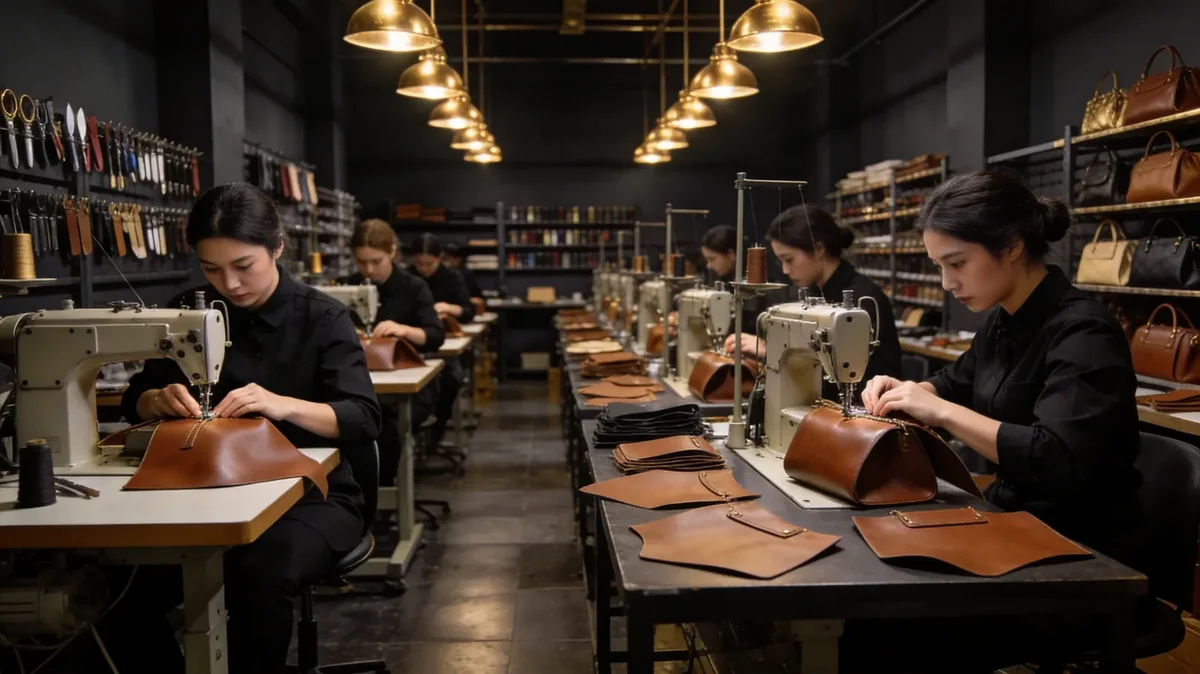
Specify packing before the run rather than after it. A 5-ply export carton, a 0.04 mm polybag, 17 gsm tissue, a 2 g silica sachet per bag and a 300 gsm hangtag card are ordinary line items that become expensive when discovered after the goods are packed. Put them in the purchase order. Bulk runs 35-50 days from the approved sample, with terms quoted FOB Xiamen and CIF and DDP available.
Step 7 — Plan the Re-order: Re-quote vs Sealed Reference
The last step is the one that decides whether there is a second season, and it is decided at the end of the first. The re-quote route treats the next order as a new one: the file is rebuilt, the tooling is charged again, the material approvals are retaken. The sealed-reference route carries the pattern, the mould, the approvals and a golden sample forward, and the next order runs in 28-35 days rather than 35-50.
Pattern file
Held against the brand at a recorded revision number, released to a second house only with written consent. The asset the re-order depends on.
Correction log
Every change recorded against a revision, so the same correction is not rediscovered. The clearest evidence that a specification is being held.
Tooling record
Mould number and its location, so a later season is not quoted with a tooling charge already paid for once.
Golden sample
One sealed unit per style and colourway, held on both sides. Without it a re-order has no reference and the second season is a re-sampling exercise.
Material approvals
Hide lot, lining, thread and plating readings on file, with a named alternative finish approved in case the first is discontinued.
Which Route Fits Which Launch
Taken together, seven steps and two routes each give a launch its shape. The recommendation below is not universal — it is what works for a design-led house launching its first or second season with a fixed window and a specification worth defending. The figures that hold in every case are the ones the programme is built on.
The recommended route in one line per step
- Three styles in two colourways. Lock the tolerances, leave the edge finish open. Book the hide lot and retain a swatch. Cast the closure. Sample in parallel. Add inline checks to the final inspection. Seal the golden sample and carry the file forward. Minimum 500 pcs per style and colourway, sampling 6-10 working days, bulk 35-50 days, inspection AQL 2.5 under ISO 2859-1, FOB Xiamen.
Material approval. It is the step with the longest shadow and the one most often squeezed when a launch is running late — and a hide chosen in a hurry is a decision that returns in season two rather than staying in season one.
Plan your launch step by step
Send the range shape, the hide intent, the hardware route and the launch date, and our team will return a step-by-step plan and a costed first order through our quotation desk.
Frequently Asked Questions
What are the steps to launch with a handbag maison?
Seven: choose the range shape, set the specification, approve materials, decide hardware, run sampling, release bulk, and plan the re-order. Each has two routes, and the route matters more than the step — parallel over sequential sampling, booked lot over available hide, sealed reference over re-quote.
How many styles should a launch carry?
Three silhouettes in two colourways is the working answer: six production units of 500 pcs, about 3,000 bags. It gives three price points and two colour stories inside one sampling and one bulk window, where a single style fills nothing on a rail.
What is the minimum order for a launch?
500 pcs per style and per colourway, quoted FOB Xiamen. Each colourway carries its own dye lot approval and its own minimum, which is why an extra colourway costs more than an extra silhouette in the same colourway.
Should sampling run in parallel or in sequence?
In parallel. Three styles sampled together finish inside the same 6-10 working day window as one, because the pattern work and the bench time are separate. Sequencing them turns a ten-day window into a month, which is the most common avoidable delay in a launch.
How long does a launch take from brief to delivery?
Roughly three months. Material approval 3-5 days, tooling 8-12 days if the closure is cast, sampling 6-10 working days, a correction round of 5-7 days, pre-production 35-50 days, production 35-50 days for packing and export.
How much does custom hardware add to a launch?
USD 450-900 per mould as a one-off, plus 8-12 days of tooling before the first prototype can be built. The mould is reusable on later drops of the same style, and it is the strongest practical defence against a design being copied.
What is the difference between inline checks and final inspection?
Final inspection draws a sample to AQL 2.5 under ISO 2859-1 at level II and accepts or rejects the lot. Inline checks add readings at the bench during the run, which turns a fault found at the end into a correction made in the middle. Both release at the same standard.
How should packing be specified for a launch?
Before the run, as purchase-order line items: a 5-ply export carton, a 0.04 mm polybag, 17 gsm tissue, a 2 g silica sachet per bag and a 300 gsm hangtag card. A carton specification discovered after the goods are packed is expensive to redo.
What is a golden sample and when is it sealed?
The approved physical unit, sealed one per style and colourway and held on both sides. It is sealed at pre-production, after material certificates are filed and the unit has been photographed against the reference — not after the first drop has shipped.
How does a re-order differ from a first order?
It runs 28-35 days rather than 35-50, because the pattern, the tooling and the material approvals are already on file. Sampling drops to a confirmation round of 3-5 days and the tooling charge is not repeated. Without a sealed reference, it is a re-quote in all but name.
What tolerances should be locked before sampling?
Panel at ±1.5 mm cut and ±3 mm on a finished stuffed bag, gusset at ±2 mm, strap drop at ±5 mm on a 220 mm length, stitch density at 8-9 per inch. The edge finish is better left open until a prototype is in hand.
How much does a launch sample cost?
A structured calfskin prototype runs USD 180-320, more where a frame or a cast clasp is involved because the metal part has to be produced first. The charge is usually credited against the bulk order and should appear as a named line rather than inside the unit figure.
What compliance pack does a launch need?
REACH Annex XVII for the European Union, a Prop 65 assessment for California, CPSIA limits and a tracking label for the United States, EU Regulation 1007/2011 for fibre naming, and Leather Working Group audit status at the tannery. Collect declarations before dyeing and plating.
How is colour controlled across two colourways?
In a D65 light booth against retained physical swatches, held at ΔE ≤ 1.0, with colour-fastness verified to ISO 105. Both colourways are approved against the same booth, and a named alternative finish is approved at the same time in case one is discontinued.
People Also Ask
How do you launch a handbag line?
Seven steps: choose three styles in two colourways, lock the tolerances, book the hide lot, cast the closure, sample in parallel, add inline checks to final inspection, and seal the golden sample for the re-order.
How long does a handbag launch take?
About three months from brief to delivery: 3-5 days material approval, 8-12 days tooling, 6-10 working days of sampling, 5-7 days correction, 3-5 days pre-production, 35-50 days bulk, then packing and export.
How many handbags should a first launch include?
Three silhouettes in two colourways at 500 pcs each, roughly 3,000 bags. It gives three price points and enough shelf presence to read as a collection while staying inside one sampling and one bulk window.
Should sampling be done all at once?
Yes. Three styles sampled in parallel finish in the same 6-10 working day window as one, because pattern work and bench time are separate. Sequencing them turns ten days into a month.
What makes a handbag re-order faster than the first order?
A sealed golden sample plus the pattern file, tooling and material approvals on file. The re-order then runs 28-35 days instead of 35-50, and sampling falls to a confirmation round of 3-5 days.
Sources and further reading
Every figure on this page is either our own programme data or attributed below. Open the originals before you write them into a specification.
- ISO — International StandardsInternational Organization for Standardization Publisher of ISO 2859-1 sampling procedures, ISO 105 colour fastness, ISO 11644 finish adhesion and ISO 3376 tensile strength.
- Leather Working GroupLeather Working Group Tannery audit protocol used to evidence a hide chain and book a lot of 300-500 hides against a season.
- Understanding REACHEuropean Chemicals Agency Annex XVII restrictions on chromium VI, azo dyes, nickel release and phthalates in leather and plated hardware.
- CPSC — Business EducationU.S. Consumer Product Safety Commission CPSIA lead limits, phthalate restrictions and tracking label requirements for goods placed on the United States market.