How to Plan Luxury Bag Packaging for a Collection: A Five-Choice Decision Tree
How do you plan luxury bag packaging for a collection? You plan it as five choices taken in order: how many kit sizes the line needs, what board and finish carry the mark, which decoration method survives stacking, what insert holds each silhouette, and how the packed carton travels. Taken in that order the pack lands with the bags; taken in reverse it lands three weeks after them.
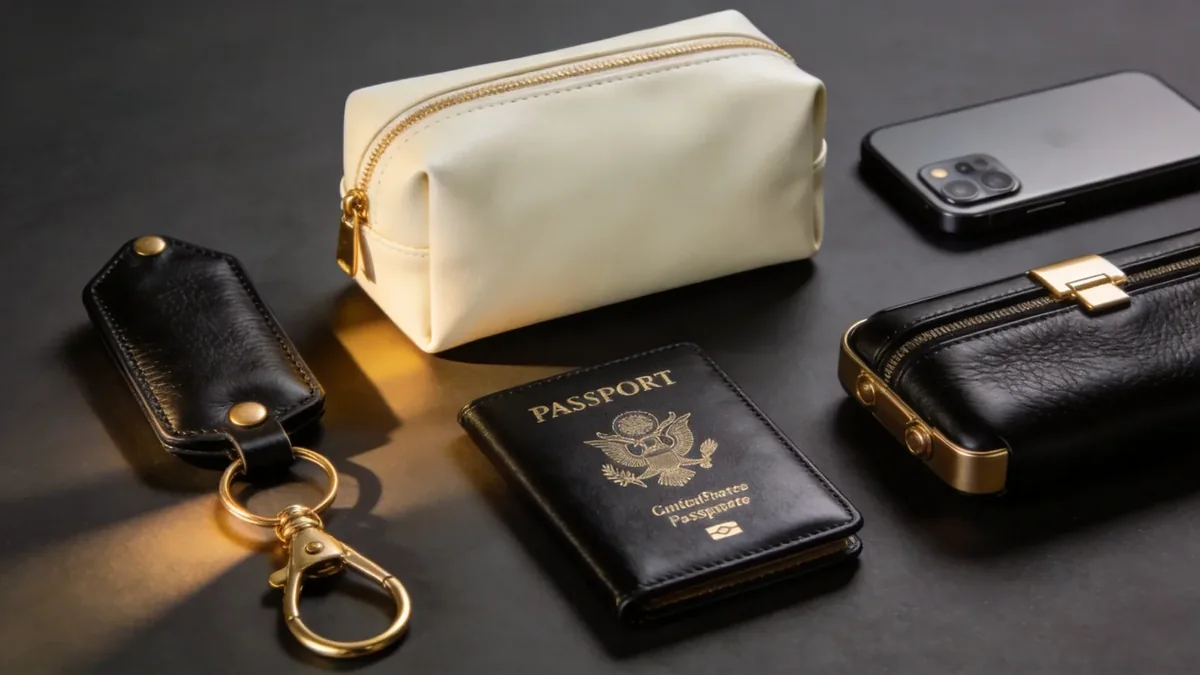
The Decision Tree: Five Choices in Order
Collection packaging is five choices, and they are made in a fixed order because each one constrains the next. Kit sizes first, because a size ladder decided late forces every silhouette into a box that nearly fits. Board and finish second, because the finish decides which foil grade will bond. Decoration third. Insert fourth, because it is cut to the silhouette and cannot be designed before the body is fixed. Freight last, and only then does the carton rating mean anything.
- Decide the kit sizes: usually three boxes covering five silhouettes.
- Choose board and finish, because the finish decides the foil grade.
- Choose the decoration method, and freeze the artwork before tooling.
- Design the insert to the finished body, not to the drawing.
- Rate the shipper carton once the packed weight is known.
Choice One: One Kit or Several?
A first collection rarely needs a box per silhouette. Three sizes — a small for an evening bag and a card case, a medium for a shoulder or top-handle body, and a large for a tote — will cover five or six silhouettes if the internal insert is doing the fitting rather than the shell. The saving is not in the board; it is in the tooling, the print set-up and the number of carton sizes the warehouse has to hold.
The test for adding a fourth size is whether any silhouette is being forced into more than about 15 mm of excess void. Beyond that the insert stops holding the body square, the piece travels inside the box, and the corner wear that arrives is blamed on the freight rather than on the size ladder.
Choice Two: Board, Stock and Finish
Board is chosen by weight and by span. Around 1200 gsm gives about 1.5 mm and suits a box under 300 mm on its longest edge; 1500 gsm gives about 2.0 mm and is the right step above that, because a long lid on thin board bows under its own weight. The wrap paper follows: 128-157 gsm art paper, matte laminated in most cases, because a gloss film reflects the reading light back and flattens the relief.
- Kit ladder
- Three box sizes covering five or six silhouettes
- Board grade
- 1200 gsm below 300 mm, 1500 gsm above
- Wrap paper
- 128-157 gsm art paper, matte laminated
- Relief depth
- 0.3-0.8 mm, 0.5 mm the usual working figure
- Insert wall
- 1.2 mm moulded pulp, or 2 mm foam where the finish is delicate
- Pack-out rate
- About 140 pcs per hour per bench
- Pack cost
- About USD 4.80 per unit for the full presentation pack
Where the pack has to enter a paper recycling stream, the finish choice narrows. A metallised foil layer is rejected by some streams, which is why pigment foil is specified more often than it used to be. Say which stream the pack has to survive at specification time, because the decision cannot be reversed after the foil is chosen.
Choice Three: Decoration Method
Three methods cover the range. Blind emboss carries the mark by shadow alone and is the quietest and least costly. Foil stamping transfers a metallic or pigment layer and is what makes a mark read in a photograph. Registered foil emboss does both in one pass and is reserved for the top of a line, because it carries a tighter tolerance and a new tool if the artwork moves.
- Keep strokes at 0.25 mm minimum for foil and 0.4 mm for blind work.
- Freeze the artwork before the die is cut; a late change means a new tool.
- Hold decoration at least 5 mm clear of any crease or fold.
- Score adhesion with a cross-hatch tape test, 4B the minimum to release.
- State the rejection rule for drift as a number of consecutive pieces.
Decoration is also the line item most sensitive to schedule pressure, because the die is the only tooling in the pack that is cut to a specific artwork. Board can be swapped, wrap stock can be substituted and inserts can be re-cut from stock, but a mark that changes after tooling means starting the window again. That is why the freeze comes before the order rather than after it.
Choice Four: Insert and Support
The insert is the part that actually protects the piece, and it is designed against the finished body rather than the drawing. A moulded pulp tray at 1.2 mm wall holds a structured silhouette square without touching the hardware; a foam pocket is used where the finish is delicate enough to mark under its own strap. The insert must also release: a pocket cut too tight will hold the handle and the customer will force it.
| Silhouette | Insert type | What it must prevent |
|---|---|---|
| Structured top handle | Moulded pulp tray, 1.2 mm wall | Handle roll and corner crush in a stack |
| Soft shoulder body | Foam pocket with a tissue wrap | Collapse and permanent creasing |
| Evening bag with a frame | Die-cut board cradle | Frame distortion at the hinge |
| Tote with an open top | Board collar with a tissue fill | Body folding along the mouth |
| Small leather goods | Shallow tray with a lid catch | Movement and scuffing against the lid |
One more test decides the ladder: pack the heaviest and the lightest silhouette in the line and drop both. If the light one moves more than about 3 mm inside its tray, the tray is too large rather than the insert too soft, and the fix is a size change rather than a material change. Houses usually reach for a thicker foam first, which adds cost without holding the body square.
Timing the Packaging Against the Bag Run
Packaging is ordered to land with the bags, which means it is specified early rather than at the end of development. The print, the board and the die all have their own windows, and the die in particular is cut to artwork that has to be frozen. A pack specified after the bag is approved will arrive after it, and the two shipments then have to be reconciled at the warehouse.
The working sequence is: freeze the mark, cut the die, sample the pack, approve the first article, then release the run alongside the bag programme. Packaging sampling occupies its own 6-10 working day window, or 12-15 where a registered foil emboss is involved, and bulk occupies 35-50 days. Both are drawn at AQL 2.5 under ISO 2859-1 and set out on the luxury quality control page.
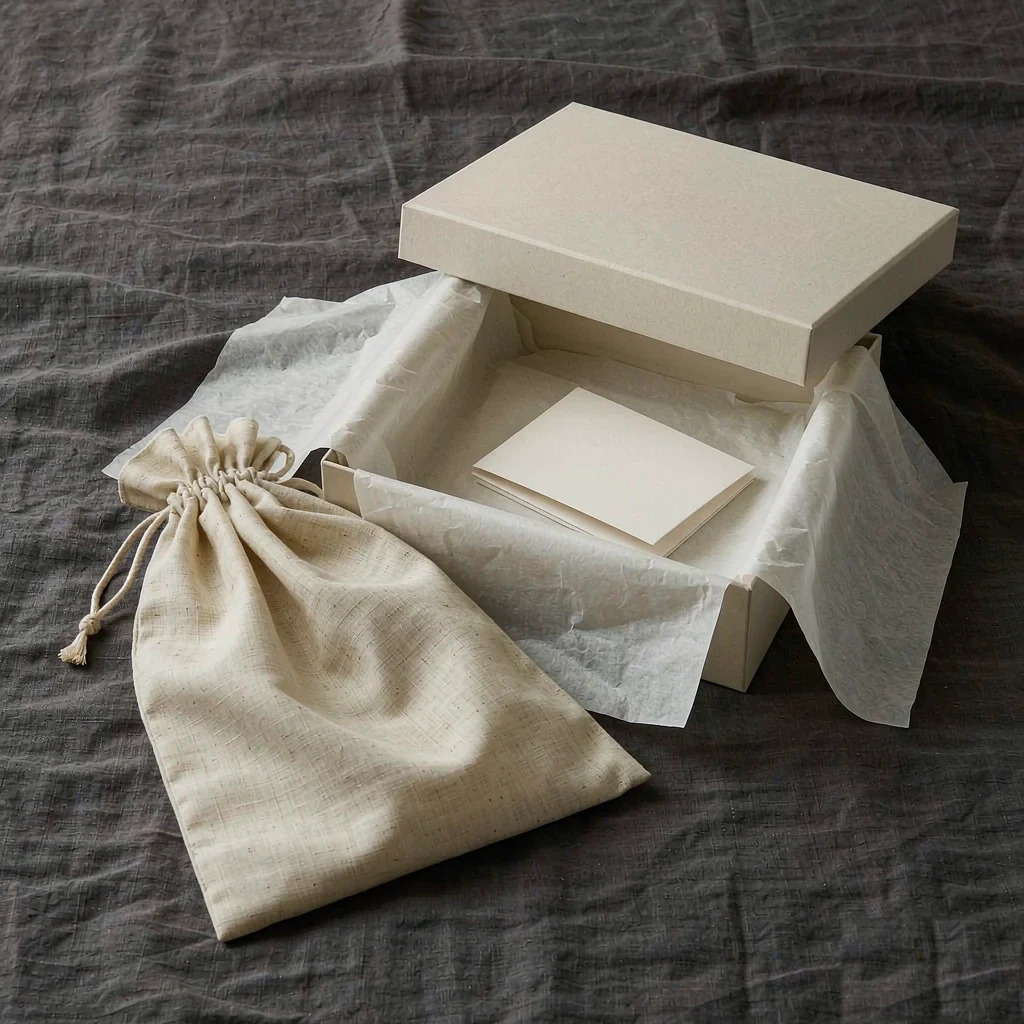
The Sequence From Frozen Mark to Released Pack
The sequence has six steps and each one has a gate. The mark is frozen first, and the gate is a signed artwork sheet rather than an email. The die is cut second, and the gate is a tooling drawing that names material and expected impressions. The pack is sampled third, and the gate is the first-article sheet with photographs. The insert is fitted to a finished body fourth, and the gate is a drop test on the packed box.
The pack is released to the run fifth, against a confirmed quantity plus about 5% over-order to cover print set-up waste and any re-sort after inspection. And the carton is rated sixth, once the packed weight is known rather than estimated. Skipping a gate does not save time; it moves the decision to the warehouse, where it is made by somebody without the drawing.
What the Pack Costs, and Where the Money Sits
A full presentation pack lands near USD 4.80 per unit, split three ways. The board and wrap are the largest single part and scale with surface area, which is why a size ladder matters more than it appears to. Decoration is second and is driven by foil area and tolerance. Inserts are third and depend on whether the tray is tooled or cut from stock.
Board and wrap
The largest single line, scaling directly with surface area. A tighter size ladder is usually a larger saving here than a thinner board, because the board cannot go below about 1200 gsm without the lid bowing.
Decoration
Driven by foil area and by tolerance. A registered foil emboss carries a tighter window and a higher reject rate, which is why it stays at the top of a line rather than across it.
Insert
Tooled trays carry a one-off cost and the lowest unit price; cut stock is the reverse. Above roughly 2,000 pcs the tooled tray usually wins.
Where Collection Packaging Goes Wrong
Four mistakes cause most of the packaging problems we are asked to look at, and all four are ordering errors rather than design errors. Each is listed with the line on the specification that prevents it.
- Sizes chosen after the silhouettes are fixed, forcing bodies into boxes that nearly fit.
- Artwork changed after the die is cut, which means a new tool and a fresh sampling window.
- Inserts designed to the drawing rather than to the finished body, so nothing holds square.
- Carton rated before the packed weight is known, so the board is wrong for the load.
The single most useful thing a brand can do is freeze its mark before the board is ordered. Every late artwork change costs a tool, a sampling window and a place in the schedule.
Writing the Specification That Goes to the Run
The specification that goes to the run is a single sheet: box size and board grade, wrap stock and finish, decoration method with depth and foil reference, insert type and release requirement, carton rating and pack-out sequence, and the inspection plan with its pass score. Six lines. Anything the sheet does not say will be decided at the bench, and decided differently on the second shift.
Packaging drawings are versioned the same way bag drawings are, and the version on the sheet has to match the version the die was cut from. Most decoration disputes come down to two documents that disagree, both of them plausible and neither of them withdrawn. A single controlled sheet removes the argument entirely.
Collection packaging in one line
- Three sizes, board by span, decoration frozen before tooling, insert cut to the finished body, carton rated to the packed weight.
Programme Figures
Our programme runs through our validated partner factory Quanzhou Yingming Bags, an SGS-validated site with 7 production lines and roughly 200,000 pcs per month of capacity, holding export experience since 2014. Sampling takes 6-10 working days, or 12-15 on a complex build; bulk occupies 35-50 days; minimums sit at 500 pcs per style and colourway; and shipments leave FOB Xiamen with FOB, CIF and DDP terms all available.
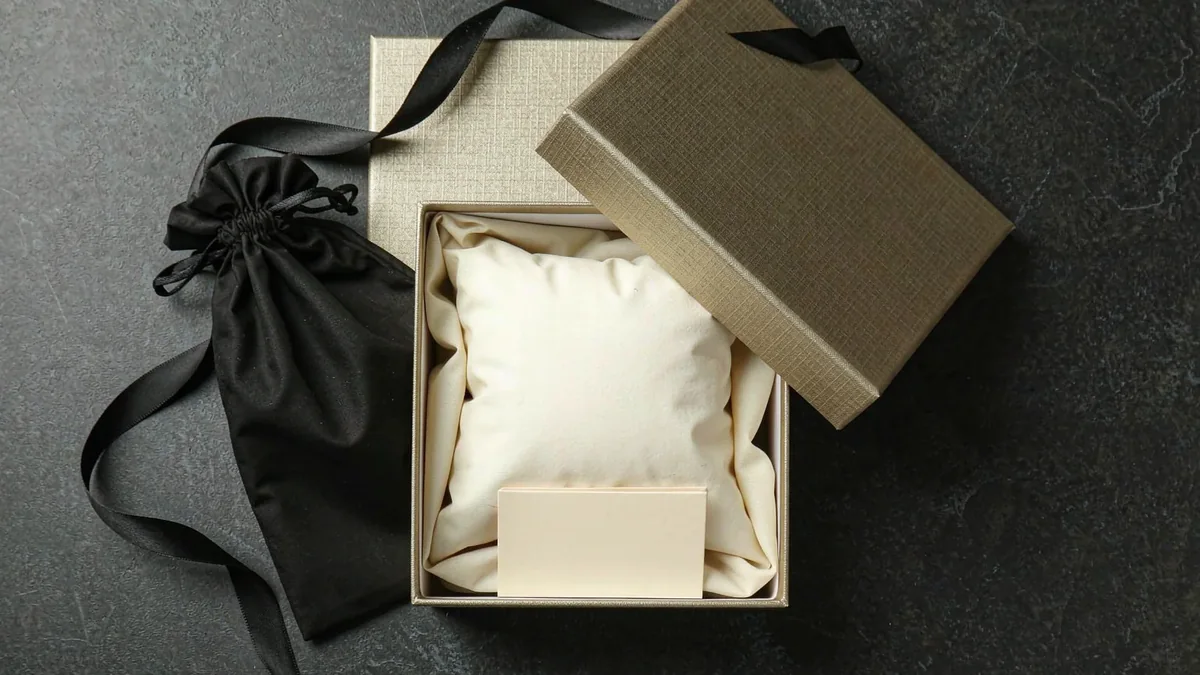
Presentation is specified alongside the bag so the two arrive together rather than in two shipments, and the full presentation specification is set out on the luxury packaging page. Material behaviour under heat and light is described on luxury materials.
Have the collection pack planned before the silhouettes are frozen
Send the silhouette list, quantity per colourway, decoration direction, delivery date and freight mode. You will receive a packaging plan naming sizes, board, decoration, insert and carton rating. Request a quote.
Frequently Asked Questions
How do you plan luxury bag packaging for a collection?
As five choices taken in a fixed order: the kit size ladder, the board and finish, the decoration method, the insert, and the carton rating. Each constrains the next, so taking them out of order is what makes a pack arrive three weeks after the bags it was made for.
How many box sizes does a first collection need?
Usually three: a small for an evening bag and a card case, a medium for a shoulder or top-handle body, and a large for a tote. Three sizes cover five or six silhouettes provided the insert is doing the fitting rather than the shell.
When should a fourth box size be added?
When any silhouette is being forced into more than about 15 mm of excess void. Beyond that the insert stops holding the body square, the piece travels inside the box, and the corner wear that arrives gets blamed on the freight.
What board grade suits a rigid presentation box?
About 1200 gsm below a 300 mm longest edge and 1500 gsm above, giving roughly 1.5 mm and 2.0 mm. The driver is lid span: a long lid on thin board bows under its own weight long before anything is stacked on it.
Why does the artwork have to be frozen before tooling?
Because the die is cut to the artwork. Any change after that point means a new tool, a fresh sampling window and a new place in the schedule, which is the most common reason a presentation pack misses a collection launch.
How is the insert designed?
Against the finished body rather than the drawing. A moulded pulp tray at 1.2 mm wall holds a structured silhouette square without touching the hardware; a foam pocket is used where the finish is delicate. It must also release cleanly.
What is a workable pack-out rate?
About 140 pcs per hour per bench for a bag, dust bag, care card and insert sequence. Use it to size the despatch window rather than assuming packing is instantaneous, because pack-out is where a schedule usually slips.
How much does a presentation pack cost per unit?
Near USD 4.80 for a full pack, split between board and wrap, decoration, and insert. Board scales with surface area, decoration with foil area and tolerance, and inserts with whether the tray is tooled or cut from stock.
Should packaging be ordered with the bag or after it?
With it. The print, the board and the die each carry their own window, so a pack specified after the bag is approved will land after it, and the warehouse then has to reconcile two shipments.
How long does packaging sampling take?
It occupies its own 6-10 working day window, or 12-15 where a registered foil emboss is involved, because the die is cut to frozen artwork. Bulk then occupies 35-50 days at 500 pcs per style and colourway.
What is the usual over-order on printed packaging?
About 5% above the confirmed quantity, to cover print set-up waste and any re-sort after inspection. Ordering exact quantities leaves no cover for a reprint, which always takes longer than the original run.
What should the carton label carry?
The outer pack reference, the box size it matches, the contents count and the stack arrow. Labelling the carton so the warehouse can match pack to bag without opening it removes the most common packing error.
People Also Ask
Should every silhouette have its own box?
No. Three sizes with a bespoke insert cover most collections. A box per silhouette multiplies tooling, print set-up and the number of carton sizes the warehouse has to hold.
How early should packaging be specified?
Before the bag is approved. Print, board and die carry their own windows, and the die needs frozen artwork, so late specification pushes the pack past the bag.
Does a matte laminate change the foil choice?
It does. Foil bonds to the film rather than the fibre, so a grade matched to laminate is required; a paper-grade foil will lift from the film within weeks.
What makes an insert fail?
Designing it to the drawing instead of the finished body, and cutting the pocket too tight. The first leaves the piece unheld; the second makes the customer force it out.
Is a 5% over-order on print worth it?
Yes. It covers set-up waste and gives cover for a re-sort after inspection. Exact quantities leave nothing in hand when a carton is re-sorted.
Sources and further reading
Every figure on this page is either our own programme data or attributed below. Open the originals before you write them into a specification.
- European Federation of Corrugated Board ManufacturersFEFCO Source of the corrugated board codes and the design styles used when rating an outer shipper.
- ISO - International Organization for StandardizationISO Publisher of ISO 2859-1 for the AQL 2.5 inspection plan and ISO 2233 on conditioning packages before testing.
- International Safe Transit AssociationISTA Publisher of the ISTA 1A and 3A sequences used to validate a packed carton before a collection ships.
- Forest Stewardship CouncilFSC Chain-of-custody scheme for the paper and board used across a presentation pack.