How Luxury Handbag Corners and Edges Are Finished: Skive, Turn, Paint, Burnish and Bind Explained
A handbag edge is finished in four operations: the panel is skived so the fold has no bulk, the edge is turned or left raw, the raw substance is sealed with paint or burnished with wax, and the corner is mitred, rounded or cut. Each operation has a number attached, and the corner is where the whole sequence is tested. This guide sets out the five finishes, the specification for each, and the five faults that appear when one of the four operations is compressed.
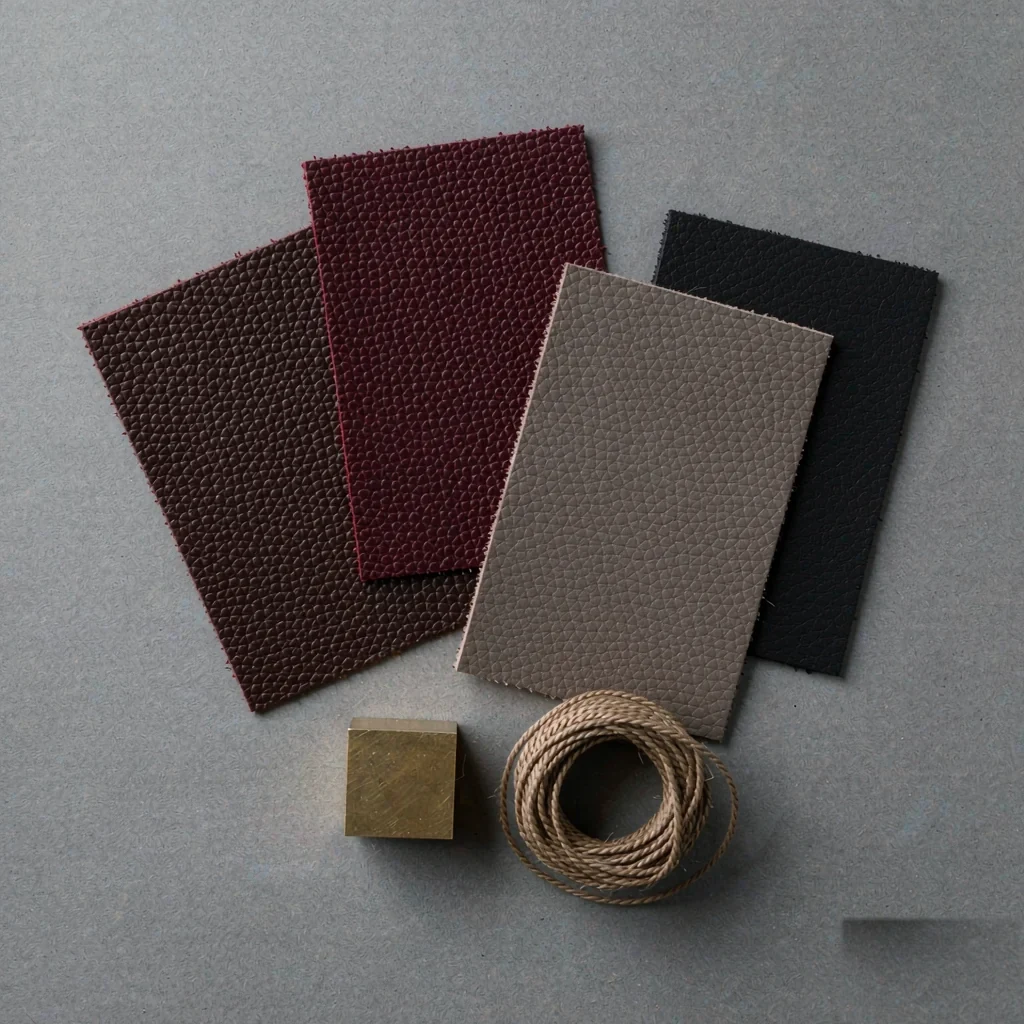
Why the Edge Is Where a Bag Is Judged
The edge is the part of a bag a customer inspects without meaning to. It is where the eye goes when the bag is set down, it is the first place a fingernail tests, and it is the surface that strikes a door frame, a table corner and a car door. Leather panels, hardware and lining all survive rough handling better than an edge does.
The edge is also the most honest record of how a bag was made. A skive that was rushed leaves a ridge along a fold within weeks. A flash-off that was shortened produces a finish that goes tacky in warm weather. Both faults are invisible on the day the bag is packed and obvious six weeks later, which is why edge specification is written in numbers rather than in adjectives.
Five Edge Finishes and Where Each Belongs
Five finishes cover almost every luxury handbag in production. They differ in how much substance they remove, how much time they take, and how they age. Read the last column first: ageing is the difference that customers write about.
| Finish | Substance at the edge | Where it belongs | How it ages |
|---|---|---|---|
| Turned and painted | 0.6-0.8 mm, folded over a 3.0 mm allowance | The default on a structured calfskin bag | Holds if the coats were flashed properly; chips at the corner if not |
| Burnished and waxed | Full 1.2-1.4 mm substance, slicked rather than covered | Heritage work, natural hides, bridle and harness leathers | Darkens with handling and improves for years |
| Bound | Edge wrapped in a 12-15 mm binding, stitched through | A soft construction or an unlined interior seam | Binding wears before the leather and can be replaced |
| Piped | A cord set inside a folded strip along the edge | Where the edge defines the silhouette of the bag | Holds its line; the cord flattens slowly under pressure |
| Raw and sealed | Cut edge sealed with a single thin coat, no fold | An interior panel or a concealed seam only | Not suitable on any edge a hand will find |
The last row carries a warning rather than a recommendation. A raw sealed edge is acceptable inside a bag and never acceptable on one, because it is the finish that fails first and fails visibly.
Skiving: the Operation Before the Finish
Skiving happens before anything else and determines everything after it. It removes substance from the back of a panel so that a fold can turn without bulking, and it is done by hand because hides from the same lot differ in resistance and density.
- Body substance
- 1.2-1.4 mm full-grain calf, measured after splitting
- Substance at the fold
- 0.6-0.8 mm, reached by taper rather than by step
- Taper width
- 8-10 mm, so the transition disappears under the hand and under the paint
- Turn allowance
- 3.0 mm on every turned edge
- Corner build-up
- Trimmed back on the diagonal before the corner is folded
- Stitch line setback
- 1.5-2.0 mm from the finished edge, so the thread is not buried in paint
- Sanding between coats
- Light, with a fine abrasive, to remove the raised grain before the next coat
The taper width is the number most often compromised. Eight to ten millimetres of taper is invisible once the edge is painted; a step at the same substance shows as a ridge along the fold, and no amount of pressing or paint removes it later.
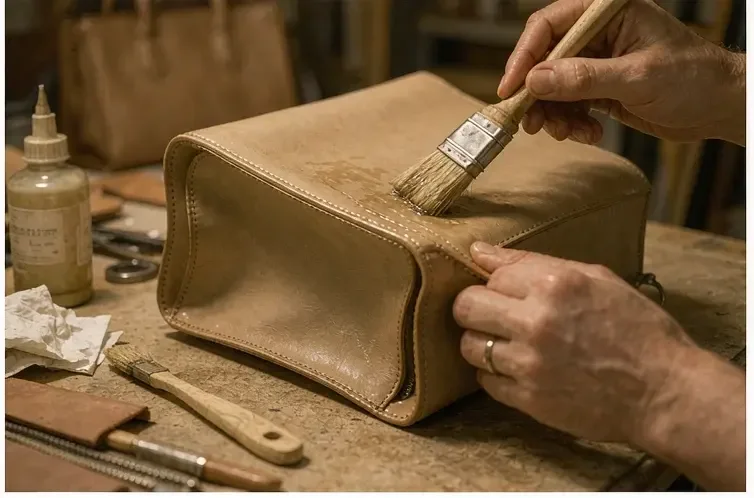
Turning a Corner: Mitre, Round or Cut
A corner is where a fold meets itself, and there are three ways to resolve it. Each removes bulk differently, and each reads differently at arm's length.
- Mitred: the excess is trimmed on the diagonal so the fold meets at 45 degrees. Crisp, and the choice for a structured bag.
- Rounded: the allowance is trimmed to a curve and eased around the corner. Softer in the hand and more forgiving on a thick hide.
- Cut: the allowance is notched and the corner folded square. Fast, and correct only where the corner will be covered by hardware.
- Bulk is removed before folding, not pressed out afterwards: a corner pressed flat against its own excess will spring back.
- The fold is set with a bone folder before any paint is applied, or it rounds off within weeks of handling.
- A corner takes one extra coat of paint and one extra sanding, because it is the point that strikes a door frame.
The mitre is the corner most houses specify on a structured bag and the one that shows sloppy work fastest. If the diagonal was trimmed unevenly, the two halves of the fold meet off-centre and the corner reads as twisted however good the paint is.
Painting an Edge: Four Coats and Why the Flash-Off Matters
Edge paint is applied in four thin coats rather than one thick one, and the time between coats is not idle time. It is the solvent leaving the film, and it is the stage most often compressed when a run is behind schedule.
- Sand the folded edge level so the film has a flat surface to sit on rather than a ridge to follow.
- Apply the first coat thinly and let it flash off for 8 minutes at 60 °C before touching it.
- Sand the first coat back lightly, then apply the second; repeat the flash-off and the sanding.
- Apply the third coat, sand again, and inspect the corner, which is where the film is thinnest.
- Apply the fourth coat, then inspect under D65 light against the sealed master for tone and gloss.
- Allow the finished edge to cure fully before packing, because a film packed warm marks the tissue it touches.
Four coats at eight minutes each is half an hour of apparent waiting per batch, and it is the half hour that decides whether an edge is still sound in a warm shop window six months later. A single thick coat looks identical on the day and goes tacky in the heat.
Run a fingernail along the corner of a finished edge. If the film lifts, the coats were applied too thickly or the flash-off was shortened. An edge that survives the fingernail at the corner survives a season of door frames and table corners.
Burnishing and Waxing a Natural Edge
Where an edge is left natural rather than painted, it is sealed by burnishing: the fibres of the cut edge are compressed and filled rather than covered. The result is darker than the face of the leather and becomes darker still with handling, which is precisely the effect heritage houses want.
Sanding
The cut edge is sanded level with a fine abrasive, working up through the grades until there is no trace of the blade. A burnished edge cannot hide a ragged cut, which is why the cutting comes first.
Slicking
A wooden or bone slicker is worked along the edge with gum tragacanth, generating heat through friction. The heat is what closes the fibre, and a slicker worked too fast glazes the surface without sealing it.
Waxing
Beeswax is rubbed in after the slicking and the edge is re-burnished. The wax fills what the gum has not and gives the edge the low sheen associated with hand work.
Bevel
A natural edge is bevelled very slightly on both faces, so the corner does not present a sharp arris to the hand or to the furniture it meets.
Burnishing is slower than painting and cannot be rushed at any stage, because every step depends on the previous one having been completed. It is also the only edge finish that improves rather than degrades, which is the argument that carries it in a specification review.
Binding and Piping a Structural Edge
Binding wraps the edge in a strip of leather, usually 12-15 mm wide, folded over the raw substance and stitched through both faces. Piping sets a cord inside a folded strip so the edge carries a defined line. Both add a visible stitch line, and both are structural rather than cosmetic.
Binding is chosen on a soft construction and on an unlined interior seam, where there is no substance to turn and paint. Piping is chosen where the edge itself defines the silhouette, because the cord holds a line that a turned edge loses as the bag relaxes. Both are stitched at 9 stitches per inch with 0.45 mm bonded nylon 69, and both are checked for an even reveal along the whole run.
Five Faults and the Operation That Caused Each
Every edge fault traces back to a specific operation, which is what makes them preventable rather than merely disappointing. Five account for most of what comes back.
- A ridge along the fold: the skive was stepped rather than tapered over 8-10 mm.
- A tacky edge in warm weather: the flash-off between coats was shortened below 8 minutes.
- A chipped corner: the fourth coat was applied before the third had flashed, or the corner was not sanded.
- Paint on the grain face: the stitch line was set closer than 1.5-2.0 mm to the edge, so the film had nowhere to go.
- A twisted corner: the mitre was trimmed unevenly, so the two halves of the fold met off-centre.
None of these are material faults. All five are timing or measurement faults, and all five are caught by a specification that names the taper width, the flash-off, the setback and the corner treatment.
Commercial Frame: Sampling, MOQ and Bulk
MOQ 500 pcs per style and per colourway. Sampling for a new style runs 6-10 working days, extending to 12-15 where a frame, a moulded handle or a new tool is involved. Bulk production at 35-50 days. FOB Xiamen as the standard term, with alternatives available where a programme needs them.
The programme runs across 7 production lines with about 200,000 pcs per month of capacity and has held export experience since 2014, carried out through our validated partner factory Quanzhou Yingming Bags, an SGS-validated site. Finish sample cards showing up to three edge and plating options on the intended leather are billed at USD 4.80 and credited against the first bulk order.
Edge specification in six numbers
- 0.6-0.8 mm: the substance a folded edge is skived to.
- 8-10 mm: the taper width that hides the transition.
- 3.0 mm: the turn allowance on every turned edge.
- 1.5-2.0 mm: the setback of the stitch line from the finished edge.
- 4 coats at 8 minutes each: the paint sequence and the flash-off at 60 °C.
- 9 stitches per inch: the density a bound or piped edge is stitched at.
Inspection is drawn to AQL 2.5 under ISO 2859-1, which on a 500 pc lot at general inspection level II gives a 50-piece sample with three majors allowed. The corner is examined first on every piece in the draw, because it is the point where all four operations meet.
Specify the edge your bag will be judged on
Send your drawings, the finish you have in mind and the quantity per colourway. You will receive an edge-by-edge note with the skive, turn, paint and corner specification, plus the effect on your calendar, within two working days. Request a quote.
Frequently Asked Questions
How is a luxury handbag edge finished?
In four operations: the panel is skived to 0.6-0.8 mm over an 8-10 mm taper, the edge is turned on a 3.0 mm allowance, the raw substance is sealed with four coats of paint or burnished with wax, and the corner is mitred, rounded or cut.
How many coats of edge paint does a luxury bag need?
Four thin coats, each sanded back before the next, with an 8 minute flash-off at 60 °C between them. The flash-off is the solvent leaving the film, and shortening it produces an edge that goes tacky in warm weather.
What is a turn allowance?
The width of leather folded over at an edge, standardised at 3.0 mm. It is trimmed back on the diagonal at a corner, folded, and set with a bone folder before any paint is applied, or the fold rounds off within weeks.
Should a bag corner be mitred or rounded?
Mitred on a structured bag, where a crisp corner is the point. Rounded on a soft construction or a thick hide, where easing the allowance around a curve is more forgiving. A cut corner is correct only where hardware will cover it.
Why does an edge go tacky?
Because the flash-off between coats was shortened. Eight minutes at 60 °C lets the solvent leave the film; compressed to keep a run moving, the edge looks right on the day and softens in a warm shop window.
What is burnishing?
Sealing a natural edge by compressing its fibres rather than covering them: sanded level, worked with a wooden slicker and gum tragacanth until friction closes the fibre, then waxed. It darkens with handling and is the only edge finish that improves with age.
When is a bound edge the right choice?
On a soft construction and on an unlined interior seam, where there is no substance to turn and paint. A 12-15 mm binding is folded over the raw edge and stitched through both faces at 9 stitches per inch.
What is piping on a handbag edge?
A cord set inside a folded strip running along the edge, so the edge carries a defined line. It is chosen where the edge itself defines the silhouette, because the cord holds a line a turned edge loses as the bag relaxes.
How far should a stitch line sit from the edge?
Between 1.5 and 2.0 mm. Set closer, the paint has nowhere to go except onto the grain face, which is the most visible edge fault and the one hardest to correct on a finished bag.
How is an edge inspected?
The corner is examined first on every piece in the draw, then the fold is checked for a ridge and the film for tackiness. The draw is AQL 2.5 under ISO 2859-1: 50 pieces on a 500 pc lot with three majors allowed.
What is the minimum order for a painted-edge bag?
MOQ 500 pcs per style and per colourway, with bulk at 35-50 days on FOB Xiamen terms. Finish sample cards are billed at USD 4.80 and credited against the first bulk order.
Can a raw cut edge be used on a bag?
Only inside the bag, on a concealed or interior panel. A raw sealed edge is the finish that fails first and fails visibly, so it is never used on an edge a hand will find.
People Also Ask
What is edge paint on a handbag?
A pigmented film applied in four thin coats to seal the raw substance of a folded edge, with an 8 minute flash-off at 60 °C between coats and a light sanding before each one. It is what makes a turned edge read as finished.
Why do handbag edges crack?
Usually because the coats were applied too thickly or the flash-off was shortened, so the film stays soft underneath. A corner chips for the same reason, which is why the corner takes one extra coat and one extra sanding.
What does skiving do?
It removes substance from the back of a panel so a fold can turn without bulking, taken to 0.6-0.8 mm over an 8-10 mm taper. A stepped skive leaves a ridge along the fold that no later operation removes.
Is a burnished edge better than a painted one?
It is different rather than better. Burnishing darkens with handling and improves over years; painting gives a precise colour match to the panel. Heritage houses choose burnishing, and colour-matched collections choose paint.
How do you finish a corner on a handbag?
Trim the excess on the diagonal for a mitre, ease it around a curve for a rounded corner, or notch it where hardware will cover. Remove bulk before folding rather than pressing it flat afterwards.
Sources and further reading
Every figure on this page is either our own programme data or attributed below. Open the originals before you write them into a specification.
- ISO — International Organization for StandardizationISO Publisher of ISO 2859-1 sampling procedures used for the AQL 2.5 draw that governs edge and corner inspection.
- Leather Working GroupLeather Working Group Tannery audit protocol behind the hides whose edges are skived, turned and sealed, with the reference filed per lot.
- European Chemicals AgencyECHA Administrator of REACH, including the restrictions answered by a chemical report per lot for edge paint and waxes.
- California Office of Environmental Health Hazard AssessmentOEHHA The authority behind California Proposition 65, which governs warning requirements for listed substances in edge finishes.
- CPSCU.S. Consumer Product Safety Commission Administrator of CPSIA limits on lead in substrates and coatings, relevant to painted edges on lines sold in the United States.