How Hand Stitching Elevates a Luxury Handbag: the Saddle Stitch, Six Steps and Four Places It Earns Its Cost
Hand stitching elevates a handbag through structure rather than appearance. A saddle stitch is two threads crossing in the same hole in opposite directions, each locking the other, so a broken stitch does not run. That single property, plus the tension an artisan can hold by hand, is what separates a seam that lasts a decade from one that opens in a season. This guide sets out the six steps of the operation, the three numbers that govern it, and the four places on a bag where it is worth specifying.
What the Saddle Stitch Actually Is
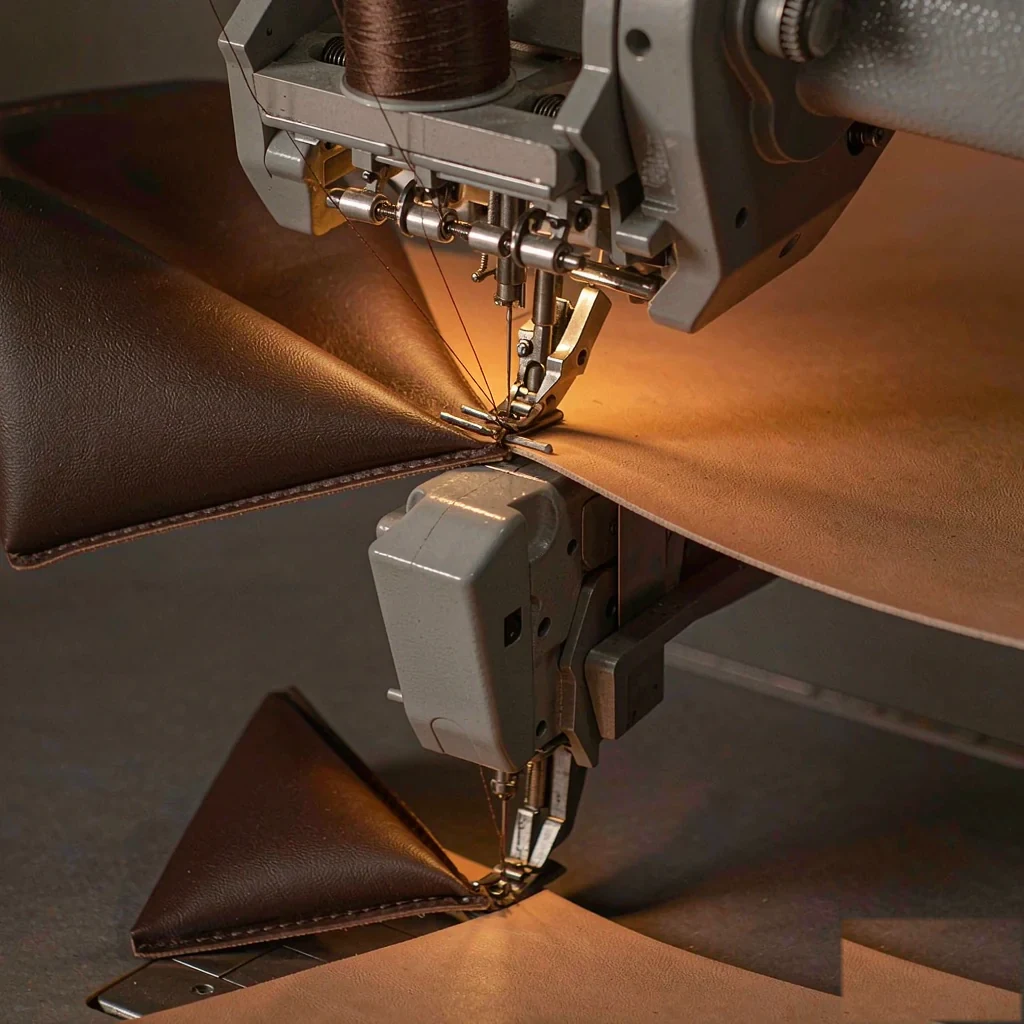
A saddle stitch is a structure, not a style. Two needles carry two separate threads through the same hole from opposite sides, and each pass crosses inside the leather. Neither thread is knotted to the other; they are held by the friction of the crossing and by the tension the artisan sets as the stitch is drawn.
Compare that with a machine lockstitch, where an upper and a lower thread interlock at the surface of each hole. It is fast, it is even, and when one stitch breaks the seam can run, because nothing crosses inside the material to hold the neighbours. On a seam that carries load, that difference is the whole argument for hand work.
How a Hand-Stitched Seam Is Made: Six Steps
Six steps, in this order. The first three happen before a needle is threaded, and they are the ones that decide whether the seam lies straight, because a stitch line can only follow the holes that were made for it.
- Mark the stitch line with a crease, so the seam sits in a shallow channel rather than on the surface of the leather.
- Space the holes with a pricking iron at the density specified, working from one end and never from both towards the middle.
- Open each hole with an awl at the angle the thread will enter, because a hole opened upright pulls the stitches out of line.
- Thread two needles on one length of waxed thread, one needle at each end, so the two passes cross inside every hole.
- Draw each stitch to the same tension by hand, seating the thread with a controlled pull rather than a fixed setting.
- Finish with back stitches rather than a knot, so there is nothing raised inside a lining for the hand to find.
The second step carries a rule that is easy to state and easy to break: prick from one end to the other. Working from both ends towards the middle leaves a mismatched half-stitch at the join, and it is the detail an experienced eye finds first on an otherwise fine seam.
Thread, Iron and Tension: the Three Numbers
Three numbers govern the operation, and all three belong in a specification. Without them the bench chooses, and the bench will choose differently on a Friday afternoon than on a Monday morning.
- Stitch density
- 9 stitches per inch, counted along the seam rather than estimated
- Thread
- 0.45 mm bonded nylon 69, waxed, in a colour matched to the panel under D65 light
- Pricking iron spacing
- Matched to the density: 9 teeth per inch, about 2.8 mm between holes
- Hole angle
- Opened with an awl at the entry angle of the thread, not perpendicular to the surface
- Tension
- Held by hand and even along the seam; tight enough to seat, never tight enough to pucker
- Finish
- Back stitches at the start and the end, with no knot inside the lining
- Panel substance at the seam
- 1.2-1.4 mm full-grain, skived to 0.6-0.8 mm where the seam folds
Wax deserves a note. It beds the thread into the hole and resists the moisture that carries dirt into a seam over years of handling. An unwaxed thread of the same specification produces a seam that looks identical on the day and loosens slowly afterwards.
Where Hand Stitching Earns Its Cost
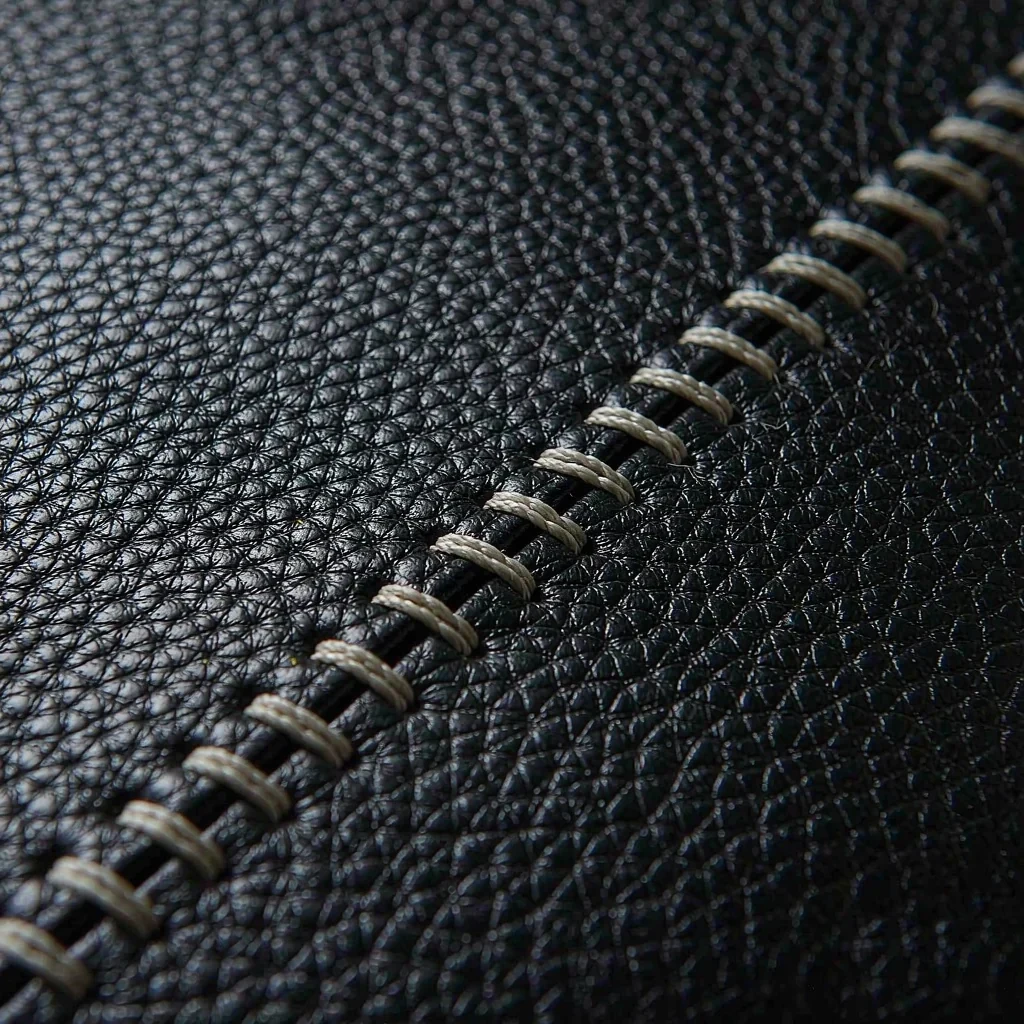
Hand stitching is slower and it should not be specified everywhere. It earns its place at four points on a bag, all of them load-bearing and all of them places where a failure becomes a return rather than a repair.
| Location | Why hand stitching here | What it prevents | Where a machine seam suffices |
|---|---|---|---|
| Handle attachment | Carries the whole weight of the bag and its contents | A handle tearing away from the body under load | A decorative handle on a light evening bag |
| Gusset and side seams | Take the stress of the bag being filled beyond its shape | A seam opening at the point of greatest strain | A flat interior pocket seam |
| Mouth and closure area | Repeatedly flexed every time the bag is opened | A seam gaping at the closure after a season | The seam holding a lining panel in place |
| Strap ends and tabs | Small, highly stressed, and the first place a bag looks tired | A tab pulling away from the body of the bag | A long straight seam on a back panel |
The pattern across all four is load combined with visibility. A seam that is stressed but hidden is a candidate for machine work; a seam that is stressed and seen is not, because the customer will find the failure before the repairer does.
Where a Machine Seam Is the Right Choice
Stating this plainly matters, because specifying hand work everywhere is not a mark of quality. It is a mark of a specification that has not been thought through, and it adds days to a calendar for no benefit the customer can detect.
- Long straight seams on a back panel or a base, where load is low and the line is what matters.
- Interior pocket seams and lining assembly, which are neither stressed nor seen once the bag is filled.
- Topstitching that is decorative rather than structural, where evenness is the whole requirement.
- Any seam on a soft, unlined construction where a hand stitch would pucker the panel.
- A first sample, where speed matters more than the final specification and the seam is re-specified later.
A programme that hand stitches the four load points and machines the rest produces a bag that behaves like a fully hand-stitched one, at a fraction of the hours. That is the specification a maison should be asking for.
A word on how the two seam types read together on one bag. A saddle stitch sits slightly proud of the surface and catches the light along its length; a machine stitch lies flatter and reads as a printed line. Where both appear on the same panel, as they do on a bag with a hand-stitched mouth and a machined back seam, the difference is visible at arm's length and reads as a decision rather than an inconsistency, provided both were specified deliberately. The fault is not mixing the two; it is mixing them by accident, which is what happens when a specification names neither.
Stitch Density: How Many Per Inch
Density is the number most argued about and least often measured. A denser seam looks finer in a photograph and weakens the leather, because every hole is a perforation along the line the seam will pull against.
7 per inch
Right for a heavy, rustic construction or a thick harness leather, where a finer stitch would tear the panel. The seam reads as deliberate rather than coarse at this substance.
9 per inch
The specification most houses write for a structured calfskin bag. It balances the appearance of fineness against the strength of the panel between the holes.
11 per inch
Reserved for fine, small-scale work: a strap end, a tab, or a bag in a light substance. Beyond this the perforation line becomes the weak point.
Counted, not estimated
Density is checked along a marked inch on the finished seam. A figure quoted from a drawing rather than counted from a bag is a claim, not a specification.
Cut one stitch on a sample seam and pull. A saddle stitch stops where it was cut. A machine lockstitch runs. That is the whole argument for hand work on a load-bearing seam, and it takes ten seconds to demonstrate at the bench.
The test is worth running at sample approval with the designer present, because it converts a preference into a fact and settles the question of where the hand work belongs.
Density and substance have to be read together, which is why one figure cannot be applied across a whole collection. At 1.2-1.4 mm full-grain, nine per inch leaves enough leather between the holes for the seam to carry its load. At a lighter substance the same density perforates the panel too closely and the seam tears before the leather does. Where a design calls for a lighter hide, the answer is usually to widen the stitch line rather than to reduce the density: two rows set further apart carry the same load through a lighter panel without weakening it.
What Hand Stitching Does to the Calendar
Hand stitching costs hours at the bench and nothing at all in tooling, which means its effect on the calendar is predictable and concentrated in the sampling rounds rather than in bulk.
Hand work in five numbers
- Sampling for a new style: 6-10 working days, extending to 12-15 where a frame, a moulded handle or a new tool is involved.
- Bulk production: 35-50 days, with hand stations sequenced so no bench waits on another.
- MOQ 500 pcs per style and per colourway, quoted FOB Xiamen as standard.
- Stitch density: 9 per inch with 0.45 mm bonded nylon 69 on a structured calfskin bag.
- Finish sample cards: USD 4.80, credited against the first bulk order, to settle thread and tone together.
The programme runs across 7 production lines with about 200,000 pcs per month of capacity and has held export experience since 2014, carried out through our validated partner factory Quanzhou Yingming Bags, an SGS-validated site. Hand stations sit inside that capacity, so a bag with four hand-stitched load points still reaches bulk inside the standard window.
Hand stations are also where a programme absorbs a late change most easily. A machine setting has to be re-configured and re-proved; a hand operation simply follows a revised instruction. This is why a late thread or colour change on a small run can cost fewer hours at a hand bench than the same change on a fully machined line, despite the higher hourly cost of skilled work. It is one of the few places where flexibility and quality point in the same direction.
How a Hand-Stitched Seam Is Inspected
Inspection is drawn to AQL 2.5 under ISO 2859-1, which on a 500 pc lot at general inspection level II gives a 50-piece sample with three majors allowed and no critical defects accepted. Six checks cover a stitched seam.
- Density is counted along a marked inch on the finished bag, not read from the drawing.
- The line is checked for straightness, which traces back to the crease and the awl angle rather than to the sewing.
- Tension is checked by eye and by touch: a seam that puckers was drawn too tight, one that gapes too loose.
- The start and the finish are checked for back stitches, with no knot inside the lining.
- Thread colour is compared to the panel under D65 light, because a thread matched under daylight separates under shop light.
- One retained bag per lot is held for 24 months, so a later dispute about the seam is measured rather than argued.
Decide where the hand work belongs on your bag
Send your drawings and the seams you consider load-bearing. You will receive a seam-by-seam note marking which should be saddle stitched, which can be machined, and what each choice costs the calendar, within two working days. Request a quote.
Frequently Asked Questions
What is a saddle stitch?
Two needles carrying two threads through the same hole from opposite sides, crossing inside the leather. Neither thread is knotted; both are held by the crossing and by the tension drawn by hand, which is why a broken stitch does not run.
Why does a saddle stitch not unravel?
Because each pass crosses the other inside the material. A machine lockstitch interlocks at the surface of each hole, so a single break can travel along the seam. Cutting one stitch on a sample and pulling demonstrates the difference in ten seconds.
How many stitches per inch should a luxury handbag have?
Nine is the figure most houses write for a structured calfskin bag. Seven suits a heavy rustic construction and eleven is reserved for fine small-scale work, because beyond that the perforation line becomes the weak point.
What thread is used for hand stitching a handbag?
0.45 mm bonded nylon 69, waxed, in a colour matched to the panel under D65 light. The wax beds the thread into the hole and resists the moisture that carries dirt into a seam over years of handling.
Which seams should be hand stitched?
Four: the handle attachment, the gusset and side seams, the mouth and closure area, and the strap ends and tabs. All four are load-bearing and visible, so a failure becomes a return rather than a repair.
Which seams can be machined?
Long straight seams on a back panel or base, interior pocket and lining assembly, decorative topstitching, and any seam on a soft unlined construction where a hand stitch would pucker the panel.
Why is stitch density specified rather than left to the bench?
Because a denser seam looks finer and weakens the leather, since every hole is a perforation along the pull line. Naming the figure stops the seam being sewn at different densities on different days.
How should a hand-stitched seam be finished?
With back stitches at the start and the end rather than a knot. A knot inside a lining is felt by the hand on every use, and it is the sort of detail that reads as carelessness on an otherwise fine bag.
How long does a hand-stitched programme take?
Sampling runs 6-10 working days and 12-15 where a frame, a moulded handle or a new tool is involved, with bulk at 35-50 days. Hand stations sit inside the standard capacity, so four hand-stitched load points do not extend bulk.
What is the minimum order for hand-stitched work?
MOQ 500 pcs per style and per colourway, quoted FOB Xiamen as standard with alternatives available. That volume is what makes a hand-finished seam viable inside a standard production calendar.
How is a hand-stitched seam inspected?
Density is counted along a marked inch, the line is checked for straightness, tension is read by eye and touch, and the start and finish are checked for back stitches. The draw is AQL 2.5 under ISO 2859-1.
Should thread be matched under daylight only?
No. A thread matched under daylight can separate from the panel under shop lighting, so the comparison is made under D65 and checked under a second source before approval is given.
People Also Ask
Is hand stitching stronger than machine stitching?
On a load-bearing seam, yes: a saddle stitch crosses inside the material so a break does not run, while a machine lockstitch interlocks at the surface and can travel. On a long unstressed panel the difference is undetectable.
What is the difference between saddle stitching and a lockstitch?
A saddle stitch passes two threads through each hole from opposite sides so they cross inside the leather. A lockstitch interlocks an upper and a lower thread at the surface, which is faster and even, but can run from one break.
How do you count stitches per inch on a bag?
Mark one inch along the finished seam and count the stitches within it. A figure quoted from a drawing is a claim rather than a measurement, and the count is the check written into an inspection sheet.
Why is hand stitching more expensive?
It costs hours at the bench rather than money in tooling. Specified at the four load points and machined elsewhere, a bag behaves like a fully hand-stitched one at a fraction of the hours.
Can hand stitching be used on every seam?
It can, and it should not be. Long straight panels, linings and decorative topstitching are better machined, and a hand stitch on a soft unlined construction will pucker the panel.
Sources and further reading
Every figure on this page is either our own programme data or attributed below. Open the originals before you write them into a specification.
- ISO — International Organization for StandardizationISO Publisher of ISO 2859-1 sampling procedures used for the AQL 2.5 draw that governs seam inspection.
- Leather Working GroupLeather Working Group Tannery audit protocol behind the hides a hand-stitched seam is sewn through, whose reference is filed per lot.
- European Chemicals AgencyECHA Administrator of REACH, including the restrictions answered by a chemical report per lot for leather, thread and finishes.
- California Office of Environmental Health Hazard AssessmentOEHHA The authority behind California Proposition 65, which governs warning requirements for listed substances in threads and waxes.
- CPSCU.S. Consumer Product Safety Commission Administrator of CPSIA limits on lead in substrates and coatings, relevant to hardware fitted near hand-stitched seams.