How Luxury Bag Brands Use Founders Stories: A Three-Act Arc, One Object, Four Placements
How do luxury bag brands use founders stories well? They build a three-act arc around one real object — the inciting piece, the refusal, the return — write it as a 120-word first-person note, photograph the founder beside the object rather than in a portrait studio, and place the same text in exactly four places. The decision order matters: choose the object first, then the arc, then the voice, then the placements. A founder story that leads with adjectives instead of an object is the single most common reason a debut house sounds interchangeable.
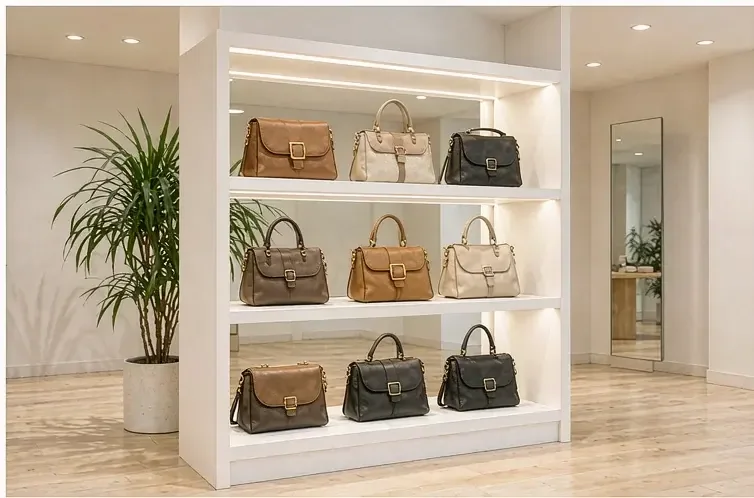
Decide in This Order: Object, Arc, Voice, Placement
Most houses write the founder story in the wrong order. They start with voice — warm, irreverent, understated — and then look for something to say. That produces a tone without a subject. The correct order is the reverse: choose the object first, because the object is the only part a reader can verify; build the arc from it; decide the voice last; and only then decide where the text appears.
The reason this order works is that each step constrains the next. A real object limits the arc to what actually happened. A true arc limits the voice to what the founder would plausibly say. And a settled voice limits the placements to the four places where that text belongs. Houses that work in this direction finish in an afternoon; houses that work in the other direction rewrite for months and usually end up with something generic.
- Pick the object: the specific piece, commission or failure that started the line — not a mood and not a category.
- Build three acts around it: the inciting object, the refusal, and the return to the bench.
- Decide the voice afterwards: first person, plain register, no superlatives, no invented ancestry.
- Fix the length: 120 words for the note, spoken in about ninety seconds.
- Choose four placements only, and use the identical text in all four.
- Photograph the founder with the object. A portrait studio frame undermines every claim in the note.
Act One: The Inciting Object
Every credible founder story begins with a thing. A doctor's case found in a grandmother's attic, a market bag bought in a port city, a failed sample with a handle set 8 mm too low — the object is what makes the account checkable. It also gives the house its first artefact, because the reference piece can be photographed beside the production bag and used in the press kit for years.
The test for act one is brutally simple: can a journalist ask to see it? If the answer is no, the object is a literary device and the story will collapse under the first serious question. Houses with a real object tend to under-use it — they mention it in one line and return to adjectives. The stronger move is to make the object the first sentence and let the rest of the note follow from it.
Act one — the object
A named, photographable piece that started the line. If a journalist cannot ask to see it, it is not an object.
Act two — the refusal
What the founder could not find or could not accept, stated as a specification problem rather than a complaint.
Act three — the return
What was built instead, with the decision that made it different: substance, closure, edge, or service.
The coda
One sentence on what the house still owes the owner — spare hardware, repair, a ten-year commitment with a real path behind it.
Act Two: The Refusal, Written as a Specification
The middle of the story is what the founder could not accept, and it works best when written as a specification problem rather than as a grievance. 'I could not find a bag at 1.2-1.4 mm that held its shape unstuffed' is a refusal a reader can picture. 'The market was full of compromise' is not. Specificity in act two is what separates a house with a point of view from a house with a mood board.
This is also the act where technical credibility is established, because the refusal is the reason the specification exists. A founder who refused handles that collapse can plausibly specify a load test at 15 kg through 2,000 lift cycles. A founder who refused plating that wears can plausibly specify 0.15-0.3 µm with a filed XRF reading. The story and the specification ledger then agree, which is the whole point.
- Note length
- 120 words, spoken in about ninety seconds
- Voice
- First person, plain register, no superlatives
- Artefact
- One photograph of the founder with the inciting object
- Placements
- About page, hangtag or care card, lookbook opening, press kit
- Specification tie
- Refusal in act two maps to one line in the tech pack
- Drop reference
- 500 pcs per style and colourway, FOB Xiamen
Act Three: The Return, and Why It Must Be Modest
The final act says what was built instead, and the temptation here is to overclaim. Resist it. 'We built a structured day bag at 1.2-1.4 mm with a closure we cast ourselves, and we hold spare hardware for ten years' is modest and checkable. 'We reinvented the handbag' is neither. Luxury readers are unusually sensitive to overclaiming, and a single inflated sentence discredits the two accurate ones around it.
- Name the decision, not the achievement: the substance, the closure, the edge, the service commitment.
- Give the reader one thing to picture. An abstract claim is forgotten within a minute; a photographed object held in the hand is remembered for years afterwards.
- Give one number. A founder note with no figure reads like every other founder note.
- State what is still imperfect. A house that admits one limitation sounds more credible than one that claims none.
- Close on the owner rather than the founder — the story is about what she carries, not about who made it.
- Keep the coda to a single sentence and make sure a real service path exists behind it.
- Never date the house earlier than it is. Invented ancestry is the fastest way to lose press coverage.
Voice: First Person, Plain Register, No Superlatives
Founder notes fail most often on register. The temptation is to write in the voice of an established house — heritage cadences, abstractions, subordinate clauses. A debut house has no right to that voice and readers sense the mismatch immediately. First person, short sentences, concrete nouns and one figure per paragraph will always outperform a pastiche of a centenarian maison.
| Choice | Weak version | Strong version |
|---|---|---|
| Person | The house was founded to pursue excellence | I could not find a bag that held its shape, so I made one |
| Evidence | Crafted with the finest materials | Full-grain calfskin at 1.2-1.4 mm from one tannery lot |
| Scale | Rare and limited | 500 pcs per style and colourway, two colourways per season |
| Service | Timeless quality for generations | Spare hardware held at 2% and edge refinishing for ten years |
| Register | An enduring dialogue between heritage and modernity | One reference, one sentence, one object in frame |
Four Placements, Identical Text
A founder story lives in four places and nowhere else: the about page, the card that ships with the bag, the opening spread of the lookbook, and the press kit. Use the identical text in all four. Rewriting it per channel is how a house ends up with three versions of its own origin, which a journalist quoting the press kit and a customer reading the card will eventually compare.
The card placement is the one most houses forget, and it is the most valuable. A note read at the moment of unboxing lands differently from one read on a website, because the object is in the reader's hands and every claim in the note can be checked against it immediately. Printed on a small card at a cost of about USD 4.80 per unit, it is the least costly piece of brand writing a house will ever commission.
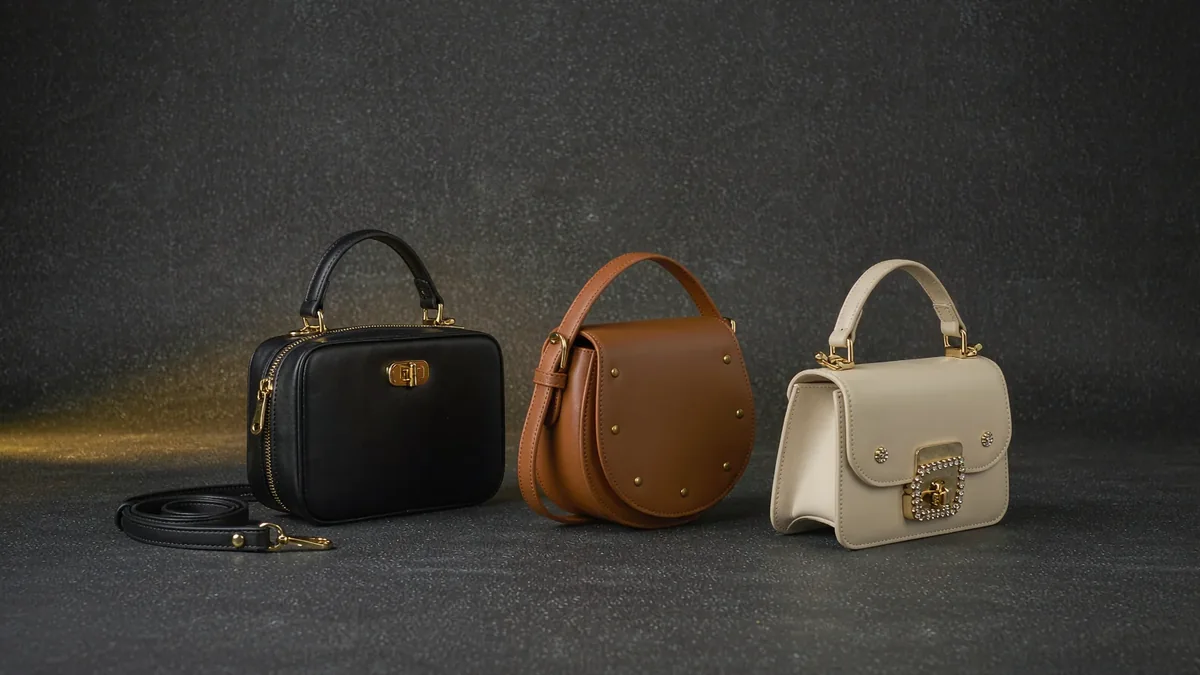
How the Founder Story Supports the Sales Conversation
A good founder note does a specific job in an appointment: it answers the question a buyer is thinking but rarely asks out loud, which is why this house exists. The answer that works is not a mission statement but a specification decision with a person behind it. When the founder can say, in ninety seconds, what object started the line and what she refused to accept, the buyer has a reason to remember the collection after seeing forty others.
The founder story in one paragraph
- One inciting object, three acts, 120 words in the first person with no superlatives, one photograph of the founder with the object, and the same text in four placements: about page, care card, lookbook opening and press kit. Act two names a specification the founder refused — 1.2-1.4 mm substance, a cast closure, 0.15-0.3 µm plating — so the story and the tech pack agree.
Any sentence containing 'passion'. It appears in most debut founder notes and communicates nothing a buyer can act on. Replace it with the specification decision the passion produced — the substance, the closure, the cycle count — and the note immediately sounds like a house.
Build the object behind your founder story
If your founder note names a piece that does not exist yet, send us the description or a reference photograph. Our team will develop it through sampling in 6-10 working days at 500 pcs per style and colourway and return a specification you can quote in the note through our quotation desk.
Where Founder Stories Go Wrong
Three failures dominate. The first is borrowed heritage: a founding date, a city or a relative the house has no connection to, which ends the moment anyone checks. The second is the founder as hero, where the story is about the founder's journey rather than about the object — readers want the bag, not the biography. The third is a promise without a path, usually a lifetime commitment with no spare hardware holding and no repair process behind it.
All three are fixed by returning to the object. A founder story anchored to a real piece, a real refusal and a real specification cannot drift into borrowed heritage, because the object keeps it honest. It also cannot overpromise, because the specification ledger is sitting next to it. That is why the decision order matters so much: object first, arc second, voice third, placements last. A house that works in this order produces a founder story it can defend in an appointment, quote in a press kit and print on a care card without changing a word. A house that works in the opposite order produces a tone in search of a subject, and the tone is precisely what a buyer forgets by the time she reaches the second appointment of the day.
Frequently Asked Questions
How do luxury bag brands use founders stories?
They anchor them to one real object and build a three-act arc: the inciting piece, the refusal written as a specification problem, and the return to the bench. The note runs 120 words in the first person with no superlatives, and the identical text appears in four placements — about page, care card, lookbook opening and press kit.
Why should a founder story start with an object?
Because an object is the only part a reader can verify. A journalist can ask to see the case that started the line; she cannot check a mood. The object also becomes a durable artefact for the press kit and keeps the story from drifting into borrowed heritage.
How long should a founder note be?
About 120 words, which reads in roughly ninety seconds. That is long enough for three acts and one figure, and short enough to be quoted in full by a journalist. Longer notes lose the reader partway through and longer still begin to read as company history the house has not yet earned.
Should a founder note be written in the first person?
Yes. First person, plain register, short sentences and no superlatives. A debut house writing in the cadence of a century-old maison sounds like a pastiche, and readers detect the mismatch immediately. Plain language with one concrete figure will always outperform an elevated tone.
What is the refusal act and why does it matter?
It is the specification the founder could not accept — a bag that slumps unstuffed, plating that wears, a handle that collapses. Written that way it establishes technical credibility, because the refusal is the reason the specification exists and the story and the tech pack then agree.
How many placements should a founder story have?
Four, with identical text: the about page, the care card that ships with the bag, the opening spread of the lookbook, and the press kit. Rewriting per channel is how a house ends up with three versions of its own origin, which a customer and a journalist will eventually compare.
Why is the care card the most valuable placement?
Because it is read at unboxing, when the object is in the reader's hands and every claim can be checked immediately. Printed at about USD 4.80 per unit, it is the least costly piece of brand writing a house will commission and the one with the highest attention.
What is the biggest mistake in founder storytelling?
Borrowed heritage — a founding date, a city or a relative the house has no connection to. It collapses the moment anyone checks and takes the accurate parts of the story down with it. Close behind is making the founder the hero rather than the object.
Should the founder appear in the photograph?
Yes, but beside the object rather than in a portrait. A studio portrait of the founder communicates nothing about the bag; a frame of her holding the inciting piece communicates the whole story in one image and gives press a usable asset.
How does a founder story help in a buyer appointment?
It answers the question a buyer rarely asks out loud: why does this house exist. The answer that works is not a mission statement but a specification decision with a person behind it, delivered in ninety seconds and remembered after forty other appointments.
Can a founder story include a service promise?
Yes, provided there is a real path behind it. Spare hardware held at 2% of unit quantity, matched thread kept against the style and an edge refinishing process are the three things that make a ten-year commitment credible rather than aspirational.
How do you keep the story consistent across seasons?
Lock the text and reuse it unchanged. Write the next season's material from the sealed reference sample and the specification ledger rather than from a blank page, so the object, the refusal and the numbers stay the same while the collection changes around them.
People Also Ask
What is a founder story in luxury?
A short first-person account of the object, refusal and decision that started a house. In luxury it must be verifiable, so it names a real piece and a real specification rather than describing a passion.
Why do luxury brands talk about their founders?
Because a person behind a specification decision is easier to remember than a specification alone. It answers why the house exists, which is the question a buyer is thinking during an appointment.
How do you avoid sounding generic in a founder note?
Name one object, one figure and one decision. Generic notes are generic because they contain no nouns a reader can picture and no number a reader can check.
Where should the founder story appear?
In four places with identical wording: the about page, the care card inside the box, the lookbook opening and the press kit. Consistency across all four is what makes it quotable.
Should a founder note mention materials?
Yes, once, with a figure — full-grain calfskin at 1.2-1.4 mm, or plating at 0.15-0.3 µm. A single concrete number makes the whole note credible in a way that adjectives never do.
Sources and further reading
Every figure on this page is either our own programme data or attributed below. Open the originals before you write them into a specification.
- Business of FashionBusiness of Fashion Trade reporting on how houses present founding narratives and what editors actually quote from a press kit.
- Women's Wear DailyWWD Coverage of debut accessories houses and the founder angles that earn editorial attention.
- Leather Working GroupLeather Working Group Tannery audit protocol referenced when a founder note names a hide source that must remain available.
- Understanding REACHEuropean Chemicals Agency Annex XVII restrictions referenced when a founder note makes a material safety claim.