Boutique Buyer Outreach for Luxury Handbags: 12 Doors, 3 Touches, 65% Sell-Through at 12 Weeks
How does boutique buyer outreach work for a luxury handbag line? Build a list of twelve doors rather than a hundred, run a three-touch sequence over eight weeks, and lead with a six-field line sheet rather than a deck. The numbers a buyer wants are sell-through expectations of about 65% at twelve weeks, a multiple of 2.6-2.8× landed cost, a minimum of 500 pcs per style and colourway, and a re-order window of 28-35 days. Outreach fails when it leads with the story and answers the arithmetic second.
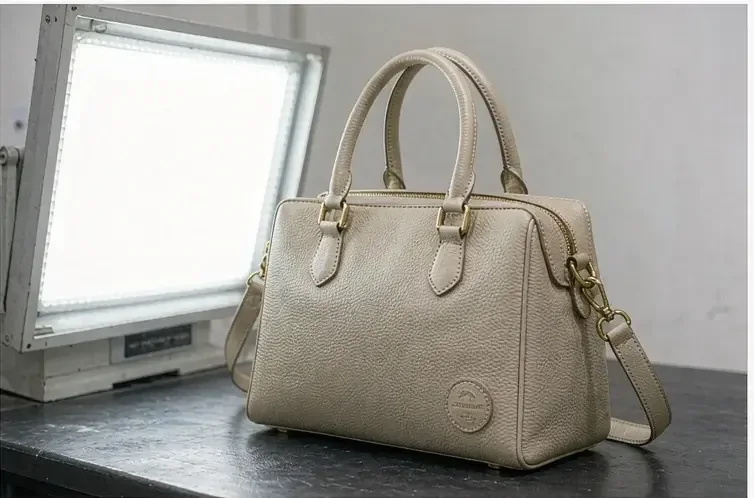
Start With the Arithmetic a Buyer Runs in Her Head
A boutique buyer does not evaluate a line aesthetically first; she evaluates it arithmetically. Four numbers decide whether she books an appointment: expected sell-through in the first twelve weeks, the multiple of landed cost the retail price represents, the minimum quantity she must commit to, and how quickly a re-order can arrive if the line works. Everything else — the founder story, the photography, the material provenance — is context that supports those four figures.
This is why outreach should open with the arithmetic. An email that states 65% expected sell-through at twelve weeks, a 2.6-2.8× multiple, 500 pcs per style and colourway and a 28-35 day re-order window is answered. One that opens with 'a collection inspired by...' is not, because the buyer cannot tell from it whether the line fits her floor plan or her cash cycle.
- Target list size
- 12 doors, qualified before first contact
- Touch sequence
- 3 touches across 8 weeks
- Expected sell-through
- About 65% at 12 weeks
- Retail multiple
- 2.6-2.8× landed cost
- Minimum commitment
- 500 pcs per style and colourway
- Re-order window
- 28-35 days against a sealed reference sample
- Sample round
- 6-10 working days, 12-15 for frame work
Building the Twelve-Door List
Twelve, not a hundred. A debut house cannot service a hundred doors, and a mail-merge to a hundred buyers produces a response rate that tells you nothing and a reputation that is hard to recover. Twelve qualified doors — where the buyer already stocks structured bags at a comparable retail band, has floor space for a new line, and is not carrying a directly competing house — produce enough appointments to fill a season.
- Stock check: does the door already carry structured bags at a comparable retail band?
- Space check: is there floor or shelf capacity for a new line this season, or is the floor committed?
- Conflict check: does the door carry a house whose signature closure or silhouette overlaps yours?
- Cycle check: when does the buyer write her orders? Most work to a fixed buying calendar.
- Geography check: can you service a re-order there inside the quoted window?
- Service check: does the door have staff who can explain construction, or does it sell on branding alone?
Qualification takes about an hour per door and it is the highest-return hour in the whole exercise. A house that skips it spends eight weeks chasing buyers who were never going to buy, and concludes that outreach does not work. A house that does it finds that three or four of the twelve converts, which is a normal and healthy rate for a debut line.
The Three-Touch Sequence Across Eight Weeks
Three touches, spaced across eight weeks, is what a buying calendar can absorb. The first is a written introduction carrying the four numbers and nothing else. The second, two to three weeks later, offers a sample appointment with a date. The third, in weeks six to eight, closes the loop with the sell-through data from any door already trading. More than three touches reads as pressure, and pressure is fatal in a relationship business.
| Touch | Week | Content | What it is designed to produce |
|---|---|---|---|
| Introduction | 1 | Six-field line sheet, four numbers, one photograph | A reply asking for the sample or for a date |
| Appointment offer | 3-4 | Two proposed dates, sample list, expected sell-through | A confirmed appointment in the buying calendar |
| Evidence close | 6-8 | Sell-through from trading doors, re-order window, terms | An order, or a clear no with a reason |
The Six-Field Line Sheet
A deck is the wrong instrument. Buyers read a line sheet. Six fields per style is what a buyer needs to decide: style name and code, colourways with the minimum per colourway, materials with substance and finish, retail and sell-in figures, delivery window, and the re-order term. Anything beyond six fields goes in an appendix she can ask for. Anything fewer and she has to write back, which most buyers will not do.
Style and code
Name plus a reference code the re-order can be placed against without ambiguity.
Colourways and minimum
Each colourway with 500 pcs per style and colourway stated plainly.
Materials
Full-grain calfskin 1.2-1.4 mm, brass at 0.15-0.3 µm, lining, closure type.
Figures
Sell-in price and the intended retail band, so the 2.6-2.8× multiple is visible.
Delivery
Sampling 6-10 working days, production 35-50 days, FOB Xiamen.
Terms
Inspection at AQL 2.5 under ISO 2859-1, spare hardware at 2%, repair path.
What Happens in the Sample Appointment
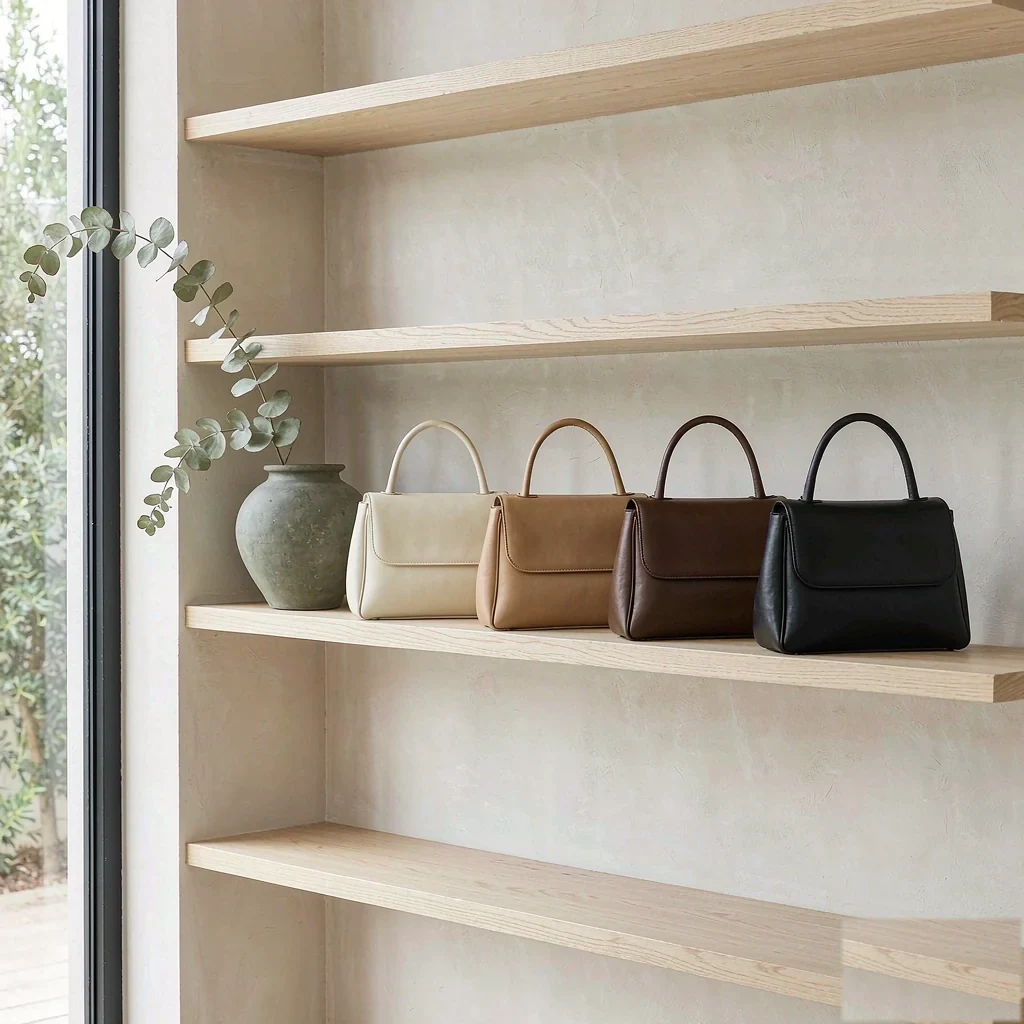
The appointment is won or lost on three objects: the bag, the swatch card and the line sheet. Bring all three, plus one damaged unit that has been through the load test, because a buyer who can see how a bag fails trusts the one that has not. Expect forty minutes. Expect questions about re-order terms, exclusivity by territory and what happens if a colourway does not sell.
- Open with the four numbers, then put the bag in her hands. Do not present before she has touched it.
- Walk the construction: substance, skiving at 0.6 mm, stitch density at 8-9 per inch, edge paint in three coats.
- Show the closure being opened and closed; a #5 metal chain validated through 500 pull cycles is a concrete proof point.
- Answer the exclusivity question before she asks it — territory, duration and what it applies to.
- State the re-order window and the minimum for a re-order, so she can plan her own cash cycle.
- Close by asking for a date, not for an opinion. A date can be moved; an opinion ends the conversation.
Sell-Through, Terms and the Second Order
Sell-through is the figure that decides whether there is a second season with that door. Around 65% at twelve weeks is a healthy expectation for a debut structured line at a boutique; below 40% the buyer will not re-order and is unlikely to say why. Agreeing the review date at the point of the first order — usually week twelve — is what turns a vague relationship into a measurable one.
Terms matter as much as the product. State the sell-in price, the intended retail band, the inspection standard and the re-order window in writing, and hold to them. A house that changes terms between the first and second order loses the door regardless of how well the line sold, because the buyer's planning depends on the figures being stable. Consistency here is worth more than any concession.
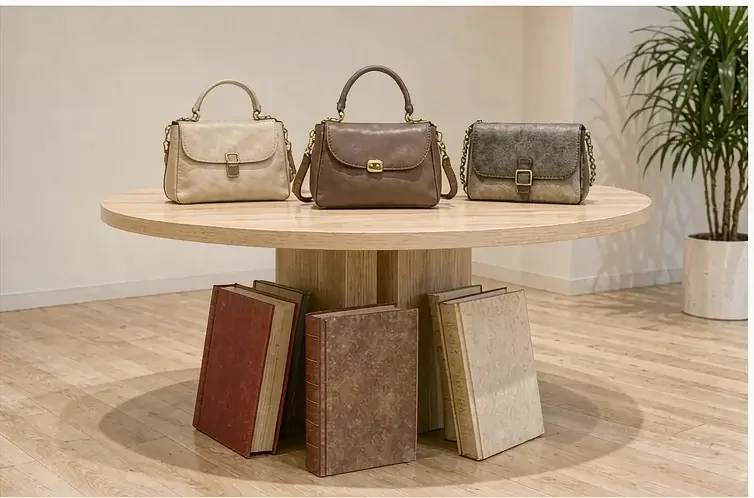
Reading the Numbers Each Door Sends Back
Three reports come back from a trading door and each one tells the house something different. The weekly unit report says which style is moving; the return report says which component is failing; the staff feedback, if the house asks for it, says what customers actually say on the floor. Most debut houses collect the first and ignore the other two, which is why they discover a closure problem through a return rather than through a conversation.
The useful discipline is to ask for all three at the point of the first order, in the same email that confirms the delivery window. A door that sends a weekly unit figure will usually send a return reason if asked once and thanked. That single addition turns season one from a sales result into a specification review, and it is the least costly product research a house will ever get — considerably cheaper than a sample round.
- Ask for a weekly unit report by style and colourway, not a season total.
- Ask for return reasons in the buyer's own words rather than in a category code.
- Ask one member of floor staff what customers say when they pick the bag up.
- Compare returns against the specification ledger — most failures trace to one component.
- Feed the result into the next sampling round rather than into a marketing meeting.
- Close the loop: tell the door what changed. It is the single strongest retention action available.
Why Outreach Fails: The Four Reasons
Four failure modes account for most unsuccessful outreach. The first is an unqualified list — a hundred doors, none checked for conflict or space. The second is a story-led email with no figures, which the buyer cannot act on. The third is no sample readiness: the buyer replies with interest and the house has nothing to send for three weeks. The fourth is silence after the first season, which is how a house loses a door that was actually selling.
The outreach arithmetic in one place
- Twelve qualified doors, three touches across eight weeks, a six-field line sheet, and four figures stated in the first message: about 65% sell-through at twelve weeks, a 2.6-2.8× multiple of landed cost, 500 pcs per style and colourway, and a 28-35 day re-order. Sampling 6-10 working days, bulk 35-50 days, inspection at AQL 2.5 under ISO 2859-1, FOB Xiamen, spare hardware at 2%.
Open with the sell-through expectation and the re-order window, not with the inspiration. A buyer can act on 65% at twelve weeks and 28-35 days; she cannot act on a mood, and an email she cannot act on goes into a folder she will not reopen this season.
Get sample-ready before you write to a buyer
If your line sheet is waiting on sampling, send us the specification and the quantity per colourway. Our team will develop the styles in 6-10 working days and return samples plus a written delivery and re-order plan through our quotation desk.
Keeping the Door After Season One
Retention is operational. The three things that keep a door are a re-order that arrives inside the quoted 28-35 days, a second season that matches the first within a ΔE ≤ 1.0 shade band, and a repair path that resolves a customer complaint without involving the buyer. A printed care card costing about USD 4.80 per unit, shipped with every bag, prevents a large share of the complaints that otherwise reach the buyer's desk.
Houses that do this well find the second season is easier than the first: the specification ledger exists, the sealed sample exists, and the buyer has sell-through data she trusts. The conversation shifts from whether the line works to how deep the next order should be, which is the only kind of outreach that compounds.
Frequently Asked Questions
How does boutique buyer outreach work for luxury handbags?
Qualify twelve doors rather than contacting a hundred, then run a three-touch sequence across eight weeks. Lead with four figures: about 65% expected sell-through at twelve weeks, a 2.6-2.8× multiple of landed cost, 500 pcs per style and colourway, and a 28-35 day re-order window. Use a six-field line sheet rather than a deck.
How many boutiques should a debut line approach?
Twelve qualified doors is a workable number. It produces enough appointments to fill a season and is small enough for a debut house to service properly. A mail-merge to a hundred buyers yields a response rate that means nothing and damages the house's reputation with the buyers who matter.
What should the first email to a buyer contain?
The four numbers she runs first: expected sell-through, the retail multiple, the minimum per style and colourway, and the re-order window. Add one photograph and nothing else. An email built around inspiration rather than arithmetic cannot be acted on and will not be answered.
What is a line sheet and what fields does it need?
Six fields per style: name and code, colourways with minimum, materials with substance and finish, sell-in and retail figures, delivery window, and terms including inspection and re-order. More than six goes in an appendix; fewer means the buyer has to write back, which she usually will not.
What sell-through should a debut line expect?
Around 65% at twelve weeks is a healthy expectation for a structured line at a boutique. Below 40% the buyer will not re-order and is unlikely to explain why, which is why agreeing a week-twelve review date at the point of the first order matters so much.
What retail multiple do boutiques expect?
Between 2.6 and 2.8 times landed cost is the usual band for premium handbags at independent doors. Below that the boutique cannot cover its own overhead on the space; above it the line will struggle against comparable houses on the same shelf.
How long does the full outreach cycle take?
About eight weeks: an introduction in week one, an appointment offer in weeks three to four, and an evidence close in weeks six to eight. That matches a boutique buying calendar. A fourth touch inside the same cycle reads as pressure and costs the relationship.
What should be brought to a sample appointment?
Three objects: the bag, the swatch card and one unit that has been through load testing. Expect forty minutes and questions about re-order terms, territorial exclusivity and what happens if a colourway does not sell. Close by asking for a date rather than an opinion.
How should exclusivity be handled with a boutique?
State it before the buyer asks: which territory, for how long, and what exactly it covers. Exclusivity usually applies to the style and finish combination rather than to a shared component. Vagueness here is read as a risk and delays the first order.
Why do buyers stop re-ordering after one season?
Usually because terms changed, the re-order arrived outside the quoted window, or a second drop did not match the first within a ΔE ≤ 1.0 shade band. The buyer's own planning depends on those figures being stable, so consistency protects the door better than any concession.
What keeps a boutique door after the first season?
Three operational things: a re-order arriving inside 28-35 days, a second season matching the first within the agreed shade band, and a repair path that resolves customer complaints without involving the buyer. A care card shipped with every unit prevents many of those complaints.
How does sampling fit into the outreach calendar?
Before it. Sampling runs 6-10 working days for a structured style and 12-15 with frame work, so samples should exist before the first email goes out. A buyer who replies with interest and waits three weeks for a sample is usually lost to another line.
People Also Ask
What is a line sheet in fashion?
A one-page commercial summary of a style carrying the fields a buyer needs to order: reference, colourways, minimum, materials, prices, delivery window and terms. It replaces a deck in a trade appointment.
What is sell-through rate?
The share of delivered units sold within a defined period. For a debut boutique line, about 65% at twelve weeks is a healthy expectation and is the figure that determines whether a second order follows.
How do you approach a boutique buyer?
With figures rather than story. A short note stating expected sell-through, the retail multiple, the minimum per colourway and the re-order window earns a reply; an email about inspiration does not.
What is a retail multiple in handbags?
The ratio of retail price to landed cost. Independent boutiques usually work between 2.6 and 2.8 for premium bags, which covers their overhead and margin on the floor space the line occupies.
How long is a boutique buying cycle?
Most independent buyers work to a fixed calendar with eight-week windows between initial contact and a written order. Outreach planned around that calendar converts; outreach sent at random does not.
Sources and further reading
Every figure on this page is either our own programme data or attributed below. Open the originals before you write them into a specification.
- Business of FashionBusiness of Fashion Trade reporting on how independent doors build their season assortments and evaluate new accessories lines.
- Sourcing JournalSourcing Journal Coverage of order patterns, lead times and re-order behaviour across premium accessories retailers.
- ISO — International StandardsInternational Organization for Standardization Publisher of ISO 2859-1, the sampling procedure behind the AQL 2.5 inspection level quoted on a line sheet.
- FashionUnitedFashionUnited Sector data used for context on independent retail channels and premium accessories demand.