How Luxury Bag Boutiques Display Product: Six Fixture Rules, One Lighting Number and the 21-Day Rotation
Boutique display for luxury bags is a fixture specification before it is a styling decision. The numbers that decide a sale are an eye level of 1,200-1,400 mm, a shelf pitch of 350-400 mm, three units per shelf at most, lighting at 2,700-3,000 K and a rotation every 21 days. A client spends four to seven seconds with a bag they did not come in for, and in that time a compressed shoulder or a grey-tinted tan has already lost the sale. The six rules below are what a house agrees with a door before the first drop ships at 500 pcs per style and colourway.
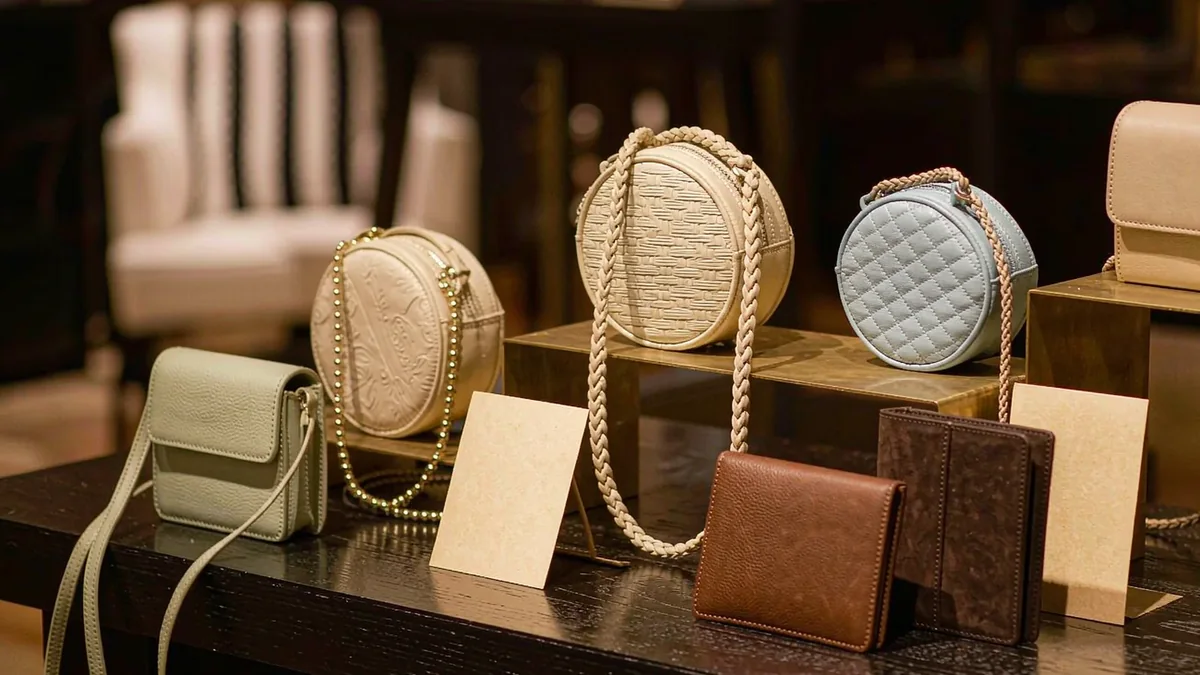
The Answer in One Sentence
A bag sells on a shelf when it is at eye level, uncompressed, lit warm and turned towards the aisle, with a material card beside it and nothing else competing for the same 400 mm. Everything else in display is a variation on those six conditions. Houses that negotiate the shelf before they negotiate the price get the six; houses that negotiate the price first get whatever 400 mm was free.
The Door That Moved Its Shelf by 300 mm
A house with two styles in two colourways placed its first drop in a door that had given it a lower shelf, 900 mm from the floor, beneath a rail of garments and directly under a 4,000 K ceiling lamp. The bags sold slowly for a season and the door concluded the ticket was too high. The founder visited on a Saturday and found the real cause: clients had to stoop to touch the bag, and under cool light the tan read grey against the reference approved at ΔE ≤ 1.0 under D65.
The negotiation that followed was about millimetres and kelvin rather than about money. The shelf moved up to 1,250 mm, the lamp above it was changed to 2,700 K and the door agreed a 350-400 mm pitch so the structured body was not compressed by the shelf above. The same bags, unchanged, sold through inside eight weeks of the move. Nothing about the object had altered; only its height, its light and its air.
Three lessons came out of it, and they generalise. First, a display problem almost always presents as a pricing problem, and the second diagnosis is usually wrong. Second, the three conditions a house should never concede are height, pitch and lamp, in that order. Third, the fix costs nothing in production, which is why display is the highest-return work a house can do on an existing drop.
What the Eye Does at 1,200 mm
A client walking a boutique looks at a band between roughly 1,200 and 1,400 mm from the floor, and almost nowhere else without a reason. A bag placed at 900 mm is examined only by someone already interested, which removes the spontaneous sale entirely. The band is not a preference; it is where an adult's eyes happen to be while walking, and every effective fixture in this category is built around it.
- Eye level band
- 1,200-1,400 mm from the floor, the centre of the shelf at 1,250 mm
- Shelf pitch
- 350-400 mm between shelves, free of the shelf above
- Units per shelf
- Three at most, spaced so no shoulder touches
- Aisle clearance
- 1,500 mm so two clients can pass without turning sideways
- Viewing angle
- 45° to the aisle, front panel towards the walkway
- Lighting
- 2,700-3,000 K at 300-500 lux on the product face
- Dwell time
- Four to seven seconds for a bag the client did not come for
The last line explains why the others matter. In four to seven seconds there is no time for a client to pick a bag up, so the decision is made on the silhouette, the light on the leather and the absence of competition. A shoulder compressed by the shelf above removes the silhouette, and a cool lamp removes the light. Both lose the sale before the client has touched anything.
The Six Rules of a Bag Shelf
- Height: the centre of the shelf at 1,250 mm, inside the 1,200-1,400 mm band.
- Pitch: 350-400 mm between shelves, so a structured body keeps its shoulder line.
- Density: three units per shelf, spaced, so the eye has somewhere to rest.
- Light: 2,700-3,000 K at 300-500 lux, measured on the product face rather than at the ceiling.
- Angle: 45° to the aisle, with the closure towards the walkway, since the closure is the signature.
- Card: one material card per unit, naming the tannery and the lot, at the front of the shelf.
The fifth rule is the one houses forget, and it is the one that carries the brand. Turning each bag 45° towards the aisle puts the closure, the signature element, towards the client's eye rather than towards the wall. A shelf of bags facing straight out reads as inventory; a shelf turned to the aisle reads as a presentation of five objects someone arranged.
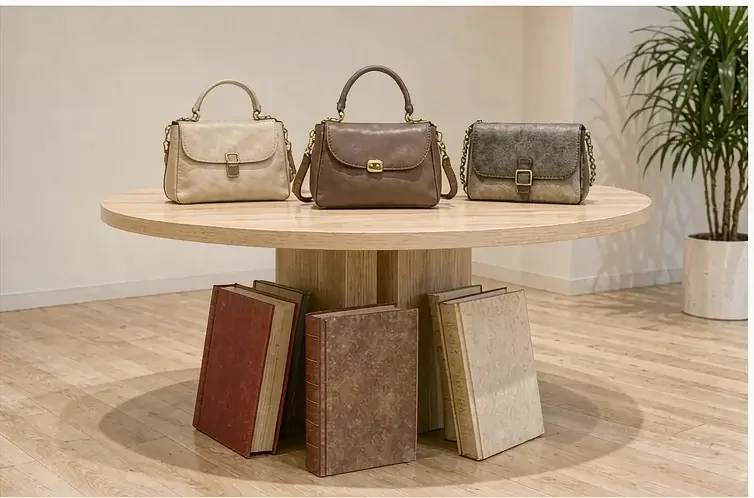
Display Elements, Compared
| Element | What it does | The number that governs it | Common failure |
|---|---|---|---|
| Shelf height | Puts the bag in the walking eye band | Centre at 1,250 mm | A lower shelf that removes the spontaneous sale |
| Shelf pitch | Protects the shoulder line | 350-400 mm | Compression that flattens a structured shape |
| Plinth | Lifts one piece out of the row | 80-120 mm high | A plinth so tall the bag is above the band |
| Lighting | Holds the approved shade | 2,700-3,000 K at 300-500 lux | 4,000 K that turns tan grey |
| Material card | Answers the question nobody asks aloud | One per unit, at the front | A card behind the bag, unread |
| Rotation | Gives regular clients a reason to look | Every 21 days | A shelf unchanged for a whole season |
The third row is worth a note because plinths are both the least costly display tool and the most misused. A plinth of 80-120 mm lifts one piece out of a row without taking it out of the eye band; a taller one pushes the bag to 1,500 mm, where it is above the band and therefore invisible. Use the plinth to separate a piece, not to elevate it.
Lighting and the Shade Argument
Lighting is the display element that most often starts an argument between a house and a door, because the two are measuring different things. The house approved a shade at ΔE ≤ 1.0 under D65 in a booth; the door is lighting it at 4,000 K on a white shelf. Both are telling the truth and the results differ, which is why the lamp belongs in the shelf agreement.
The third and fourth rows are small and decisive. A mirror shelf or a gloss board throws a specular highlight onto the lower half of the bag and changes its apparent colour, and a wall darker than the leather turns a tan body into a silhouette. Both are fixed with a piece of board, and both are usually discovered only after a season of slow sales.
Rotation and the 21-Day Rule
A shelf that has not changed in twelve weeks is invisible to anyone who visits monthly, which includes most of a door's best clients. Rotating the arrangement every 21 days, moving pieces between shelves, changing the angle and swapping the plinth, costs twenty minutes and gives a regular client a reason to look again. It also tells the door the house is present, which matters at re-order time.
Rotation is also a quick way to test the six rules without a negotiation. If moving a bag from 900 mm to 1,250 mm changes what sells, the house has evidence for the next shelf conversation in that door and in the next one. Display arguments won with numbers are won permanently; arguments won with taste are re-argued every season.
Mistakes That Cost a Shelf
- Accepting the first shelf offered, which is usually the one nobody else wanted.
- Letting the door install 4,000 K lighting over a hide approved at ΔE ≤ 1.0 under D65.
- Filling a 400 mm shelf with five bags, so no shape is visible.
- Placing the material card behind the unit where nobody reads it.
- Using a plinth tall enough to lift the bag out of the eye band.
- Leaving a shelf untouched for a season and then blaming the ticket.
Height, pitch and lamp, in that order. A house that concedes price and holds those three will outsell a house that holds price and concedes them, because the shelf, not the ticket, is what makes a client stop walking.
The Figures a Boutique Display Must Hit
- MOQ
- 500 pcs per style and colourway across the doors
- Sampling
- 6-10 working days, 12-15 for frame or exotic work
- Bulk
- 35-50 days from the approved sample
- Re-order
- 28-35 days against a sealed reference
- Shelf agreement
- Centre at 1,250 mm, pitch 350-400 mm, three units
- Lighting
- 2,700-3,000 K at 300-500 lux on the product face
- Trim set
- About USD 4.80 per piece
- Inspection
- AQL 2.5 under ISO 2859-1
- Incoterm
- FOB Xiamen
The fifth line is the one to put in the door agreement rather than in a conversation. A written shelf specification, height, pitch, density, lamp and angle, converts display from a matter of taste into a condition of supply, and it is the document a house uses when it opens the second door.
Write the shelf into the door agreement
If you are placing a drop in a door and want the six conditions specified, send your silhouette shortlist and target quantity per colourway. Our team will return a shelf and presentation specification through our quotation desk.
How a shelf specification is supported in practice
- Across 7 production lines running about 200,000 pcs per month, our validated partner factory Quanzhou Yingming Bags builds the presentation a shelf needs: unmarked cartons, a material card per unit and a shape that arrives uncompressed. Export experience since 2014, FOB Xiamen and an inspection at AQL 2.5 under ISO 2859-1 mean the bag a door lifts to 1,250 mm is the bag that was approved.
Frequently Asked Questions
How should a luxury bag be displayed in a boutique?
At eye level, uncompressed, lit warm and turned towards the aisle, with a material card beside it and nothing competing for the same 400 mm. In practice: a shelf centre at 1,250 mm, a pitch of 350-400 mm, three units, 2,700-3,000 K lighting and a 45° angle to the walkway.
What height should a handbag shelf be?
The centre of the shelf at about 1,250 mm, inside the 1,200-1,400 mm band where a walking adult's eyes naturally fall. A bag at 900 mm is examined only by someone already interested, which removes the spontaneous sale entirely. Height is the first of three conditions a house should never concede.
How much space does each bag need on a shelf?
About 400 mm of width and 350-400 mm of pitch between shelves, with three units per shelf at most. Below that a structured body is compressed by the shelf above and loses the shoulder line it was cut for. Space is the second condition, and it is the one doors concede most readily.
What lighting is best for leather handbags?
2,700-3,000 K at 300-500 lux, measured on the product face rather than at the ceiling. Warm light flatters tan calfskin; a 4,000 K lamp turns it grey against a reference approved at ΔE ≤ 1.0 under D65. Agreeing the lamp with the door is agreeing the shade the client will see.
Why does a bag sell slowly in a good door?
Usually the fixture rather than the ticket. A lower shelf, a compressed pitch or a cool lamp will each halve the sale rate of an unchanged bag. Before reducing the price, spend a Saturday in the room and check height, pitch, lamp, density, angle and card in that order.
How often should a boutique shelf be changed?
Every 21 days. Moving pieces between shelves, changing the angle and swapping the plinth costs twenty minutes and gives a monthly visitor a reason to look again. It also provides evidence: if a move changes what sells, the house has a number for the next shelf negotiation.
What is a material card and where does it go?
A small printed card naming the tannery, the lot, the finish and the substance, placed in front of the unit rather than behind it. It answers the question a client will not ask aloud, and it is the least costly piece of the display. One card per unit, always at the front.
Should bags face forward or at an angle on a shelf?
At 45° to the aisle with the closure towards the walkway. The closure is the signature element, so turning it towards the client's eye is what makes the shelf read as a presentation rather than as inventory. It costs nothing and it is the rule most often missed.
How high should a display plinth be?
80-120 mm, enough to lift one piece out of a row without taking it out of the eye band. A taller plinth pushes the bag above 1,400 mm, where it becomes invisible. Use the plinth to separate a piece from its neighbours, not to elevate it above them.
What shelf surface works best under a handbag?
A pale, matte board, with a neutral wall two shades lighter than the leather behind it. A mirror or a gloss shelf throws a specular highlight onto the lower half of the bag and changes its apparent colour, and both problems are fixed with a piece of board.
How does display affect the re-order conversation?
Directly. A door with a shelf that sells will re-order; one that does not will not, whatever the relationship. A written shelf specification also gives the house something concrete to hand to the second door, so the second negotiation starts where the first one ended.
What should a house put in a door agreement about display?
Six conditions in writing: height at a 1,250 mm shelf centre, pitch of 350-400 mm, three units per shelf, lighting at 2,700-3,000 K, a 45° angle and one material card at the front of each unit. Written, they convert display from taste into a condition of supply.
People Also Ask
Does shelf height really change handbag sales?
Yes. A bag at 900 mm is handled only by a client already interested, while one in the 1,200-1,400 mm band is seen by everyone walking past. Moving a shelf up 300 mm has changed a sell-through rate without any change to the bag.
How many bags should be on one shelf?
Three at most, spaced so no shoulder touches. A five-bag 400 mm shelf shows no silhouette at all, and a client gives a bag four to seven seconds, so the shape has to read immediately.
What colour light makes leather look best?
2,700-3,000 K. Warm light keeps a tan hide at the shade it was approved at under D65, while a cool 4,000 K lamp turns it grey and starts an argument about a colour that never changed.
How can a small brand negotiate a better shelf?
With numbers rather than taste. Ask for a 1,250 mm centre, a 350-400 mm pitch and a 2,700-3,000 K lamp, and be willing to concede price instead. Shelf conditions won with figures are held permanently.
Should the dust bag be shown on the shelf?
No. The bag should be shown alone with its material card. The dust bag and the outer carton belong to the moment the client takes it home, and on a shelf they add two objects competing for the same 400 mm.
Sources and further reading
Every figure on this page is either our own programme data or attributed below. Open the originals before you write them into a specification.
- ISO — International StandardsInternational Organization for Standardization Publisher of ISO 105 colour fastness methods and of ISO 2859-1, the sampling standard behind an approved shade.
- National Retail FederationNational Retail Federation Retail operating research on fixture presentation and on the sell-through effects of shelf placement.
- Leather Working GroupLeather Working Group Tannery audit protocol behind the lot record printed on a material card placed in front of a unit.
- Proposition 65California OEHHA Substance and warning requirements for leather goods and plated hardware sold through retail doors.