How a High-End Handbag Supplier Onboards Buyers: Nine Gates From Enquiry to Shipment
How does a high-end handbag programme onboard a new buyer? In nine gates: enquiry and NDA within 48 hours, tech pack review, material selection, costing, sampling at 6-10 working days, a pre-production reference piece, bulk at 35-50 days, inspection to AQL 2.5 under ISO 2859-1, then shipment and a dated reorder. Each gate has an owner, a document and a decision, and skipping one costs between five and fifty days.
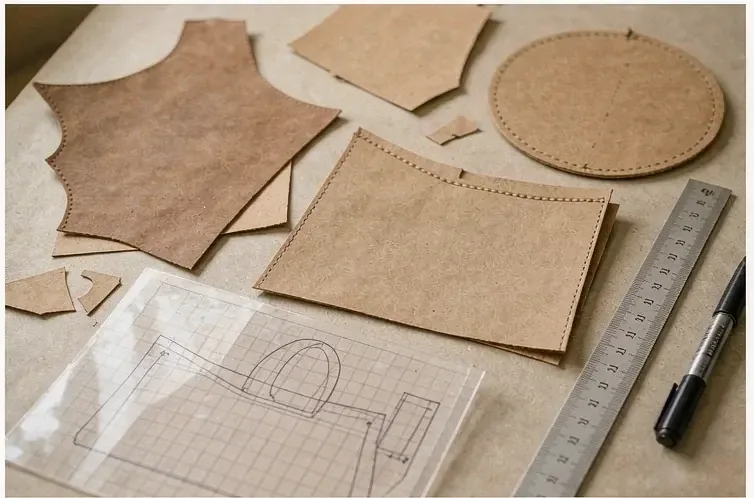
The Onboarding Checklist: Nine Gates From Enquiry to Shipment
Onboarding is not an administrative formality. It is the sequence in which a design becomes a delivered shipment, and each gate in it either closes with a document or stays open and costs time later. Nine gates is what a first programme usually runs, and the whole sequence is between 70 and 105 days end to end.
The checklist below is written so it can be worked through in order. Every gate states what the buyer supplies, what comes back, and what closes it. Where a gate cannot be closed, the calendar slips, and it slips by a known amount rather than by an unknown one.
Gate One: Enquiry, NDA and the First 48 Hours
The first gate is the fastest and the easiest to get wrong. An enquiry that arrives without drawings, without a retail band and without a target delivery week cannot be costed, and the four days spent establishing those three facts are the four days most often lost in a first programme.
- A mutual NDA, returned signed within one working day where the buyer supplies it.
- Silhouette drawings, however rough, with at least overall dimensions in millimetres.
- The retail price band the construction has to land inside.
- The target delivery week, and whether a reorder is expected behind it.
- The unit count, or the honest answer that it is not yet known.
What closes the gate is a written acknowledgement with a named contact, a technical response within 48 hours and a stated next step. A response that says only that the enquiry has been received is not a closed gate, and it is usually the first sign of a programme that will drift.
Gate Two: The Tech Pack Review and What Gets Sent Back
The second gate is the review, and it is the most valuable thing a serious programme does for a buyer at no cost. A tech pack is read line by line against what can actually be made, and the gaps are returned as a list rather than discovered one at a time over three sampling rounds.
| Tech pack line | What is checked | What comes back | Why it matters |
|---|---|---|---|
| Dimensions | Capacity against stated size | A revised dimension or a note | A bag that cannot hold what it should |
| Leather | Grade, substance and finish | A swatch card of three options | Hand, weight and cost all move together |
| Hardware | Metal, plating build and finish | A component list with figures | Plating build decides year-one complaints |
| Construction | Stitch count, seam type, reinforcement | A construction note with figures | Load paths fail at the weakest seam |
| Colour | Swatch code and tolerance | A dyed swatch in the target shade | Screen approval costs correction rounds |
| Lining and edge | Material, coats and sanding | A finish specification | Edge is the most touched surface |
A good review returns six to ten questions. That is not friction; it is the least costly possible place to spend a week, because every question answered here is a correction round not spent later, and a correction round at sampling runs 5-8 working days.
Gate Three: Material Selection and Swatch Approval
Material selection closes when the buyer holds the actual leather rather than a description of it. A swatch card is sent with three options in the same grade and finish, at the substance the construction needs, and the buyer picks one and returns the card signed.
On a structured top-handle body, full-grain calfskin at 1.2-1.4 mm is the usual reference. On a softer, slouching body the same leather is specified at 1.0-1.2 mm, or a lambskin is offered at 0.8-1.0 mm where drape matters more than structure. The choice is not about quality in the abstract; it is about what the silhouette has to do.
Gate Four: Costing Against the Retail Band
Costing is done against the ticket the buyer has to hold, not in isolation. A construction that lands at USD 4.80 per unit on the base reference supports a very different ticket from one at twice that, and the whole point of the gate is to know which before sampling starts.
- Costed against
- The retail band, working backwards
- Base reference unit
- USD 4.80
- Variables that move it
- Leather grade, hardware metal, stitch count
- Minimum the costing assumes
- 500 pcs per style and colourway
- Payment structure
- 30% at order, 70% before shipment
- Quoted basis
- FOB Xiamen, with CIF and DDP available
- Validity
- Stated on the quotation, with the leather price assumption
- What closes the gate
- A signed costing sheet, not a verbal agreement
The seventh row is the one buyers skim. Leather is a commodity with a moving price, and a quotation held open for ninety days without a stated assumption is a quotation that will be renegotiated at the moment the buyer has least leverage.
Gate Five: Sampling at 6-10 Working Days
Sampling runs 6-10 working days from a closed tech pack and a confirmed material choice, extending to 12-15 for a complex construction with a frame, an exotic panel or a hand-set closure. The clock starts when the specification is settled rather than when the enquiry arrives, which is the single most misunderstood thing about it.
- Pattern developed and cut from the production leather.
- Skiving and preparation, with interlining at the stated thickness.
- Assembly and closing, at the stated stitch count per inch.
- Hardware set, and the closure cycled and pull tested.
- Edge finished in three coats, sanded between each.
- Internal review against the tech pack, line by line.
- Photographed and dispatched, with a written note of any deviation.
The last item matters more than it sounds. A sample that arrives with no note about where it deviates from the brief is a sample the buyer has to re-review from scratch, and that is where a second round usually begins.
Gate Six: Pre-Production Sample and the Golden Reference
The pre-production piece is made from production leather, on the line, with production hardware. It is photographed, signed by both sides, and one piece is retained. That retained piece is the reference against which the bulk shipment is later judged, and it is the only object in the programme that both sides have touched at the same time.
Where a buyer cannot attend, the reference is held on the bench and sent with the inspection report. The comparison that matters at intake is not between the shipment and a photograph; it is between the shipment and this piece.
Gate Seven: Bulk at 35-50 Days With Progress Reporting
Bulk runs 35-50 days from an approved pre-production sample and the deposit. The range is wide because the variables are: leather arrival, hardware plating, the number of operations in the construction, and where the run sits in the calendar.
- Week one to two: leather received, graded, cut and prepared.
- Week two to four: hardware received, checked and plated to build.
- Week three to six: assembly, closing and edge finishing on the line.
- Week five to seven: hardware setting, closure cycling and pull testing.
- Week six to seven: final inspection to AQL 2.5 under ISO 2859-1.
- Week seven: packing, documentation and handover to the nominated carrier.
Progress reporting is weekly in text with photographs at the cut stage, the assembly stage and the finish stage. Three photographs at three fixed points tell a buyer more than daily messages, and they do it without asking anybody to stop working to write them.
Gate Eight: Inspection to AQL 2.5 and Release
Inspection is carried out to AQL 2.5 under ISO 2859-1, which supplies the sample size and the acceptance and rejection numbers. Critical defects carry an acceptance of zero; major and minor defects carry the numbers the standard gives for the lot size.
Third-party inspection is optional and available, and it is most useful where the buyer cannot attend. Either way, the remedy for a failed inspection should have been agreed at gate four rather than negotiated at gate eight, because a negotiation at week seven is the most expensive conversation in the whole programme.
Gate Nine: Shipment, Documents and the Reorder Date
On FOB Xiamen terms the buyer nominates the carrier; sea freight and clearance run 20-35 days door to door, air 5-8. The documents that travel with the goods are the commercial invoice, the packing list, the bill of lading and any compliance test reports for the destination market.
The gate does not close at handover. It closes when a reorder date is written down, 60 to 90 days from delivery, against a sell-through threshold of 65-70%. A programme that ends at the bill of lading is a programme that will start again from zero next season, which is the most expensive way to buy anything.
What Slows Onboarding and How to Avoid It
Four things slow every first programme, and all four are on the buyer's side of the line rather than the bench.
An undecided retail band
Costing cannot be done against an unknown ticket. Nominate a band at gate one even if it later moves by one price point, because a costing built against a band can be revised in an hour and one built against nothing cannot.
Approvals by committee
A sample sent to five people for comment returns five opinions and no decision. Name one approver per gate, and let everybody else advise that person rather than replace them.
Colour approved on a screen
Still the commonest cause of a second sampling round. Approve against a physical swatch under controlled lighting, with a delta E tolerance stated against the reference.
A delivery week with no slack
A programme planned to the day fails on the first unexpected event. Hold ten working days against a 70-105 day sequence, and spend them only if something actually goes wrong.
The Onboarding Sequence in One Checklist
Nine lines, each with a document, and the whole sequence closes in 70 to 105 days when they are worked in order.
Nine gates, one document each
- Enquiry: NDA signed, drawings, retail band, delivery week.
- Tech pack review: a returned list of gaps and questions.
- Material selection: a signed swatch card, physical.
- Costing: a signed costing sheet, with validity stated.
- Sampling: 6-10 working days, 12-15 for a complex construction.
- Pre-production: one retained reference piece, signed.
- Bulk: 35-50 days, with three progress reports.
- Inspection: AQL 2.5 under ISO 2859-1, remedy agreed in advance.
- Shipment: documents issued, and a reorder date written down.
Our programme works to MOQ 500 pcs per style and colourway, with sampling at 6-10 working days and 12-15 for a complex construction, bulk at 35-50 days on FOB Xiamen terms, inspected to AQL 2.5 under ISO 2859-1. It runs across 7 production lines with about 200,000 pcs per month of capacity and export experience since 2014, delivered through our validated partner factory Quanzhou Yingming Bags, an SGS-validated site. The framework sits under high-end handbag sourcing and the development detail under luxury sampling.
Start at gate one this week
Send the drawings, the retail band and the delivery week. We will return the gaps, a costed construction and a gate-by-gate calendar, within two working days. Request a quote.
Frequently Asked Questions
How long does it take to onboard a new handbag buyer?
Between 70 and 105 days from enquiry to delivered stock. Nine gates make up the sequence: enquiry and NDA, tech pack review, material selection, costing, sampling at 6-10 working days, a pre-production reference, bulk at 35-50 days, inspection, then shipment and a reorder date.
What does a buyer need to supply at the enquiry stage?
A signed NDA, silhouette drawings with dimensions in millimetres, the retail price band the construction has to land inside, the target delivery week and the unit count. With those five items a technical response is returned within 48 hours and costing can begin immediately.
What happens during the tech pack review?
The pack is read line by line against what can be made, and six to ten questions come back covering dimensions, leather grade and substance, hardware metal and plating build, stitch count, colour reference and edge finish. Each question answered there avoids a sampling correction of 5-8 working days.
When does the sampling clock start?
When the specification is settled and the material is confirmed, not when the enquiry arrives. From that point sampling runs 6-10 working days, extending to 12-15 for a complex construction with a frame, an exotic panel or a hand-set closure.
What is a pre-production sample for?
It is made from production leather, on the line, with production hardware, and it is retained as the reference against which the bulk shipment is judged. One piece is signed by both sides and kept on the bench for comparison at intake inspection.
How is bulk production reported?
Weekly in text, with photographs at three fixed points: the cut stage, the assembly stage and the finish stage. Three photographs at known points tell a buyer more than daily messages, and they do not interrupt the line to produce.
What inspection standard is used before shipment?
AQL 2.5 under ISO 2859-1, which supplies the sample size and the acceptance and rejection numbers. Critical defects carry an acceptance of zero. Third-party inspection is optional, and the remedy for a failed inspection is agreed at the costing stage.
What payment structure applies to a first order?
Typically 30% at order and 70% before shipment, stated on the quotation rather than assumed. The quotation also carries a validity period and the leather price assumption behind it, since leather is a commodity with a moving price.
What documents travel with the shipment?
The commercial invoice, the packing list, the bill of lading and any compliance test reports required by the destination market, such as REACH documentation for the European Union or Prop 65 information for California. On FOB Xiamen terms the buyer nominates the carrier.
How is colour approved during onboarding?
Against a physical swatch sent from the same dye lot, under controlled lighting, with the reference code named and a tolerance of delta E 1.0 stated against it. A swatch card is sent with three options and returned signed, which closes the material gate.
Can a first order run below the standard minimum?
The programme works to 500 pcs per style and colourway. A first order below that figure is usually costed higher per unit rather than lower, because leather is bought by the hide and hardware tooling is spread across the quantity rather than absorbed by it.
What should a buyer hold as contingency time?
Around ten working days against a 70-105 day sequence. A programme planned to the day fails on the first unexpected event, and the slack is far less expensive held in the calendar than bought later through air freight at 5-8 days instead of 20-35 by sea.
People Also Ask
What does onboarding a handbag buyer involve?
Nine gates from NDA to reorder: tech pack review, material selection, costing, sampling, a retained pre-production reference, bulk, inspection and shipment. Each closes with a document, and the sequence runs 70-105 days.
How quickly should a production partner respond to an enquiry?
A technical response within 48 hours, with a named contact and a stated next step. An acknowledgement alone is not a closed gate and is often the first sign of a programme that will drift.
Why is sampling 6-10 working days and not less?
Because the piece has to be patterned, cut, assembled, have hardware set, be edge finished in three coats and be reviewed against the pack. Complex constructions with a frame or an exotic panel run 12-15.
What is the golden sample in handbag production?
The signed pre-production piece made from production materials on the production line. It is retained and used as the reference at intake, so inspection becomes a comparison rather than an opinion.
What causes delays in a first handbag order?
An undecided retail band, approvals by committee, colour approved on a screen and a delivery week with no slack. All four sit on the buyer's side of the line rather than at the bench.
Sources and further reading
Every figure on this page is either our own programme data or attributed below. Open the originals before you write them into a specification.
- ISO — International Organization for StandardizationISO Publisher of ISO 2859-1, the sampling standard behind AQL 2.5 inspection at shipment, and ISO 105-B02 on light fastness.
- SGS — inspection, verification and testingSGS Third-party inspection and laboratory testing for finished leather goods and metal hardware.
- ICC — Incoterms rulesICC Authoritative reference for FOB, CIF and DDP, and where cost and risk transfer between the two sides.
- ECHA — European Chemicals AgencyEuropean Chemicals Agency Administrator of REACH, including the Annex XVII restrictions that apply to leather and metal components.
- Sourcing JournalSourcing Journal Trade coverage of sourcing calendars, sampling practice and freight conditions across the accessories category.