How Exotic Leather Bag Samples Are Developed: Six Gates from Skin Grading to a Sealed Reference in 12-15 Working Days
Exotic leather bag samples are developed through six gates rather than the usual three, and the extra three exist because the skin is finite. Gate one is availability and CITES documentation; gate two is grading the skin on a four-point scale; gate three is layout, where one wrong panel can consume a whole hide; gate four is symmetry matching, which adds 18-22 per cent to skin consumption; gate five is construction; gate six is finishing. A complete exotic programme runs 12-15 working days rather than 6-10, and ends in a sealed reference with the tag number recorded.
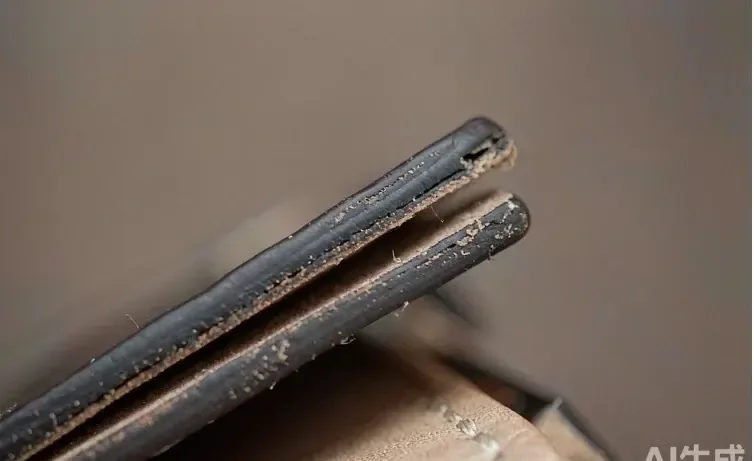
Why Exotic Skins Change the Sampling Sequence
A calfskin programme can be sampled, argued with, corrected and resampled because more hides exist. An exotic programme cannot. The skin in front of the bench is one of a small number, it will not reappear in the same grade, and every cut made in it is permanent.
That single fact reorganises the whole exercise. Where a calfskin sample can begin with a trial shell in stock material, an exotic sample begins with a decision about which part of which skin provides which panel, taken before a blade touches anything. The sequence is inverted, and the consequence of getting it wrong is measured in skins rather than in days.
It also adds three gates to the process. Sampling a standard construction moves from specification, to prototype, to reference. Sampling an exotic insert moves from documentation, to grading, to layout, to matching, to construction, to finishing, and each of the three additional gates is one that a calfskin programme never has to think about.
Gate One: Availability and Documentation
Nothing is cut until the skin exists, is graded, and carries its documentation. This gate is administrative and it is the one that most often delays an exotic programme by weeks rather than days.
The documentation requirement is specific: skins of species listed under CITES travel with permits issued for the individual skin, and the tag number on the skin has to correspond to the paperwork that accompanies it. The paperwork is not generated at shipment and cannot be backdated. Where a programme intends to sell into more than one market, the requirements differ by destination and have to be established at this gate rather than at import.
The practical instruction for a founder is to confirm documentation before confirming a date. An exotic sample promised in ten working days from a skin that is not yet in hand is a promise made about a document, not about a bag.
Gate Two: Grading the Skin Before Anything Is Cut
Grading is a four-point exercise carried out on a light table, and it decides which panels the skin can supply before the design is allowed to argue.
| Grade | What the skin shows | Which panels it can supply |
|---|---|---|
| Grade 1 | Even scale rows, no scarring, consistent lustre across the full skin | Centre front panel, flap, any surface seen first |
| Grade 2 | Minor irregularity in one row, or a scale size change at the flank | Side gussets, base, handle faces |
| Grade 3 | Visible scar, healed or otherwise, or a row break | Interior facings, underside of a strap, hidden panels |
| Grade 4 | Multiple defects or a damaged margin | Not used on a luxury piece; returned to the tannery |
The discipline here is unglamorous and it is what separates an atelier that works in exotic skins from one that merely offers them. Grading first means the design is matched to the material; grading last means the material is forced into the design, and the wastage shows up on the invoice.
Conditioning the Skin Before the Blade
Between grading and layout there is a step that costs a day and prevents a class of fault that only appears after the piece has been finished for a month.
Exotic skins are stored and conditioned flat, at a stable humidity, for at least 24 hours before cutting. A skin cut while it is dry from transit will relax afterwards, and the relaxation shows as a panel that has grown by a millimetre or two after the piece is assembled. On calfskin that is absorbed by the tolerance; on a matched exotic panel it breaks the alignment that gate four was designed to protect.
The same logic applies at the other end of the range. A skin conditioned in a humid room and then shipped to a dry climate will tighten, and the tighten shows at the join. Conditioning is not quality control in the usual sense; it is an acknowledgement that this material moves after it is cut and that the sample has to be made from a skin that has already finished moving.
Gate Three: Layout, and the Cost of a Wrong Panel
Layout places each panel on the skin so that scale rows run in the intended direction and the pattern of scales reads continuously across the piece.
A standard panel on a 25 cm front reads at roughly 24-30 scales across its width, and those rows have to continue onto the gusset at the same size. A row that jumps at the fold is visible from across a room and cannot be corrected afterwards, because the skin does not grow another row.
Layout is also where wastage is decided. Cutting a front panel and a flap from the same skin so that their scales align can consume a third more material than cutting them without regard to alignment. That is a real cost and it is the reason a matched exotic piece is priced differently from an unmatched one rather than merely described as better.
Gate Four: Matching, Symmetry and What Symmetry Costs
Symmetry matching is the decision that most affects both the appearance and the cost of an exotic piece, and it should be taken deliberately rather than inherited.
- Unmatched
- Panels cut for grade and direction only. Lowest skin consumption, and scale size varies between panels.
- Half-matched
- Front and flap aligned to each other; sides and back cut for direction. A good balance for most programmes.
- Fully matched
- Scale rows continue across every panel and around the piece. Adds 18-22 per cent to skin consumption.
- Mirror matched
- Left and right panels mirror each other across the centre line. Adds further consumption again and requires more skins per piece.
- Skin substance
- Exotic skins arrive at 0.9-1.2 mm and are not split, so structure is built with backing rather than by substance.
The number to hold onto is the 18-22 per cent. Full matching is not a finishing choice; it is a material decision with a measurable cost, and it should be specified at gate four and quoted at gate four rather than discovered at bulk.
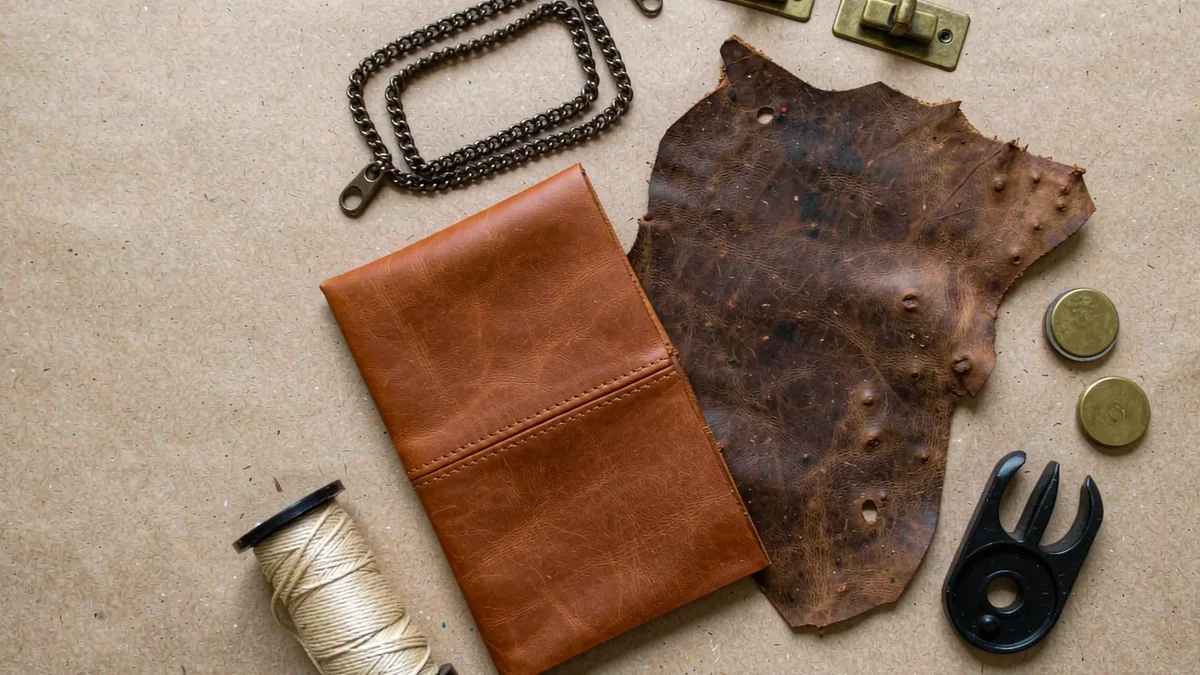
Gate Five: Construction Choices Specific to Exotic Skins
Exotic skins are thinner than structured calfskin and behave differently at every join, so three construction defaults change.
- Backing rather than substance: the skin is bonded to a 0.6 mm reinforcement so the panel holds its shape without being split.
- Stitch pitch opens to 7-8 per inch, because a finer pitch perforates between scales where the fibre is weakest.
- Adhesive is applied at around 60 gsm and allowed to cure fully, since a scale edge lifts if the bond is rushed.
The second point surprises designers who have specified 8-9 per inch elsewhere in the collection. Exotic skins do not behave like calfskin at the needle, and a specification copied across from a leather style will perforate the panel between scale rows in a way that only appears once the piece is flexed.
There is a further choice about the edge. An exotic panel is turned and burnished rather than painted, because edge paint sits on scale edges as a plastic line and reads as a repair. Turning costs bench time and it is the correct finish on this material.
Gate Six: Finishing, Edge and Hardware Against a Scale
Hardware sits against a surface that is not flat, and the specification has to account for it.
A plate or a lock fitted directly to a scaled surface rocks on the high points. The remedy is a backing plate set under the skin, or a recessed seat cut into the reinforcement, and both have to be drawn at gate six rather than solved on the bench. Where a magnetic closure is used, the pull force has to be stated, because the closure is working against a surface with more friction and less give than calfskin.
Plating remains at 0.15-0.3 microns over a nickel-free undercoat, with salt spray resistance at 24 hours as standard and 48 hours for humid markets. Nothing about an exotic skin changes those figures, and they should not be relaxed because the material is expensive.
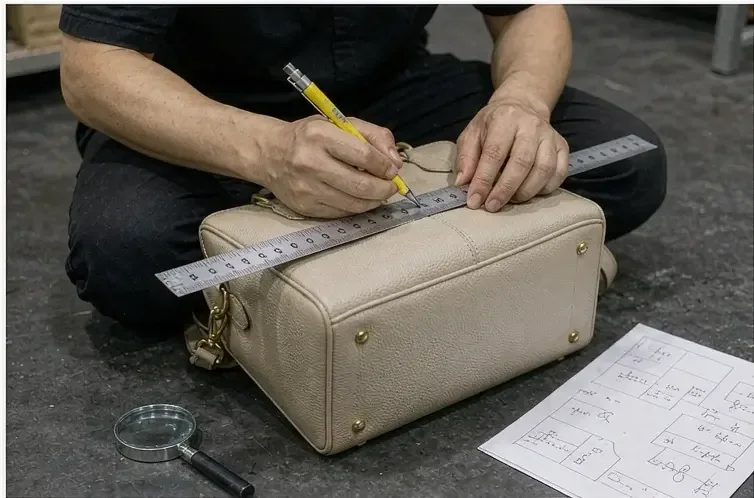
The Documentation That Travels With the Piece
An exotic sample generates four records, and all four are needed at bulk rather than at the end.
- The skin tag number, recorded against the style and the panel it supplied.
- The permit reference, held with the skin rather than with the finished piece.
- The grade and layout sheet, showing which panel came from which part of the skin.
- The sealed reference itself, tagged with the same number as the documentation.
The fourth item is what makes the other three usable. A permit that cannot be tied to a physical piece is a document about a skin; a sealed reference tagged with the same number is evidence about a bag, and only the second resolves a question at import or at a client meeting.
What the 12-15 Working Days Buy
An exotic sample runs 12-15 working days against 6-10 for a standard construction, and the additional days are spent at the first three gates rather than on the bench.
Documentation and grading take the front of the window. Layout takes the middle. Only then does the bench begin, and the bench work itself is not slower than on calfskin once the decisions are made. The extra time is decision time, which is why a founder who arrives with documentation in hand and a matching level already chosen can sometimes hold the shorter end of the range.
For scale on cost, the bench figure for one finished piece in a normal run sits around USD 4.80 in parts and labour. An exotic piece carries the same bench logic plus skin cost, grading waste and matching consumption, which is why it is quoted as a programme rather than as a unit price.
From approval the programme is conventional: MOQ 500 pcs per style and colourway, bulk in 35-50 days, inspection at AQL 2.5 under ISO 2859-1 and handover on FOB Xiamen terms. Export experience runs since 2014 across 7 production lines with about 200,000 pcs per month of capacity, delivered through our validated partner factory Quanzhou Yingming Bags.
When an Exotic Programme Should Not Proceed
Three situations argue against proceeding, and each is better handled before the skin is bought than after it is cut.
- The species is not available in a quantity that can supply the run. One beautiful skin is a sample, not a programme.
- The destination market is undecided. Documentation requirements differ, and a skin permitted for one market may not serve another.
- The design demands grade 1 across every visible panel. That is a specification no skin supply can hold at volume.
In the first two cases the answer is a different material or a confirmed market. In the third it is a design conversation, and it is a conversation worth having at gate two rather than at gate six.
On calfskin the design leads and the material follows. On an exotic skin the material leads, because there is a fixed quantity of it and every cut is permanent. Reversing that order is the single most expensive mistake available in this category.
Plan an exotic programme from the skin outwards
Tell us the species, the panels and the destination market and we will return availability, grading, matching options and a sampling window in one document. Request a quote.
Frequently Asked Questions
How long does an exotic leather sample take?
Twelve to fifteen working days against six to ten for a standard construction. The extra days go to documentation, grading and layout rather than to bench work, which is why arriving with paperwork in hand can hold the shorter end.
What does grading an exotic skin involve?
A four-point assessment on a light table covering scale regularity, scarring and lustre. Grade 1 supplies centre fronts and flaps, grade 2 supplies gussets and bases, grade 3 supplies hidden panels, and grade 4 is not used on a luxury piece.
What is symmetry matching?
Aligning scale rows so they continue across panels and around the piece. Full matching adds 18-22 per cent to skin consumption, and mirror matching adds more again, so the level has to be chosen and quoted before cutting.
Can exotic skins be split to a thinner substance?
No. They arrive at 0.9-1.2 mm and are not split, so structure is built by bonding the skin to a 0.6 mm reinforcement rather than by reducing the material.
Why does stitch pitch change on exotic skins?
Because a pitch of 8-9 per inch perforates between scale rows where the fibre is weakest. Opening the pitch to 7-8 protects the panel, and the specification should never be copied across from a calfskin style.
Why are exotic edges turned rather than painted?
Edge paint sits on scale edges as a plastic line and reads as a repair. Turning and burnishing costs more bench time and is the correct finish on this material.
What documentation travels with an exotic piece?
The skin tag number, the permit reference held with the skin, a grade and layout sheet, and a sealed reference tagged with the same number. The last item turns the other three into evidence about a bag.
Can documentation be prepared after the sample is made?
No. Permits are issued for the individual skin and cannot be backdated. An exotic sample promised in ten days from a skin not yet in hand is a promise about a document rather than a bag.
Do requirements differ by destination market?
Yes. Species listings and import requirements differ by country, so the destination has to be established at the first gate. A skin permitted for one market may not serve another.
How does hardware fitting differ on a scaled surface?
A plate fitted directly rocks on the high points of the scales. The remedy is a backing plate set under the skin or a recessed seat cut into the reinforcement, both drawn at the design stage rather than solved on the bench.
How is an exotic piece priced against a calfskin one?
On the same bench logic, with a normal run sitting around USD 4.80 per finished piece in parts and labour, plus skin cost, grading waste and matching consumption. It is quoted as a programme rather than as a unit figure.
When should an exotic programme not proceed?
When the species cannot supply the run, when the destination market is undecided, or when the design demands grade 1 across every visible panel. All three are better resolved before the skin is bought.
People Also Ask
What makes exotic leather sampling different?
The skin is finite and every cut is permanent, so grading, layout and matching happen before construction. Three extra gates are added and the window extends to 12-15 working days.
How many skins does one bag need?
It depends on the panels and the matching level. A single front and flap cut for alignment consume substantially more of a skin than the same panels cut for grade alone.
Do exotic bags need special paperwork?
Yes. Listed species travel with permits issued for the individual skin, tied to a tag number, and the sealed reference should carry the same reference.
Is full matching worth the cost?
On a piece where the front and flap are seen together, yes. On a piece where panels are separated by a gusset, half-matching usually reads as well for materially less skin.
Can exotic leather be repaired?
Not invisibly. A damaged scale does not grow back, which is why grading at gate two and careful layout at gate three matter more here than in any other category.
Sources and further reading
Every figure on this page is either our own programme data or attributed below. Open the originals before you write them into a specification.
- CITES - Convention on International Trade in Endangered SpeciesCITES The permit framework under which listed species are traded, with documentation issued for the individual skin.
- Leather Working GroupLeather Working Group Tannery audit and traceability protocol behind the skin records kept at grading and layout.
- ISO - International Organization for StandardizationISO Publisher of ISO 2859-1 for inspection and the material test methods referenced in exotic specifications.
- SATRASATRA Technology Centre Independent testing organisation covering flex, adhesion and hardware performance on exotic panels.
- IUCN Red List of Threatened SpeciesIUCN Conservation status reference consulted when establishing which species a programme can responsibly source.