How Couture Bag Hardware Is Custom Cut: The Four Routes, the Four Polishing Passes and the Tolerances That Decide Fit
A maison arrives with a hand-carved wax: a 34 mm turn-lock with a bevelled shield, intended for 600 structured top-handle bags. What happens next is a chain of seven operations, and the finished fitting is only as good as the tightest tolerance in that chain. Couture hardware is cut by one of four routes — die casting, lost-wax casting, CNC from solid bar or stamping from flat stock — and that choice, not the drawing, decides the tooling spend, the piece cost, the minimum run and how sharp an edge you can feel under a thumb. On our programme the reference fitting sits at USD 4.80, sampling runs 6-10 working days and MOQ is 500 pcs per style and colourway.
The Four Routes From Sketch to Finished Fitting
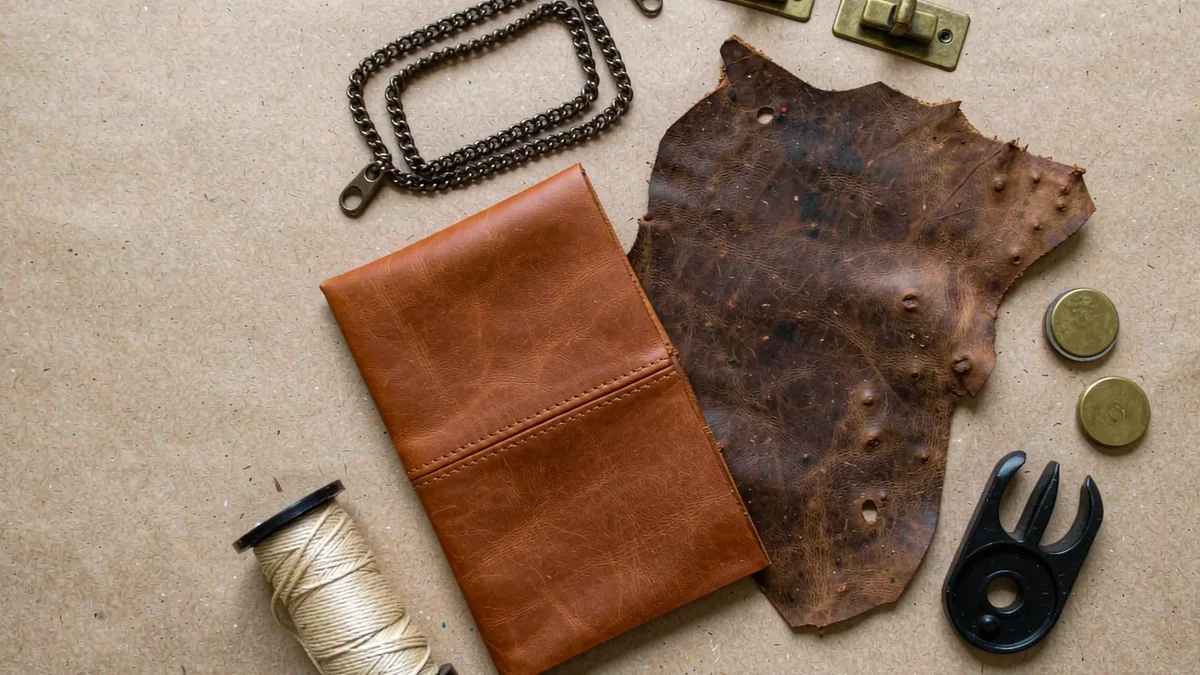
Couture hardware reaches the bench by one of four routes, and the route — not the drawing — decides what the fitting can cost, how sharp its edges may be, and how many pieces justify the tooling.
| Route | Alloys it suits | Tooling | Edge definition | Realistic tolerance | Suited to |
|---|---|---|---|---|---|
| Die casting | Zamac #3 and #5 | Steel die, 18-25 days | Good, but every outside edge needs a 0.2 mm radius | ±0.15 mm on fit faces | Turn-locks, feet, D-rings at 500 pcs and above |
| Lost-wax casting | Brass CuZn39, bronze, sterling | Rubber mould and wax tree, 15-22 days | Excellent, undercuts and engraved relief stay crisp | ±0.20 mm after fettling | Sculptural clasps, engraved shields, small runs |
| CNC from solid bar | Brass CuZn37, stainless 316L | Programme and fixtures only | Very sharp, arrises can stay deliberately square | ±0.05 mm | Frames, bar hardware, precision hinge parts |
| Stamping from flat stock | Brass sheet 0.8-1.2 mm | Progressive die, 20-28 days | Crisp on the face, rolled on the cut edge | ±0.10 mm | Name plates, flat locks, decorative bars |
Where a fitting carries load or threads repeatedly — a lock tongue, a hinge, a foot that takes the whole weight of a loaded bag — solid brass or stainless is the safer specification. Where the part is decorative and largely flat, zamac die casting gives the best surface for the money.
Tooling: Cost, Cavities and How Long a Die Lasts
Tooling is the largest fixed cost in custom metalwork, and it is the reason a minimum run exists at all: a steel die amortised over 500 pieces costs several times per piece what it costs over 5,000.
- Steel die, single cavity
- 18-25 days from the approved drawing, the fastest route to a first fitting
- Steel die, two or four cavities
- 25-35 days, chosen once a style has proven itself and is being re-ordered
- Zamac die life
- Commonly 30,000-50,000 shots before the cavity needs refurbishing
- Shrinkage allowed on zamac
- 0.5-0.7%, compensated inside the die rather than in the drawing
- Shrinkage allowed on lost-wax brass
- 1.5-2.0%, which is why cast parts always need a fettling stage
- Yield per wax tree
- Around 20-40 pieces on a 30-40 mm fitting, which sets the sampling pace
Tolerances You Can Actually Hold
Every dimension on a drawing is a request, and only two or three of them are worth arguing for: stating tolerances everywhere is the same as stating them nowhere.
- Fit face on a die-cast lock
- ±0.15 mm, held by keeping the face in one die half
- Milled seating face
- ±0.05 mm, used wherever two parts meet in motion
- As-cast decorative dimension
- ±0.20 mm, adequate for shields, profiles and engraved relief
- Flatness on the base of a bag foot
- 0.10 mm, or the bag rocks on a table
- Prong length on a riveted fitting
- Leather stack thickness plus 0.5 mm, and never stack plus 2 mm
- Hole-to-hole centre distance
- ±0.10 mm, or the sewing and the fitting fight each other
Hole-to-hole centre distance causes more waste than any other line: when the stitch line and the fitting are each drawn at their own nominal dimension, a tenth of a millimetre of disagreement appears as a panel that will not sit flat.
The Four Polishing Passes Behind a Mirror Finish
A mirror finish is four passes and not one, and skipping the second pass is the commonest cause of a plating that looks grey under shop lighting.
- Cut with 180 grit to remove gate marks and the parting line: this is where shape is corrected, and it removes 0.05-0.10 mm.
- Refine with 400 grit until the surface is uniform, because any scratch left here survives every later pass.
- Pre-finish at 800 to 1200 grit, which sets reflectance rather than shine.
- Buff with compound on a cloth mop: it removes 0.02-0.05 mm and is the only pass that produces a true mirror.
- Break every outside edge to a 0.2 mm radius before plating, since plating builds on arrises and a sharp edge becomes a burr.
Vibratory finishing replaces passes two and three on large runs of small parts, and hand finishing remains the only option on undercuts and engraved relief. A brushed or satin finish stops after the second pass, then takes a directional brush at 180-240 grit.
Plating: Thickness, Barrier Layers and the Salt Spray That Proves It
Plating is specified in micrometres, and the number that decides how long a fitting looks new is the thickness of the barrier layer under the colour, not the thickness of the colour itself.
| Finish | Barrier under the colour | Colour layer | Salt spray target | Where it is used |
|---|---|---|---|---|
| Light gold | 0.5-1.0 µm palladium | 0.15-0.3 µm gold | 48 h, ASTM B117 | Turn-locks, frames, chain |
| Palladium | 0.5-1.0 µm, single layer | No separate colour layer | 48 h | Feet, D-rings, zip pullers |
| Gunmetal or ruthenium | PVD 0.3-0.8 µm | No separate colour layer | 48 h and beyond | Architectural, minimal silhouettes |
| Brushed brass, sealed | E-coat 8-12 µm | No plating | 24 h minimum | Heritage styles intended to patinate |
| Antique brass | 0.5 µm palladium, antique dip, e-coat | No separate colour layer | 24 h | Vintage references, relief engraving |
Salt spray ranks two finishes against each other under identical conditions; it does not predict service life in years. Twenty-four hours is the floor for a piece handled rarely, and 48 hours is the right setting for any fitting a customer touches daily.
The 34 mm Turn-Lock: How the Specification Was Settled
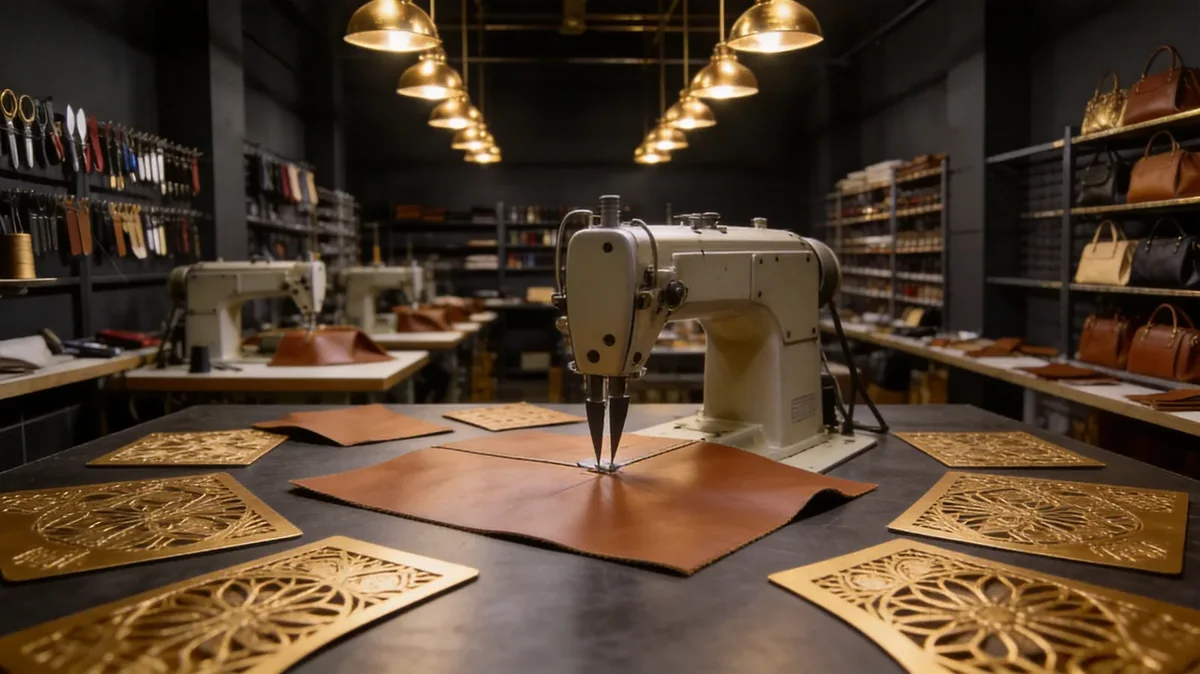
The maison's wax was 34 mm wide, bevelled, and cut by hand. The first question was never how to reproduce it inexpensively, but which route could hold the bevel at all — and that single question eliminated two of the four options.
Option A, die-cast zamac
Reproduced the shield well and cost the least per piece, but the mandatory 0.2 mm edge radius softened the bevel the designer had drawn, and the lock tongue in zamac wore visibly inside 500 open-and-close cycles.
Option B, lost-wax brass
Held the bevel and the engraving exactly, at roughly twice the piece cost of the zamac version, with a fettling stage that added four days to the sampling calendar.
Option C, CNC from solid brass
Sharpest arris and the tightest tolerance available, but the 34 mm shield needed about 11 minutes of machine time, which put the piece beyond the target for a 600-piece run.
Chosen, lost-wax brass, palladium
The bevel was the brand signature, so the route that held it won. Sampling ran 9 working days against the 6-10 quoted, and the tongue was re-specified in solid bar stock to answer the wear test.
The lesson generalises cleanly: decide which detail is the signature, choose the route that holds that detail, then let every other dimension relax to whatever tolerance that route can hold without a fight.
Fitting Metal to a Leather Stack
Hardware fails at the join far more often than it fails in the metal, and the join is governed by the thickness of the stack the fitting passes through.
- Full-grain calfskin at an attachment point
- 1.2-1.4 mm, the range most structured panels are skived to
- Reinforcement board behind the panel
- 0.8 mm, which brings the real stack to roughly 2.0-2.2 mm
- Prong or post length
- Stack plus 0.5 mm for the turn-over, never stack plus a guess
- Washer under a riveted foot
- 0.3 mm brass, spreading the load and stopping the foot from spinning
- Seating face of a bag foot
- Flat within 0.10 mm, checked on plate glass before approval
Insist the fitting is assembled on the production stack rather than a flat swatch. A post cut for a single thickness of leather will spin or tear the moment it meets the reinforced panel it was always going to meet.

Sampling, MOQ and the Metal Calendar
The metal calendar sits inside the bag calendar and is frequently the longest pole in it, because tooling is cut before a first fitting exists and bulk plating cannot start until the leather is confirmed.
| Stage | Working days | What gates it |
|---|---|---|
| Drawing and 3D model | 3-5 | Approved dimensions and a named finish code |
| Tooling | 18-25 | Steel die or wax tooling, the longest single step |
| First fitting samples | 6-10 | 6-10 working days, or 12-15 for complex constructions |
| Plating trials | 5-8 | Colour and salt spray approved against a sealed reference |
| Bag assembly | 35-50 | Bulk production with hardware already in hand |
MOQ is 500 pcs per style and colourway, roughly the point at which a single-cavity die stops dominating the piece cost.
What the Drawing Must Carry Before It Goes to the Bench
Ten lines on a drawing prevent most of the arguments that otherwise happen at the plating stage, and none of them takes more than a few minutes to write.
Ten lines before the drawing leaves your desk
- Overall dimensions with tolerances, and the two or three genuinely critical ones marked as critical.
- Alloy named, not described: zamac #3 or #5, brass CuZn37 or CuZn39, stainless 316L.
- Finish code with both layers in micrometres: colour layer and barrier layer separately.
- Salt spray target in hours, and the standard the test is run to.
- Edge condition: a 0.2 mm break, or a deliberately square arris.
- Weight range in grams, which is the fastest check on whether the right alloy was used.
- Prong or post length stated against the actual leather stack thickness.
- Cycle life: how many open-and-close operations the closure must survive.
- Chemical declaration required for the markets the piece will be sold into.
- A sealed reference fitting, one retained by each side and compared under the same light.
The arithmetic of getting a line wrong is worth stating plainly. Reworking one fitting after bulk — a foot pulled off a finished bag, a plating stripped and redone — costs around USD 4.80 in parts and bench time before any freight is counted, which is more than the difference between two alloy choices on most pieces.
How Piece Cost Moves With Route, Finish and Quantity
Read piece cost as an index against a known anchor, because the anchor moves with alloy markets while the ratios between routes stay fairly stable.
- Reference fitting, zamac die-cast, palladium, 500 pcs
- USD 4.80 per piece, the anchor for every line below
- Same fitting in lost-wax brass
- About 1.9-2.3× the zamac piece cost
- Same fitting, CNC from solid brass
- About 3-4×, driven by machine time rather than by material
- Quantity raised from 500 to 3,000 pcs
- Piece cost falls roughly 30-40% once the die is amortised
- Salt spray raised from 24 h to 48 h
- Adds roughly 8-15% to the plating cost, and nothing to the metal
- Four-cavity die instead of one
- Lowers piece cost about 18-25%, raises tooling about 60%
Our programme runs export experience since 2014 across 7 production lines with about 200,000 pcs per month of capacity, delivered through our validated partner factory Quanzhou Yingming Bags, an SGS-validated site, with inspection at AQL 2.5 (ISO 2859-1) and handover on FOB Xiamen terms.
Send the drawing and get the route, the tooling cost and the calendar
Send a sketch, a photograph of any reference fitting and your target quantity. We will return the recommended route, the tooling cost, the sampling calendar and a piece price at 500 pcs, in writing. Request a quote.
Frequently Asked Questions
What are the four ways couture bag hardware is cut?
Die casting in zamac, lost-wax casting in brass or bronze, CNC milling from solid bar stock, and stamping from brass sheet. Each carries a different tooling cost, edge sharpness and tolerance band, so the route should be chosen from the detail that matters most in the drawing rather than from the price alone.
How long does custom hardware tooling take?
A single-cavity steel die takes 18-25 days from an approved drawing, and a two- or four-cavity die takes 25-35 days. Lost-wax work needs a rubber mould and a wax tree, typically 15-22 days. Tooling is the longest single step in the metal calendar, so it should start before the leather is finalised.
What tolerance can a die-cast fitting actually hold?
Around ±0.15 mm on a fit face that sits in one die half, and about ±0.20 mm on as-cast decorative dimensions. Where two parts move against each other, milled faces at ±0.05 mm are the realistic specification. Marking every dimension as critical is the same as marking none of them, so state two or three.
Why does zamac need a radius on every outside edge?
Because plating builds up on an arris, and a sharp cast corner becomes a burr once it is plated. A 0.2 mm break on every outside edge solves this and also stops the edge chipping in use. It is the reason die-cast work cannot reproduce a crisp bevel as sharply as lost-wax or machined brass can.
How many polishing passes does a mirror finish need?
Four: a 180 grit cut that removes 0.05-0.10 mm and corrects the shape, a 400 grit refine, an 800 to 1200 grit pre-finish that sets reflectance, and a compound buff that removes 0.02-0.05 mm. Skipping the refine pass leaves scratches that survive every later stage and read as grey under shop light.
What plating thickness should I specify for a luxury turn-lock?
A colour layer of 0.15-0.3 µm of gold over a barrier of 0.5-1.0 µm of palladium, tested to 48 hours of salt spray. The barrier matters more than the colour: without it, the colour migrates into the brass substrate and dulls within weeks, however thick the deposited layer was.
What does a salt spray test actually tell me?
It ranks two finishes against each other under identical conditions; it does not predict service life in years. Twenty-four hours is the floor for a piece handled rarely in a dry climate, and 48 hours is the right setting for any fitting a customer touches daily, such as a turn-lock or a zip puller.
Why is my bag foot spinning or tearing the leather?
Almost always because the prong length was specified against a flat swatch instead of the production stack. A structured panel is 1.2-1.4 mm of leather plus 0.8 mm of reinforcement, so the correct prong is that stack plus 0.5 mm for the turn-over, assembled with a 0.3 mm brass washer.
How many pieces justify a custom die?
Five hundred is the usual answer, because that is roughly where a single-cavity die stops dominating the piece cost. Below that, lost-wax casting or modified stock fittings are normally the better route. Above about 3,000 pieces, a four-cavity die lowers the piece cost by around 18-25% and pays back its higher tooling cost.
What should a hardware drawing state that most drawings leave out?
The alloy by name, the barrier and colour thicknesses separately, the salt spray target in hours, the edge condition, the weight range in grams, the prong length against the real stack, and the cycle life. Of these, weight range is the least costly check that the specified alloy was actually used.
How long does sampling a custom fitting take?
Six to ten working days once tooling exists, and 12-15 for complex constructions such as a hinged frame or a multi-part clasp. Plating trials then add 5-8 days. Because hardware is cut before bag assembly, a late finish decision delays the whole programme rather than a single week inside it.
Is solid brass always better than zamac?
No. Solid brass holds a sharper arris and wears better on a moving part such as a lock tongue, but it costs roughly two to four times as much per piece and takes longer to machine. Zamac gives an excellent surface on flat or decorative parts and remains the right answer wherever load and wear are low.
People Also Ask
What is the least costly way to cut a custom bag fitting?
Zamac die casting, because one steel die produces 30,000-50,000 pieces and gives an excellent surface on flat or decorative parts. It costs roughly half to a third of lost-wax brass per piece, but it needs a 0.2 mm edge radius everywhere.
How thick is luxury handbag plating?
A gold colour layer of 0.15-0.3 µm over a palladium barrier of 0.5-1.0 µm is typical. Palladium-only finishes run 0.5-1.0 µm and PVD gunmetal 0.3-0.8 µm, with a 48 hour salt spray target for anything a customer handles daily.
Why do cast brass parts need a fettling stage?
Because brass shrinks 1.5-2.0% as it solidifies, so the cast form is slightly smaller than the wax and needs the gate removed and the surface corrected by hand before polishing. Zamac shrinks only 0.5-0.7%, which is compensated inside the die.
What does a custom bag fitting cost at 500 pieces?
A zamac die-cast fitting in palladium sits near USD 4.80 per piece at that quantity. The same part in lost-wax brass runs about 1.9-2.3× that, and CNC from solid bar around 3-4×, with reductions of 30-40% once the quantity reaches about 3,000.
Can hardware be fitted before the leather is chosen?
It can be tooled, but prong and post length must wait, because the leather plus reinforcement stack decides it. A structured panel runs 1.2-1.4 mm of leather plus 0.8 mm of board, so the fitting is stack plus 0.5 mm.
Sources and further reading
Every figure on this page is either our own programme data or attributed below. Open the originals before you write them into a specification.
- ISO — International Organization for StandardizationISO Publisher of ISO 2859-1 sampling and the ISO colour fastness series referenced when hardware and leather are assessed together.
- ASTM InternationalASTM International Publisher of ASTM B117, the salt spray standard used to compare plating systems side by side.
- ECHA — REACHEuropean Chemicals Agency Administrator of REACH Annex XVII restrictions, including the nickel release limits that govern plated fittings sold in the EU.
- Leather Working GroupLeather Working Group Tannery audit protocol behind the leather declarations that accompany a metal specification in a tech pack.
- Sourcing JournalSourcing Journal Trade reporting on hardware sourcing, tooling economics and finish standards across the accessories industry.