How to Build Luxury Handbag Brand Equity With Quality: Six Questions Every House Must Answer
Does quality really build brand equity in luxury handbags, or is it just a story houses tell themselves? It builds equity, but only when it is specified, tested and repeated: leather at 1.2-1.4 mm on body panels, stitch density held at 8-9 stitches per inch, three edge coats cured 24 hours, and inspection at AQL 2.5 under ISO 2859-1 across every run. Quality that is felt but not specified cannot be repeated, and quality that cannot be repeated does not compound into a name.
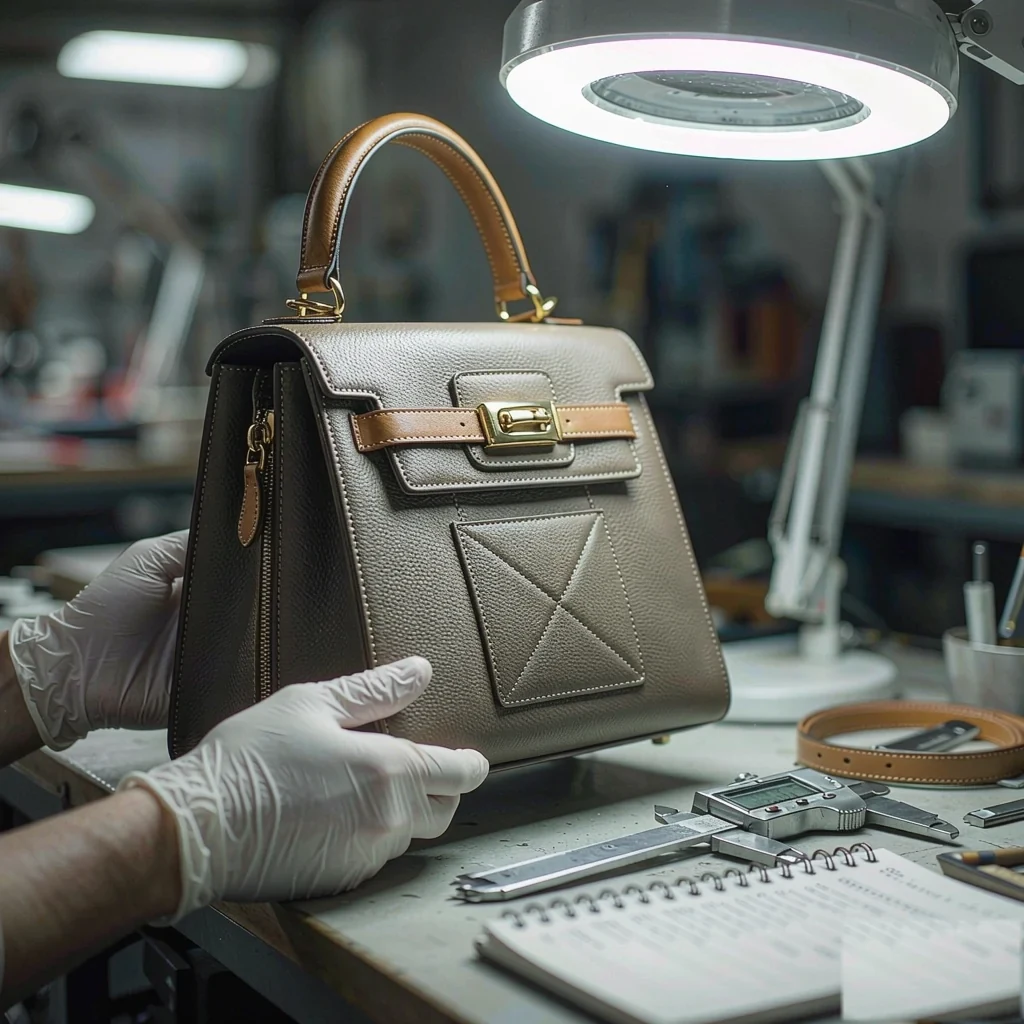
Question 1: What Does Equity Mean When the Product Is a Bag?
Equity is the premium a buyer will pay before she has compared anything. In handbags it is not built by a logo; it is built by the accumulated result of a hundred small promises kept. A strap that does not stretch, an edge that does not crack in month nine, a lining that does not pill against a coat — each one is a promise kept, and the sum of them is the reason a customer pays a second time without being persuaded.
The financial expression of that is repeat rate and price integrity. A house that holds its price across three seasons without promotional support is a house with equity; a house that has to move price to clear stock has spent its equity. Both outcomes are decided on the bench long before they appear in a sell-through report, which is why the specification sheet matters more to equity than the campaign does.
This is also why equity cannot be bought with imagery alone. Photography can create the expectation, and expectation is necessary, but the second purchase is decided by whether the object met the first expectation. Houses that invest in imagery ahead of specification borrow equity from the future and repay it in returns.
Question 2: Which Quality Failures Actually Destroy Equity?
Not every defect costs the same. A loose thread is a nuisance; an edge that splits along the gusset in month nine is a broken promise, because the customer has by then formed an opinion about the house and the failure confirms a suspicion she did not know she held. Rank defects by how visible they are at three, nine and twenty-four months, not by how easy they are to fix at the bench.
| Failure | When it shows | Equity cost | Specification that prevents it |
|---|---|---|---|
| Edge paint cracking at the fold | 6-12 months | Severe — reads as poor finishing on first touch | Three coats at 0.12-0.15 mm, 24 h cure, sanded between coats |
| Handle elongation under load | 3-6 months | Severe — the bag visibly changes shape | Handle load test 12 kg for 60 s; 0.8 mm reinforcement bonded to the body panel |
| Hardware plating wear at contact points | 9-18 months | High — the metal is the first thing a buyer sees | Gold plating 0.15-0.3 µm over brass; salt spray 24 h minimum, 48 h for coastal doors |
| Colour transfer onto light clothing | 1-3 months | Severe — damages the customer's wardrobe, not just the bag | Rub fastness ISO 11640 at 4 dry and 3-4 wet minimum |
| Stitch break at the strap root | 6-18 months | High — a structural failure, not a cosmetic one | 8-9 SPI, 0.45 mm bonded thread, 12 mm back-tack at stress points |
| Lining pilling and seam grin | 3-9 months | Moderate — inside the bag, but felt every day | Lining bonded at 0.4-0.6 mm, seam allowance held at 8 mm |
Question 3: Where in the Build Does Quality Become Visible?
A buyer assesses a bag in a fixed order, and the order is worth knowing because it tells you where to spend. She looks at the silhouette from a metre away, then at the hardware from thirty centimetres, then at the edge and the stitch line from fifteen centimetres, and only then at the lining. Every specification below maps to one of those four distances, and a house that spends on the last before the first has misallocated.
- Body leather thickness
- 1.2-1.4 mm full-grain calfskin; selection yield 60-70% of a hide at A grade
- Turn-edge skive
- 0.6-0.8 mm at the fold, skimmed over a 6-8 mm width
- Reinforcement
- 0.8 mm bonded to handle roots, strap roots and base corners
- Stitch density
- 8-9 SPI with 0.45 mm bonded thread; 12 mm back-tack at stress points
- Edge finish
- 3 coats at 0.12-0.15 mm per coat, sanded between coats, 24 h cure
- Hardware plating
- Gold 0.15-0.3 µm over brass substrate; salt spray 24 h standard, 48 h coastal
- Zip specification
- Number 5 metal with a 6 mm tape, pull tested across 5,000 cycles
- Lining
- 0.4-0.6 mm, seam allowance 8 mm, colour matched to a 4 dry rub minimum
Two of these eight lines do most of the work. Stitch density is the one a customer reads as craft without knowing the term: at 6 SPI a seam looks utilitarian, at 8-9 SPI it reads as considered, and above 11 SPI on a 1.2 mm leather it begins to perforate the panel and weakens it. Edge finish is the other, because the edge is where a bag fails first and where a repair is most often refused.
Question 4: How Do You Prove Quality Before the Customer Touches It?
Prove it with named test methods rather than adjectives. Four methods cover almost everything a house needs: ISO 11640 for colour fastness to rubbing, ISO 105-B02 for colour fastness to light, ISO 3376 for tensile strength and elongation of the leather, and ISO 11644 for finish adhesion. Each returns a number, each can be written into a specification sheet, and each can be re-run on a retained sample eighteen months later if a customer disputes a claim.
Alongside the laboratory methods, two bench tests catch what the standards miss. The first is a loaded handle test: 12 kg held for 60 seconds on each handle, measured for permanent elongation after a 30-minute recovery, with 2 mm as the acceptance figure. The second is a cycle test on the closure, 5,000 open and close operations on the zip and 3,000 on a turn-lock, both with no measurable change in pull force.
Inspection sits on top of both. AQL 2.5 under ISO 2859-1 is the working level for a premium accessories line, with critical defects at zero tolerance and major defects capped by the acceptance number for the lot size. Third-party inspection is available on request and is worth taking on the first two runs of a new silhouette, when the defect signature is not yet known.
Question 5: What Does Consistency Across 500 Units Cost?
Consistency costs time and it costs a written specification. A single beautiful sample proves nothing about a run of 500 pcs per style and colourway, because the failure modes that damage equity are statistical rather than individual: the fourteenth bag in a run with a slightly thinner edge coat, the sixty-first with a strap root back-tacked 4 mm short. Those are the bags that come back, and they are prevented by process control, not by better hands.
The mechanism is a retained golden sample plus a written tolerance. One approved unit stays at the bench as the reference, one travels with the paperwork, and every line on the specification sheet carries a tolerance rather than a target: 1.2-1.4 mm rather than 1.3 mm, 8-9 SPI rather than 8.5 SPI. A tolerance is what makes a line inspectable; a target is what makes it arguable.
Trim and hardware are where the cost sits. A structured top-handle with a turn-lock, four feet, a zip and a strap adjuster carries a trim set that references at USD 4.80 per unit before plating upgrades, and moving from 0.15 µm to 0.3 µm gold is the single change most visible to a customer nine months later. Sampling closes in 6-10 working days and bulk runs 35-50 days, which is enough time to run the first articles through inspection and correct before the balance of the run.

Question 6: How Does Quality Convert Into Price Power?
Quality converts through two mechanisms: it raises the price a first-time buyer will accept, and it lowers the discounting needed to clear a season. The second is worth more than the first. A house that clears 70% of a drop at full price and 30% through markdown has already told its customer what the bag is really worth, and that lesson is remembered longer than the launch campaign.
| Signal | Entry line | Premium line | Effect on price power |
|---|---|---|---|
| Leather grade | Corrected grain, 1.0-1.2 mm | Full-grain calfskin, 1.2-1.4 mm | Supports a 1.8-2.2x step |
| Edge finish | 2 coats, unsanded | 3 coats, sanded, 24 h cure | Removes the most common return reason |
| Stitch density | 6-7 SPI | 8-9 SPI, 0.45 mm thread | Reads as craft at arm's length |
| Hardware | Zamac, 0.1 µm flash | Brass substrate, 0.15-0.3 µm | Holds finish past 12 months |
| Inspection | Internal visual check | AQL 2.5 under ISO 2859-1 | Makes the claim auditable |
| Documentation | None supplied | Specification sheet and care card | Converts a claim into a record |
The Equity Ledger: Six Lines to Keep for Ten Years
Equity compounds only if it is recorded. Keep one ledger per silhouette with the specification, the test results, the inspection outcome and the return rate, and review it at the start of each season. A house that can produce the ledger for a style launched four seasons ago can answer a stockist, a journalist and a customer in the same terms, and that consistency is itself a signal of quality.
Specification sheet
Eight lines with tolerances, not targets: 1.2-1.4 mm leather, 8-9 SPI, 3 edge coats, 0.15-0.3 µm plating, and four more.
Test record
ISO 11640 rub, ISO 105-B02 light, ISO 3376 tensile, plus the 12 kg for 60 s handle test and 5,000-cycle closure test.
Inspection outcome
AQL 2.5 under ISO 2859-1 per lot, with critical defects at zero and the major count recorded against the lot size.
Return ledger
Returns by reason and by month. Edge and handle faults in months 6-12 are the figures that predict equity loss.
Repair policy
What you will repair, for how long, and at what charge. A repairable bag is a promise the customer can test.
Retained sample
One approved unit per colourway, held for the life of the style, used to settle any dispute about what was agreed.
Where Quality Decays Without Anyone Noticing
Decay is quiet and it is usually commercial rather than technical. A house grows, adds colourways, and quietly accepts a 1.0 mm leather on the third colourway because it was available; or moves the stitch to 7 SPI because the line was behind. Neither change is announced, both are invisible in a photograph, and both show up eighteen months later in the return ledger as a rise in edge and seam faults.
- Re-approve the specification sheet whenever a colourway is added; a new colour often arrives on a different leather batch with different substance.
- Hold the golden sample for the life of the style and compare every new run against it, not against the last run.
- Re-run ISO 11640 rub testing on the darkest colourway in every drop; deep dyes transfer first.
- Audit one finished unit per 100 pcs against the written tolerance, not against memory.
- Record the plating thickness on the purchase document, not on the sample card, where it tends to drift.
- Review returns by month 6, 12 and 24 rather than in aggregate; a rising curve is the earliest warning.
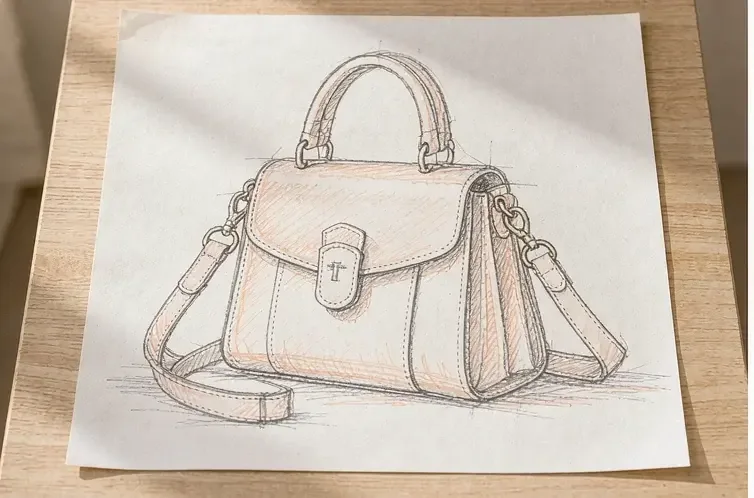
What to Ask the Bench Before Approving a Sample
Approval is the moment equity is either locked in or mortgaged, and it happens in a room in about twenty minutes. Ask six questions and write the answers down: what is the leather thickness and its tolerance, what is the stitch density and thread gauge, how many edge coats and at what thickness, what is the plating thickness over what substrate, what tests have been run and what did they return, and what is the inspection level. A partner who cannot answer six questions about its own work is telling you something.
The approval test in one paragraph
- Approve a sample only when the specification sheet exists in writing with tolerances, when four named test methods have returned numbers, when a golden sample has been retained, and when the inspection level is stated as AQL 2.5 under ISO 2859-1. Then confirm the run figures: 500 pcs per style and colourway, 6-10 working days for sampling and 12-15 for complex builds, 35-50 days bulk, FOB Xiamen. Equity is the record of those decisions.
Where to Start If You Are Building From Nothing
Start with one silhouette and make it unarguable. One shape, one leather grade, two colourways, a written eight-line specification and a full test record, produced at 500 pcs and inspected at AQL 2.5. That single style becomes the reference every future style is measured against, and it is the one you will still be selling in three seasons — which is the only definition of equity that survives contact with a sell-through report.
Put your specification in writing before the next sample
Send the silhouette, leather grade and hardware finish you have in mind. Our team returns a written specification sheet with tolerances, the four named test methods, a sampling plan at 6-10 working days and bulk at 35-50 days for 500 pcs per style and colourway, FOB Xiamen with inspection at AQL 2.5 under ISO 2859-1. Our validated partner factory Quanzhou Yingming Bags runs 7 production lines at about 200,000 pcs per month with export experience since 2014. Begin at the quotation desk.
Frequently Asked Questions
Does product quality really build brand equity in luxury handbags?
Yes, but only when it is specified and repeated. A single excellent sample proves nothing about a run. Equity comes from a written specification with tolerances, named test methods that return numbers, and inspection at AQL 2.5 under ISO 2859-1 on every lot, so the hundredth bag matches the first.
Which single specification most affects how expensive a bag feels?
Stitch density. At 6-7 stitches per inch a seam reads as utilitarian; at 8-9 SPI with 0.45 mm bonded thread it reads as considered. Above 11 SPI on a 1.2 mm leather the needle begins to perforate the panel and the seam actually weakens.
Why do bag edges crack and how is it prevented?
Edges crack when the coating is too thick, applied over an unsanded base, or cured too fast. Three coats at 0.12-0.15 mm each, sanded between coats and cured 24 hours, will hold on a folded gusset. Two coats applied thick is the most common cause of a month-nine failure.
What leather thickness suits a structured top-handle bag?
Full-grain calfskin at 1.2-1.4 mm on body panels, with a 0.8 mm reinforcement bonded at the handle roots, strap roots and base corners. Skive the turn-edge to 0.6-0.8 mm over a 6-8 mm width so the fold closes without bulk at the seam.
How thick should gold plating be on luxury bag hardware?
Gold over a brass substrate at 0.15-0.3 µm is the working band, verified by 24 hours of salt spray for standard doors and 48 hours for coastal ones. A 0.1 µm flash over zamac will brighten a photograph and wear through at contact points inside a year.
Which laboratory methods should a house name in its specification?
Four cover most of it: ISO 11640 for colour fastness to rubbing, ISO 105-B02 for colour fastness to light, ISO 3376 for tensile strength and elongation, and ISO 11644 for finish adhesion. Add a 12 kg for 60 s handle test and a 5,000-cycle closure test at approval.
What acceptance level should inspection use on a premium accessories line?
AQL 2.5 under ISO 2859-1 is the working level, with critical defects at zero tolerance and major defects capped by the acceptance number for the lot size. Take third-party inspection on the first two runs of a new silhouette, when the defect signature is still unknown.
How does quality convert into the ability to hold price?
Through two mechanisms: it raises the price a first-time buyer accepts, and it reduces the markdown needed to clear a season. The second matters more. Clearing 30% of a drop through markdown teaches the customer the real price and that lesson outlasts the launch campaign.
What is a golden sample and why does a house need one?
A golden sample is one approved unit retained at the bench for the life of the style, plus a second that travels with the paperwork. Every run is compared against it rather than against the previous run, which stops the slow drift that accumulates when each batch is judged against the last.
How do returns data reveal a quality problem early?
Read returns by month rather than in aggregate. Edge cracking and handle elongation concentrate in months 6-12 and are the earliest reliable predictors of equity loss. A curve that rises between month 6 and month 12 usually points to a coating or reinforcement change nobody announced.
Should a house test the darkest colourway separately?
Yes. Deep dyes carry more pigment and transfer first, so re-run ISO 11640 rub testing on the darkest colourway in every drop and require 4 dry and 3-4 wet as the minimum. Colour transfer onto a customer's clothing costs more goodwill than any fault confined to the bag itself.
What causes handles to elongate and how is it specified out?
Handles elongate when the body panel carries the load without reinforcement. Bond a 0.8 mm reinforcement at the handle roots and strap roots, and require a loaded test of 12 kg held for 60 seconds with no more than 2 mm permanent elongation after a 30-minute recovery.
How many units should a first serious run be?
500 pcs per style and colourway is the standard minimum for a premium line, because it is the point at which process control becomes meaningful and a golden sample can be enforced. Sampling closes in 6-10 working days, 12-15 for complex builds, and bulk runs 35-50 days before inspection at AQL 2.5 under ISO 2859-1 and packing.
What should a house document to prove quality to a stockist?
Six things: the specification sheet with tolerances, the four test results, the AQL 2.5 inspection outcome, the return ledger by month, the repair policy, and the retained sample reference. A stockist reading those six in consistent terms is reading a house that knows its own work.
People Also Ask
What is the fastest way to damage a new luxury bag brand?
Ship a beautiful sample and a run that does not match it. Edge cracking and handle elongation in months 6-12 teach the customer that the promise was cosmetic, and that lesson outlasts any campaign.
Can good photography substitute for product quality?
No. Photography creates the expectation and the second purchase tests it. Houses that fund imagery ahead of specification borrow equity from the future and repay it in returns within a year.
Why does a written tolerance matter more than a target?
A tolerance is inspectable and a target is arguable. Leather at 1.2-1.4 mm can be checked with a gauge; leather at about 1.3 mm invites a discussion every time a run falls short.
How often should a specification sheet be re-approved?
Whenever a colourway is added or a leather batch changes. A new colour frequently arrives on a hide with different substance, and the drift is invisible in a photograph and visible in month nine.
Is a repair policy part of brand equity?
Yes. A repairable bag is a promise the customer can test, and stating what you will repair, for how long and at what charge converts a quality claim into a commitment.
Sources and further reading
Every figure on this page is either our own programme data or attributed below. Open the originals before you write them into a specification.
- ISO — International StandardsInternational Organization for Standardization Publisher of ISO 2859-1 sampling procedures, ISO 11640 rub fastness, ISO 105-B02 light fastness, ISO 3376 tensile and ISO 11644 finish adhesion.
- Leather Working GroupLeather Working Group Tannery audit programme referenced when a house documents leather provenance and grade in its specification sheet.
- Business of FashionBusiness of Fashion Trade reporting used to benchmark how houses talk about quality, price integrity and season clearance.
- WWDWWD Accessories trade coverage used for context on premium construction standards and return drivers in the sector.
- SGSSGS Independent testing and inspection body referenced for third-party verification of leather and hardware claims.