High-End Handbag Supplier Communication Playbook: The Rules That Remove Eleven Days
A communication playbook is a fixed set of rules about what is sent, when it is sent and where a decision becomes binding. How should a brand talk to a high-end handbag partner? In one thread, with a brief carrying eleven fields, a quote returned within three working days, sample notes consolidated into one document within five working days, and a one-page status note every Friday. This article follows a single capsule from first enquiry to handover, showing which messages moved it forward and which cost eleven working days before anything reached the bench.
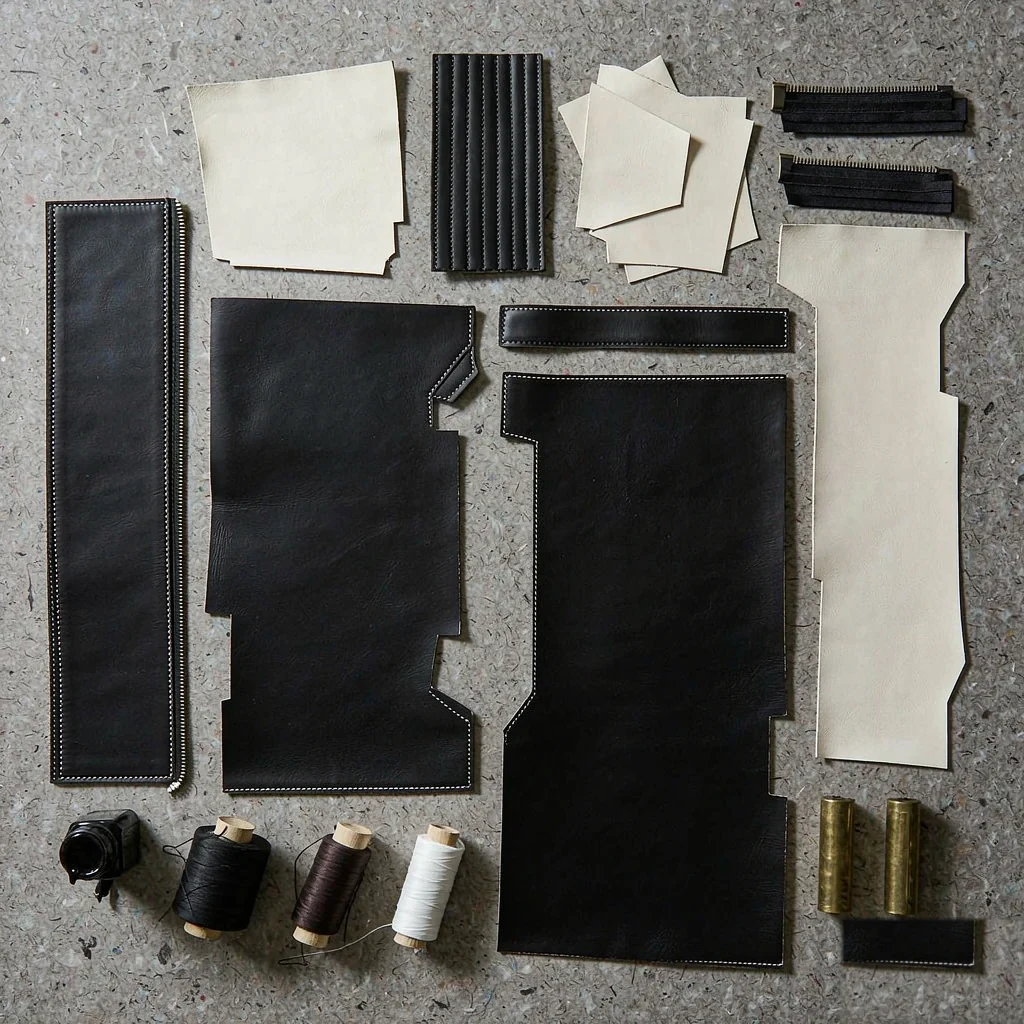
The Capsule That Lost Eleven Days Before Anything Was Made
A maison in London sent its first enquiry on a Tuesday: six styles, a February appointment week, and a number it needed by Friday. The enquiry arrived as four separate messages over two days — a photograph of a reference piece, a hand sketch, a note about hardware and a question about minimums. Nothing was wrong with any of them individually. Together they were unanswerable, and eleven working days passed before a price could be quoted.
Those eleven days were not lost in production. They were lost in correspondence: two days waiting for the dimensions, three for the lining specification, four for confirmation of which markets the pieces would be sold in, and two more reconciling three competing versions of the hardware list. The bench was never the bottleneck, because nothing had been released to it.
The rules below are the ones that would have removed that delay. They are unglamorous, they take an afternoon to agree, and they are the difference between a 35-50 day bulk window that can be planned around and one that can only be hoped for.
Why an Enquiry Arrives Unanswerable
An enquiry is unanswerable when it omits any of the three variables that actually set the price: the construction method, the quantity per colourway, and the compliance regime of the destination market. Those three are also the three most often left out, because they are the ones the brand has not yet settled for itself.
- Construction is described with a photograph rather than a section, so the quote has to assume a method and price the assumption.
- Quantity is given for the whole capsule rather than per colourway, and colour is where the leather cost actually sits.
- The compliance market is not named, so neither REACH Annex XVII nor California Prop 65 testing is priced into the unit.
- The target date is a season rather than a week, so nobody can judge whether the window is comfortable or already tight.
- Hardware is described as brass without a finish, a gauge or a plating thickness, which leaves the largest variable open.
None of these are unreasonable omissions. They are simply questions the brand has not answered internally yet, and the honest response to an unanswered question is another question rather than an assumption written into a price.
The Eleven Fields an Answerable Brief Carries
An answerable brief carries eleven fields: silhouette, dimensions, shell material, lining, hardware, closure, colourways, quantity per colourway, target FOB price, target delivery week and the compliance markets the pieces will be sold in. A brief missing any one of them will be answered with a question rather than a number.
- Silhouette
- Flat, gusseted or framed; it sets the panel count and the construction sequence before anything else is decided.
- Dimensions
- Height, width and depth at the base, plus strap drop, given in millimetres with a tolerance rather than as a sketch.
- Shell material
- Species, tannage, finish and thickness, for example calfskin at 1.2-1.4 mm with a semi-aniline finish.
- Lining
- Fibre, weight and colourfastness expectation, because a lining that crocks will fail the piece at inspection.
- Hardware
- Alloy, finish, gauge and plating thickness, for example brass at 0.15-0.3 µm, with a salt spray expectation.
- Closure
- Turn-lock, magnetic catch, zip or frame, with the brand or gauge named, since this drives both cost and tooling.
- Colourways
- How many, and whether the run splits across them, because each colourway carries its own minimum.
- Quantity per colourway
- The single figure the price is built on, stated separately from the capsule total.
- Target FOB price
- A number rather than a hope, so the quote can be engineered toward it instead of landing wherever it lands.
- Target delivery week
- A calendar week, which lets the schedule be read backwards from a fixed date.
- Compliance markets
- EU, US, UK or others, which decides whether REACH, Prop 65 or CPSIA testing is in scope and priced.
The ninth field is the one brands resist giving, and it is the one that saves the most time. A stated target price lets a proposal be engineered toward it, by adjusting leather selection, hardware gauge or construction sequence, whereas a quote built without one has to be negotiated afterwards.
How Fast Should Each Kind of Message Be Answered?
Three working days for a complete brief and six for an incomplete one: those two figures are the whole of quote turnaround. Anything slower is rarely a capacity problem and almost always a missing field that nobody has named yet.
| Message | Sent by | Expected turnaround | If it slips |
|---|---|---|---|
| Enquiry with a complete brief | Brand | Quote in 3 working days | Ask which field is missing |
| Enquiry with an incomplete brief | Brand | Questions in 1 day, quote in 6 | Complete the brief before chasing |
| Specification clarification | Either side | Same working day | Escalate to the named lead |
| Sample dispatch note | Programme partner | Within 24 hours of despatch | Confirm the courier reference |
| Sample feedback | Brand | One document in 5 working days | Book a call, not a fourth message |
| Approval or rejection | Brand | One line within 24 hours | State which version is live |
| Weekly status note | Programme partner | Every Friday, one page | Escalate at the second miss |
The fourth row prevents the most common waste in sampling. A piece sent without a dispatch note, a courier reference and a list of what was changed since the last round arrives as a surprise, and the feedback that follows is a reaction rather than an assessment.
What a Quote Must State Before Two of Them Can Be Compared
A quote is comparable only when it states the same six things in the same way: the price basis, the quantity it is built on, the validity window, the assumptions it makes, what is excluded, and how a change will be re-priced. Two quotes that differ on any of those are not two prices, they are two different offers.
Basis and quantity
FOB Xiamen, per unit, at 500 pcs per style and colourway. A quote built on a different quantity is not a competing price, it is a different proposition.
Validity and assumptions
Thirty days from issue, with the leather price and the exchange rate it assumes stated in writing. Past thirty days the leather market, not the house, sets the number.
Exclusions and changes
Tooling, testing, presentation packing and freight named as in or out, plus a stated method for re-pricing a change so the second quote is not a negotiation.
The third card is the one that prevents the familiar grievance of a low first quote and a high final invoice. A written change formula, agreed before sampling, means a specification change is re-priced by arithmetic rather than by argument.
The Sample Round: One Document Instead of Eleven Messages
Sample feedback should arrive as a single document within five working days of receipt, carrying the measurement, the reference it was measured against, the correction wanted and the version now live. Eleven messages describing the same piece produce eleven partial readings and no decision.
- Open with the version: which revision of the pack the piece was made to, and which revision the notes apply to.
- State the measurement rather than the impression, for example a strap drop 6 mm outside the stated tolerance.
- Name the reference: the retained piece under standard lighting, not a recollection of the original sample.
- Say what is wanted: a correction, a concession or a re-make, with a date the answer is needed by.
- Close the item in writing once it is corrected, so the same point does not reopen two rounds later.
The second item is worth the effort on its own. Sampling runs at 6-10 working days for a straightforward piece and 12-15 for a complex one, and a round spent arguing about whether a strap sits wrong costs the same calendar time as a round spent correcting the strap drop by 6 mm.
The Weekly Rhythm Once Bulk Starts
A one-page status note every Friday, with the same nine lines in the same order, removes the two questions that otherwise generate the most correspondence: where the run is, and whether it is still on schedule. Anything that needs a decision is listed separately at the top.
The nine lines of a Friday note
- Style and colourway, with the purchase order reference and the confirmed quantity.
- Status: cutting, closing, assembly, finishing or packing, with the percentage complete.
- Schedule: the original handover date and the current forecast, with the variance in days.
- Critical path item of the week, named, with who owns it.
- Open decisions, each with an owner, a due date and the date it was raised.
- Corrections closed this week, and corrections still open from previous rounds.
- Material position: leather received, hardware received, anything short and its arrival date.
- Inspection status, including whether AQL 2.5 sampling under ISO 2859-1 has been booked.
- One line on risk: what could move the date, and what would be done about it.
The eighth line is the one that protects the handover date. Inspection booked before packing finishes, at AQL 2.5 under ISO 2859-1 with a third-party inspector where the brand wants one, means a failed lot is found while there is still time to correct it.
Escalation: Who Decides, and How Fast
Two named leads, one on each side, each with a named deputy, and a rule that any item unanswered for 48 hours escalates to them automatically. Escalation that depends on somebody noticing is escalation that happens late.
- Name both leads in writing before sampling starts, and copy rather than bypass them on every thread.
- Give each a deputy who can act during holidays and time zone gaps, so a question never waits a week.
- Escalate at 48 hours on substance, and immediately on anything blocking the bench.
- Escalated twice, an item is treated as a scope change and re-priced rather than chased again.
- Record the outcome in the pack or the log within 24 hours, with the version number bumped.
The fourth rule sounds severe and is the kindest of the five. An item that has been escalated twice is not waiting for information; it is waiting for a decision somebody would rather defer, and re-pricing it forces the conversation that chasing never would.
At Handover, What Is Written Is What Counts
At handover, communication becomes documentation: the inspection result, the closed correction list, the reconciled shipping documents and the signed retained reference, all stored together. What was said during the programme matters far less at that point than what was written down.
- Inspection result
- AQL 2.5 under ISO 2859-1, recorded against the run rather than summarised in a sentence
- Correction list
- Every item raised during sampling and bulk, closed and confirmed in writing by both sides
- Retained reference
- A signed piece held under standard lighting, for the re-order and for any dispute
- Version history
- Every pack revision from first issue to freeze, retrievable rather than overwritten
- Glossary
- Around 30 shared terms covering edges, seams, panels, finishes and hardware
- Contact record
- The two named leads and their deputies, for the re-order conversation
- Document pack
- Packing list, commercial documents, test reports and the inspection result together
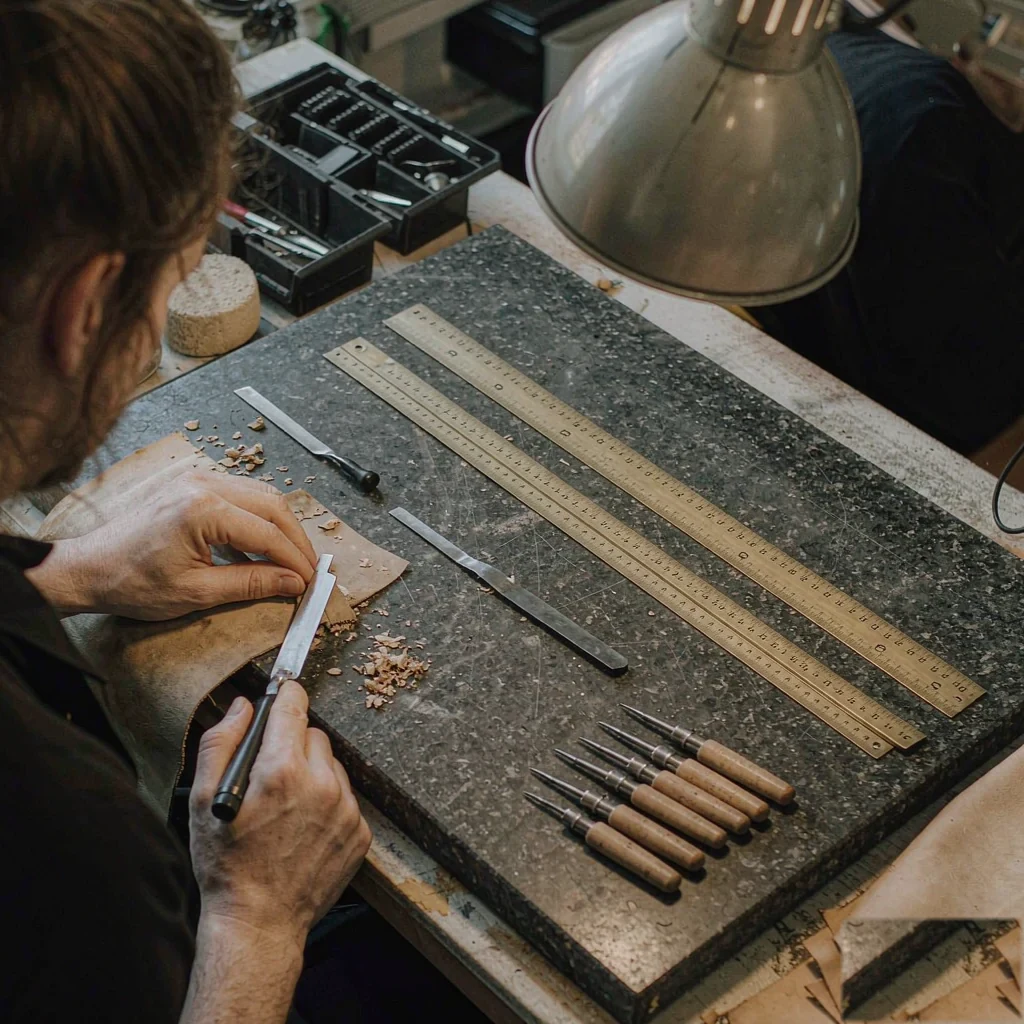
The glossary is the item that sounds trivial and prevents the most damage. Around thirty shared terms mean that skiving, burnishing, skiving thickness and edge paint describe the same operation on both sides of every subsequent exchange.
The Record You Keep for the Next Season
Keep the brief, the quote with its assumptions, the sample notes, the correction list, the inspection result and the retained reference as one folder, because the re-order conversation begins with the last one. A re-order opened from a folder like that is a confirmation; a re-order opened from memory is a new project.
Our programme works to MOQ 500 pcs per style and colourway, with sampling at 6-10 working days and bulk at 35-50 days on FOB Xiamen terms, inspected to AQL 2.5 under ISO 2859-1. It runs across 7 production lines with about 200,000 pcs per month of capacity and export experience since 2014, delivered through our validated partner factory Quanzhou Yingming Bags, an SGS-validated site.
Get a quote answered in three working days
Send the eleven fields and we will return a comparable quote, a named lead and a written communication plan for the capsule. Within two working days. Request a quote.
Frequently Asked Questions
Why does a first enquiry take so long to answer?
Because the three variables that set the price — construction, quantity per colourway and compliance market — are usually the three left out. Each missing field costs a round trip rather than a calculation. An eleven-field brief is answered in three working days; an incomplete one takes six.
What are the eleven fields of an answerable brief?
Silhouette, dimensions, shell material, lining, hardware, closure, colourways, quantity per colourway, target FOB price, target delivery week and compliance markets. A brief missing any one of them will be answered with a question rather than a number, which is why completeness beats length every time.
How fast should a quote come back?
Three working days for a complete brief and six for an incomplete one. Anything slower is rarely a capacity problem and almost always an unnamed missing field. Ask which field is missing rather than chasing the quote, because the answer is faster either way.
What must a quote state before two can be compared?
Six things: the price basis, the quantity it is built on, the validity window, the assumptions it makes, what is excluded and how a change will be re-priced. Two offers differing on any of those are not two prices, they are two different propositions that look alike on a spreadsheet.
How should sample feedback be sent?
As one document within five working days of receipt, carrying the version, the measurement against the retained reference, the correction wanted and the date needed. Eleven messages describing one piece produce eleven partial readings and no decision. A consolidated note produces one round instead of three.
What belongs in a weekly status note?
Nine lines in a fixed order: style and quantity, status, schedule variance, critical path item, open decisions, corrections closed, material position, inspection status and one line of risk. Fixed order matters because the reader finds last week's item in the same place as this week's.
Who should own communication on a programme?
Two named leads, one on each side, each with a named deputy who can act during holidays and time zone gaps. Every additional correspondent creates another place where a version of a decision can quietly appear. Copy the leads on everything rather than summarising to them afterwards.
What is the 48-hour escalation rule?
Any item unanswered for 48 hours escalates automatically to the two named leads, and anything blocking the bench escalates immediately. Escalation that depends on somebody noticing happens late. Escalated twice, an item is re-priced as a scope change rather than chased a third time.
Why agree a change formula before sampling?
Because a specification change re-priced by arithmetic is settled in an hour, while the same change re-priced by argument is settled in a week and leaves a grievance. Agree the formula, the tooling treatment and the validity window before the first sample, not after the first change.
How long is a quote valid for?
Thirty days from issue, with the leather price and exchange rate it assumes stated in writing. Beyond that window the leather market sets the number rather than the house, and a quote held for a season is a historical document rather than an offer. Re-baseline before comparing anything old.
What should be stored at handover?
The inspection result at AQL 2.5 under ISO 2859-1, the closed correction list, the reconciled shipping documents, the version history and the signed retained reference under standard lighting, plus the two named contacts. Store them together, because the re-order conversation opens with that folder.
Why keep a shared glossary of terms?
Around thirty shared terms covering edges, seams, panels, finishes and hardware mean skiving, burnishing and edge paint describe the same operation on both sides. Without it, technical words do extra work in every exchange, and corrections arrive describing the wrong operation entirely.
How does a programme keep a 35-50 day window predictable?
By reading the schedule backwards from a fixed delivery week, booking inspection before packing finishes, and closing every decision in writing within 24 hours. Windows slip for lack of decisions rather than for lack of capacity, and the Friday note is where a missing decision becomes visible.
What is the single most useful communication rule?
Separate discussion from decision. A decision exists only once it is written into the pack or the log with a version number; until then it is a proposal, wherever it was discussed. That one rule removes most of the eleven days described at the start of this article.
People Also Ask
What should I send a handbag production partner first?
One brief with eleven fields rather than a folder of images. Completeness decides speed: a full brief gets a quote in three working days, a partial one in six.
How often should we speak during bulk production?
A one-page written note every Friday, plus a live conversation whenever an item blocks the bench. Weekly rhythm plus immediate escalation beats daily unstructured messaging.
How do I compare two handbag quotes fairly?
Normalise them first: same basis, same quantity per colourway, same validity window, same treatment of tooling and testing. Only then compare the unit figures.
What is the right way to reject a sample?
In one document, with the measurement against the retained reference and the correction wanted. Impressions generate argument; measurements generate a correction and a date.
Who should I name as the contact on my side?
One lead who can answer without escalation, plus a deputy who covers holidays and time zone gaps. A team address is owned by nobody and answered by nobody.
Sources and further reading
Every figure on this page is either our own programme data or attributed below. Open the originals before you write them into a specification.
- ISO — International Organization for StandardizationISO Publisher of ISO 2859-1, whose recorded accept and reject numbers are the model for writing a decision down rather than discussing it.
- ECHA — European Chemicals AgencyEuropean Chemicals Agency Administrator of REACH, including Annex XVII restrictions that a brief must name before a compliance market can be priced.
- Office of Environmental Health Hazard AssessmentCalifornia OEHHA Administrator of California Proposition 65, one of the destination regimes that changes what a quote must include.
- Leather Working GroupLeather Working Group Tannery audit protocol and its terminology, a source for the shared glossary recommended in the handover record.
- Sourcing JournalSourcing Journal Reporting on cross-border sourcing practice and the correspondence failures that precede most delivery problems.