High-End Handbag Sourcing Lead Times Explained: Three Routes, Nine Stages and the 95-120 Day Critical Path
How long does high-end handbag sourcing take? From drawing to warehouse, around 95-120 days: sampling 6-10 working days, material 15-20, bulk 35-50, inspection 2-3, sea transit 28-36 from Xiamen to northern Europe, plus 21 days of line booking notice. Three routes are possible: standard sea, a split air and sea delivery, and a fast-track that compresses the middle by pre-booking and pre-reserving material. Below: nine stages compared, the critical path, the four delays that actually occur, and a backwards calendar from your delivery date.
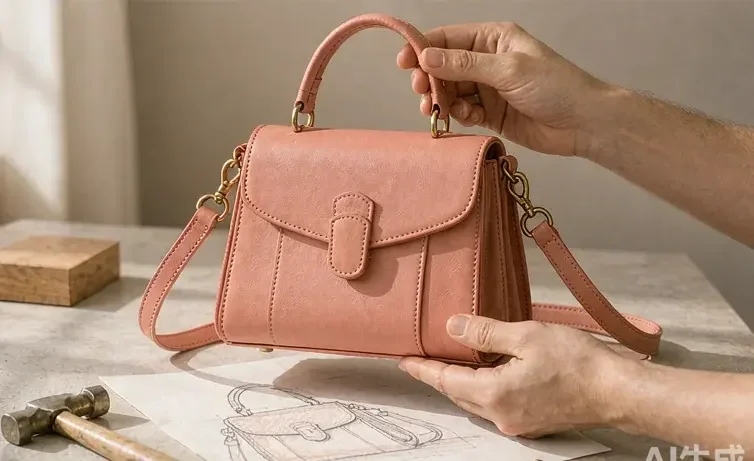
Three Routes Compared: Standard, Split and Fast-Track
There are three ways to run the calendar, and they differ almost entirely in what happens after bulk finishes rather than before it begins. Standard sea is the default, the split route buys the launch date with freight, and the fast-track route buys it by preparing earlier rather than by working faster.
| Stage | Standard sea | Split air and sea | Fast-track |
|---|---|---|---|
| Brief to first sample | 6-10 working days | 6-10 working days | 6-10 working days, material pre-reserved |
| Correction round | 6-10 working days | 6-10 working days | 6-10 working days, one round only |
| Material window | 15-20 working days | 15-20 working days | Opens at briefing, not at approval |
| Bulk production | 35-50 days | 35-50 days | 35-50 days on a pre-booked slot |
| Inspection | 2-3 days | 2-3 days | 2-3 days, third-party in parallel |
| Transit to Europe | 28-36 days | 5-7 days on the launch quantity | 28-36 days, or air on the balance |
| Typical total | 95-120 days | 75-95 days to first units | 80-100 days with earlier decisions |
The important reading in that table is the bulk row. Nobody compresses 35-50 days of bench work without damaging it, so any route that promises a dramatically shorter total is shortening the transit row or the material row, and it is worth asking which.
Stage by Stage: Where the 95-120 Days Go
Nine stages, and each one has a number attached. Stating them as a list is more useful than stating a single total, because a total cannot be argued about while a stage can be re-sequenced.
- Brief and scoping: two working days to a scoped answer from a completed brief.
- Technical development and pattern: 5-8 working days, running alongside the first cut.
- First sample: 6-10 working days, or 12-15 on a complex build.
- Evaluation and correction list: 48 hours is the discipline worth holding.
- Corrected sample: a further 6-10 working days where a structural change is needed.
- Material reservation and receipt: 15-20 working days from a settled shade.
- Bulk production: 35-50 days from material issued to goods packed.
- Inspection at AQL 2.5 under ISO 2859-1: 2-3 days on a 500 pcs lot.
- Transit and clearance: 28-36 days by sea to northern Europe, plus 2-4 days clearance.
Read as a sequence, the nine stages occupy about 95-120 days with two correction rounds and 80-100 with one. A buyer who plans for a single round and gets two loses three weeks, which is why the allowance is worth writing into the calendar rather than hoping for.
The Critical Path: Which Stage Cannot Be Compressed
Two stages on the critical path cannot be compressed without damaging the result: bulk at 35-50 days and material at 15-20 working days. Everything else can be overlapped, pre-booked or bought with freight, and knowing which is which is the whole of calendar management.
- Bulk production
- 35-50 days; compressible only by cutting operations, which is where quality goes
- Material window
- 15-20 working days; compressible only by pre-reserving before approval
- Sampling
- 6-10 working days; compressible by approving the first round as-is
- Inspection
- 2-3 days; compressible by agreeing the defect list before bulk starts
- Transit
- 28-36 days by sea; compressible to 5-7 days by air, at a freight premium
- Booking notice
- 21 days; compressible only by taking a slot that was already held
- Clearance
- 2-4 days; compressible by preparing the compliance file in advance
The material row is the one buyers can genuinely move. Reserving a lot before the sample is approved means the 15-20 day window opens while the correction round is still running, which takes roughly two weeks out of the total without asking the bench to work any faster.
Four Delays That Actually Occur
Delays are predictable enough to be named in advance. Four account for most of the slippage seen on luxury programmes, and each has a control that costs nothing.
Late material decision
Choosing the shade after sample approval rather than reserving it during sampling pushes the whole calendar back 10-15 days. Control: reserve the lot under your name before approval.
Undefined defect list
Agreeing what counts as a defect during inspection rather than before bulk turns a 2-day stage into a week. Control: write the list at quotation stage, at AQL 2.5.
Peak season booking
Requesting a line slot during the autumn surge without notice typically loses 10-20 days. Control: book 21 days ahead, and earlier still before a public holiday.
Incomplete compliance file
Missing per-lot reports and declarations hold goods at clearance for 2-4 days or longer. Control: request the file when bulk starts, not when it finishes.
Of the four, three are decided before sampling finishes. That is the argument for treating the calendar as a planning exercise rather than a chasing exercise: by the time you are chasing, the only lever left is freight.
Sampling: 6-10 Working Days, and What Makes It 12-15
Six to ten working days covers a first built unit, measurement against the drawing within ±0.5 mm on panels, a written correction list and one corrected round. A build becomes a 12-15 day exercise when one of four things has to be proved rather than cut.
- A bespoke closure: the clasp needs a first try, a correction and a confirming round.
- A framed body: the frame has to be set and the panel skived to meet it at 0.6-0.7 mm.
- A hand-set lining: the interior is fitted rather than dropped in, which adds a day per unit.
- An exotic skin: cutting requires layout and matching, and CITES documentation has to be in hand.
A complex build is not an inferior one; it is merely one where the bench has to discover something rather than execute something. Allowing 12-15 days honestly is better than allowing 10 and discovering the difference in week three.
Bulk: 35-50 Days and the Variables Inside It
Thirty-five to fifty days covers cutting, skiving, assembly, edge finishing, hardware setting, inspection and packing. The spread of fifteen days is not inefficiency; it is the difference between a straightforward run and one carrying bespoke hardware or a second colourway.
| Variable | Shorter end, 35 days | Longer end, 50 days |
|---|---|---|
| Colourways in the run | One, at 500 pcs | Three, each needing a line set-up |
| Hardware | Stock or lightly modified | Bespoke, proved over 24 hours of salt spray |
| Material | Reserved lot, cut and issued | Exotic skin requiring layout and matching |
| Edge finishing | Machine-assisted, three coats | Hand-burnished between coats on a curved edge |
| Inspection | Internal at AQL 2.5 | Internal plus third-party, sequenced |
A second colourway is not simply more units; it is a line set-up, a shade check and a separate inspection draw. Three colourways at 500 each is three short runs rather than one long one, and the calendar behaves accordingly.
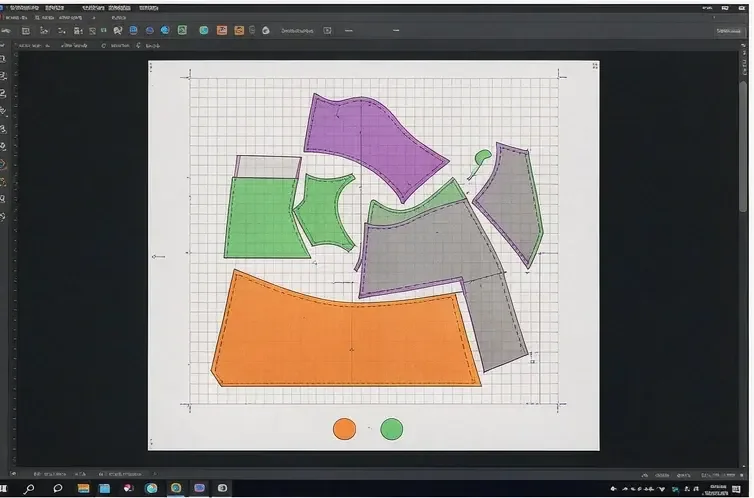
Transit and Clearance: The Last 30-40 Days
Sea transit from Xiamen runs 28-36 days to northern Europe and 18-22 days to the United States west coast, with 2-4 days of clearance on top. Air runs 5-7 days door to door, and sample couriers 3-5 days. These are the most reliable numbers in the whole calendar, which is why they are the wrong place to look for a saving.
- Book the vessel before bulk finishes, not after inspection passes.
- Prepare the commercial invoice and packing list while bulk is running.
- Hold per-lot test reports and declarations ready for the broker in advance.
- Confirm the classification under heading 4202 with your broker before shipment.
- Decide the air and sea split before bulk starts, not when the date looks tight.
The last item is the one that costs least and helps most. A split decided early is a routing instruction; a split decided in week six of bulk is an emergency, and emergencies are priced accordingly.
A Backwards Calendar From Your Delivery Date
Plan backwards from the immovable date rather than forwards from today. Take a delivery date and subtract the stages in reverse order, and the date you must issue a brief appears without any negotiation.
- Delivery date minus 2-4 days clearance, minus 28-36 days transit: goods must be packed.
- Minus 2-3 days inspection: bulk must be finished.
- Minus 35-50 days: material must be issued to the line.
- Minus 15-20 working days: the shade and the lot must be settled.
- Minus 6-10 working days for a correction round, and the same again for the first sample.
- Minus 21 days of booking notice: that is the date your brief has to be complete.
Worked honestly, a spring delivery date lands the briefing somewhere in the previous autumn, which surprises buyers who expected a shorter route. The arithmetic is not negotiable, but the order is: reserve material early and book the slot early, and two of the six steps stop costing calendar.
Five Controls That Protect the Date
Five controls, all decided before sampling ends, protect a delivery date more effectively than any amount of chasing later. None of them costs money; three of them cost a decision.
- Reserve the material lot under your name during sampling, so the 15-20 day window opens early.
- Book the line slot 21 days ahead, and earlier before a public holiday or an autumn surge.
- Agree the defect list and the AQL 2.5 plan at quotation stage, not at inspection.
- Limit correction rounds to four and write each finding against an operation.
- Request the compliance file when bulk starts rather than when it finishes.
State the immovable date as a date, not as a season. A season is a range of about twelve weeks, and a house planning against a range will plan for the end of it.
Our programme runs across 7 production lines with about 200,000 pcs per month of capacity and has held export experience since 2014, carried out through our validated partner factory Quanzhou Yingming Bags, an SGS-validated site. Sampling returns in 6-10 working days, 12-15 on a complex build, bulk runs 35-50 days, inspection is drawn at AQL 2.5 under ISO 2859-1, and handover is on FOB Xiamen terms. The swatch card set is billed at USD 4.80 and credited against the first order.
Sequencing detail sits under luxury sampling, inspection arithmetic under luxury quality control, presentation timing under luxury packaging, and the full route on the high-end handbag sourcing page. For a buyer's own evaluation sequence, see high-end handbag sourcing for luxury buyers.
Send your delivery date and get a backwards calendar
Send your drawing, quantity per colourway, destination and the date goods must land. You will receive a backwards calendar with every stage dated, within two working days. Request a quote.
Frequently Asked Questions
How long does high-end handbag sourcing take from drawing to delivery?
About 95-120 days with two correction rounds, or 80-100 with one. That covers sampling at 6-10 working days, material at 15-20 working days, bulk at 35-50 days, inspection at 2-3 days and sea transit at 28-36 days from Xiamen to northern Europe, plus clearance.
Which stage cannot be compressed?
Bulk, at 35-50 days, and the material window, at 15-20 working days. Bulk can only be shortened by cutting operations, which is where quality goes. The material window can be moved rather than compressed, by reserving the lot before the sample is approved.
What makes sampling take 12-15 days instead of 6-10?
Four things that have to be proved rather than cut: a bespoke closure needing a first try and a confirming round, a framed body with panels skived to 0.6-0.7 mm, a hand-set lining, and an exotic skin requiring layout, matching and CITES documentation.
How much does a second colourway add to the calendar?
A set-up rather than merely more units. Each colourway needs a line set-up, a shade check under D65 light and a separate inspection draw, so three colourways at 500 each behave as three short runs rather than one long one.
What is the 21-day booking rule?
Give the house 21 days' notice to hold a line slot rather than queue for one. A held slot starts bulk on the promised day; a slot requested during an autumn surge typically starts 10-20 days later, which is the most common single cause of a missed season.
Does air freight solve a late programme?
It solves the transit row, which is 28-36 days by sea against 5-7 days by air. It does nothing for bulk or material, and it costs roughly four to six times the freight line. The split option, air-freighting 20-30 per cent, is usually the better use of it.
How should I plan the calendar?
Backwards from the immovable delivery date. Subtract clearance, transit, inspection, bulk, material, correction and sampling in reverse order, and add 21 days of booking notice. The resulting date is the one by which your brief has to be complete.
Why does the material window matter so much?
Because it is 15-20 working days that only open once a shade is settled, and it sits directly in front of bulk. Reserving the lot during sampling rather than after approval removes roughly two weeks from the total without asking the bench to work faster.
What causes most delays on a luxury programme?
Four things: a late material decision, an undefined defect list agreed at inspection rather than at quotation, peak season booking without notice, and an incomplete compliance file at clearance. Three of the four are decided before sampling finishes.
How long does inspection take on a 500 pcs lot?
Two to three days, drawing 50 units at AQL 2.5 under ISO 2859-1 at general inspection level II, accepting on 3 defects and rejecting on 4. That assumes the defect list was agreed in advance; agreeing it during inspection turns two days into a week.
How long does clearance take at the destination?
Typically 2-4 days once the file is complete. Per-lot test reports and declarations under REACH Annex XVII and California Prop 65 should be ready before the vessel sails, and the classification under heading 4202 should be confirmed with your broker in advance.
Is a fast-track route slower in quality terms?
No, because it does not shorten the bench. It works by preparing earlier: reserving material at briefing, holding a slot, agreeing the defect list in advance and running third-party inspection in parallel. Bulk stays at 35-50 days in every route.
Should I state my delivery date as a season?
No. State it as a date. A season is a range of roughly twelve weeks, and a house planning against a range will sensibly plan for the end of it, which is how a delivery arrives late without anyone having broken a promise.
How many correction rounds should I allow?
Two on a straightforward silhouette and up to four where bespoke hardware is involved. Allowing four honestly is better than allowing two and discovering the third in week three, because a bespoke clasp needs a try, a correction and a confirming round.
People Also Ask
How long does it take to produce a luxury handbag order?
Around 95-120 days end to end: 6-10 working days of sampling, 15-20 for material, 35-50 days of production 35-50 days of inspection and 28-36 days of sea transit plus clearance.
Can a handbag order be produced faster?
Only at the edges. Bulk stays 35-50 days, so speed comes from reserving material early, booking the slot 21 days ahead and using air freight for 20-30 per cent of the run.
Why is bulk production 35 to 50 days?
Because cutting, skiving, assembly, edge finishing, hardware setting, inspection and packing all have to happen in sequence, and the spread reflects colourway count, bespoke hardware and hand-finishing rather than inefficiency.
How long is shipping from China?
Sea runs 28-36 days from Xiamen to northern Europe and 18-22 days to the United States west coast, plus 2-4 days of clearance. Air runs 5-7 days door to door.
What is the biggest cause of late deliveries?
A late material decision. Choosing the shade after sample approval rather than reserving it during sampling pushes the whole calendar back 10-15 days, and unlike freight it cannot be bought back later.
Sources and further reading
Every figure on this page is either our own programme data or attributed below. Open the originals before you write them into a specification.
- ISO — International Organization for StandardizationISO Publisher of ISO 2859-1, the sampling standard behind the AQL 2.5 plan and the 50-unit draw on a 500 pcs lot.
- World Customs OrganizationWorld Customs Organization Custodian of the Harmonized System, under which handbags are classified in heading 4202 and cleared at the destination.
- Leather Working GroupLeather Working Group Tannery audit protocol behind lot qualification, which is what allows a reserved lot to open the material window early.
- CITES — Convention on International Trade in Endangered SpeciesCITES Documentation required before an exotic skin is cut, which is one of the four things that extends sampling to 12-15 days.
- Sourcing JournalSourcing Journal Reporting on lead time pressure, peak season congestion and freight conditions across the leather goods supply chain.