High-End Handbag Sourcing From China: A Buyer's Guide Built on Six Numbers and One Landed Cost Split
Is China the right origin for a luxury handbag programme? For most designer labels the answer is yes, and the reason is arithmetic rather than sentiment: a landed cost split of roughly 38-46 per cent material, 9-14 per cent hardware and 16-22 per cent direct labour, on a minimum of 500 pcs per style and colourway. Sampling returns in 6-10 working days, bulk runs 35-50 days, and sea transit from Xiamen to northern Europe takes 28-36 days on FOB terms. Below: the eight cost lines, the six numbers that decide the calendar, and the four risks worth planning for.
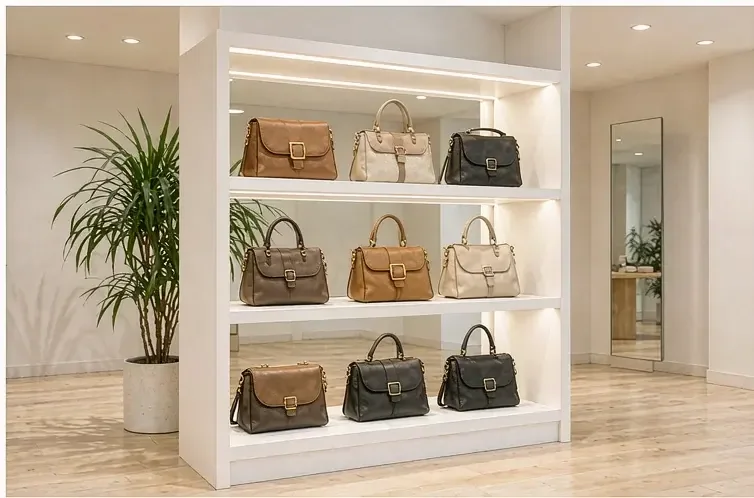
Where the Money Goes: A Landed Cost Split for 500 pcs
The landed unit cost of a premium calfskin bag on a 500 pcs run divides into eight lines, and the two that buyers most often underestimate are testing and freight. Material dominates, but the lines that move between quotes are hardware and packing, which is why an itemised quotation matters more than a single figure.
| Cost line | Share of landed unit cost | What moves it |
|---|---|---|
| Material, leather and lining | 38-46% | Tannery, grade, cut yield, lot size reserved |
| Hardware | 9-14% | Plating 0.15-0.3 µm, bespoke tooling, salt spray proving |
| Direct labour | 16-22% | Stitch density 8-9 per inch, hand-finished operations |
| Interlining and consumables | 4-7% | 0.8 mm interlining, edge coats, thread at Tex 40-60 |
| Compliance testing | 1.5-3% | Per-lot reports: ISO 3376, ISO 11644, ISO 105, ISO 11640 |
| Inspection | 0.5-1% | AQL 2.5 draw, plus third-party inspection if required |
| Packing and presentation | 3-5% | Dust bag, carton spec, humidity control |
| Freight, clearance and duty | 4-7% | Mode, season, destination, classification |
Two structural points follow from the table. Testing at 1.5-3 per cent is the line most often cut by a house under price pressure, and it is the only line that protects you after delivery. Freight at 4-7 per cent looks small until a season forces air freight, at which point it becomes the line that decides whether the margin survives.
The Six Numbers That Decide the Calendar
Six numbers determine whether a season lands: 6-10 working days of sampling, 15-20 working days to reserve and receive material, 35-50 days of production 35-50 days of inspection, 28-36 days of sea transit, and the 21 days of line booking notice that secures a slot. Miss any one of them and the others do not compress to compensate.
- 6-10 working days: first built unit, measurement against the drawing, one corrected round. Complex builds take 12-15 days.
- 15-20 working days: the material window, which only opens once the shade and the lot are settled.
- 35-50 days: bulk, from material issued to goods packed, across 7 production lines.
- 2-3 days: inspection at AQL 2.5 under ISO 2859-1, drawing 50 units on a 500 pcs lot.
- 28-36 days: sea transit from Xiamen to northern Europe; 18-22 days to the United States west coast.
- 21 days: the notice a house needs to hold a line slot rather than queue for one.
Add them honestly and a first capsule from drawing to warehouse occupies around 95-120 days. Buyers who plan for 60 days are not planning a programme; they are planning an air freight bill and a correction round they did not schedule.
Ports, Terms and What FOB Xiamen Actually Covers
FOB Xiamen means the seller carries the goods to the vessel at the port of loading and clears them for export; the buyer carries ocean freight, insurance, import clearance and duty from that point. It is the term most buyers should choose, because it keeps freight visible and therefore contestable.
FOB Xiamen
Seller covers inland haulage to the port, export clearance and loading. Buyer controls the carrier, the routing and the insurance. Recommended where the buyer has a broker.
CIF
Seller adds freight and minimum insurance to a named port. Convenient, but the routing is chosen for you and the freight line is no longer visible in the quotation.
DDP
Seller carries everything to your door, including duty. Attractive on paper, but duty is then estimated by someone who does not see your classification, and that estimate is usually padded.
Xiamen is the natural port for this work: the Fujian leather goods cluster sits around it, so inland haulage is short and the export documentation chain is short with it. A programme quoted FOB Xiamen can also be quoted CIF or DDP where a buyer prefers it, and the choice is worth making explicitly rather than by default.
Transit: Sea, Air and the Split Option
Sea is the default and air is the remedy, and the remedy costs roughly four to six times the freight line. The third option is the one most programmes should use: split the delivery, air-freighting the launch quantity and sending the balance by sea to arrive two to three weeks later.
- Sea, Xiamen to Rotterdam
- 28-36 days port to port, plus 2-4 days clearance
- Sea, Xiamen to Los Angeles
- 18-22 days port to port, plus clearance
- Air, Xiamen to Europe
- 5-7 days door to door including clearance
- Courier, samples
- 3-5 days, which is why a corrected sample round costs calendar rather than money
- Split delivery
- Air 20-30 per cent of the run, sea the balance, arriving 14-21 days apart
- Carton cube
- About 0.09 m³ for a carton holding 12-15 finished units
- Container reference
- A 40 ft high-cube carries roughly 60-67 m³ of usable volume
The split works because the units that matter most are the first ones: the window display, the press samples and the opening two weeks of trade. Air-freighting 150 units of a 500 pcs run puts the launch on time while the remaining 350 arrive on the sea schedule, and the freight premium is carried by the smallest part of the run.
Duty, Classification and Compliance at Import
Handbags are classified under heading 4202 of the Harmonized System, with the subheading depending on the outer surface material; duty and any import tax are then assessed by the customs authority of the destination. The rate is not a number a programme house can quote for you, and any house that does is guessing.
- Confirm the classification and the current rate with your broker before you fix a landed cost.
- Leather, coated fabric and exotic outer surfaces sit in different subheadings with different treatment.
- Certificate of origin and the commercial invoice have to agree on material and quantity.
- REACH declarations serve the European Union; California Prop 65 and CPSIA serve the United States.
- CITES documentation must travel with exotic goods, and it is checked at both ends.
The compliance file should be built per lot, not per season. Reports under ISO 3376, ISO 11644, ISO 105 and ISO 11640 are issued against a specific lot, so a delivery split across two lots needs two sets, and a broker will ask for them before release.
Payment Structure and Currency Exposure
A first programme usually runs on a deposit with the balance against documents or before shipment, and the structure matters less than the two things written beside it: what triggers the balance, and who carries the exchange movement between quotation and payment.
- State the trigger precisely: balance on passed inspection, or balance before vessel loading.
- Agree the currency of the quotation and the currency of payment as the same one.
- Agree an exchange band, commonly two per cent, beyond which the price is reviewed.
- Separate tooling from unit price, so a bespoke closure is paid for once and owned by you.
- Keep swatch and sampling charges as a creditable line, so development is not double-charged.
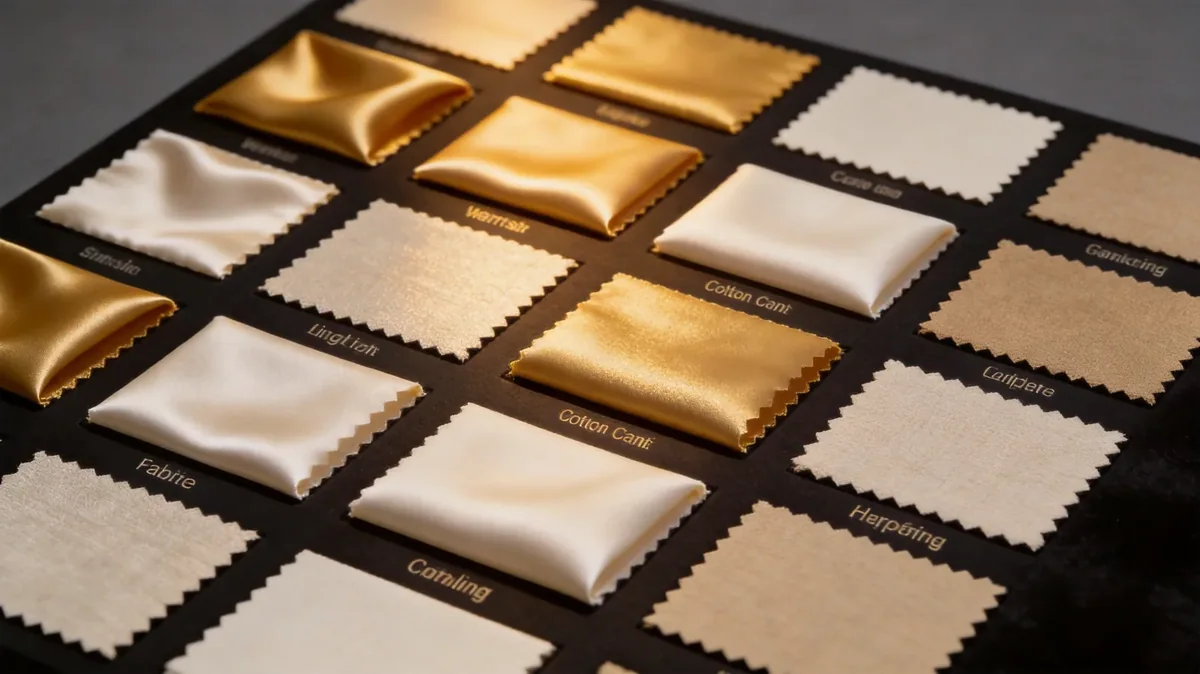
On the last point, our own practice is that the swatch card set is billed at USD 4.80 and credited against the first order. It is a small number deliberately: development should cost you attention rather than money, because the point of the stage is to decide, not to spend.
Capacity and Line Booking: Why the Calendar Behaves as It Does
Capacity is not an abstraction on a busy season; it is a queue. Our programme runs 7 production lines at about 200,000 pcs per month, and has held export experience since 2014, carried out through our validated partner factory Quanzhou Yingming Bags, an SGS-validated site. Those numbers matter to a buyer for one reason: a run booked against a held slot starts on the day it was promised.
| Booking behaviour | Calendar effect | What it costs you |
|---|---|---|
| Slot held 21 days ahead | Bulk starts on the promised day | Nothing beyond the booking itself |
| Slot requested during peak | production 35-50 days later | Two to three weeks of season |
| Material lot reserved at sampling | The 15-20 day window opens immediately | A reservation deposit |
| Material chosen after approval | The window opens late and pushes bulk | 10-15 days, and sometimes the season |
| One colourway, 500 pcs | Fits a single line without re-setting | Standard |
| Three colourways, 500 each | Three set-ups, sequenced | Time, and a higher effective minimum |
Risk Register for a China Programme
Four risks deserve a written plan, and all four are mitigated by decisions taken early rather than by inspections taken late. None of them is a reason to avoid the origin; all of them are reasons to prepare.
Shade drift between deliveries
Mitigated by reserving the lot under your name at sampling and by keeping a gold seal reference per style. A shared lot is the mechanism behind most colour complaints.
Peak season congestion
Mitigated by booking the slot 21 days ahead and by shipping before the pre-holiday surge. Late booking in the autumn costs more calendar than any other single decision.
Substitution after testing
Mitigated by per-lot declarations and by naming the lot in the order. A substitution invalidates reports you have already paid for.
Specification drift over seasons
Mitigated by retaining patterns, measurement sheets and correction history for 24 months, so a re-order is a re-run rather than a re-development.
The fourth risk is the one that costs most over three years, and it is the one nobody budgets attention for. A re-order supported by a frozen pattern and a held lot re-samples in 6-10 working days; a re-development starts the whole calendar again.
What to Prepare Before You Write
A first message that contains five things gets a scoped answer within two working days. A first message that contains one thing starts a correspondence, and correspondence is where calendars are lost.
- A dimensioned drawing or a reference piece, with the dimensions you care about marked.
- Quantity per style and per colourway, against the programme minimum of 500 pcs.
- Material direction and destination markets, since those drive the compliance file.
- The immovable date, stated as a delivery date rather than a season name.
- Your inspection expectation: AQL 2.5, and whether third-party inspection is required.
The full cost and route detail sits on the high-end handbag sourcing page; material provenance under luxury materials; inspection arithmetic under luxury quality control; and the buyer's own evaluation sequence in high-end handbag sourcing for luxury buyers.
Send the five artefacts and get a scoped answer
Send your drawing, quantity per colourway, material direction, destination market and delivery date. You will receive an itemised landed cost split, a booked slot and a calendar, within two working days. Request a quote.
Frequently Asked Questions
Is China a credible origin for a luxury handbag programme?
For most designer labels, yes, and the reason is arithmetic rather than sentiment. A landed cost split of 38-46 per cent material, 9-14 per cent hardware and 16-22 per cent direct labour, at a minimum of 500 pcs per style and colourway, is difficult to reproduce elsewhere at the same hand-finished level.
What is the minimum order for a first run?
The programme minimum is 500 pcs per style and per colourway. One colourway at 500 is acceptable; three colourways at 500 each are three set-ups sequenced across the line, which costs time and behaves like a higher effective minimum in the calendar.
How long does the whole route take from drawing to warehouse?
Around 95-120 days: 6-10 working days of sampling, 15-20 working days for material, 35-50 days of production 35-50 days of inspection and 28-36 days of sea transit to northern Europe. Complex builds add up to five days to sampling.
What does FOB Xiamen cover and what does it leave to me?
It covers inland haulage to the port, export clearance and loading onto the vessel. You carry ocean freight, insurance, import clearance and duty from that point, which is why FOB is recommended where a buyer has a broker and wants to see the freight line.
Should I choose sea, air or a split delivery?
Split, for most launches. Air-freight 20-30 per cent of the run to land the window display, press samples and opening trade on time, and send the balance by sea. Air runs 5-7 days door to door against 28-36 days by sea, at roughly four to six times the freight line.
Who sets the duty rate on handbags?
The customs authority of the destination, under heading 4202 of the Harmonized System, with the subheading set by the outer surface material. Confirm the classification and the current rate with your broker before fixing a landed cost, rather than accepting a rate quoted by the house.
Why is compliance testing only 1.5 to 3 per cent of cost?
Because a per-lot test programme is a small line against material and labour, yet it is the only line that protects you after delivery. It covers ISO 3376 tensile, ISO 11644 finish adhesion, ISO 105 colour fastness and ISO 11640 rub fastness at 500 dry and 100 wet cycles.
How do I avoid shade drift between two deliveries?
Reserve the material lot under your own name at the sampling stage and keep a gold seal reference unit per style. A lot held under a shared name can be issued to another programme, which is the usual mechanism behind colour complaints between two deliveries.
What is the 21-day booking rule?
Give the house 21 days' notice to hold a line slot rather than queue for one. A held slot means bulk starts on the promised day; a slot requested during peak season typically starts 10-20 days later, which is two to three weeks of season lost.
How much does a carton hold and how do I estimate container needs?
A carton of 12-15 finished units occupies roughly 0.09 m³, and a 40 ft high-cube carries about 60-67 m³ of usable volume. That gives a working estimate for freight planning, though packing density varies with the silhouette and the presentation specification.
What payment structure is normal for a first programme?
A deposit with the balance on a stated trigger, either passed inspection or before vessel loading. Write three things beside it: the exact trigger, the currency of both quotation and payment, and an exchange band, commonly two per cent, beyond which the price is reviewed.
Are sampling charges credited against the order?
They should be. Our own practice is to bill the swatch card set at USD 4.80 and credit it against the first order, because development should cost attention rather than money. Ask any house whether its sampling charges are creditable before you begin.
What should I include in my first message?
Five artefacts: a dimensioned drawing or reference piece, quantity per style and colourway, material direction and destination markets, an immovable delivery date stated as a date rather than a season, and your inspection expectation at AQL 2.5.
Does a re-order have to repeat the whole development cycle?
No, if records were kept. A frozen pattern, a measurement sheet and a correction history retained for 24 months reduce a re-order to a re-sample of 6-10 working days. Without them you re-develop, and the whole calendar starts again.
People Also Ask
Is China still the best origin for premium handbags?
For most designer labels yes, on arithmetic: 38-46 per cent material, 16-22 per cent labour and a 500 pcs minimum at hand-finished quality is hard to match elsewhere, and the port infrastructure shortens the export chain.
How long does shipping take from Xiamen?
Sea runs 28-36 days to northern Europe and 18-22 days to the United States west coast, plus 2-4 days of clearance. Air runs 5-7 days door to door, and sample couriers take 3-5 days.
What does landed cost include?
Eight lines: material 38-46 per cent, hardware 9-14, labour 16-22, consumables 4-7, testing 1.5-3, inspection 0.5-1, packing 3-5, and freight with duty at 4-7.
Should I use FOB or DDP terms?
FOB Xiamen for most buyers, because it keeps freight and routing visible and contestable. DDP is convenient but the duty is estimated by a party who does not see your classification, and that estimate is usually padded.
How do I prevent colour differences between deliveries?
Reserve the lot under your name at sampling and keep a gold seal reference per style. Shared lots get issued to more than one programme, which is the usual cause of shade complaints.
Sources and further reading
Every figure on this page is either our own programme data or attributed below. Open the originals before you write them into a specification.
- ISO — International Organization for StandardizationISO Publisher of ISO 2859-1 sampling plans and the ISO 3376, ISO 11644, ISO 105 and ISO 11640 test methods named in the compliance line.
- World Customs OrganizationWorld Customs Organization Custodian of the Harmonized System, under which handbags are classified in heading 4202 by their outer surface material.
- Leather Working GroupLeather Working Group Tannery audit protocol used to qualify a lot before reservation, which is the control behind shade consistency.
- European Chemicals AgencyECHA Administrator of REACH, including Annex XVII restrictions that require a per-lot declaration for goods entering the European Union.
- Sourcing JournalSourcing Journal Reporting on origin strategy, freight conditions and lead time pressure across the leather goods supply chain.