Hardware Sourcing Checklist for Designer Bags: Nine Lines, the Numbers Behind Them and What Each One Costs to Miss
Hardware is sourced against a checklist, not against a mood board, and the checklist has nine lines. The drawing and its tolerance, the alloy and the casting route, the finish and its layer build, the attachment method and the hole it goes through, the functional tests, the chemical declaration, the shade agreement, the packing and the spares. Each line has at least one number attached to it, and a line without a number is a line that will be interpreted rather than followed. This piece sets out all nine with the figures to write in, and puts a cost against the five that are missed most often, because the cost is what persuades a team to spend the extra hour.
The Nine Lines Where Hardware Cost Is Decided
Nearly every hardware dispute that reaches a packing line can be traced to one of nine lines on the specification, and in most cases the line was present but empty.
The nine are the drawing, the alloy, the finish, the attachment, the functional test, the chemical declaration, the shade agreement, the packing and the spares. Only four of them are about how the fitting looks. The rest are about whether it arrives, fits, holds and clears.
Order matters less than completeness, but there is one dependency that cannot be skipped: the attachment line depends on the leather stack, so the leather has to be chosen before the fitting is dimensioned.
Numbers to Lock Before Any Price Is Requested
A price requested before four figures exist will be revised twice, and both revisions will move it upward.
- Quantity
- 500 pcs per style and colourway is the working start; below it a custom form rarely opens
- Sampling window
- 6-10 working days, or 12-15 for a complex construction with a new die
- Bulk window
- 35-50 days from approved sample, longer where plating is subcontracted
- Inspection standard
- AQL 2.5 (ISO 2859-1) for the fitting as received and as assembled
- Handover terms
- FOB Xiamen, with the lot identified before it is booked
Give those five to the fitting maker at the same time as the drawing. They change the answer to every subsequent question, and a quote produced without them is a placeholder rather than a price.
Checklist Line One: Drawing and Tolerance
A drawing for a die-cast fitting needs a tolerance scheme, not just dimensions. Without one, the maker chooses the loose end of what the process can hold, and the bag inherits it.
- State linear tolerance as ±0.15 mm per 25 mm for a die-cast body, and tighter only on faces that are milled after casting.
- Mark the datum faces. A fitting with three unmarked faces will be measured three different ways.
- Specify gate position and vestige: the gate belongs on a non-visible face and the vestige should be trimmed to 0.20 mm or less.
- Give the draft angle, commonly 1-2 degrees, so the part releases without drag marks on the visible surface.
- Name the critical dimensions separately, so inspection knows which three of twenty measurements actually matter.
The last point saves the most time. Twenty dimensions at the same tolerance means twenty arguments; three named critical dimensions means three measurements and a decision.
Checklist Line Two: Alloy and Casting Route
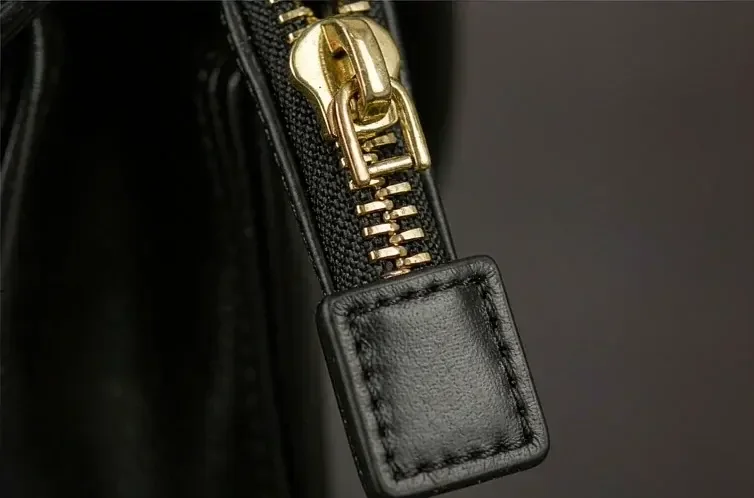
Two alloys cover most designer fittings, and the choice between them is driven by strength and by what the finish has to sit on rather than by price.
| Property | Zamak 3 | Zamak 5 | Where it tells |
|---|---|---|---|
| Copper content | Up to 0.03 percent | 0.7-1.1 percent | Copper raises strength and slightly shifts the plating colour |
| Tensile strength | About 280 MPa | About 330 MPa | A load-bearing D-ring or a chain link under a heavy bag |
| As-cast surface | Very good | Good, marginally rougher | A fitting that is plated bright rather than satin |
| Dimensional stability | Excellent | Good, slight drift over long runs | A lock that must engage the same way on piece 1 and piece 5,000 |
| Typical use | Locks, plates, decorative forms | D-rings, chain, feet, anything pulled | The strength line is the deciding one |
Shot weight is the number that links the alloy to the price, because it drives both material and cycle time. A lock body typically runs 30-120 g, and a fitting at the top of that band costs materially more per piece than one at the bottom even before any finish is applied.
Checklist Line Three: Finish and Layer Build
A finish line is complete when it names the route, the gloss, the layer build and the reference. Four fields, and a photograph is not one of them.
- Route: brushed satin, mirror polish with lacquer, light gold over a barrier, palladium, ruthenium or PVD.
- Gloss target in gloss units at 60 degrees, with a stated tolerance either side of it.
- Layer build: the colour thickness and the barrier thickness beneath it, in micrometres, measured on the batch.
- Corrosion target in salt spray hours, with the arrises inspected rather than the face.
- A sealed reference fitting held by both sides, plus a lightest and darkest pair where the finish is hand-worked.
Note that PVD is the one route that cannot be re-plated or touched up later. Where a fitting is likely to be refinished during the life of the programme, decorative plating over a barrier is the safer specification even though it wears faster.
Checklist Line Four: Attachment and the Hole It Goes Through
More fittings are lost to a wrong hole than to a wrong fitting. The attachment line has to state the stack it passes through, and the stack includes the reinforcement.
- Rivet shank diameter
- 3.0 mm, with a matching hole of 3.2 mm in the leather panel
- Washer under the head
- 8 mm diameter, which spreads the load and stops the fitting rotating
- Prong or post length
- The full stack plus 0.5 mm of turn-over, measured on production leather
- Reinforcement board
- Sized to the fitting footprint plus a 3 mm margin all round
- Sewn attachment
- A bar-tack or box stitch, never a single pass, at any load-bearing point
Assemble the fitting on the production stack and pull it before approving anything. Five minutes on a scrap panel of the actual leather with the actual reinforcement tells you more than any drawing review.
Checklist Line Five: Functional Tests
Functional tests are stated as a number plus a duration, and they are run on the assembled bag rather than on the fitting in isolation.
- D-ring pull
- 25 kgf held for 10 seconds with no permanent deformation
- Strap loop pull
- 40 kgf held for 10 seconds, the highest figure on the list
- Foot seating
- 15 kgf applied through the base panel with the bag loaded
- Zip slider cycles
- 5,000 open and close cycles with the tape under working tension
- Twist lock cycles
- 10,000 cycles, with the engagement force recorded at the start and at the end
Record the figure at the end of the test as well as at the beginning. A lock that passes at 10,000 cycles but has lost half its engagement force is a lock that will be returned, and only the second number reveals it.
Checklist Line Six: Chemical Declaration
The declaration names the finish and the batch, and it has a lead time that does not shorten because a vessel is waiting.
- REACH Annex XVII limits nickel release to 0.2 µg/cm²/week, tested after a wear and corrosion simulation.
- California Prop 65 carries a warning obligation where a listed substance is present above its safe harbour level.
- CPSIA sets lead limits on components of children's products sold in the United States.
- Testing commonly takes 7-10 working days from submission, longer in peak season.
- One declaration per finish per batch: a general statement covering the house is not a declaration.
Request it with the plating trial. It costs nothing at that point and a great deal at the packing list, and it is the first document a retailer will ask for.
Checklist Line Seven: Shade Agreement
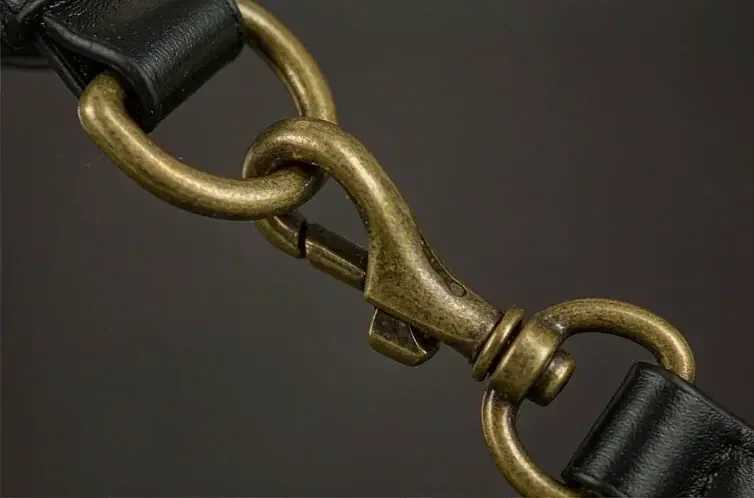
A bag carries a lock, feet, rings and a puller within a few centimetres of each other, and the eye compares them continuously, so shade is a system property rather than a per-part one.
- Agree a Delta E of 1.0 or less between every fitting on one bag, measured under D65.
- Source all fittings for a colourway from a single plating batch.
- Approve after plating and lacquer, never in the raw state.
- Inspect assembled on the bag, not part by part on a tray.
- Keep one sealed reference, held by both sides, against which any later batch is judged.
Zamac porosity belongs to this line. A pinhole that survives polishing opens during plating and shows as a dark speck that buffing will not remove, which is why a die-cast fitting is approved after plating and why the first shots from a new die are inspected more closely than later ones.
Checklist Lines Eight and Nine: Packing and Spares
The last two lines are the ones most often left blank, and they are the two that determine whether a small fault becomes a return or a five-minute fix at the destination.
- Primary packing
- One polybag per fitting, or a soft pouch for anything polished or lacquered
- Carton specification
- 5-ply export carton, 12 kg gross maximum per carton
- Separation
- Fittings bagged separately from leather panels so metal cannot mark the hide
- Spares
- 0.5 percent of the order quantity, packed separately and labelled
- Labelling
- Style, colourway and batch number on every inner bag, not only on the carton
Half a percent of spares is the least costly insurance on the list. A foot lost in transit or a lock scratched during assembly is a five-minute repair if a spare is in the carton and a customer return if it is not.
What the Five Most-Missed Lines Cost
Five lines account for most of the rework bills, and all five are quick to fill in and expensive to discover late.
| Missed line | What happens | Cost to put right |
|---|---|---|
| Attachment stack | Prong too short or too long: the fitting spins in the hole or tears the panel | About USD 4.80 per piece in parts and bench time, before freight |
| Functional test | A D-ring deforms under a loaded bag in the first month | Around USD 4.80 per piece, plus the returns handling behind it |
| Shade agreement | Two fittings ship in two shades and the whole colourway is downgraded | The full fitting cost again, and usually a price allowance on the season |
| Chemical declaration | The lot is held at intake pending a test that takes 7-10 working days | Demurrage and a missed launch window, which dwarfs the testing fee |
| Spares | A single damaged fitting becomes a customer return | The retail value of the bag, for the sake of half a percent of parts |
How to Run the Checklist in One Sitting
The nine lines fit onto a single page and take under two hours to complete, provided the leather family and the quantity are already known.
Nine lines, one sitting
- Confirm the leather family and its thickness first; everything downstream depends on the stack.
- Write quantity, sampling window, bulk window, inspection level and handover terms at the top.
- Fill the drawing line with tolerance, datum faces, gate position and three critical dimensions.
- Choose the alloy on strength, then the finish on position: hard surfaces for feet and chains.
- State every functional test as a force plus a duration, and record the value at the end of the test.
- Request the chemical declaration with the plating trial and file it against the batch.
- Agree the shade tolerance, the single batch and the sealed reference before plating starts.
- Specify packing, carton weight and half a percent of spares, labelled by style and colourway.
- Re-read the page before tooling is cut: after that, a change costs the die rather than a drawing.
Our programme runs export experience since 2014 across 7 production lines with about 200,000 pcs per month of capacity, delivered through our validated partner factory Quanzhou Yingming Bags, an SGS-validated site, with inspection at AQL 2.5 (ISO 2859-1) and handover on FOB Xiamen terms.
Have the checklist filled in against your drawing
Send the silhouette, the leather family and the markets you sell into. We will return the nine lines completed for your fitting, with the test targets and a piece price at 500 pcs. Request a quote.
Frequently Asked Questions
What should a hardware checklist for a designer bag contain?
Nine lines: drawing and tolerance, alloy and casting, finish and layer build, attachment and hole size, functional tests, chemical declaration, shade agreement, packing and spares. Each line needs at least one number attached to it, because a line without a figure is interpreted rather than followed.
What tolerance should be specified on a die-cast fitting?
A linear tolerance of ±0.15 mm per 25 mm is realistic for die casting, tightened only on faces that are milled afterwards. Mark the datum faces and name three critical dimensions separately, so inspection knows what actually governs whether the part fits.
Which zamak alloy should I use for a bag fitting?
Zamak 3 for surface-critical decorative parts such as locks and plates, at roughly 280 MPa tensile. Zamak 5 for anything load-bearing such as D-rings, feet and chain, at roughly 330 MPa. The copper content of 0.7-1.1 percent in Zamak 5 is what raises the strength.
How strong should a D-ring be on a handbag?
It should hold 25 kgf for 10 seconds without permanent deformation, tested on the assembled bag rather than on the part alone. A strap loop, which carries the weight of the loaded bag directly, is tested to 40 kgf for the same duration.
How many cycles should a zip slider survive?
Five thousand open and close cycles with the tape under working tension is the standard figure in this category. A twist lock is tested to 10,000 cycles, and the engagement force is recorded at both the start and the end rather than only at the start.
What hole size do I need for a 3 mm rivet?
A hole of 3.2 mm in the leather panel, with a washer of 8 mm diameter under the head to spread the load and stop rotation. The rivet length must equal the full stack plus 0.5 mm of turn-over, measured on production leather rather than on a swatch.
How many spare fittings should I order?
Half a percent of the order quantity, packed separately and labelled by style and colourway. A foot lost in transit or a lock scratched during assembly is a five-minute repair with a spare in the carton and a customer return without one.
What carton specification should hardware ship in?
A 5-ply export carton at 12 kg gross maximum, with each fitting in its own polybag or soft pouch. Fittings must be bagged separately from leather panels so that metal cannot mark the hide in transit, and every inner bag labelled with style, colourway and batch.
When should the chemical declaration be requested?
With the plating trial rather than with the packing list. Testing commonly takes 7-10 working days from submission and longer in peak season, and the declaration names the finish and the batch, so each finish needs its own record.
What is zamac porosity and how is it caught?
Pinholes in a die-cast fitting that survive polishing and then open during plating, leaving a dark speck that buffing will not remove. It is caught by approving the fitting after plating, and by inspecting the first shots from a new die more closely than later ones.
Can a PVD finish be repaired later?
No. PVD cannot be re-plated or touched up, so a PVD fitting is replaced rather than refinished. Where a fitting is likely to be refinished during the life of the programme, decorative plating over a barrier layer is the safer specification despite wearing faster.
What does it cost to correct a hardware specification error?
Around USD 4.80 per piece in parts and bench time before freight, for something like replacing a foot or re-plating a lock after finishing. The exceptions are the expensive ones: a held chemical declaration costs demurrage and a missed launch window.
People Also Ask
How do I write a hardware specification for a handbag?
Work through nine lines and attach a number to each: drawing tolerance, alloy, finish build, attachment and hole, functional test, chemical declaration, shade agreement, packing, spares. A line without a figure becomes a matter of interpretation later.
What pulls a D-ring off a bag?
A hole that is too large for the rivet, a missing washer, or a prong that is too short for the stack. The fix is a 3.2 mm hole for a 3.0 mm shank, an 8 mm washer, and a length equal to the stack plus 0.5 mm measured on production leather.
Is Zamak 5 stronger than Zamak 3?
Yes, roughly 330 MPa against 280 MPa, because of its 0.7-1.1 percent copper content. Zamak 3 has the better as-cast surface, so it is preferred for bright decorative parts where strength is not the governing requirement.
How much hardware should I order as spares?
Half a percent of the order quantity, packed separately and labelled. That is a small number of parts that converts a damaged foot or scratched lock from a retail return into a five-minute bench repair at the destination.
Sources and further reading
Every figure on this page is either our own programme data or attributed below. Open the originals before you write them into a specification.
- ISO — International Organization for StandardizationISO Publisher of ISO 2859-1, the sampling standard behind an AQL 2.5 inspection level, and of the dimensional tolerancing conventions used on hardware drawings.
- ASTM InternationalASTM International Publisher of test practices for plating thickness, salt spray exposure and abrasion resistance, referenced when a finish line is written.
- ECHA — REACHEuropean Chemicals Agency Administrator of REACH Annex XVII, including the nickel release limit of 0.2 µg/cm²/week that governs plated fittings sold into the EU.
- CPSCU.S. Consumer Product Safety Commission Administrator of CPSIA component limits, the reference behind chemical declarations for the United States market.
- Sourcing JournalSourcing Journal Trade reporting on hardware sourcing, compliance holds and recalls across the accessories industry.