Handbag Maison vs Sourcing Agent: Key Differences — One Order, Two Arrangements
Handbag maison vs sourcing agent comes down to one thing: who holds the correction log. An agent places an order and reports on it; a maison programme owns the pattern file, the tooling, the material approvals and the record of every change. Follow one order through both arrangements below — 500 pcs per style and colourway, sampling in 6-10 working days, bulk in 35-50 days, inspection at AQL 2.5 under ISO 2859-1, quoted FOB Xiamen — and the differences become concrete rather than contractual.

The Two Arrangements, Seen Through One Order
A house with a structured gusseted body put the same style through two arrangements in consecutive seasons. Under the first, an agent placed the order with a workshop, relayed the technical file, and reported progress weekly. The first sample came back with a gusset sitting 4 mm proud of the body. The note that came back with it said the pattern had been adjusted. Adjusted from what, against which reference, and by whose decision — three questions the arrangement could not answer, because the agent had relayed the file rather than owned it.
Under the second arrangement the same style went through a maison programme. The gusset fault appeared again, because it was a fault in the design rather than in the workshop. This time the correction was logged against a revision number, the panel was re-cut, and the reason was written down. Season three of the same style took 28-35 days rather than 35-50. The bag had not changed. What changed was who held the record of what had been done to it.
What an Agent Actually Controls
An agent controls the placement of an order, the flow of information and the commercial interface. That is genuinely valuable when a brand is buying across several categories and cannot hold a relationship with every workshop involved. The agent's leverage comes from placing volume, and that leverage is real: it buys attention and it resolves scheduling disputes faster than a brand can on its own. What it does not buy is control of the pattern file, because the file belongs to whoever made it.
| Function | Sourcing agent arrangement | Maison programme |
|---|---|---|
| Technical file | Relayed to the workshop as received | Owned, revision-numbered and corrected in house |
| Correction record | Reported verbally, not retained | Logged against a revision number, retained per style |
| Pattern ownership | Held by the workshop | Held against the brand at a recorded revision |
| Tooling | Charged, held by the workshop | Charged once, mould number recorded for the brand |
| Material approvals | Described in the order | Physical, retained, with a named alternative |
| Inspection | Arranged, standard varies | AQL 2.5 under ISO 2859-1, level II, defects classified |
| Sampling window | Relayed, not controlled | 6-10 working days, 12-15 for frame work |
| Re-order | Re-quoted from the start | 28-35 days against a sealed reference |
What a Maison Programme Controls Instead
A maison programme controls the four artefacts that a brand actually needs to own: the pattern file, the correction log, the tooling and the golden sample. Everything else — placing the order, chasing it, arranging inspection — can be delegated without loss. These four cannot, because each is an asset that carries into the next season, and each one is what makes a re-order cheaper than a first run.
The pattern file is the clearest of the four. A structured gusseted body carries three patterns and eleven cut panels; a flat envelope carries one pattern and four. Whoever holds that file at a recorded revision number decides how quickly a correction can be made and whether it has to be rediscovered next season. A brand that does not hold it is renting its own design. This is set out in more detail in Handbag Maison vs Standard Production.
Where the Correction Log Is the Dividing Line
If one artefact separates the two arrangements it is the correction log. A sample comes back wrong in both arrangements, because that is what sampling is for. The difference is what happens to the reason. Under a relayed arrangement the reason travels verbally and expires with the conversation. Under a programme it is written against a revision number, and it survives to the next style — which is the only mechanism that stops the same correction being rediscovered and paid for twice.
Ask for it directly: the correction log from the last three styles a house developed. It is a reasonable request, it takes a minute to produce, and the answer tells you more about an arrangement than any assurance given on a call. A programme that holds the log can produce it. An arrangement that relays the file cannot, because nobody was obliged to keep it.
The Technical File: Who Owns It, and What It Contains
Ownership of the file is the second dividing line, and it is a clause rather than a sentiment. The file should be held against the brand at a recorded revision number, released to a second workshop only with written consent, and it should contain the figures that make a bag buildable without interpretation. Below is what a complete file carries for one structured style.
- Pattern count
- 3 patterns, 11 cut panels for a gusseted body
- Panel tolerance
- ±1.5 mm cut, ±3 mm on a finished stuffed bag
- Welt cord
- 1.6 mm, set into the seam on a structured edge
- Piping width
- 12 mm, matched to the hide rather than the lining
- Buckle tongue thickness
- 3 mm, with a 0.7 mm skiver on the fold
- Quote validity
- 30 days from issue, restated after a material change
- Inspection standard
- AQL 2.5 under ISO 2859-1, level II
- Terms
- FOB Xiamen, with CIF and DDP available
The Commercial Difference: Margin, Terms and Transparency
The commercial question is not which arrangement costs less; it is what the difference buys. An agent's margin sits on top of the workshop's figure and is usually invisible inside it. A programme quotes a figure and itemises it: hide, hardware, lining, edge work, assembly, packing. Transparency here is not a courtesy — it is what allows a brand to make an informed trade-off when a design lands above its target band, rather than guessing at where the cost sits.
Itemisation
A programme quotes hide, hardware, lining, edge work, assembly and packing as separate lines. An agent quotes a figure. Only the first lets a brand decide what to change when the total lands high.
Quote validity
Hide and plating costs move. A 30-day validity, restated after any material change, is the honest way to handle it — an open-ended quote usually means the figure will be revisited later.
Tooling custody
A mould paid for by the brand belongs to the brand. Record the mould number and where it is held, so a later season is not quoted with the tooling charge included a second time.
Sampling charges
A structured calfskin prototype runs USD 180-320, usually credited against the bulk order. Custom casting adds USD 450-900 per mould. Both should appear as named lines rather than inside the unit figure.
Terms and documents
FOB Xiamen, with CIF and DDP available. Export documentation, packing specification and labelling belong in the purchase order as line items, not in an exchange of emails.
When an Agent Is Genuinely the Better Answer
It would be dishonest to suggest one arrangement always wins. An agent is the better answer in three situations. First, when a brand is buying across several categories and needs one interface rather than five relationships. Second, when the specification is settled, the volume is large and there is nothing to correct — at that point the correction log has no value and the fee for holding it is wasted. Third, when a brand is deliberately testing a workshop before committing, because an agent can place a small trial that a programme cannot structure.
What an agent cannot do is make a design correct faster than the pattern allows. The sampling window is 6-10 working days in either arrangement, 12-15 where a frame or a custom-cast clasp is involved, because pattern work takes the time it takes. The difference is what happens after the sample comes back wrong, and that is entirely a question of who owns the record.
Moving From One to the Other Without Losing a Season
Moving between arrangements costs one full sampling cycle, because the pattern file has to be rebuilt against the receiving house's tolerances. Plan it between seasons rather than during one. Bring what can be brought: the reference images, the dimension list with tolerances, the material approvals, and the mould numbers for any hardware already paid for. What cannot be brought is the correction log, which is the argument for holding it from the first season onward. Expect the first season under a new arrangement to cost slightly more than the last one under the old, and to be cheaper from the season after that, when the file is complete and the re-order runs against a sealed reference rather than a fresh quote.
The test in one question
- Ask who owns the pattern file and what revision it is held at. If the answer names the brand and a number, the arrangement is a programme. If it names a workshop, the brand is renting its own design, and every season will be quoted as though it were the first. Minimum 500 pcs per style and colourway, sampling 6-10 working days, inspection AQL 2.5, FOB Xiamen.
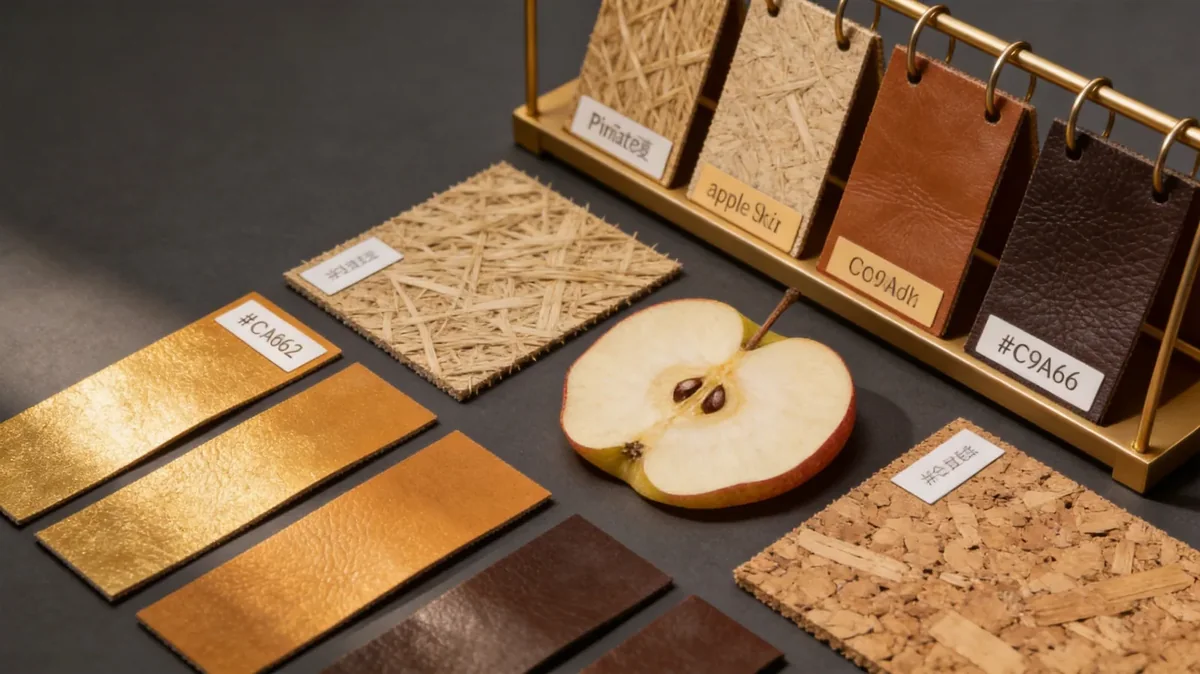
The correction log from the last three styles. It is a reasonable request, it takes a minute to produce, and it separates an arrangement that owns the file from one that relays it more reliably than any assurance given on a call.
Ask who owns your pattern file
Send the style you are running, the arrangement you are using and what is going wrong, and our team will return an honest read on whether a programme would change it — through our quotation desk.
Frequently Asked Questions
What is the difference between a handbag maison and a sourcing agent?
An agent places an order, relays the technical file and reports on progress. A maison programme owns the pattern file at a recorded revision number, keeps the correction log, holds the tooling against the brand and seals a golden sample. The distinction is custody of the file rather than the competence of either.
Who owns the pattern file under each arrangement?
Under a programme the file is held against the brand at a recorded revision number, released to a second workshop only with written consent. Under a relayed arrangement it belongs to whoever made it, which means a re-order is quoted as though it were the first.
What is a correction log and why does it matter?
It is the written record of every change made to a pattern, held against a revision number. It matters because it is the only mechanism that stops the same correction being rediscovered on the next style. Given verbally, a correction expires with the conversation.
Is a sourcing agent cheaper than a maison programme?
Not necessarily. An agent's margin usually sits invisibly on top of the workshop figure, whereas a programme itemises hide, hardware, lining, edge work, assembly and packing as separate lines. The comparison to make is transparency and what it lets you change, not the headline figure.
When is a sourcing agent the better choice?
When a brand buys across several categories and needs one interface, when the specification is settled and there is nothing to correct, or when testing a workshop deliberately before committing. In those situations the correction log has little value and the fee for holding one is wasted.
How long does sampling take under each arrangement?
6-10 working days in either, and 12-15 where a frame or a custom-cast clasp is involved, because pattern work takes the time it takes. The difference is what happens after the sample comes back wrong, which is a question of who owns the record.
What is the minimum order for a maison programme?
500 pcs per style and per colourway, quoted FOB Xiamen. Each colourway carries its own dye lot approval and its own minimum, so three silhouettes in two colourways is six production units of 500 pieces, about 3,000 bags.
How is a bulk run inspected before release?
Final inspection is drawn to AQL 2.5 under ISO 2859-1 at general inspection level II, with defects classified critical, major and minor. On a 500-piece lot the sample is 50 units, accepted at 3 major defects and rejected at 4. Critical defects are rejected outright.
What does it cost to move from one arrangement to the other?
One full sampling cycle, because the pattern file has to be rebuilt against the receiving house's tolerances. Plan it between seasons. Bring the reference images, the dimension list with tolerances, the material approvals and any mould numbers already paid for.
How much does custom hardware cost and who owns the mould?
USD 450-900 per mould as a one-off, plus 8-12 days of tooling before the first prototype is built. A mould paid for by the brand belongs to the brand, and the mould number should be recorded so a later season is not charged for it again.
What should a quote show to be comparable?
Hide, hardware, lining, edge work, assembly and packing as separate lines, a stated sampling charge of USD 180-320 per prototype, tooling where applicable, an inspection standard, and a validity period — 30 days is the working figure, restated after any material change.
What is a golden sample and who holds it?
The approved physical unit, sealed one per style and colourway and held on both sides. It is the reference against which bulk and every re-order are measured. Without it a re-order has no reference and the second season becomes a re-sampling exercise.
How is colour controlled across an order?
Against a retained physical swatch in a D65 light booth, held at ΔE ≤ 1.0, with colour-fastness verified to ISO 105, finish adhesion to ISO 11644 and tensile strength to ISO 3376. Approve a named alternative finish at the same time.
What compliance documents should each arrangement provide?
REACH Annex XVII for the European Union, a Prop 65 assessment for California, CPSIA limits and a tracking label for the United States, EU Regulation 1007/2011 for fibre naming, and Leather Working Group audit status at the tannery. Collect them before dyeing and plating begin.
People Also Ask
Should a brand use a sourcing agent or a maison programme?
Use an agent across several categories or at settled specification. Use a programme when the design needs correcting, because then the pattern file, the correction log and the golden sample are the things worth owning.
Who owns a handbag pattern file?
Under a programme, the brand does, held at a recorded revision number and released to a second workshop only with written consent. Under a relayed arrangement it belongs to whoever made it.
What is a correction log in handbag development?
The written record of every change made to a pattern, held against a revision number. It is what stops the same correction being rediscovered on the next style, and it is the clearest evidence a specification is being held.
How long is a handbag quote valid for?
Thirty days is the working figure, restated after any material change, because hide and plating costs move. An open-ended quote usually means the figure will be revisited later rather than that it is fixed.
What does a handbag quote include?
Hide, hardware, lining, edge work, assembly and packing as separate lines, plus the sampling charge, any tooling, the inspection standard and the validity period. Itemisation is what lets a brand make an informed trade-off.
Sources and further reading
Every figure on this page is either our own programme data or attributed below. Open the originals before you write them into a specification.
- ISO — International StandardsInternational Organization for Standardization Publisher of ISO 2859-1 sampling procedures, ISO 105 colour fastness, ISO 11644 finish adhesion and ISO 3376 tensile strength.
- Leather Working GroupLeather Working Group Tannery audit protocol used to evidence a hide chain and to confirm provenance before a cutting order is released.
- Understanding REACHEuropean Chemicals Agency Annex XVII restrictions on chromium VI, azo dyes, nickel release and phthalates in leather and plated hardware.
- Proposition 65Office of Environmental Health Hazard Assessment California safe-harbour levels determining whether a plated hardware set carries a warning.