Full Grain vs Top Grain for Luxury Handbags: What the Difference Costs and Returns
How do full grain and top grain differ for luxury handbags? The difference is 0.1-0.3 mm of grain surface: full grain keeps it, top grain has it sanded away and replaced with a finish film of roughly 15-25 µm. Everything a buyer cares about follows from that one operation — rub fastness, patina, yield per hide and the figure on the unit. This article puts numbers on each consequence and shows which choice suits which silhouette.
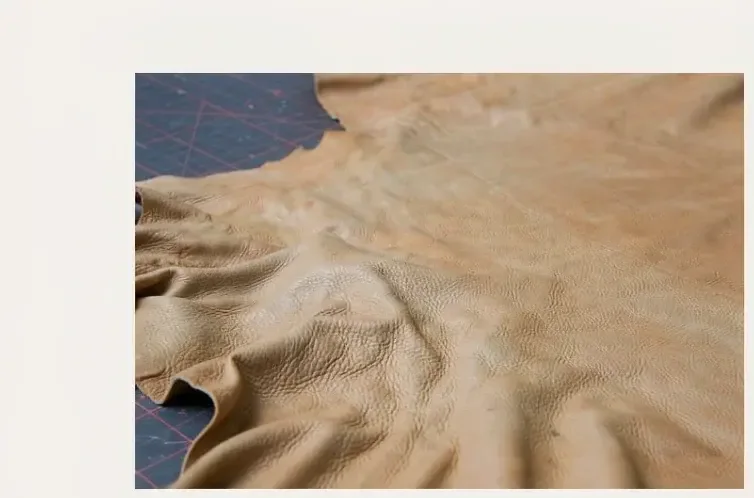
The Difference Is 0.1-0.3 mm of Surface
Full grain keeps the original grain surface of the hide intact. Top grain has that surface sanded away, taking roughly 0.1-0.3 mm with it, then replaces what was removed with an applied finish. Everything else buyers argue about is downstream of that single operation.
Because it is a subtraction followed by a substitution, the two materials should be compared as packages rather than as grades. Full grain offers the original surface and its behaviour; top grain offers an engineered surface and the consistency that comes with it. Neither is automatically the better material for a given bag.
- Full grain: original surface, pores intact, natural marks visible.
- Top grain: surface reduced by roughly 0.1-0.3 mm, finish applied over it.
- The sanding removes the loose grain damage along with the grain itself.
- The finish is what then carries rub, light and moisture performance.
- Everything — cost, yield, patina — follows from those two moves.
The third item is why the operation exists. Sanding is not deception; it is how a hide with visible surface damage becomes usable at all, and judged honestly both materials are legitimate choices with different consequences.
What the Two Words Do to Yield and Hide Cost
Start where money moves first. Because correction hides surface damage, a corrected piece uses more of each hide than an uncorrected one, and that difference is the origin of most of the price gap between them.
- Usable area
- Correction commonly lifts usable area per hide by 10-18%
- Hide selection
- Uncorrected surface requires a cleaner hide to begin with
- Cutting rejects
- Full grain can raise rejects from around 6% to 14% on large panels
- Sorting labour
- Hand sorting and pairing adds roughly USD 4.80 per unit
- Development rounds
- Uncorrected hides can need an extra matching round
- Unit effect
- The gap narrows once reject rates are counted rather than ignored
The last line matters when numbers are compared on a quotation. A full grain hide that looks only slightly more expensive per unit of surface can end up costing noticeably more per finished bag once the cutting rejects are added to it.
This is also why the same body can be priced two ways. A house that quotes the hide without quoting the yield is not being dishonest; it is answering a different question from the one you asked.
The Finish Film: Thickness and What It Buys
What replaces the sanded surface is a finish, and finishes have measurable thickness. An aniline-type finish sits thin, typically around 5-10 µm, while a pigmented finish over a corrected surface commonly runs 15-25 µm.
Thickness buys protection and costs authenticity. A thicker film resists rubbing, repels moisture and evens out colour across a body; it also fills the grain so the surface stops reading as skin. This is the trade that every comparison ultimately resolves into.
| Attribute | Full grain, thin finish | Top grain, pigmented finish |
|---|---|---|
| Film thickness | Around 5-10 µm | Commonly 15-25 µm |
| Dry rub, grey scale | Typically grade 4 after 500 rubs | Typically grade 4-5 after 500 rubs |
| Wet rub, grey scale | Typically grade 3 | Typically grade 4 |
| Water behaviour | Absorbs and darkens, then dries | Beads for a short period before wetting |
| Colour evenness | Varies across the hide | Even across panels and across lots |
| Surface reading | Pores and grain visible | Grain impressed after correction |
Read the second and third rows together with your own use case. For a light neutral body carried daily, wet rub grade 3 versus 4 is the difference between a bag that marks and one that does not, and no amount of storytelling changes that number.
Behaviour at the Bench
The two materials do not behave identically under the machine, and these differences decide both the construction and the achievable finish. Build and tolerance choices made for one will not transfer to the other without adjustment.
Stretch
An uncorrected hide with a thinner finish generally has more give, so soft bodies drape better and structured ones need firmer reinforcement behind them.
Skiving
A corrected surface skives cleanly because the finish binds the grain; thin-finished hides can fray at a fine skive and need a slightly wider taper.
Edge build
Edge preparation takes a little more care on thicker pigmented films, which can chip if sanded too aggressively between coats.
Marking
Finger pressure leaves a temporary trail on thin finishes during assembly, which simply has to be accepted rather than treated as damage.
The second card occasionally surprises both sides. A taper that works fine on corrected grain may tear at the fold on a thin-finished hide, and the fix costs one extra development round that could have been anticipated in the specification.
How Each One Ages
Ageing is where intuition usually fails, because the desirable patina and the undesirable wear come from the same mechanism: a surface that changes. A surface that changes beautifully also changes visibly, and one that resists change resists it in every direction.
- Thin-finished hides darken and polish where handled, which is the patina most houses describe.
- Pigmented films hold their colour longer and then fail suddenly rather than gradually.
- Deep scratches through a pigment film cannot be rubbed out, because what lies beneath is not the same colour.
- Sunlight shifts aniline tones more quickly, so light-only panel placement matters more.
- Structured bodies rub at corners first, and the failure there is film rather than hide.
The third bullet describes the repair asymmetry. A scuff on a thin finish can often be worked back into the surrounding surface; one that cuts through a pigment layer exposes a different colour underneath and requires refinishing rather than attention.
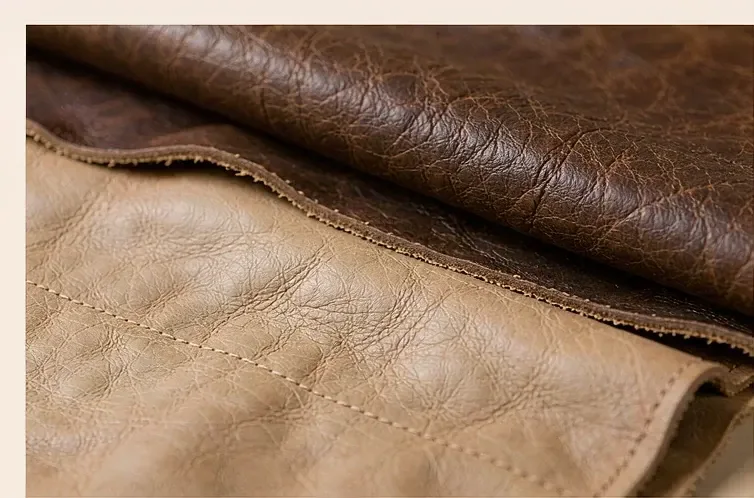
Choosing by Silhouette Rather Than by Grade
Choose by what the body has to do. A slouchy hobo wants drape and invites surface change; a rigid top-handle wants uniformity and resistance to handling marks. The grade question answers itself once the silhouette is honest about its own demands.
| Body type | Usual choice | Reason |
|---|---|---|
| Soft unstructured hobo | Full grain, thin finish | Drape and developing surface suit the shape |
| Rigid top-handle | Top grain, even finish | Uniformity and resistance to handling marks |
| Large everyday tote | Either, decided by colour | Pale tones usually need the stronger film |
| Evening frame bag | Thin finish over fine grain | Close-range reading matters more than wear |
| Travel pieces | Corrected, well finished | Abrasion resistance over surface authenticity |
The third row is the one most often decided by colour rather than by philosophy. Pale neutrals on a thin finish will mark in ordinary service, and pretending otherwise produces returns rather than character.
Reading a Sample Without Being Misled
A sampling swatch is made from the most convincing hide available, which is a good reason to treat it as a starting point rather than as evidence. Ask for a whole range of samples rather than a single square, because the variation between them is the information that actually predicts how your body will look.
Three checks settle most questions quickly. Rub the surface lightly with a clean cloth and look for transfer; flex a corner of the sample and examine whether the finish whitens along the fold; hold two samples from different parts of the range together and judge how far apart they sit in shade before you decide anything else.
- Ask for samples from at least three hides rather than one selected square.
- Judge the spread between them, since that is what arrives across a delivery.
- Flex a corner and inspect the fold for whitening in the finish rather than the hide.
- Check whether the grain reads as opened pores or as an impressed pattern.
- Confirm the sample is the same finish and thickness you intend to order.
The last check prevents the most expensive misunderstanding of all. A sample developed at one film thickness and then ordered at another delivers a body that passes nothing you approved, and the difference is almost invisible on the swatch card.
Writing the Choice Into a Specification
Once chosen, specify it numerically so the choice survives contact with a purchase order. State the finish type, the approximate film thickness, the rub requirements dry and wet under ISO 105-X12, flex cycles to ISO 5402-1, and the light fastness expected.
Specifying tests rather than adjectives is what prevents the quiet substitution. A corrected hide with a convincing printed grain can pass a visual check entirely, and only a rub figure or a film measurement distinguishes it from what was agreed.
Numbers worth writing down
- Finish type and approximate film thickness, around 5-10 µm or 15-25 µm.
- Dry and wet rub to ISO 105-X12, quoted as grey scale grade after 500 rubs.
- Flex cycles to ISO 5402-1, commonly 50,000 without finish cracking.
- Finish adhesion to ISO 11644, with the minimum value written rather than implied.
- Tensile strength to ISO 3376 where the body carries load at handles.
- Colour tolerance against the sealed reference before and after the above.
The last item catches a subtle failure mode: a material can pass every test individually and still be the wrong shade, so a sealed reference check before and after testing keeps both halves of the requirement intact.
Our programme develops both routes to MOQ 500 pcs per style and colourway, with sampling at 6-10 working days and 12-15 days for complex bodies, and bulk at 35-50 days on FOB Xiamen terms, inspected to AQL 2.5 under ISO 2859-1. It runs across 7 production lines with about 200,000 pcs per month of capacity and export experience since 2014, delivered through our validated partner factory Quanzhou Yingming Bags, an SGS-validated site.
Two materials can differ slightly per unit of surface and substantially per finished bag. Always ask for the usable yield assumption alongside the hide figure; the difference between them is where the real comparison lives.
Compare both routes on your own body
Send the silhouette, colour and quantity. We will return both options with yield, rub figures and unit cost side by side. Request a quote.
Frequently Asked Questions
What is the real difference between full grain and top grain?
About 0.1-0.3 mm of surface. Full grain keeps the hide's original grain; top grain has that layer sanded off and replaced with an applied finish. Everything else — how the surface ages, how it resists rubbing, what the unit costs — follows from that one subtraction and substitution.
Is full grain always the better choice for a luxury bag?
No, despite how often it is presented that way. Uncorrected surface brings drape and patina but lower rub resistance and higher cutting rejects. For a pale structured body carried daily, a well finished corrected surface will usually serve the customer better than an honest one that marks.
How much finish is applied to each type?
A thin finish typically runs around 5-10 µm, while a pigmented film over a corrected surface commonly runs 15-25 µm. The thicker film is what gives the corrected material its resistance to rubbing and moisture, and it is also why the surface stops reading as skin up close.
Why does a corrected hide cost less?
Mainly yield. Sanding removes surface damage as well as grain, so correction usually lifts usable area per hide by 10-18%. Fewer hides are needed for the same number of bodies, and that saving reaches the unit figure even where the hide itself is close in price.
How do the two compare on rub fastness?
Measured with ISO 105-X12, a thin finish commonly achieves grey scale grade 4 dry and about 3 wet after 500 rubs, while a pigmented finish reaches around 4-5 dry and 4 wet. The wet figure is what decides performance on light colours in daily service.
Which one develops a patina?
The uncorrected surface with a thin finish. It darkens and polishes where hands touch, which is the change most houses describe as character. A pigmented film holds its colour longer and then tends to fail abruptly rather than developing gradually over seasons.
Can a scratch be repaired on both?
More easily on a thin finish, where a scuff can often be worked back into the surrounding surface. A deep cut through a pigment film exposes a different colour beneath, and that requires refinishing rather than attention, which is a much larger intervention.
Do they behave differently during making?
Yes. Corrected hides skive cleanly because the finish binds the grain, whereas thin-finished hides are more likely to fray at a fine taper and need a slightly wider one. Uncorrected hides also have more give, so soft shapes drape better and structured ones need firmer backing.
How should I specify which one I am buying?
By tests rather than words. State the finish type, the approximate film thickness, dry and wet rub to ISO 105-X12 with grey scale grades, flex cycles to ISO 5402-1, and adhesion to ISO 11644 with a stated minimum. Adjectives permit substitution; numbers do not.
Does the choice affect the minimum order?
The programme minimum is the same at MOQ 500 pcs per style and colourway. What changes is how many hides that requires and therefore how the unit lands, since uncorrected hides needing matching may consume more hides to deliver the same number of finished pieces.
Which suits a pale neutral body?
Usually a corrected surface with a well built finish. Thin-finished hides in pale tones mark in ordinary service, and the customer reads that as damage rather than as patina. Where a brand insists on the uncorrected look, restrict it to darker tones or smaller pieces.
How much does hand sorting and matching add?
Roughly USD 4.80 per unit on a medium structured body, covering the additional handling needed to pair panels when an uncorrected hide varies across the piece. It is worth paying where two visible panels meet at a seam or where the body is symmetrical.
Should every component in one body use the same surface?
Not necessarily. Facings, bindings and interior parts rarely need the hero surface, and splitting the specification lets one body carry two finishes without the difference being visible. Keep the expensive material to the areas the customer actually sees and touches every day.
How do I judge whether a patina will look good?
Handle the sample. Rub one corner with a clean cloth for thirty seconds and compare it with the untouched area; the direction and depth of that change is a fair preview of two years of ownership. If the change looks like soiling rather than enriching, choose the stronger film.
People Also Ask
Which is more expensive, full grain or top grain?
Per unit of surface they can be close, but per finished bag the uncorrected hide usually costs more because cutting rejects rise, often from around 6% to 14% on large panels, and matching labour adds roughly USD 4.80 per unit.
Does full grain leather scratch more?
It marks more readily, particularly in pale tones, because there is less film protecting the surface. A scuff can usually be worked back in, while damage through a pigmented film exposes another colour and needs refinishing rather than attention.
What is corrected grain?
A hide whose surface has been sanded to remove around 0.1-0.3 mm, taking surface damage with it, then refinished and often embossed with a grain pattern. The trade is authenticity of surface against uniformity and improved rub resistance.
Which is better for a structured top-handle?
Usually a corrected surface with an even finish, because rigid bodies show handling marks at the corners first and uniformity reads as precision. Soft slouchy shapes are the better home for a thin finish that drapes and develops with handling.
How do I check which one I was sent?
Test rather than look. Rub figures under ISO 105-X12 and finish adhesion under ISO 11644 separate the two reliably, whereas a printed grain on a corrected hide can be visually indistinguishable from the real thing at sampling distance.
Sources and further reading
Every figure on this page is either our own programme data or attributed below. Open the originals before you write them into a specification.
- ISO/TC 289 — Leather technical committeeISO Maintains ISO 105, ISO 3376 and ISO 11644, the test methods referenced when specifying finish and rub requirements.
- Leather Working Group — environmental audit protocolLeather Working Group Auditing of the tanneries producing both uncorrected and corrected surfaces for fine leather goods.
- Regulation (EU) No 1007/2011 on fibre names and labellingEUR-Lex Sets the naming discipline relevant to claims made about linings and textile-backed materials used alongside leather.
- REACH legislationEuropean Chemicals Agency Restricted substance obligations, including chromium VI limits, applying to finishes regardless of how the grain was treated.
- Sourcing JournalSourcing Journal Reporting on hide availability and finish trends shaping how houses choose between these surfaces season to season.