Development Cycle for Premium Handbag Brands: A 26-Week Cycle in Numbers and the Three Places It Loses Time
How long is the development cycle for a premium handbag brand? Around 26 weeks from range definition to delivered goods: roughly 14 weeks of definition, material and sampling, 5-7 weeks of bulk at 35-50 days, and 4-5 weeks of sea transit. Three points account for most of the slippage: late feedback after a sample, material ordered after approval rather than alongside it, and hardware commissioned before the style is settled.
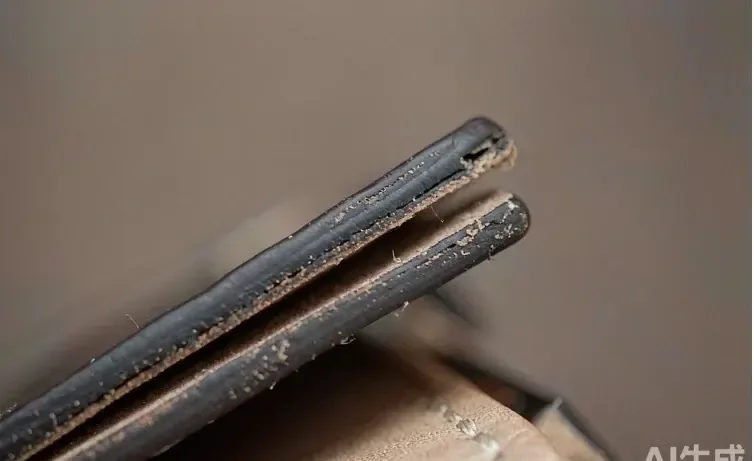
The Cycle in Numbers
A full cycle runs to about 26 weeks, and the figure is dominated by decisions rather than by bench time. Bench time across the whole exercise is a small fraction of it.
The largest single block in that list is the one buyers plan least carefully. Definition is where the decisions are made that determine everything downstream, and it is also the phase with no visible output, which is why it is compressed and then paid for three times over.
Phase One: Definition
Definition is roughly six weeks and it produces one artefact: a tech pack complete enough to cut from. Everything else in the cycle is downstream of it.
- Range plan
- The styles in the drop, sorted into hero, support, carry-over and deferred
- Drawings
- Dimensioned, with a tolerance on every measurement and an interior plan
- The seven numbers
- Leather 1.2-1.4 mm, stitch 8-9 per inch, thread 0.45 mm, three edge coats, plating 0.15-0.3 microns, interlining 0.8 mm, #5 zip
- Quantity
- Against the MOQ of 500 pcs per style and colourway, counted per colourway
- Authority
- Who approves, and who may authorise one more round
The last field is the one almost nobody writes down and the one that costs the most when it is missing. A cycle with an unnamed approver loses a week at each approval point, because the decision waits on a conversation rather than on a signature.
What Six Weeks of Definition Actually Contains
Six weeks sounds generous for a phase that produces one document, and the reason it is not is that most of the work is decisions that require people in a room together.
| Week | What happens | Output |
|---|---|---|
| 1 | Range plan agreed and sorted into hero, support, carry-over and deferred | One sheet with tiers and dependencies |
| 2 | Silhouettes drawn and proportioned, interiors sketched | Dimensioned exterior drawings |
| 3 | Material direction set, swatch set requested with batch numbers | Swatch cards and finish chips |
| 4 | The seven numbers written, tolerances added to every dimension | A tech pack that can be cut from |
| 5 | Quantity set against the MOQ, colourway count settled | The commercial shape of the drop |
| 6 | Review of the pack against dependency order, approver named | A signed-off plan and a first cut date |
The table is worth reading as a warning as much as a plan. Houses that spend two weeks on definition and four on sampling do not save four weeks; they spend those weeks inside the sampling phase, where each decision costs a round and 6-10 working days rather than an afternoon.
Phase Two: Material and Hardware
Material and hardware take about four weeks and they should run alongside definition rather than after it, which is the single largest available saving in the cycle.
- Hide selection with a swatch set: three pieces per hide, from the back, shoulder and belly.
- Batch numbers recorded at selection, not at approval, so the approval can be matched later.
- Finish chips numbered and held by both sides, since a described finish has no shared meaning.
- Hardware identified by catalogue or drawing reference, with plating at 0.15-0.3 microns.
- Exotic skins graded, with confirmation that the grade can supply the full quantity.
Where a programme specifies an imported hide, the order should be placed at the same time as the first sample is commissioned. The two run in parallel and the second sample is then cut from the real material rather than from a stand-in, which removes a round rather than adding one.
Phase Three: Sampling
Sampling is roughly three weeks for two rounds and a sealed reference, and the variable inside it is not the bench but the review window on the buyer's side.
| Element | Working time | What controls it |
|---|---|---|
| First sample | 6-10 working days, or 12-15 complex | Completeness of the tech pack |
| Buyer review | 48 hours target | How quickly one consolidated note is returned |
| Second sample | 6-10 working days, or 12-15 complex | Whether feedback was written as measurements |
| Sealing and sign-off | 1-2 days | Whether five gates can be closed without waiver |
That distribution is the most useful thing on this page. A house that believes sampling is slow is usually looking at its own review window and calling it a production problem, and the correction costs nothing but a habit.
Phase Four: Sealing and Sign-Off
Sealing is one to two days and it produces the artefacts that make the rest of the cycle enforceable.
- Three sealed references in the approved specification, one held by each side and one held back.
- A written specification sheet recording every number the piece was approved against.
- A signed measurements sheet, with every variance either corrected or accepted in writing.
- A retained cutting of the approved hide, tagged with the batch and kept with the reference.
Two days spent here replace weeks of correspondence later. A delivery questioned six months after handover is resolved by putting the cutting, the reference and the delivered piece under D65 light together, and that only works if the artefacts exist.
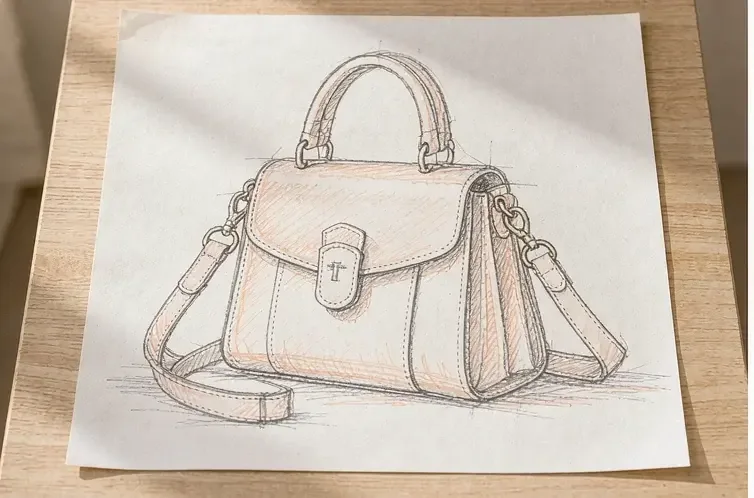
Phase Five: Bulk
Bulk runs 35-50 days from approved references to handover, and the range is wider than most buyers assume because it depends on what has to be bought before cutting starts.
35 days
Material held, stock hardware, a proven pattern and an uncomplicated construction.
42 days
The working middle: material ordered at approval, one engineered fitting, a standard construction.
50 days
An exotic skin, a framed opening or several engineered fittings, each with its own lead time.
What follows
Inspection at AQL 2.5 under ISO 2859-1, then handover on FOB Xiamen terms.
The third card is where a programme discovers whether its material question was settled early. A graded skin that was confirmed as able to supply the run at selection starts bulk on time; one confirmed after approval starts late and stays late. It is also worth noting what sits inside each window and is invisible from outside: the first week or more of a bulk window is procurement rather than cutting, so a programme whose material was ordered at approval spends that week cutting while one whose material was not is still waiting.
Phase Six: Transit, Clearance and Review
The last phase is four to five weeks and it is the one most often omitted from the plan entirely.
- Sea transit to Northern Europe runs roughly 25-35 days after the vessel sails.
- Customs clearance and inland delivery add days that vary by market and by season.
- A container gated in after the cut-off waits for the next sailing, and sailings are weekly.
- Air freight shortens this phase sharply, at a cost worth weighing against the margin.
- The review afterwards should record what sold, what was returned and what the cycle cost.
The last item closes the loop. A cycle is only a cycle if its results feed the next one, and the two facts worth recording are which styles carried the season and where the calendar actually slipped against the plan. Most houses record the first and not the second, which is why the same slippage recurs each season in the same place. A single page written at the end of a drop, listing the planned week and the actual week for each phase, is enough to break that pattern.
Where the Cycle Loses Time
Three points account for most of the slippage we see, and all three are decided on the buyer's side rather than on the bench.
| Point | Typical loss | The fix |
|---|---|---|
| Feedback after a sample | 1-3 weeks, because material and hardware lead times restart at approval | One consolidated note inside 48 hours, written as measurements |
| Material ordered after approval | 2-4 weeks of procurement lead time | Order the hide alongside the first sample rather than after sign-off |
| Hardware commissioned early | The tool is revised and paid for twice | Use stock fittings for samples, commission engineered parts near approval |
The first row deserves emphasis because it is counter-intuitive. Material and hardware lead times do not run through the review period; they restart at approval. A sample held for three weeks therefore costs three weeks plus the lead time that would otherwise have run in parallel with it.
Compressing the Cycle Without Cutting Gates
Four compressions are legitimate, and none of them involves skipping a gate or accepting a looser standard.
- Run material and hardware selection alongside definition rather than after it.
- Share one hardware family across several styles, so tooling and testing happen once.
- Sample fewer new constructions and extend more colourways on proven patterns.
- Pilot the hardest colourway, so the defect list arrives while there is time to act.
What cannot be compressed without consequence is the review window and the sealing discipline. A sample approved quickly but without measurements produces a second round; a reference sealed in a hurry produces a standard nobody can enforce. There is a fifth compression that is sometimes proposed and should be refused, which is to begin bulk against a reference that has not yet been sealed. It appears to save a fortnight and it removes the only object that can settle a dispute about the run, so the fortnight is repaid with interest at the first inspection.
The same logic applies to the pilot. A programme under pressure will sometimes skip a pilot run in order to start bulk a few days earlier, and that is occasionally correct on a proven repeat style. On a new construction it is not, because the cycle time and the dominant defect are the two facts a bulk window most needs before it starts, and both come from the pilot rather than from the sample.
Running Two Cycles in Overlap
The mature version of this cycle is two running at once, and the overlap is where the second season starts to cost less than the first.
- Define the second drop while the first is in bulk, which lets both share a hide order.
- Reuse the hardware family, so plating, finish approval and salt spray testing are not repeated.
- Grade the proven patterns rather than redeveloping them, where a style has sold through.
- Keep the same approver and the same note format, so the review window stays at 48 hours.
Add clearance and 25-35 days of sea transit to Northern Europe to the 35-50 days of bulk before committing a launch date. Handover on FOB Xiamen terms means the goods have left, not arrived.
What the Programme Runs On
Throughout the cycle, the commercial terms are fixed: MOQ 500 pcs per style and colourway, sampling in 6-10 working days or 12-15 for a complex construction, bulk in 35-50 days, inspection at AQL 2.5 under ISO 2859-1 with third-party inspection available, and handover on FOB Xiamen terms. Export experience on this programme runs since 2014 across 7 production lines with about 200,000 pcs per month of capacity, delivered through our validated partner factory Quanzhou Yingming Bags.
Map your next cycle against these numbers
Send the range plan, the material direction and the target delivery week, and we will return a cycle plan with the phases dated backwards from delivery. Request a quote.
Frequently Asked Questions
How long is the development cycle for a premium handbag brand?
Around 26 weeks from range definition to delivered goods: roughly 6 weeks of definition, 4 of material and hardware, 3 of sampling and sealing, 5-7 of bulk at 35-50 days, and 4-5 of transit and clearance.
Which phase takes longest?
Definition, at about six weeks, and it is the phase with no visible output. It is also the one most often compressed, which is why the decisions it should have made reappear later as extra rounds.
Should material selection run before or after definition?
Alongside it. Running material and hardware selection in parallel with definition is the largest single saving available in the cycle, and it lets a specified hide be ordered at the same time as the first sample.
How much of the sampling phase is bench time?
About a fortnight of the three weeks. Each round is 6-10 working days, or 12-15 on a complex construction, and the remainder of the phase is the buyer's review window.
Why does late feedback cost more than the delay itself?
Because material and hardware lead times restart at approval rather than running through the review period. A sample held for three weeks costs three weeks plus the lead time that would otherwise have run in parallel.
How quickly should feedback be returned?
Inside 48 hours, as one consolidated note with a revision code and a priority on every line. Written as measurements rather than impressions, which is what keeps the programme to two rounds.
What does the bulk window depend on?
What has to be bought before cutting. Thirty-five days where material is held and hardware is stock; 42 as the working middle; 50 where there is an exotic skin, a framed opening or several engineered fittings.
Why is transit so often omitted from the plan?
Because handover feels like the end. On FOB Xiamen terms the goods have left rather than arrived, and roughly 25-35 days of sea transit plus clearance still separate handover from a launch date.
What happens if a container misses the cut-off?
It waits for the next sailing, and the wait is about a week rather than a day because sailings are weekly. The booking date should appear on the plan alongside the bulk date.
How can the cycle be compressed safely?
Four ways: run material alongside definition, share one hardware family across styles, sample fewer new constructions and extend colourways on proven patterns, and pilot the hardest colourway.
What cannot be compressed?
The review window and the sealing discipline. A sample approved quickly but without measurements produces a second round, and a reference sealed in a hurry produces a standard nobody can enforce.
What is created at sealing?
Three sealed references, a written specification sheet, a signed measurements sheet and a retained cutting of the approved hide, tagged with its batch and kept with the reference.
How does a second season become faster?
By overlap. Define the second drop while the first is in bulk, reuse the hardware family, grade proven patterns rather than redeveloping them, and keep the same approver and note format.
What are the fixed commercial terms throughout?
MOQ 500 pcs per style and colourway, sampling in 6-10 working days or 12-15 complex, bulk in 35-50 days, inspection at AQL 2.5 under ISO 2859-1, and handover on FOB Xiamen terms.
People Also Ask
How long does it take to develop a handbag collection?
Around 26 weeks end to end, with roughly 14 weeks before bulk starts and 9-12 weeks of production and transit after it.
What slows a handbag development cycle?
Late feedback, material ordered after approval instead of alongside it, and hardware commissioned before the style is settled.
Can the cycle be shortened?
Yes, by running material in parallel with definition, sharing one hardware family, and sampling fewer new constructions. Not by skipping gates.
When should a specified hide be ordered?
At the same time as the first sample is commissioned, so the second sample can be cut from the real material rather than a stand-in.
What should be counted when setting a launch date?
Bulk at 35-50 days plus clearance plus 25-35 days of sea transit, counted backwards from the delivery rather than forwards from approval.
Sources and further reading
Every figure on this page is either our own programme data or attributed below. Open the originals before you write them into a specification.
- ISO — International Organization for StandardizationISO Publisher of ISO 2859-1, the inspection procedure applied at handover at the end of the bulk phase.
- ICC — Incoterms rulesInternational Chamber of Commerce Publisher of the Incoterms rules that define FOB, CIF and DDP obligations and the point at which risk passes.
- Leather Working GroupLeather Working Group Tannery audit protocol behind hide batch identification across the material phase of the cycle.
- Sourcing JournalSourcing Journal Reporting on development calendars, freight and transit times across the accessories trade.
- SATRASATRA Technology Centre Independent testing organisation for leather and hardware, covering the testing carried out during the cycle.