Why Small Batch Luxury Bags Outperform Trends: The Unit Cost Curve, the Carrying Cost Nobody Counts, and How to Price Both
Why do small batch luxury bags tend to outperform trend-led volume? Because the unit cost curve is flatter than people assume — commonly only 8-12% between 500 and 1,500 pieces — while the cost of getting quantity wrong is steep: unsold stock commonly consumes 20-30% of its value each year once storage, capital and insurance are counted.
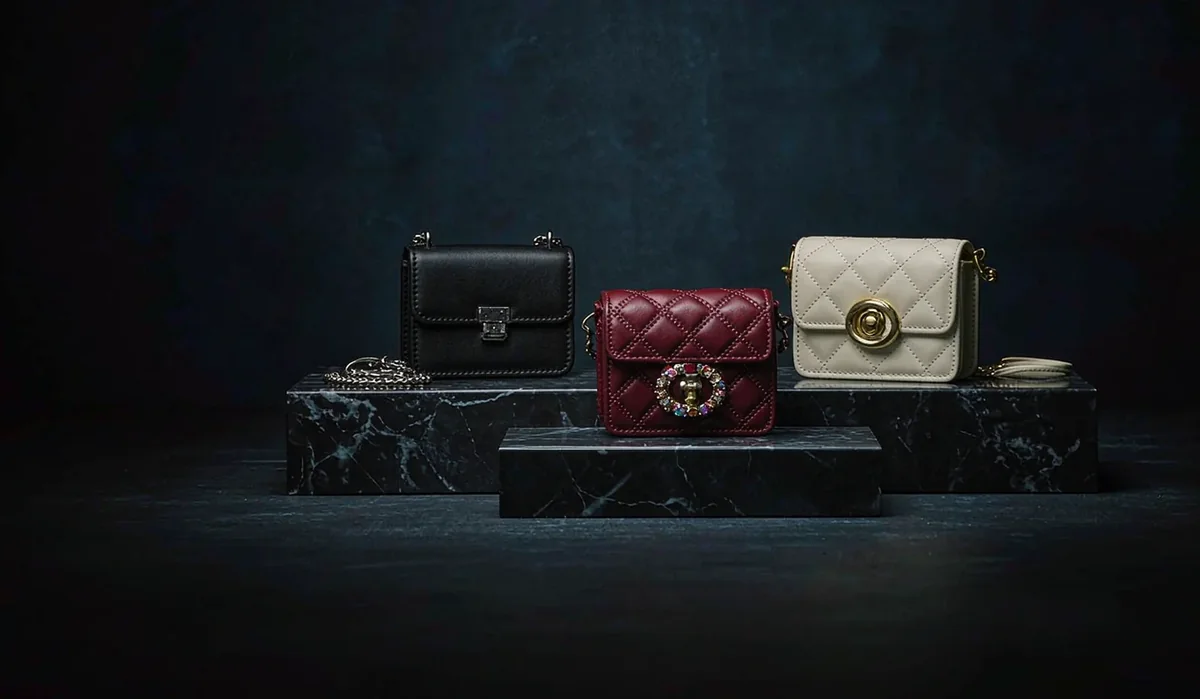
The arithmetic before the argument
Before the romance of limited runs, there is a curve, and the curve is gentler than almost anyone expects. Moving a colourway from 500 pieces to 1,500 pieces commonly reduces unit cost by 8-12%, and reaching 3,000 recovers perhaps another 4-6%. Those are real savings, and none of them is large enough to justify carrying twelve months of inventory you did not need.
Set against that is the cost of the wrong quantity, which is where most of the damage happens. Unsold stock is not simply money waiting; it consumes somewhere around 20-30% of its value per year once storage, capital cost and insurance are counted, and it rarely realises anything close to its value when eventually reduced. A single overcommitted colourway can erase the savings on ten profitable ones.
The comparison that matters is therefore not unit cost against unit cost. It is the small, certain saving on a larger order against the large, uncertain cost of holding what did not sell. Once framed that way, most volume arguments lose their force, particularly for labels whose selling season is genuinely limited rather than continuous.
Where unit cost actually moves, and where it stubbornly does not
| Colourway quantity | Unit cost index | What improves | What stays fixed |
|---|---|---|---|
| 500 pcs | 100 | Reference point for the run | Patterns, tooling, development rounds |
| 1,000 pcs | 94-96 | Cutting efficiency and line continuity | Approval time and the debugging of early difficulties |
| 1,500 pcs | 88-92 | Material buys at slightly better terms | Minimum buy thresholds at the tannery |
| 3,000 pcs | 84-88 | Further material economies only | Everything decided before the line started |
| 5,000 pcs | 82-86 | Marginal further improvement | Sell-through risk now dominates entirely |
Two things should be read from that table, and the second is more important than the first. Yes, larger runs cost less per piece. But the entire advantage available from quadrupling an order is smaller than the loss from reducing half of it later, which makes depth a decision taken for a very small prize against a considerable exposure.
What a development round costs no matter how many you cut
Development is a fixed cost and it behaves accordingly. Pattern making, tooling, and the first rounds of sampling cost the same whether the run is 500 pieces or 5,000, and so does the hardest thing to buy: learning. The first sixty pieces of any new construction teach the team something, and that tuition is charged to whatever quantity follows.
- Pattern and tooling
- Fixed per style, unchanged by run depth, and the reason development dominates a 500 pc run's economics
- Sampling rounds
- 6-10 working days for a standard piece, 12-15 for a complex construction, regardless of final quantity
- Construction learning
- Concentrated in the earliest units and the largest hidden cost of every brand-new silhouette
- Material minimums
- Set at the tannery and often well above what the run needs, especially for a specific finish
- Bulk duration
- 35-50 days from confirmed sample and confirmed materials, and it does not shorten because the run is small
- Base reference unit
- USD 4.80 before material, which is why material choice rather than volume drives most unit cost movement
Read the fifth row carefully, because it surprises people every season. Bulk duration does not compress because an order is smaller. The line, the drying intervals, the finishing sequence and the inspection all take the time they take, so the calendar argument for going large is weaker than it sounds once someone actually lays the plan out.
The carrying cost that nobody puts in the plan
Here is the number that should sit beside every volume decision and almost never does. Inventory left at the end of a season commonly consumes 20-30% of its value each year through storage, capital and insurance, before any reduction in price is considered. Three seasons of the same unsold colourway have therefore cost more than the reduction needed to move it would have come to.
- Count storage, insurance and the cost of capital, not merely the purchase price, when judging what stock is really worth.
- Reckon the opportunity cost too: capital sitting in last season's colourway cannot fund this season's development.
- Remember that leather and presentation articles date, so the useful life of unsold stock is shorter than its physical life.
- Note that reductions compound: clearing through secondary channels also trains customers to wait for them.
- Track sell-through in-season rather than after; below roughly 55% at full price, the season's margin is usually gone.
That last line is the operational version of the whole argument. A working in-season target sits nearer 70% at full price, and falling beneath roughly 55% usually means margin has already been consumed by whatever has to happen next. Which means depth should be set to protect sell-through rather than to chase unit cost.
Small batch versus deep volume, item by item
Unit cost
Deep volume wins, by a smaller margin than expected. The realistic prize across meaningful depth is often under 15%, most of it arriving in the first step of the curve.
Risk exposure
Small batch wins decisively. Unsold inventory is the largest single destroyer of margin available to a growing label, and smaller runs simply offer it less to destroy.
Material range
Small batch wins outright. A 500 pc colourway permits articles and finishes that would never be available at five times the quantity.
Speed of correction
Small batch wins. Learning from the first drop can be applied to the next within weeks rather than being absorbed across a year of the same commitment.
Relationship argument
Deep volume wins where an account needs guaranteed depth across many doors, and that genuine requirement should always be stated honestly rather than dressed as loyalty.
Presentation economics
Deep volume wins on formed trays and printed cartons, both of which carry tooling and minimum thresholds independent of the bag itself.
Four of those six go to small batch, and the two that do not are genuine rather than sentimental. There are real programmes that need depth, and pretending otherwise would be dishonest. But those are programmes with a large committed distribution, not programmes hoping that cutting more will create demand.
What small batch buys on the material side
This is the quiet advantage and it is usually worth more than the unit cost saving you gave up. A finish available in limited quantity is available at all precisely because nobody needs five thousand pieces of it. Small quantities unlockgraded articles, unusual finishes and tannery lots that would never be offered to someone demanding volume of a single specific hide run.
It also permits something structurally healthier: variety across bodies rather than depth in one. Two bodies at 500 pieces each cost less to develop than one body deep enough to satisfy a volume argument, and they give you two sets of information rather than one large bet. The same capital buys coverage instead of concentration, and coverage fails more slowly, because it is rare for every consumer displacement to arrive in the same direction at once.
What small batch costs in calendar
Honestly, very little, and this is the part most often misrepresented in both directions. Sampling runs 6-10 working days for a standard piece and 12-15 for a complex construction; bulk runs 35-50 days from a confirmed sample and confirmed materials; inspection is agreed at AQL 2.5 under ISO 2859-1 before the line starts; despatch is FOB Xiamen. None of that changes with order size.
What does differ slightly is scheduling flexibility. Smaller runs are easier to place, easier to repeat and easier to sequence around other work, whereas a single large commitment occupies a fixed position in the plan and everything else has to move around it. Flexibility of that kind is worth real money in a season where one piece needs a second round.
The most common error in the whole category is cutting deeper because deeper is lower cost per unit. Unit cost is only relevant once the pieces are sold. Set depth from expected sell-through, then take whatever unit cost that implies, and re-order from evidence rather than from optimism.

How to size a first run properly
- Start from expected sell-through rather than from unit cost, using your own history or a stated planning assumption.
- Set depth so that a genuine upside scenario still clears at full price, which usually means being conservative rather than clever.
- Keep the total committed at or near 500 pcs per style and colourway, which is what makes any of this possible at all.
- Spend the balance on a second body rather than on depth in the first, so you learn two things instead of one.
- Reserve the material for a plausible repeat at the outset, so a successful small run can be extended within weeks.
- Re-order against evidence at 6-week intervals rather than committing everything before anyone has seen the piece.
The fifth step is the one that converts small batch from a cost penalty into a genuine strategy. If material is reserved when the first run announces, the repeat can be cut inside weeks of the first delivery clearing, which is roughly when a trend either confirms or dies. That responsiveness is the whole reason small quantities beat volume in a fast-moving season.
When deep volume is the right answer anyway
Sometimes it plainly is. A core body running for years with consistent demand benefits from depth, because its sell-through is known and its materials are standing items. Presentation tooling favours longer runs. And certain accounts require guaranteed quantity across many doors, which is a legitimate requirement rather than a failure of nerve.
The test is simple and worth stating out loud: is this quantity supported by evidence, or is it a hope? Evidence means historical sell-through at this depth, or a committed account allocation. Hope means a figure chosen because it made unit cost look attractive on a spreadsheet. The first deserves the depth; the second should be cut at 500 and reviewed at six weeks.
Our own working frame sits beneath whichever route you choose: MOQ 500 pcs per style and colourway, sampling at 6-10 working days and 12-15 for a complex construction, bulk at 35-50 days on FOB Xiamen terms, inspection at AQL 2.5 under ISO 2859-1, and a base reference unit of USD 4.80 before material. Capacity runs across 7 production lines at about 200,000 pcs per month with export experience since 2014, delivered through our validated partner factory Quanzhou Yingming Bags.
Size the run against sell-through, not unit cost
Send us the bodies you are considering and we will return the unit cost index across three depths, with the material you can reserve for a repeat, in writing, before development starts. Request a quote.
Frequently Asked Questions
How much does unit cost really fall on a larger order?
Commonly 8-12% moving from 500 to 1,500 pieces, then perhaps another 4-6% at 3,000, with the curve flattening sharply afterwards. The whole advantage available from quadrupling depth is usually smaller than the loss created by reducing even a third of it later, which is why unit cost is a poor basis for choosing quantity.
What does unsold inventory actually cost?
Around 20-30% of its value each year once storage, capital cost and insurance are counted, before any reduction in price is considered. Three seasons of the same unsold colourway will therefore have cost considerably more than clearing it early would have done. Counting this reliably changes how most depth decisions are made.
Does a smaller run take less time to make?
Not meaningfully. Sampling stays at 6-10 working days and 12-15 for complex constructions, and bulk stays at 35-50 days regardless of quantity, because the drying intervals, finishing sequence and inspection do not scale down. What improves is scheduling flexibility rather than elapsed time, and that is often worth more than the unit cost saving in a season where one piece needs correcting.
Why is 500 pcs the minimum rather than a smaller figure?
Because below that threshold nothing about the run works economically: cutting layouts are inefficient, tannery minimums exceed the need, and the fixed cost of patterns and tooling becomes disproportionate. Five hundred pieces per style and colourway is where those economics begin to make sense, not an arbitrary number.
Is small batch better for material choice?
Yes, and this is often worth more than the unit cost given up. Finishes available in limited quantity simply exist at all because nobody needs thousands of pieces of them. A 500 pc colourway can access graded articles and unusual tannery lots unavailable to anyone demanding large volume of one specific article.
Should I put the same capital into depth or into more bodies?
Usually into more bodies. Development cost per body is fixed, so two bodies at minimum depth teach you two things and cover more of the market than one deep bet does. That said, presentation tooling favours length, so balance each decision against what it is genuinely buying you.
When is deep volume genuinely the right decision?
When evidence supports it: a core body with years of consistent sell-through, a committed multi-door allocation, or standing materials where nothing is uncertain. Those are real reasons. Hoping a larger order will create demand is not one, and it is usually how inventory problems begin for growing labels.
How often should re-orders be reviewed?
Every six weeks during the selling period is a workable rhythm. That interval is short enough to catch demand while it is still rising and long enough for the first data to be meaningful. Reserve material at the outset so that any decision made at that point can actually be executed.
What sell-through target should a season aim for?
Around 70% at full price within the selling window is a sensible working target, and figures below roughly 55% usually mean the season's margin has already been consumed by what happens next. Track it in-season rather than afterwards, because post-season arithmetic cannot change what was cut.
Does discovery of a trend late justify a rush larger order?
Rarely. The delay in responding to a trend usually exceeds its life, and the pieces arrive as interest falls. If something is genuinely moving, the cheaper route is a minimum run with material reserved for a repeat, which lets you extend on evidence rather than committing before anyone has reacted.
People Also Ask
Is small batch always better than a large run?
No, but it usually is. Volume wins where sell-through is known, materials are standing items and presentation tooling favours length. Small batch wins everywhere else, mostly because the largest cost in this category is inventory rather than unit production cost.
How do I compare two quantities honestly?
Put the unit cost saving on one side and the carrying cost of the additional pieces on the other, using your own sell-through. Add storage, capital and insurance at roughly 20-30% of value per year, and the comparison usually resolves itself quickly.
What is the least costly way to add a colourway?
Add one to an existing body. It shares pattern, tooling and construction learning, leaving only material to be bought, which is why colourways are the most economical growth available once a body has been proven by a first run.
Why does depth not shorten the production calendar?
Because the sequence rather than the quantity governs elapsed time. Cutting,<|hy_place▁holder▁no▁813|> drying intervals, finishing sequences and inspection each take the time they take, and none of them compresses because there are more pieces waiting behind them.
Should I reserve material for a repeat before I know?
Yes, whenever a repeat is plausible. Reservation costs nothing beyond the commitment and it is the single factor that lets a successful small run be extended quickly. Without it, the repeat loses six to eight weeks to rematching finishes.
Sources and further reading
Every figure on this page is either our own programme data or attributed below. Open the originals before you write them into a specification.
- FashionUnited — market news and dataFashionUnited Open trade coverage of inventory, sell-through and margin reporting across the personal luxury goods sector.
- Business of FashionBoF Insights Publishes the annual State of Fashion reporting used to read category direction and inventory discipline.
- Sourcing JournalSourcing Journal Documents how order depth, material minimums and capacity allocation interact across production calendars.
- Leather Working GroupLeather Working Group Publishes tannery ratings and protocol detail relevant when selecting smaller lots from unfamiliar articles.
- ISO — standards catalogueInternational Organization for Standardization Publisher of ISO 2859-1 inspection sampling, applied identically regardless of the depth of the run.