What Luxury Bag Buyers Want in 2026: Three Development Postures Compared, and Which One Fits Your Season
What do luxury bag buyers want next season? Less novelty, more proof: interiors that clear a phone around 160 mm laid flat, everyday shoulder pieces under roughly 700 g, strap drops consistent within about ±5 mm across a run, and materials that can be documented rather than merely described. There are three credible ways to answer that, and they suit different labels.
Three answers, chosen deliberately rather than by instinct
Ask twenty people what luxury bag buyers want next season and you will hear twenty versions of the same three ideas. Reduced to what actually reaches a specification, those ideas are: pursue novelty and accept shorter lives; invest in construction and accept slower development; or work from the archive and accept that nothing looks new. Each is legitimate and each fails differently.
Choosing between them is the real decision, and it should be made before the first sketch rather than discovered halfway through a series of compromises. What follows compares the three postures across seven dimensions, then sets out which kind of label each suits. None of the three is safer than another; they simply lose money in different ways.
It is also worth naming what is not on that list. Lower prices are not the ask, whatever is said about value sensitivity, and neither is faster novelty. What sits behind almost every reported shift is a buyer deciding whether something will still be worth owning after several years, which is a construction question wearing the clothing of a taste question. Read it that way and most of the apparent volatility settles into something considerably more stable, and far easier to plan against than it first appears.
How the three postures compare
| Dimension | Novelty-led | Construction-led | Archive-led |
|---|---|---|---|
| Development cost | High and repeated every season | High once, then recoverable across years | Low, since patterns already exist |
| Speed to first sample | 6-10 working days, often falsely promising | 12-15 working days realistically | 6-10, sometimes faster with existing patterns |
| Material implication | New articles each season | Fewer, better-known articles | Standing articles, reserved ahead |
| Risk profile | Rapid obsolescence of everything | Slow acceptance, then long revenue | Relevance risk rather than quality risk |
| What it asks of the buyer | Attention and appetite for change | Patience and willingness to compare | Recognition rather than discovery |
| Best insurance against it | Reserve material for a repeat early | Document every tolerance in writing | Re-proportion rather than merely reissue |
| Suits | Labels with constant new audiences | Labels building durable value | Labels with genuine history to draw on |
The last row deserves reading twice, because labels frequently choose a posture their own history does not support. An archive strategy needs an archive. Construction-led work needs buyers prepared to compare rather than merely react. Novelty-led work needs an audience genuinely interested in change, which is a narrower group than most briefs assume.
What is actually being asked for, in measurable terms
Much of what gets described as shifting taste is really a set of practical requirements that nobody has bothered to write down. Buyers are asking for interiors that accommodate what people carry now, weights that do not punish daily use, and construction consistent enough that the second purchase behaves like the first. Those are all numbers.
- Interior clearance
- Slip pockets should clear a phone of roughly 160 mm laid flat, rather than diagonally only
- Everyday shoulder weight
- Commonly targeted below 700 g including hardware, above which daily carry becomes tiring
- Strap drop consistency
- Held within about ±5 mm across a run, so every piece sits identically when worn
- Closure operation
- Cycled to an agreed number of operations during approval rather than examined visually
- Material documentation
- Tanning source and audit date quoted together, since either alone answers nothing
- Repairability
- Accessible strap fittings and standard closure sizes, decided at pattern stage or never
- Presentation expectation
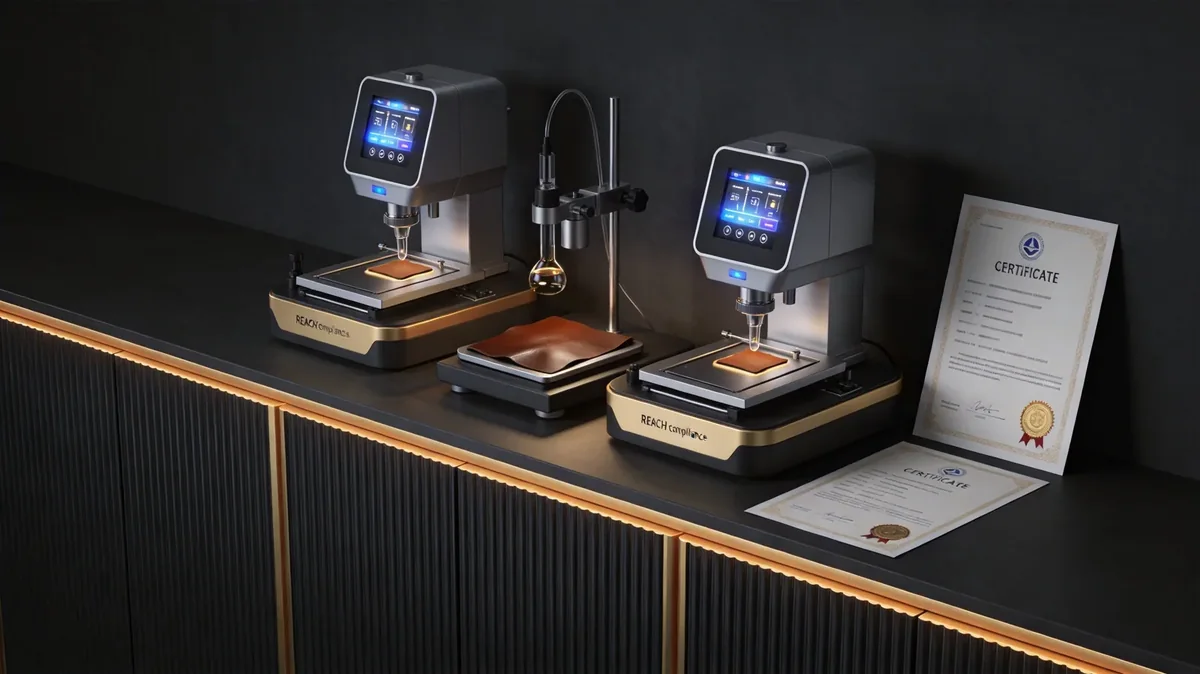
- Certified board with stated content, moulded trays and a care card specific to the materials
Notice how unromantic that list is. Not one line concerns a silhouette trend, and every one of them costs little to specify and is difficult to retrofit. Those seven lines, answered honestly, will do more for a season's reception than most trend direction anyone can offer.
Novelty-led: where it works and how it fails
Novelty works when attention renews demand, and it fails in a particular way worth understanding: cost is not the problem, depreciation is. Every season's decisions must be rebuilt from zero, because nothing carries forward except lessons, and the same buyers who responded once expect the next thing sooner rather than later.
Where it genuinely works
Labels with constantly renewing audiences and distribution that rewards visibility: regular drops, strong editorial relationships, and channels where being seen matters more than being remembered.
The failure mode
Tooling, patterns and material selections that amount to very little reusable asset at the end of it, so year three costs as much as year one.
The best insurance
Reserve material when the drop announces and keep every pattern open, so a repeat can be cut inside weeks rather than rediscovered in eighteen months.
What to specify anyway
Tolerances stay tight even here. Novelty justifies an unusual shape; it never justifies a wandering seam or closure whose cycle life nobody checked.
The honest test
Ask whether last season's piece still sells today. If not, novelty is being used to replace demand rather than to serve it, and the economics will eventually show that.
Where not to attempt it
Anywhere the distribution cannot absorb frequent change. Accounts holding pieces for two seasons cannot support a programme that assumes interest resets continuously.
The fifth card is the one worth pinning to the wall. Novelty used to serve demand produces a profitable season; novelty used to replace demand produces a treadmill where next season's figures always look like they need explaining.
Construction-led: the slower answer that compounds
Construction-led work asks buyers to compare rather than react, which takes longer to convert and then converts for years. The specification is heavier, development takes 12-15 working days rather than 6-10, and material choice narrows deliberately. What is purchased instead is durability, consistency and a resale figure that supports the primary price.
- Pick fewer materials and learn them properly, rather than selecting something new for every body.
- Write every tolerance: leather substance, seam alignment, edge build, hardware cycle count and strap drop variance.
- Test closure operation and strap anchors to destruction at least once per construction, not per season.
- Hold spares for every fitting, which converts future damage into a bench job rather than an unsellable return.
- Document materials by batch, since claims will be asked about long after anyone remembers which lot was used.
- Accept the slower start. This route converts later and holds considerably longer than either of the alternatives.
The third step sounds severe and costs an hour per construction. It is also the only reliable way to learn where a piece will actually fail, because failures consistently occur at points nobody predicted — usually where a stiff element meets a soft one, and nearly always somewhere a hidden panel edge sits directly behind a stitch line.
Archive-led: looking backwards with intent
Reissuing from the archive is the most economical route available and the easiest to do badly. A straight reproduction usually disappoints, because expectations about weight, interior usefulness and hardware behaviour have all moved. Successful reinterpretation keeps proportion and intent while quietly re-engineering everything else around how the piece will actually be used.
- Keep the proportion and the design intent; re-engineer weight, interior organisation and hardware entirely.
- Re-cut for contemporary carrying rather than for the original silhouette only, particularly around strap drop.
- Modernise materials where the original's choices were driven by availability rather than intent.
- Expect the kind directors and older accounts to recognise it, and treat that recognition as the point rather than a limitation.
- Re-proportion rather than merely rescale: a smaller version of a larger idea rarely works as well as one developed as itself.
- Document which original you worked from, since provenance of that kind is genuinely interesting to buyers.
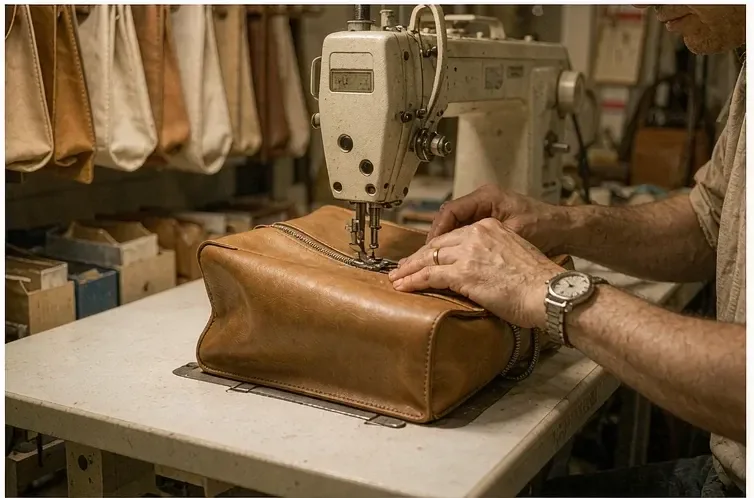
What each posture does to material and calendar
Here is the reassuring part, and worth stating plainly because it is usually assumed to be otherwise. Whichever posture you adopt, our own frame does not change: minimum 500 pcs per style and colourway, sampling at 6-10 working days and 12-15 for complex constructions, bulk at 35-50 days, inspection agreed at AQL 2.5 under ISO 2859-1 with a written defect library before the line starts, despatch FOB Xiamen, and a base reference unit of USD 4.80 before material.
What does differ is how early decisions must be settled. Novelty-led work needs material reserved at announcement, because nothing can be predicted. Construction-led work needs material selected earliest of all, since it is chosen deliberately and then kept. Archive-led work can rely on standing articles, provided someone actually reserves them rather than assuming availability.
A novelty piece built on construction timelines costs too much to matter; a construction piece rushed onto novelty timelines fails at the bench. Decide which you are running before sampling starts, and tell everyone involved which it is.
Choosing one for the coming drop
Three questions decide it, and they should be answered in this order. First, what did your own buyers respond to most recently — recognition or discovery? Second, can your distribution hold a piece for more than one season? Third, how much calendar do you genuinely have before the delivery window, rather than how much you would like?
Answer those honestly and the choice usually makes itself. Labels whose best pieces are re-orders rather than launches are already construction-led, whatever their briefs say. Labels whose pieces sell out and are never seen again are novelty-led, and should plan their material accordingly. Whatever you choose, write it down and tell everyone involved, since inconsistency costs more than any posture. Labels that do this rarely find themselves halfway through a season asking why a construction piece is being rushed along novelty timelines, which is the single most reliably expensive place a programme can end up.
Three things none of the postures can avoid
Whatever the direction, three requirements are now universal and none of them is negotiable at the point of delivery. Materials must be documented rather than described, in enough detail that a batch can be traced. Construction must be consistent within stated tolerances rather than within good intentions. And every claim about either has to be supported by something someone can look at. None of the three can be met by a photograph, a description or a promise, which is why they belong on paper before anything else does.
Those three are not trends and will not shift next year. They are what happens when a category matures, when shoppers compare listings before buying, and when the person paying is asked by someone else where the material came from. Build for them once and every future season gets easier, whichever of the three postures you happen to be running.
There is also a habit worth adopting alongside whichever route you take, and it costs nothing. Write the posture at the top of every development brief, next to the delivery window and the target quantity. Those three lines answer most questions a team will raise later, and they remove the temptation to borrow assumptions from whichever other project happened to be running nearby.
Decide the posture before the first sketch
Tell us which route you intend for the coming season and we will return the specification lines, material availability and calendar that fit it, in writing, before development starts. Request a quote.
Frequently Asked Questions
What do luxury bag buyers actually want next season?
Three measurable things rather than a trend: interiors that accommodate what people carry now, weights that support daily use, and construction consistent enough that a second purchase behaves like the first. Clear a phone around 160 mm laid flat, stay under roughly 700 g for everyday pieces, and hold strap drops within about ±5 mm.
Is novelty still worth pursuing?
Sometimes, when the audience genuinely renews itself and distribution rewards visibility. Novelty's problem is not cost but depreciation, since nothing carries forward between seasons. Test it simply: if last season's pieces still sell today, novelty serves demand; if they do not, novelty is quietly replacing it.
How long does development take under each posture?
Sampling sits at 6-10 working days for standard constructions and 12-15 for complex ones, whichever route you choose, with bulk at 35-50 days. What differs is settlement of decisions: construction-led requires materials chosen deliberately and earliest, while novelty-led requires material reserved at announcement because nothing can be predicted.
Why do reissued archive pieces sometimes disappoint?
Because they were reproduced rather than reinterpreted. Expectations of weight, interior usefulness and hardware behaviour all moved, so a straight reproduction feels wrong for reasons buyers struggle to name. Keep proportion and intent, then re-engineer weight, organisation and fittings around how people carry pieces now.
How much should an everyday shoulder bag weigh?
Around 700 g including hardware is a sensible working ceiling, above which daily carry becomes tiring enough to notice. The figure is not universal, but having one at all tends to change material and reinforcement decisions early, which is precisely when those decisions are within reach rather than expensive.
What makes a lining choice wrong for modern use?
Being specified without regard to what it will sit against or hold. Slip pockets should clear current phone sizes laid flat rather than diagonally, pale linings need transfer testing against dark exteriors, and coated linings should be checked for adhesion in humid conditions before confirmation.
Do I have to document materials now?
Increasingly yes, because the question is being asked one step earlier in the chain each year. Naming the tannery, quoting its rating with the audit date, and recording results against the batch costs almost nothing at the time and is effectively impossible to assemble six months later.
Which posture suits a label without much history?
Construction-led, generally. There is no archive to draw from and no novelty machinery to feed, so the durable answer is fewer materials learned properly, tolerances written rather than described, and pieces built well enough that each relies on the last. That compounds, which is exactly what a younger label needs.
How often should specifications be revisited?
Once per development round, and every time a material changes. Revisiting mid-run is where inconsistency enters, because a partial update leaves two versions of the same decision in circulation. If something genuinely needs changing, update everything affected at once and say which pieces the change applies to.
What single preparation helps every posture equally?
Holding spares for every fitting. Whatever you are running, something will eventually need replacing, and having turn-locks, feet and strap ends available turns damage into a bench job rather than an unsellable return. Have that conversation with whoever repairs your pieces as well, since they usually know which fitting fails most often and can tell you exactly which spares matter.
People Also Ask
How is construction-led different from archive-led?
Construction-led invests in new bodies built slowly and documented carefully; archive-led reworks patterns that already exist. Both produce durable pieces, but archive-led is considerably cheaper to develop because the shape and its behaviour have already been learned once.
Can a label run two postures at once?
Yes, provided they are separated rather than blended: a novelty drop and a permanent core, each with its own calendar and material logic. Trouble arises when one piece is developed as construction-led but scheduled as novelty-led, which produces either a late piece or a weak one.
What interior features do buyers mention most?
Slip pockets that fit current phones, a leash for keys, and lining dark enough not to show wear. Those three come up repeatedly, cost little to include, and are noticed immediately when absent, which makes them among the highest return items in any interior specification.
Why does strap drop consistency matter?
Because it decides how a piece feels when worn, and inconsistency undermines confidence in everything else. Holding drops within about ±5 mm means the fiftieth piece sits identically to the first, which is what lets a buyer recommend something without qualifying the recommendation.
Is it too late to start documenting materials mid-season?
Never, but the valuable window is at selection rather than at packing. Start with whatever goods are currently on the line, capture codes while they still exist, and the next drop will have a complete file. Documentation started late is simply a file with a gap in it.
Sources and further reading
Every figure on this page is either our own programme data or attributed below. Open the originals before you write them into a specification.
- Business of FashionBoF Insights Publishes annual reporting on what is actually being bought across personal luxury goods rather than what is being shown.
- Sourcing JournalSourcing Journal Covers material availability, lead times and the practical constraints behind each development posture.
- Leather Working GroupLeather Working Group Publishes tannery ratings whose audit date should accompany any material reference in a modern specification.
- ISO — standards catalogueInternational Organization for Standardization Publisher of ISO 2859-1 inspection sampling and the leather test methods referenced in written specifications.
- FashionUnitedFashionUnited Open trade coverage useful for checking whether a reported shift is value-led or unit-led before acting on it.