Couture Bag Demand Post Pandemic Explained: What Changed in Occasion Buying and How to Build for It
How did couture bag demand change after 2020, and what has to change to serve it? Occasion buying did not disappear; it redistributed towards pieces that can be worn more often, which raised requirements rather than lowering them. Frame bags now need a frame-to-shell fit within about 0.5 mm, chain drops within ±3 mm, and occasion bodies expected to survive 6-10 working days of sampling and 35-50 days of bulk like any other construction.
A checklist rather than a forecast
Very little about demand after 2020 can be forecast usefully, and a great deal can be prepared for. The difference matters: a forecast invites you to guess quantities three seasons out, while a checklist invites you to be ready when an order arrives with a short deadline. This page is the second kind, written for labels planning occasion and couture-weight pieces.
Each checklist below covers one area where demand genuinely moved, and each item is deliberately actionable. Where a number helps, a number is given. Where judgement is genuinely required, the judgement is named rather than hidden, because most planning failures in this category come from pretending judgement was not involved.
One consequence of that redistribution is worth stating before anything else: the occasion category no longer supports a large range. It supports a narrow range handled well. A label offering four well-built occasion bodies will outsell one offering twelve mediocre ones, because the buyer looking at this category compares construction more closely than she compares choice, and because every additional body absorbs the attention that might have gone into getting three of them right.
Checklist one: how occasion buying redistributed
- Occasion pieces are expected to work more often than before, so stiff formality sells less well than adaptable construction.
- Interest moved towards pieces that read as special without requiring an occasion: a frame bag that works with day dressing, for instance.
- Smaller formats gained share as commuter requirements fell away, and that shift has largely persisted rather than reversing.
- Pieces bought less frequently are researched harder, so material honesty and documented construction matter more now.
- Guests and clients ask about care and repair earlier than before, having held pieces for longer before replacing them.
- Presentation carries more of the argument when fewer pieces are bought: the unboxing is doing work that range once did.
The second line is the commercially important one. The winning occasion piece is rarely the most dramatic; it is the one someone can justify using six times a year rather than once. That pushes development towards adaptable proportion and away from the extremely rigid forms whose ceremonial appeal is obvious but whose usefulness is narrow.
Checklist two: what couture-weight construction actually requires
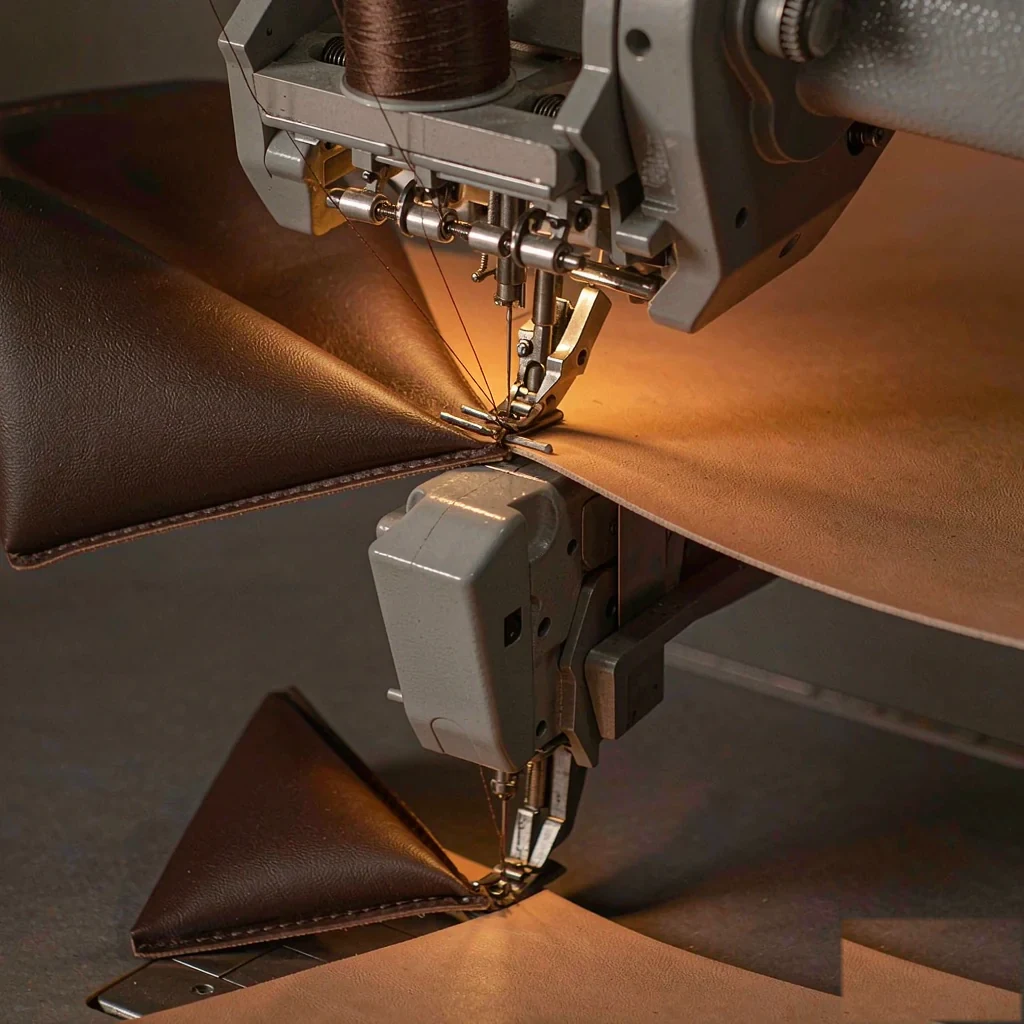
Couture bodies are unforgiving because their tolerances are tight and their materials are frequently unusual. A frame bag is the clearest example: the frame must meet its shell cleanly along the whole aperture, and any mismatch shows at the corners first. The same is true of a minaudière whose lid must close without pressure, and both are decided by specification rather than by skill at the bench.
- Frame-to-shell fit
- Held within roughly 0.5 mm along the aperture, since error concentrates visibly at the corners
- Chain drop tolerance
- Commonly ±3 mm, so pieces sit consistently whether they are the first or the fiftieth of a run
- Foil stamping dwell
- Recorded in seconds with temperature stated, typically around 1-3 seconds depending on area
- Lid and closure pressure
- Specified so the piece closes without being pressed, which protects both frame and finish over time
- Structural reinforcement
- Chosen with the outer material rather than after it, particularly for unusual or delicate surfaces
- Interior finish expectation
- Highest of any category, since occasion pieces are opened and inspected more often than carried
Note how many of those six lines are about recording rather than making. The difficulty with couture-weight work is rarely skill; it is that the tightest decisions are the ones least often written down, so the fiftieth piece differs from the first in ways nobody can trace afterwards.
There is a second reason couture work punishes vague documentation, and it concerns who is available to do it. Complex hand-finished construction depends on people who have done it repeatedly, and repeat work is how that capability is maintained. Written tolerances matter here less for consistency between machines than for making sure that the next person to pick the piece up inherits the same decisions rather than guessing at them.
Checklist three: materials that recovered fastest
Satin and cloth bodies
Recovering steadily, though buyers expect the construction around them to be substantial. Cloth over a well-built frame reads as couture; cloth on a light structure reads as costume.
Fine calfskin small goods bodies
Consistently strongest where the finish is honest and the grain clean. Pale shades need transfer tested against both lining and clothing.
Embellished surfaces
Demand persists but requires honest labour minutes. Embroidery and hand-set detail should be costed by area rather than by impression.
Metal mesh and maille
Recovering in small quantities. Use only with lining specified for the weight, since mesh pulls and snags anything delicate beneath it.
Exotic skins
Restricted by documentation rather than taste. Confirm CITES listing before development, since paperwork cannot be assembled once cut.
Velvet and pile surfaces
Cycle-driven and difficult to predict, so plan them as small colourway experiments against an established body rather than as new patterns.
Two of those six deserve more planning than the rest. Embellished surfaces must be costed by area, because the minutes involved scale directly with coverage and bear no relationship to how impressive a sketch looks. And metal mesh needs its lining chosen for abrasion rather than for hand, since mesh quietly destroys whatever sits against it. Both become expensive when discovered late, and both are visible in the first quotation rather than in the first sample.
Checklist four: quantity, timing and what couture really costs to serve
| Planning item | Usual behaviour | What it means |
|---|---|---|
| Minimum per colourway | 500 pcs per style and colourway | Applies to couture work exactly as it does elsewhere |
| Sampling duration | 6-10 working days, 12-15 for complex | Couture pieces almost always fall into the longer bracket |
| Bulk duration | 35-50 days from confirmation | Hand-finished coverage is the main reason a couture run sits at the top of that range |
| Labour minutes | Scale with embellished area | Cost by area rather than by how elaborate the piece looks |
| Material minimums | Often exceed what the run needs | Selection is the scarce step for unusual surfaces |
| Repeat runs | Cheaper once patterns remain open | Keep tooling available rather than closing it after each season |
The fourth row is where couture planning usually goes wrong. A design is costed as though labour scaled with complexity between two similar approaches, when in practice it scales with covered area. Two equally elaborate-looking pieces can differ enormously in minutes, and that difference is decided at the sketch stage rather than later.
Checklist five: how to present couture pieces now
- Protect during transit properly, since pale cloth and satin surfaces mark permanently against anything inadequate.
- Use void fill that does not shed onto embellishment; loose fibre around hand-set detail is extremely difficult to remove.
- Separate metal components from adjacent surfaces with interleaving, because contact tarnish is common in transit.
- Write a care card specific to the materials rather than generic advice, particularly for satin, mesh and embellished work.
- State whether the piece can be repaired, which for couture constructions is frequently the deciding purchase question.
- Consider whether a dust bag and storage form are needed, since occasion pieces spend most of their lives stored rather than used.
The last two items are worth separate attention. Buyers of expensive occasion pieces ask about repair more often than buyers of anything else, partly because the piece cost more and partly because it will be kept longer. Answering that question well — how the frame is serviced, which components are stocked, what can be re-covered — frequently decides the sale.
Checklist six: signals worth tracking each season
- Track how fast each occasion colourway sells through once the season opens rather than waiting for the end of it.
- Watch whether requests cluster on one body, because that indicates the body rather than the colourway is doing the work.
- Note every repair request by component, since couture repairs reveal which fittings were under-specified.
- Record enquiry-to-order timing, because couture enquiries often arrive with a deliberately short window.
- Compare presentation costs across channels; occasion pieces frequently need different protection per lane.
- Keep whether a piece is chosen for a specific event or generally, which changes how subsequent drops should be timed.
Two of those six convert directly into commercial advantage. Clustering on one body tells you where to add colourways, which is the least costly growth available, and clustering of repair requests on one component tells you what to re-specify before anyone needs to admit there was a problem.
Turning the checklist into the next order
None of this changes what we can do on our side, and it is worth stating plainly: minimum 500 pcs per style and colourway, sampling at 6-10 working days and 12-15 for complex constructions, bulk at 35-50 days, inspection agreed at AQL 2.5 under ISO 2859-1 with a written defect library before the line starts, and despatch FOB Xiamen. What couture work changes is how much specification has to be written down first.
So start there. Before sketching anything, write the tolerance sheet: frame fit, chain drop, foil dwell and temperature, reinforcement choice, protection method and care instruction. Six lines, decided early, converting a beautiful drawing into something that can actually be repeated fifty times without anyone improvising. Notice that none of those six requires expensive equipment; each simply requires somebody deciding before rather than during.
Couture pieces fail for the same unglamorous reason ordinary ones do: a decision was made twice, differently, by two people. Writing the tolerance sheet first costs an hour and removes most of the improvisation that otherwise happens at the bench.
Where couture demand sits now
Occasion buying is smaller, more deliberate and better informed than it was before 2020, and none of those three is bad news for labels willing to build properly. It means fewer pieces sold per customer, higher expectations per piece, and a genuine premium on the things no one can replicate quickly: hand-set embellishment, honest frames, and repair that is offered rather than improvised.
For anyone serving that demand, the practical advice is unremarkable. Keep the tolerance sheet current, keep tooling open between seasons, hold spares for every fitting, and protect pieces properly in transit. Those four habits, sustained over several years, do more for occasion demand than any amount of anticipation about what the next season might bring.
There is one further habit that separates the labels doing well in this category from the ones struggling, and it is not glamorous either. They re-order deliberately. Rather than treating each season as a fresh set of bets, they identify the two bodies that carried them and extend those with new colourways and finishes, which keeps construction learning intact and leaves only material to be selected each time.
Write the tolerance sheet before the sketch
Send us the couture bodies you are planning and we will return the tolerance, labour and material notes we recommend, in writing, before development starts. Request a quote.
Frequently Asked Questions
Did demand for couture and occasion bags recover?
It redistributed rather than recovered or vanished. Fewer pieces are bought, each is expected to work harder, and tolerance for weak construction fell sharply. The pieces doing best are adaptable rather than ceremonial, which pushes development toward proportion that reads special without requiring an occasion to justify it.
What is the biggest mistake in couture bag development?
Costing labour by impression rather than by area. Two designs can look equally elaborate and differ enormously in minutes, because embellishment coverage rather than visual complexity drives time. Sketch-stage decisions therefore set the cost, and anything costed later tends to be wrong by a wide margin.
How tight are tolerances on a frame bag?
Frame-to-shell fit is commonly held within about 0.5 mm along the aperture, with any error concentrating at the corners where the eye finds it immediately. Chain drops are usually specified within roughly ±3 mm, so the fiftieth piece sits identically to the first when it is worn.
Are exotic skins still viable for occasion pieces?
Yes, and often sought after, but the constraint is documentation rather than taste. Species listed under the CITES appendices must be confirmed before development, because paperwork cannot be assembled once a skin has been cut, and a finished piece without papers has no lawful route forward.
Why do couture pieces sit at the top of the bulk range?
Because hand-finished coverage cannot be parallelised the way ordinary assembly can. Any process requiring one person to set, align or finish by hand scales linearly with pieces, which is why couture runs sit toward 35-50 days rather than at the bottom of it. Any process requiring one person to set, align or finish pieces by hand scales linearly with quantity, and no amount of planning changes that.
Do buyers of occasion pieces really ask about repairs?
More than buyers of anything else, because the piece cost more and will be kept longer. Being able to answer properly — how the frame is serviced, which fittings are stocked, whether a surface can be re-covered — frequently decides a sale that price alone would not have closed.
Should colourways or new bodies be added first?
Usually colourways. A proven couture body has already absorbed the expensive part, which is construction learning and tooling. Adding colourways buys coverage without restarting anything, whereas a new body resets the whole development sequence including the difficult first rounds. Identify the two bodies carrying a season and extend them deliberately rather than starting fresh.
How should pale satin or cloth pieces be shipped?
Protected against contact rather than merely against impact. Pale cloth marks permanently, so void fill must not shed, metal components need interleaving, and surfaces should not meet each other under pressure. Occasion pieces are often damaged in transit far more than in use, and few things undo careful construction faster than a mark that arrived before the piece reached its owner.
Is smaller really better for occasion formats now?
Smaller formats gained share and have largely kept it, partly because formal occasion dressing declined and partly because smaller pieces integrate into ordinary wardrobes. That said, size should follow proportion rather than trend, since an awkward small version of a larger idea sells to nobody.
What should be tracked each season to improve planning?
Sell-through by colourway early in the season, clustering of demand on particular bodies, repair requests by component, and enquiry-to-order timing. Those four tell you where to add colourways, what needs re-specifying and how much calendar to hold for the next approach. Review them monthly rather than seasonally, because couture enquiries tend to arrive in clusters and leave very little time to react afterwards.
People Also Ask
What counts as a couture bag today?
A piece whose construction requires individual judgement at the bench: hand-set frames, hand-applied embellishment, unusual materials needing individual handling. The distinction is about how it is made rather than what it costs, though the two generally move together.
Why did commuter formats lose ground?
Because daily travel patterns changed and never fully reverted. Wardrobes reorganised around less frequent commuting, which reduced demand for dedicated work formats and increased it for smaller, adaptable pieces that cross easily between settings.
Are embellished surfaces worth their cost?
Sometimes, when the coverage is modest and focused. Full-surface embellishment rarely returns its minutes, whereas concentrated detail on a clean body reads as couture at a fraction of the labour. Cost by area before deciding where the detail sits.
How far ahead should occasion pieces be planned?
Material selection earliest of all, since unusual surfaces are finite and selected rather than ordered. After that, allow 12-15 working days for sampling complex constructions and 35-50 days for bulk, then protect adequate transit for delicate surfaces.
Do couture pieces need different presentation?
Yes. Non-shedding void fill, interleaving against metal, material-specific care instructions and often storage forms, because occasion pieces spend most of their lives in storage rather than being carried. Presentation failures here are visible immediately on unboxing.
Sources and further reading
Every figure on this page is either our own programme data or attributed below. Open the originals before you write them into a specification.
- CITESCITES Secretariat Authority for appendix listings and the documentation required before listed skins can be cut or traded across borders.
- ISO — standards catalogueInternational Organization for Standardization Publisher of ISO 2859-1 inspection sampling, ISO 105 colour fastness and ISO 3377 tear resistance relevant to delicate surfaces.
- Business of FashionBoF Insights Publishes reporting on how occasion dressing and accessories demand redistributed in personal luxury goods.
- Sourcing JournalSourcing Journal Covers materials availability and labour economics for embellished and hand-finished construction.
- FashionUnitedFashionUnited Open trade coverage of category direction across luxury accessories after several disrupted selling seasons.