Vetting a High-End Handbag Supplier in Xiamen: Seven Gates, Passed in the Order That Costs Least to Fail
How do you vet a high-end handbag production house in Xiamen? Pass seven gates in this order: documents, bench visit, lot traceability, hardware proving, inspection plan, compliance scope, then a trial order. The order matters because each gate is cheaper to fail than the next one, and the first three cost a week while the last three cost a season. Xiamen adds one specific test — coastal humidity, which is why salt spray proving runs 48 hours here rather than 24. Below, each gate with its pass criterion, the eight things to photograph on a bench visit, and the point at which most vetting quietly stops being useful.

The Vetting Sequence: Seven Gates in the Order They Should Be Passed
Vet in a fixed order, because each gate is cheaper to fail than the one after it. Documents cost an afternoon; a bench visit costs a day; a trial order costs a season. Failing a candidate at gate two rather than gate seven is the entire point of having a sequence.
- Gate one, documents: a house that cannot produce a measurement sheet will not produce one at handover either.
- Gate two, the bench: visit before you commission anything, and photograph rather than admire.
- Gate three, lot traceability: the tannery and lot behind the reference piece, in writing.
- Gate four, hardware proving: plating thickness and salt spray hours, not a finish name.
- Gate five, the inspection plan: AQL 2.5 stated as accept and reject numbers.
- Gate six, compliance scope: reports that name your markets and cover the lot in question.
- Gate seven, the trial order: sized to reveal how the house behaves when something goes wrong.
Most buyers run this in reverse. They start with a small order to 'test the water', which is the most expensive possible way to learn what a document request would have told them in an afternoon. A trial order belongs at the end, as confirmation, not at the beginning, as research.
Gate One: Documents Before Conversation
Ask for four documents before asking anything else. Each takes under a day for a house that already holds it, and the speed of the response is itself part of the answer.
- A measurement sheet from a previous comparable run, kept with the pattern rather than reconstructed.
- Test reports issued against a lot: ISO 3376 for tensile strength, ISO 11644 for finish adhesion, ISO 105 for colour fastness.
- A tannery audit reference, ideally a Leather Working Group audited site.
- A social compliance reference such as BSCI or Sedex for the appointed site.
Read the dates on the reports rather than the logos on them. A report issued last year against a different lot tells you the house passed a test once; it says nothing about the hide that will go into your run, which is why the lot number matters more than the certificate.
Gate Two: The Bench Visit, and the Eight Things to Photograph
A bench visit is a measurement exercise wearing the clothes of a courtesy call. Arrive with a list, photograph what is on it, and write figures down while you are standing there, because impressions recorded later are worth very little.
Cutting and skiving
Photograph the skiving station and note the setting. Seam allowances should be reduced to 0.6-0.7 mm, and a bench that skives by eye will produce edges of inconsistent thickness.
Stitch density at three points
Count stitches on one long seam at the start, middle and end. Eight to nine per inch in all three positions means the machine and the hand are both steady.
Edge finishing
Photograph the edge paint station and count the passes. Three layers, each sanded before the next, is the standard; two leaves a ridge that wears at the corners first.
Interlining and reinforcement
Open a work-in-progress piece. Load panels should carry 0.8 mm non-woven and a structured base should carry a 0.8 mm board behind it.
Four more belong on the list: the hardware bin, where you check whether fittings are bagged and labelled or loose in a tray; the reserved hide store, where lots should be tagged rather than stacked; the inspection table, which should have a gauge and a rule actually on it; and the packing bench, where dust bags and cartons are staged. A house that stages its packing properly almost always finishes properly.
Gate Three: Lot Traceability Back to the Tannery
Ask which tannery and which lot produced the leather in the reference piece, then ask what happens if that lot runs short mid-run. The first question establishes whether a traceable chain exists; the second establishes whether the house intends to honour it under pressure.
- Tannery
- Named, with an audit reference such as an LWG audited site
- Lot number
- Recorded on a card that travels with the hides
- Substance
- 1.2-1.4 mm full grain, measured before skiving
- Reports
- Issued against the lot: ISO 3376, ISO 11644, ISO 105
- Shortfall policy
- Written: re-reserve with approval, never silent substitution
- Reservation
- One lot per colourway, held for the duration of the run
Silent substitution is the failure this gate exists to prevent. Hides are finite and a lot reserved for 500 pcs may not cover a larger run; if the contract says nothing, the shortfall is filled from another lot and the difference shows in the hand before it shows in a photograph.
Gate Four: Hardware Proving, and Why the Coast Changes It
Xiamen sits on the coast, and coastal air is the reason hardware proving here should run 48 hours rather than 24. Salt-laden humidity finds the thinnest point in a plating layer, and a finish that survives a continental warehouse can dull within a season on a seafront shop floor.
| Hardware item | Standard proving | Proving for a coastal market | Why the difference |
|---|---|---|---|
| Decorative plating | 0.15-0.3 µm, 24-hour salt spray | 0.15-0.3 µm, 48-hour salt spray | Humidity reaches the base metal through a thin or porous layer |
| Closure mechanism | 50 open-and-close cycles | 50 cycles plus a corrosion check | A stiffening mechanism is read by the customer as a fault |
| Zip gauge | #5 main, #3 interior | #5 main with a corrosion-resistant pull | The pull is the part fingers touch most |
| Feet and studs | Visual check | Salt spray with the base metal stated | Feet sit against damp surfaces on tables and floors |
Ask one further question at this gate: whether the plating bath is dedicated or shared. A shared bath is the most common explanation for a colour that shifts between two deliveries of the same fitting, and it is a question almost nobody thinks to ask.
Gate Five: The Inspection Plan Written in Numbers
Ask for the inspection plan in figures. AQL 2.5 under ISO 2859-1 is the standard answer, but the useful part is the sample size and the accept and reject counts, because those are the numbers an inspector works to at handover.
- Standard applied
- AQL 2.5, ISO 2859-1, general inspection level II
- Lot of 500 pcs
- Sample size 50, accept 3, reject 4
- Critical defects
- Zero tolerance, independent of major and minor counts
- Measurement check
- Panels within ±0.5 mm of the approved pack
- Third-party inspection
- Available at the buyer's cost, before handover
- Re-inspection
- Documented: who pays, and how quickly the lot returns
The last row is the one that reveals the most about a house. Every run eventually produces a lot that needs re-work; the question is never whether it happens but whether the house has already decided who pays and how fast the lot comes back.
Gate Six: Compliance Scope Matched to Your Markets
Compliance is booked per lot and per market, so the question is never whether a house is compliant but which reports cover this lot for these markets. A certificate without a scope is the most common non-answer in the whole sequence.
- REACH Annex XVII declarations for the European Union, issued against the lot in the bag.
- California Prop 65 declarations where the destination includes the United States.
- CPSIA testing where a younger line falls inside the scope of the order.
- CITES Appendix II or III documentation wherever an exotic skin is specified.
- GRS documentation where recycled content is claimed on the packaging or the label.
Bring your market list to this gate rather than a general idea of it. Two extra markets can add a week to the compliance line and a second set of reports to the file, and discovering that after the material is cut is a far more expensive version of the same conversation.
Gate Seven: The Trial Order, Sized to Reveal
A trial order is confirmation, not research, and its size should be chosen to reveal behaviour rather than to save money. A run too small to matter produces no information, because nobody prioritises it and nobody argues about it.
Sizing the trial
- At the standard minimum: 500 pcs per style and colourway, so the lot is treated as a real order.
- One style, one colourway: the smallest commitment that still protects shade consistency.
- With the full document set requested, so gate one is re-tested under load.
- With a written calendar: sampling 6-10 working days, bulk 35-50 days, handover FOB Xiamen.
- With one deliberate complication, because the response to it is the actual result of the trial.
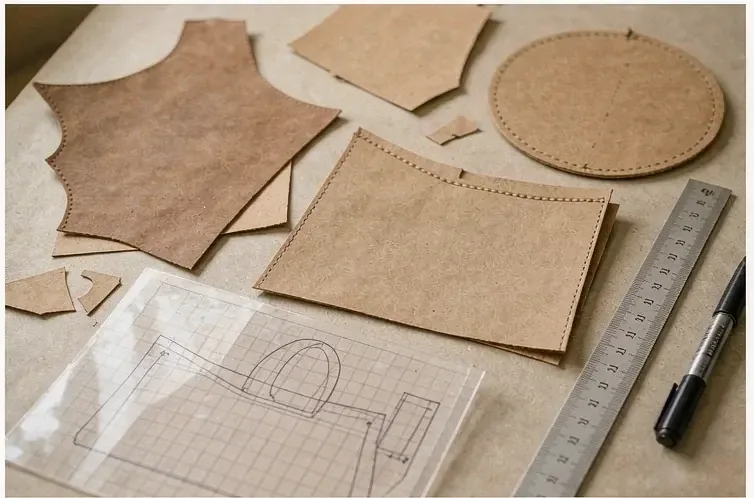
The deliberate complication is the point. Ask for a substitution, a date change or an extra report partway through, and watch what comes back: a house that answers with a written revision and a revised date is a house you can work with for years.
What the Region Does Well, and Where It Is Honest About Limits
Fujian's bag cluster grew alongside its footwear industry, and the skills transferred cleanly: cutting accuracy, edge work and an unusually deep bench of hardware and trim sources within a short drive. Xiamen's port then removes a leg of inland haulage, which is why handover is quoted FOB Xiamen rather than from an inland point.
The honest limit is exotic skins. The cluster handles calfskin, corrected grain and coated finishes as a matter of routine, but a genuinely exotic programme depends on documentation and on skin availability that no regional advantage can accelerate. Book the CITES paperwork before you book the bench.
The second honest limit is very large, very fast orders. A programme built for six lots of 500 will not behave like one built for a single drop of 20,000, and a house that says so plainly is a better appointment than one that agrees to everything.
Where Vetting Usually Stops Being Useful
Three habits turn a good sequence into a formality, and each is recognisable while there is still time to correct it.
- Vetting by photograph: beautiful imagery substituted for a measurement, which proves nothing about repeatability.
- Vetting after the deposit: every gate becomes a negotiation once money has moved.
- Vetting once: a house re-audited every two years behaves differently from one audited every season.
Our programme runs across 7 production lines with about 200,000 pcs per month of capacity and has carried export experience since 2014, delivered through our validated partner factory Quanzhou Yingming Bags, an SGS-validated site in the same Fujian cluster, with handover on FOB Xiamen terms. Visitors are welcomed at every gate, and documentary requests are answered within two working days. Release criteria sit under luxury quality control, material behaviour under luxury materials, and the sampling sequence under luxury sampling.
Book a bench visit and a document pack
Send your drawing, quantity, markets and date. You will receive the four-document pack, a bench visit slot and an itemised quotation with the lot named, within two working days. Request a quote.
Frequently Asked Questions
How do I vet a high-end handbag production house in Xiamen?
Pass seven gates in a fixed order: documents, bench visit, lot traceability, hardware proving, inspection plan, compliance scope and a trial order. The order matters because each gate is cheaper to fail than the next, and the first three cost about a week while the last three cost a season.
Why should documents come before a visit?
Because an afternoon of document requests eliminates candidates that a day of travel would also eliminate. A house that cannot produce a measurement sheet from a comparable run will not produce one at handover, and that is visible on paper before it is visible in person.
What should I photograph on a bench visit?
Eight things: the skiving station, stitch density at three points along one seam, the edge paint station and its number of passes, interlining inside a work-in-progress piece, hardware storage, the reserved hide store, the inspection table with its gauges, and the packing bench.
What stitch density should I see on the bench?
Eight to nine stitches per inch, counted at the start, middle and end of one long seam. Consistency across the three positions matters more than the absolute count, because it shows the machine and the hand are both steady.
Why does coastal Xiamen change hardware proving?
Salt-laden humidity finds the thinnest point in a plating layer, so a finish that survives a continental warehouse can dull within a season on a seafront shop floor. Proving should run 48 hours of salt spray rather than 24, at 0.15-0.3 µm plating.
What is the pass criterion for lot traceability?
A named tannery with an audit reference, a lot number on a card that travels with the hides, per-lot reports under ISO 3376, ISO 11644 and ISO 105, and a written shortfall policy that requires your approval before any substitution.
What does AQL 2.5 mean in practice on 500 pcs?
Under ISO 2859-1 at general inspection level II, the sample is 50 pieces with accept 3 and reject 4. Critical defects carry zero tolerance regardless of those counts, so a failed closure or a sharp edge fails the lot on its own.
Which compliance documents should cover my markets?
REACH Annex XVII declarations for the European Union, California Prop 65 for the United States, CPSIA where a younger line is in scope, CITES Appendix II or III for any exotic component, and GRS documentation where recycled content is claimed.
How large should a trial order be?
500 pcs per style and colourway, in one style and one colourway. Anything smaller is not treated as a real order and produces no useful information, because nobody prioritises it and nobody argues about it.
Why add a deliberate complication to a trial order?
Because the response is the actual result of the trial. Ask for a substitution, a date change or an extra report partway through; a house that answers with a written revision and a revised date is one you can work with for years.
What is the Fujian bag cluster genuinely good at?
Cutting accuracy, edge work and a deep bench of hardware and trim sources within a short drive, a skill set that grew alongside the regional footwear industry. Xiamen's port then removes a leg of inland haulage, which is why handover is quoted FOB Xiamen.
What is the honest limit of the region?
Exotic skins and very large, very fast orders. Calfskin and corrected grain are routine, but an exotic programme depends on documentation and skin availability that no regional advantage accelerates, so book the paperwork before the bench.
How long does sampling take once a house is appointed?
Six to ten working days for a standard build and 12-15 for a complex one, including one corrected round. Bulk then runs 35-50 days from approved sample and confirmed material, with handover on FOB Xiamen terms.
How often should a house be re-vetted?
At least once a year, and after any change to the material direction or the destination markets. A house audited every season behaves differently from one audited once when the relationship began.
What is the clearest early signal to walk away?
A refusal to name the tannery behind a reference piece. Everything else on the seven-gate list can be corrected with money, calendar or a second sample, but an untraceable hide cannot be repeated, and a bag that cannot be repeated is a one-off.
People Also Ask
What is the first step in vetting a handbag house in Xiamen?
Request four documents: a measurement sheet from a comparable run, per-lot test reports, a tannery audit reference and a social compliance reference. Speed of response is part of the answer.
Should I visit the bench before placing an order?
Yes, and photograph rather than admire. Skiving setting, stitch density at three points, edge passes and interlining are four measurements that tell you more than any showroom.
Does coastal humidity really affect bag hardware?
Yes. Salt-laden air reaches the base metal through a thin or porous plating layer, so coastal programmes should prove hardware at 48 hours of salt spray rather than 24, with the base metal stated.
How big should my first order be?
500 pcs per style and colourway. That is the smallest quantity treated as a real order, and one style in one colourway is the smallest commitment that still protects shade consistency across the run.
What makes Fujian a sensible place to source bags?
Cutting and edge skills transferred from the regional footwear industry, a dense hardware and trim supply within a short drive, and the port of Xiamen, which removes a leg of inland haulage before handover.
Sources and further reading
Every figure on this page is either our own programme data or attributed below. Open the originals before you write them into a specification.
- amfori — BSCIamfori Social compliance framework referenced when a buyer audits an appointed site at gate one of the vetting sequence.
- SedexSedex Supply chain data platform used to share audit findings between brands and the sites they appoint.
- Leather Working GroupLeather Working Group Tannery audit protocol used to qualify the lot named at gate three, the gate that protects repeatability.
- ISO — International Organization for StandardizationISO Publisher of ISO 2859-1 for AQL plans and ISO 3376, ISO 11644 and ISO 105 for the per-lot reports requested at gate one.
- CITESCITES Convention governing Appendix II and III documentation, the paperwork gate that sits ahead of the bench on an exotic programme.