Third Party QC for Luxury Handbag Brands: What Independence Buys, and How to Brief It
When is an independent inspection worth arranging? Whenever the two sides have not yet agreed what acceptable means: a first capsule, a new construction, a new market with different compliance expectations, or any lot large enough that a surprise would hurt. The independence itself is the product, so the auditors are appointed and paid by your side, work from your written brief rather than a generic template, and draw on the same plan — code letter H, 50 units from 500, accept 3 and reject 4 — so the two reports can be reconciled line by line.

What Independence Actually Buys You
Independence is not superior skill. An external inspector uses the same gauges and reads the same numbers; what you are buying is distance from the schedule. Nobody standing at the bench late on a Thursday wants to be the person who holds the shipment, and that pressure is real even in well-run houses. Paying for someone whose only obligation is accuracy removes it.
- Distance from the shipping calendar, so the finding is not shaped by whether a vessel is waiting.
- A second reading of the accept numbers by someone who did not set them up.
- Evidence that survives a later dispute with a retailer or an insurer.
- A benchmark for your own internal record, since two measurements either agree or teach you something.
- Coverage of compliance items you may not inspect routinely, such as labelling and marking rules.
One further benefit compounds across seasons. When the same appointed firm draws against the same written plan every capsule, their files stop being snapshots and become a series, and slow drift in a construction becomes visible long before it turns into returns. That only works if you keep the brief stable: rewriting it each season buys cleverness at the cost of comparability.
Booking Sequence and Notice Periods
Independent inspection fails more often through poor scheduling than through poor technique. The auditor needs the reference, the plan and the checklist before arriving, and each of those has its own lead time. Book backwards from the date the draw has to happen, which itself sits three days before cartons close, since correction and re-check follow any finding.
- Confirm the plan in writing at least 10 working days ahead: standard, acceptance limit, inspection level and code letter.
- Send the sealed reference so it arrives at least 3 working days before the draw date.
- Issue the written brief with its checklist line items, no later than 2 working days before arrival.
- Confirm lot readiness: finished goods available together, cartons not yet closed, quantities reconciled.
- Agree the reporting interval in writing, normally 24 hours from completion of the draw.
- Reserve 3 days after the draw for correction and re-check before packing is released.
Writing the Brief
A generic checklist describes average goods and produces average findings. Yours should describe the construction in front of the inspector: which seams carry load, where an edge meets a fold, which hardware must cycle, and what you consider a declared characteristic rather than a fault. Twenty-six line items cover most structural styles comfortably; beyond forty nobody reads them carefully.
- Construction notes
- Load paths named: handle run, strap anchor, suspended pockets, base corners
- Numeric targets
- Thickness 1.2-1.4 mm, density 8-9 per inch, edge build 0.35-0.45 mm
- Functional tests
- Turn-lock cycled 200 times; zip travelled through its full run repeatedly
- Presentation items
- Thread shade, edge colour match, panel symmetry, interior placement
- Zero-tolerance clauses
- Named items sitting outside the accept number entirely
- Deliverables
- Summary table, indexed photographs, instrument readings and signed conclusion
Who Pays Decides Whose Side They Are On
The least discussed and most decisive rule in this discipline: the party appointing and paying the inspector determines who the report serves, regardless of any language about impartiality. An auditor retained and renewed by the house being audited has two clients, and one of them signs the invoices. Appoint from your side, even when the cost sits inside the unit price, or do not bother appointing at all.
- Appoint and pay directly from your side, so the obligation runs to you alone.
- Rotate between two appointed firms so neither becomes reliant on repeat work from one house.
- Prohibit payment being collected or arranged by the party whose goods are being examined.
- Require the inspector's name on the report, since anonymous evidence is weak evidence.
- Keep the appointment letter and the brief together in the lot file for future reference.
They Must Draw on Your Plan, Not Theirs
Inspection firms carry their own default plans, usually general level II with a standard accept number chosen for consumer goods. Those defaults are reasonable for their purpose and wrong for yours, because your zero-tolerance clauses and your defect classification are what make the result meaningful. Insist on the plan you specified, in writing, before anyone travels.
| Element | Default usually offered | What to specify instead |
|---|---|---|
| Acceptance limit | A single value applied to all findings | Distinct classes plus a zero-tolerance clause list |
| Inspection level | General level II | Level II for most lots, raised where shad matters more |
| Definition of acceptable | The firm's own glossary | Your classification with your own examples |
| Reference standard | The client's description | The sealed approval sample, physically present |
| Reporting format | Their own template | Your nine-section template, so files compare across seasons |
Reconciling Two Reports on the Same Lot
Running both your internal audit and an independent draw gives you two views of one population, and the reconciliation is worth more than either document alone. Where they agree, you have strong evidence. Where they disagree, you have discovered something important about either the plan or its execution, which is precisely the kind of thing worth learning on a small lot rather than a large one.
- Compare unit counts first: both should show 50 drawn from a 500 pcs lot under code letter H.
- Compare classification second, since most apparent disagreements are actually a unit called minor by one side and major by the other.
- Re-measure any disputed unit with a second calibrated gauge rather than debating the appearance.
- Record the divergence and its resolution in both files, with photographs of the disputed unit.
- Amend the specification where the divergence came from ambiguity rather than from error.
One caution about reconciliation: never average the two results. If one draw shows two majors and the other five on the same lot, the finding is that the plan is being applied inconsistently, which is a specification problem rather than an arithmetic one. Resolve it by agreeing in writing how each defect is classified, and hold the next capsule until that agreement exists.
What Independent Auditors Miss
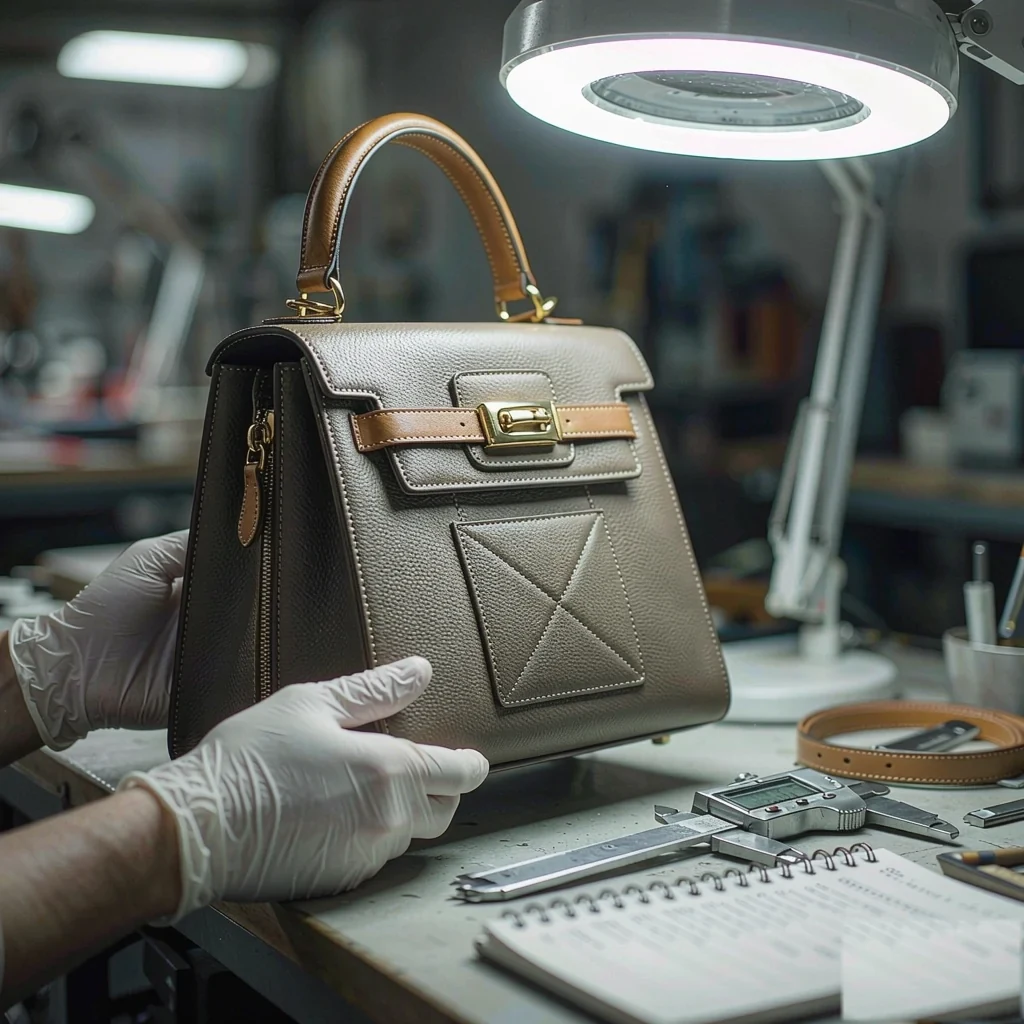
They are no better than their brief, and they arrive too late for whole categories of failure. Everything inside the construction has already been closed by the time finished goods exist, so no amount of external scrutiny recovers a misplaced reinforcement or a fold left too thick. Understanding those limits is what stops a brand treating an independent draw as insurance for an unspecified process.
- Hidden-read faults inside the structure, which were only visible while the unit was being made.
- Durability over months of use, which belongs to laboratory testing rather than any visual draw.
- Consistency of a specific named material lot against the certificate issued for it.
- Anything not written into the brief, since the inspector cannot assess what was never specified.
- Traceability of components substituted during the run and never recorded against the style.
When It Is, and Is Not, Worth Arranging
Independence costs time and attention, so it should be spent where it changes an outcome. Four situations justify it routinely, and two do not, mostly because the money is better spent on the earlier checkpoints that an external draw cannot reach anyway.
Worth arranging
A first capsule with a new house, where neither side has a shared history of what acceptable means. Also any lot exceeding your normal value threshold, or one shipping into a market new to you.
Worth arranging
A construction with a functional closure or a load-bearing join that has not been proven across seasons. Independent cycling and pull readings give you evidence before a client generates their own.
Better spent elsewhere
A mature repeat style with stable defect history, where the internal audit already tells you what the draw would say. Put the money into additional in-line readings instead.
Better spent elsewhere
A small development sample that will be re-made anyway. Sample review by your own team resolves those questions faster and feeds the specification rather than producing a report nobody files.
Building It Into the Calendar
Independent inspection is scheduled, not improvised. It sits between the end of finishing and the start of packing, which means its notice period has to be counted backwards from the latter rather than forwards from today. Build the sequence below into the master calendar at the same time as the bulk order is placed.
- Plan confirmation
- At least 10 working days before the required draw date
- Reference delivery
- Sealed sample with the auditor 3 working days before arrival
- Brief issued
- Checklist and zero-tolerance clauses sent 2 working days before arrival
- Draw window
- After finishing is complete and before cartons are closed
- Report interval
- 24 hours from completion, in your own nine-section format
- Correction reserve
- 3 days after the report for rework and re-check, inside the 35-50 day bulk window
Treat those six dates as commitments rather than intentions. Every late or improvised draw we have seen shared one cause: somebody counted forwards from the day it was raised instead of backwards from the day cartons were due to close, and discovered too late that the reference was still in transit.
How Our Programmes Accommodate an Independent Draw
Independent inspectors are welcome on site: finished goods are presented together, cartons stay open until their draw is complete, and their readings are entered into the same lot file as our own. Documentation handling for that combined file starts at USD 4.80 per lot. Our validated partner factory Quanzhou Yingming Bags, an SGS-validated site, has run export programmes since 2014 across 7 production lines at about 200,000 pcs per month, with sampling at 6-10 working days, bulk 35-50 days, and 500 pcs per style and colourway as the minimum order quantity.
Plan an independent draw on your next lot
Tell us the lot size, the destination market and whether you already retain an inspection firm. You receive our scheduling sequence, the briefing template and the plan we will draw against. Request a quote.
Frequently Asked Questions
When should a brand arrange independent inspection?
Whenever neither side yet has a shared history of what acceptable means: a first capsule with a new house, a construction with an unproven functional closure, a lot larger than you normally ship, or a market new to you. Independence costs time and attention, so spend it where it changes an outcome rather than as routine on a mature repeat style.
What does an independent inspection add to internal checks?
Distance from the schedule. Nobody at the bench wants to be the person holding a shipment, and that pressure shapes findings even in well-run houses. You also gain a second reading of the accept numbers and evidence that survives a later dispute with a retailer or an insurer.
Who should appoint and pay the inspector?
Your side, always. The party appointing and paying determines whom the report serves, whatever the language about impartiality says. An auditor retained and renewed by the house whose goods are being examined effectively has two clients, and one of them signs the invoices.
How much notice does an inspection firm need?
Book backwards from the draw date. Confirm the plan at least 10 working days ahead, get the sealed reference to the auditor 3 working days before arrival, and issue the written brief within the final 2 working days. Reserve a further 3 days after the draw for correction and re-check before cartons close.
What should go into the inspection brief?
Construction notes naming load paths, numeric targets for thickness and stitch density, functional tests for closures and zips, presentation criteria, zero-tolerance clauses and the deliverables you expect. Twenty-six line items cover most structural styles well, and beyond forty most inspectors stop reading them carefully.
Can I require my own sampling plan instead of theirs?
Yes, and you should. Their defaults are sensible for consumer goods and unsuitable for structured leather, because your classification and zero-tolerance clauses are what make the result meaningful. State the standard, the acceptance limit, the inspection level and the code letter in writing before anyone travels.
What happens when two reports disagree?
Compare unit counts first, since both should show 50 from a 500 pcs lot, then compare classification, because a unit called minor by one side and major by the other explains most divergence. Re-measure disputed units with a second calibrated gauge and amend the specification where the root cause was ambiguity.
What can an independent draw not detect?
Everything already closed inside the construction, such as misplaced reinforcement or folds left too thick, plus durability over months of wear, consistency against a specific material certificate, and component substitutions made mid-run. Those need earlier checkpoints and laboratory work rather than a visit at the end.
How many findings should trigger scepticism rather than relief?
Zero major findings on a genuinely new construction usually means the brief was too thin rather than the work being perfect. A first capsule realistically produces several majors and plenty of minors, and those findings are what teach both sides where the specification needs tightening before the next run.
Should the same firm inspect every shipment?
Rotating between two appointed firms is healthier than relying on one indefinitely, because any party depending on repeat work develops an interest in being reappointed. Keep both appointment letters and briefs in lot files so findings compare across seasons regardless of who performed the draw.
Is inspection charged per unit or per day?
Firms usually quote per inspector-day, so the figure depends on how long the draw takes for your lot size and how many line items sit in the brief. A 500 pcs lot at level II draws 50 units, which typically completes comfortably inside one working day, plus report preparation afterwards.
Do we need independent inspection to satisfy retailers?
Some retailers require it, some require only documentation, and many simply ask for the file if something goes wrong later. Where it is mandatory, schedule it early, since failure to produce the required report can hold goods at destination regardless of how well they were made.
How does independent inspection fit our quality calendar?
It sits between the end of finishing and the start of packing, so its notice period counts backwards from packing rather than forwards from today. Build the sequence into the master calendar when the bulk order is placed: plan confirmation, reference delivery, brief, draw window, report interval and the 3-day correction reserve.
People Also Ask
Is third-party inspection worth it for handbags?
Yes for first capsules, new constructions, unproven closures and unusually valuable lots, since independence buys distance from the shipping calendar. For a mature repeat style with stable defect history, additional in-line readings usually deliver more improvement than another draw.
What should an inspection brief contain?
Load paths, numeric targets such as 8-9 stitches per inch, functional cycling tests, presentation criteria, zero-tolerance clauses and the deliverables expected. Keep it around 26 line items for a structural style, since longer briefs stop being read carefully.
Who pays for third-party inspection?
The brand should appoint and pay the inspector directly. Whoever pays decides whom the report serves, regardless of impartiality language, so an auditor retained by the house being audited effectively answers to two clients at once.
Which sampling plan should external auditors use?
Yours, specified in writing before they travel. For a 500 pcs lot that means AQL 2.5 under ISO 2859-1 at general inspection level II: code letter H, 50 units drawn, accepted on 3 major findings and rejected on 4.
What are the limits of third-party inspection?
It arrives after the unit is closed, cannot see inside the construction, says nothing about long-term durability, and only covers what the brief specified. Use it alongside in-line readings and laboratory work rather than instead of them.
Sources and further reading
Every figure on this page is either our own programme data or attributed below. Open the originals before you write them into a specification.
- ISO — International Organization for StandardizationISO Publisher of ISO 2859-1 for sampling plans and ISO 17020 criteria for bodies performing inspection, referenced when appointing an independent firm.
- United Kingdom Accreditation ServiceUKAS Accreditation body explaining the independence and impartiality requirements inspection bodies must meet, relevant to who appoints and pays them.
- International Accreditation ForumIAF Multilateral recognition arrangements that determine whether an inspection report issued in one market is accepted in another.
- ASQ — Acceptance sampling resourcesASQ Guidance used when specifying the sampling plan an external inspector is required to draw on rather than their own default.