Sustainable Luxury Handbag Packaging Trends: Seven Questions Shaping the Next Season
What is actually changing in sustainable luxury handbag packaging? Seven things: plastic-free sets becoming default, recycled content moving from 30% to 70-100% on board, mono-material construction replacing mixed laminates, water-based coatings displacing solvent ones, and claims getting narrower as regulators tighten. Restraint is the trend underneath all of them. This article works through each, gives the numbers behind the specifications, and sets them against a reference unit cost of USD 4.80 at 500 pcs per style and colourway.
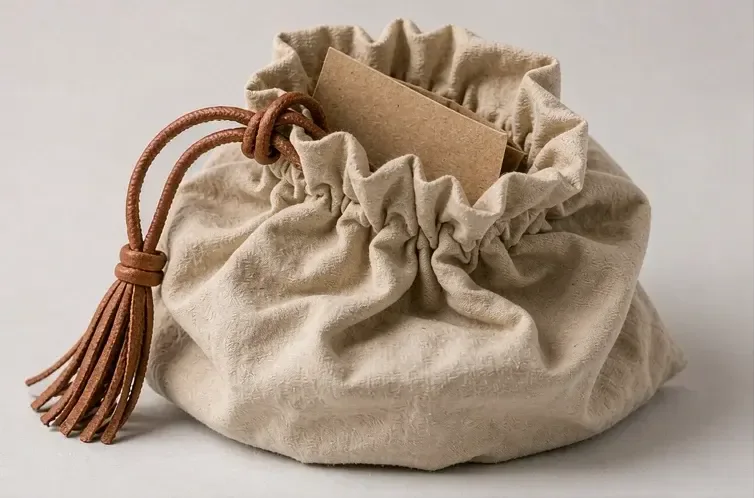
Sustainability in packaging has moved from a claim to a specification. Five years ago the question was whether a box could carry a leaf mark; this season the questions are about material composition, what happens to the set at end of life, and whether a claim on the box is narrower than the one the programme can evidence. That shift is good news for anyone specifying packaging, because composition is measurable and a claim is not.
Question One: Is Plastic-Free the Right Target?
Plastic-free is the right target and the wrong slogan, because the honest version of it is narrower than it sounds. A set is plastic-free when no element contains a polymer: paper tape rather than film tape, paper void fill rather than foam, an uncoated wrap rather than a laminate, and a cotton or heavy non-woven dust bag rather than a spun polymer one. That is achievable at every layer except the closure, where a magnetic closure or a ribbon with a synthetic core may still be involved.
The reason to pursue it anyway is that the destination market rules are moving in that direction, and a set that already complies does not need redesigning when they arrive. The European Union's Packaging and Packaging Waste Regulation is the instrument most programmes are watching, and several national and state rules already restrict specific single-use plastics in packaging. Specifying plastic-free now is cheaper than a redesign later, because a redesign reopens artwork, tooling and the first article.
Question Two: How Much Recycled Content Is Realistic?
Between 70% and 100% on board, which is a materially higher figure than most programmes specified two seasons ago. The constraint is stiffness: recycled fibre is shorter, so a board at 100% recovered content can be 5% to 10% less stiff at equal grammage. The answer is not to accept a weaker box but to move up one grade, which is why a 1,200 gsm board with high recycled content usually performs like a 1,000 gsm virgin board and should be specified as such.
| Trend | What it means in specification | Effect on cost | Effect on the client |
|---|---|---|---|
| Plastic-free sets | Paper tape, paper fill, uncoated wrap, cotton dust bag | Small increase | None, or slightly warmer in the hand |
| Higher recycled content | 70% to 100% recovered fibre on board | None to small | None; stiffness recovered by grade |
| Mono-material construction | One polymer or one fibre family per element | Small | None |
| Water-based coatings | Replacing solvent coatings on wraps | Small increase | No solvent note on opening |
| Narrower claims | Label matches what was bought | None | None, and less risk |
| Right-sized cartons | Volume reduction before material substitution | Reduction | None, and better arrival condition |
| Recycled claim on fabric | Recycled cotton or certified content in dust bags | Small to moderate | None if the hand is right |
Question Three: Does Mono-Material Actually Help?
Yes, and it is the trend most often overlooked because it is invisible in a photograph. A mono-material element is one made from a single material family, so it can be recycled without being separated first. A board box with a paper wrap is mono-material; the same box with a plastic-laminated wrap is not, because the laminate has to be split from the board before either can be processed. The change is a specification line, and it usually costs nothing.
The place mono-material thinking bites is in the laminate decision. A matte or gloss laminate on a wrap improves scuff resistance and complicates foil adhesion, both of which are real arguments for keeping it. Where a programme can drop it, a water-based coating or an uncoated stock with a debossed mark achieves a comparable result and leaves the box recyclable as paper. Where the laminate has to stay, the honest position is to say so rather than to claim otherwise.
- Recycled content on board
- 70% to 100% recovered fibre
- Stiffness allowance
- 5% to 10% at equal grammage; move up one grade
- Coating
- Water-based in place of solvent-based
- Tape and fill
- Paper, reinforced core, not film
- Claims
- Narrow, matched to what was bought
- Carton
- Right-sized to the packed set before any substitution
- Dust bag
- Cotton or recycled-content cotton
- Verification
- Certificate codes collected at the point of order
- End of life
- Elements separable without a tool
Question Four: What Do the Regulations Ask This Season?
Three instruments come up in packaging conversations. The European Union's Packaging and Packaging Waste Regulation sets the direction of travel on recyclability and on restricted substances in packaging. REACH governs substances in articles placed on the European market, which includes inks and coatings on a box. California Proposition 65 governs warnings for listed substances, which is why a printed element entering that state needs its ink declared rather than assumed.
None of the three prevents decoration, and none of the three is a reason to avoid a market. What all three require is that the programme can say what is in the set, which is a documentation question rather than a design one. The practical step is to ask the converter to declare the ink, coating and adhesive in writing, and to file that declaration with the packaging specification rather than with the purchase order.
Question Five: Does Restraint Sell Better Than a Claim?
Increasingly, yes, and the reason is that a claim is now checked. A client who reads a recycled-content figure on a box and then finds a laminated wrap inside it has been told something the set contradicts. That is a worse outcome than saying nothing at all, which is why the more confident houses have moved to narrower claims, or to no claim on the box and a fuller statement in the care literature where there is room to be accurate.
The design consequence is that restraint is becoming a marker of the category rather than a compromise within it. A single-colour deboss on uncoated board, a cotton dust bag and a right-sized carton read as more considered than a laminated, foiled, four-colour set, and they happen to be the more defensible specification. That alignment between what reads well and what can be evidenced is the most useful thing to have happened in luxury packaging in a decade.
Question Six: What Does Certification Cover Now?
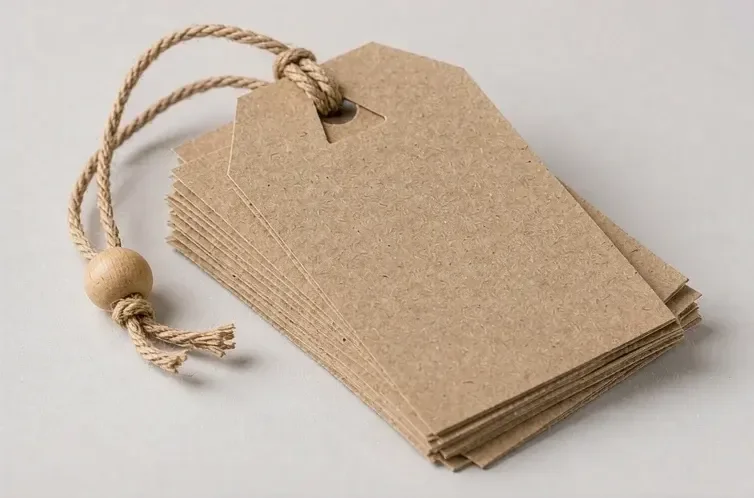
Chain of custody remains the backbone, covering the documented trail from certified forest or certified recovered fibre through each handler to the finished board. What has changed is the expectation that the claim is specific: whether the content is certified virgin fibre, a mix, or entirely recovered material, and which elements of the set the claim covers. A box-level claim is narrower and easier to evidence; a set-level claim covers board, tissue and fabric and requires each of those chains to be documented separately.
Where a dust bag carries a recycled-content claim on the fabric, the same logic applies through the textile chain, and the recycled-content standard used for textiles is the reference point rather than the forest scheme. The general rule is unchanged and worth repeating: buy first, confirm the certificate code against the delivery note, then choose the label. Programmes that choose the label first and then source to it are the ones that end up with a claim they cannot evidence.
Question Seven: Where Does Sustainability Cost More?
In two places: water-based coatings and recycled-content fabric, both of which carry a modest premium over the conventional option. It costs less, or nothing, in three others: paper tape and paper fill are comparable to the polymer alternatives, mono-material specification is a drawing line rather than a purchase, and right-sizing the carton actively reduces cost by removing board and freight volume at the same time.
Right-sizing the carton reduces board, reduces freight volume and improves arrival condition, and it touches nothing the client sees. It is the one sustainability change that pays for itself, and it should be made before any material substitution is considered.
How the Trends Differ by Market
The European market leads on recyclability and on substance declaration, which means a set destined for it should be mono-material, coated with a water-based system where it is coated at all, and accompanied by a written declaration of the ink and adhesive. The North American market leads on warning requirements and on state-level plastics restrictions, which means the printed elements need their substances declared and the fill and tape need to be paper rather than polymer.
For a programme listing in both, the efficient answer is to build one set to the stricter line rather than two sets to two lines. The stricter line is almost always achievable at negligible extra cost, because the expensive parts of compliance are documentation and redesign rather than material. Two sets mean two artwork approvals, two tooling decisions and two first articles, which costs more than the difference between the two specifications ever does.
Where a programme genuinely cannot reconcile the two, the split should be made at the shipper rather than at the box. The inner presentation can be identical across markets, since it is the client-facing element and the one the brand cares about; the outer shipper, tape and fill absorb the local requirement, because they are the elements the local regulation is actually written about. That keeps one set and one claim.
What to Specify This Season
A defensible starting set for the coming season: board at 70% to 100% recovered content, specified one grade higher to recover stiffness; an uncoated wrap with a single-colour deboss rather than a laminate with foil; water-based coating where a coating is needed; paper tape and paper void fill; a cotton or recycled-content cotton dust bag; a right-sized carton; and a claim on the box that names only what was bought. Every line is measurable and every line can be evidenced, which is the point. Where a programme wants to go further than this set, the two extensions that hold up are a removable closure that does not combine materials and a care card printed on the same fibre family as the box. Both are small changes that make the set easier to describe accurately, and neither changes how the opening feels, which is the test any packaging change has to pass.
Set against a reference unit cost of USD 4.80, that set sits in the middle of the 40% to 90% range a complete presentation set occupies, and it is not meaningfully more expensive than a conventional one once the carton has been right-sized. The premium, where there is one, sits in the coating and the fabric. The saving, where there is one, sits in the freight. The two rarely cancel exactly, and the honest expectation is a small net increase on the set, offset in whole or in part by the volume reduction at the carton. What the programme buys for that is a set it can describe accurately in any market it lists in, which is the part that is hard to price and easy to need.
Fitting the Sustainable Set Into the Programme Clock
Certified grades are produced in fewer lots, so availability belongs at the point of order rather than at pack-out. Sampling takes 6-10 working days and 12-15 for complex constructions, bulk production runs 35-50 days, inspection sits at AQL 2.5 under ISO 2859-1, and handover is on FOB Xiamen terms. Work runs at 500 pcs per style and colourway through our validated partner factory Quanzhou Yingming Bags, an SGS-validated site operating since 2014 with 7 production lines and capacity of about 200,000 pcs per month. See luxury handbag packaging for the layer specification this sits on.
Take this to the bench
- Right-size the carton first, then specify 70% to 100% recovered content one grade higher, an uncoated wrap with a deboss, water-based coating, paper tape and fill, and a claim that names only what was bought.
Build a defensible set
Tell us the markets you list in and the claims you want to make, and we will specify a set you can evidence line by line. Request a quote
Frequently Asked Questions
What is driving sustainable luxury packaging this season?
Seven things: plastic-free sets, recycled content moving from 30% to 70-100% on board, mono-material construction, water-based coatings, narrower claims, right-sized cartons and recycled content in dust bag fabric. Restraint is the trend underneath all of them.
Does recycled board perform as well as virgin board?
Almost. Recycled fibre is shorter, so a board at 100% recovered content can be 5% to 10% less stiff at equal grammage. The answer is to specify one grade higher rather than to accept a weaker box, which is why 1,200 gsm recovered-content board performs like 1,000 gsm virgin board.
What does plastic-free packaging actually mean?
No element containing a polymer: paper tape rather than film tape, paper void fill rather than foam, an uncoated wrap rather than a laminate, and a cotton or heavy non-woven dust bag. It is achievable at every layer except the closure, where a magnet or a synthetic ribbon core may remain.
Why does mono-material construction matter?
Because a mono-material element can be recycled without being separated first. A board box with a paper wrap qualifies; the same box with a plastic-laminated wrap does not, because the laminate must be split from the board before either can be processed. The change is a drawing line and usually costs nothing.
Which regulations affect luxury packaging?
The European Union's Packaging and Packaging Waste Regulation sets direction on recyclability and restricted substances; REACH governs substances in articles placed on the European market, including inks and coatings; and California Proposition 65 governs warnings for listed substances in printed elements.
Do these regulations stop a programme decorating its packaging?
No. None of the three prevents decoration. What they require is that the programme can state what is in the set, which is a documentation question. Ask the converter to declare the ink, coating and adhesive in writing and file it with the specification rather than the purchase order.
Is it better to make a sustainability claim or to stay quiet?
It is better to make a narrow claim the set can evidence, or to make none on the box and a fuller accurate statement in the care literature. A client who reads a recycled figure and then finds a laminated wrap has been told something the set contradicts.
How much does sustainable packaging cost?
More in two places, water-based coatings and recycled-content fabric, both modest. Less or nothing in three others: paper tape and fill are comparable to polymer alternatives, mono-material specification is a drawing line, and right-sizing the carton actively reduces cost.
What is the least costly sustainability improvement?
Right-sizing the carton. It removes board, removes freight volume and improves arrival condition, and it touches nothing the client sees. It should be made before any material substitution is considered, because it pays for itself.
Should the claim cover the box or the whole set?
The box, in most cases. A box-level claim is narrower, easier to evidence and sufficient for most listing conversations. A set-level claim covers board, tissue and fabric and requires each of those chains to be documented separately, which roughly triples the burden.
How is a recycled-content dust bag verified?
Through the recycled-content standard used for textiles rather than the forest scheme, with the certificate code confirmed against the delivery note. The general rule is to buy first, confirm the code, then choose the label, never in the other order.
Does sustainable packaging take longer to source?
Certified grades are produced in fewer lots, so a late order may be quoted against the next available lot. Confirm availability at the point of order and name an accepted substitute grade. Sampling takes 6-10 working days, bulk runs 35-50 days, inspection sits at AQL 2.5 under ISO 2859-1.
People Also Ask
What is mono-material packaging?
An element made from a single material family so it can be recycled without separation. A board box with a paper wrap qualifies; a board box with a plastic-laminated wrap does not.
How much recycled content can luxury board carry?
Between 70% and 100% recovered fibre. Because recycled fibre is 5% to 10% less stiff at equal grammage, specify one grade higher to recover the performance.
Is plastic-free packaging realistic for a luxury set?
Yes, at every layer except the closure. Paper tape, paper void fill, an uncoated wrap and a cotton dust bag cover it, and the destination market rules are moving in that direction anyway.
Does a sustainable set cost more?
Marginally, in coatings and fabric. Right-sizing the carton usually offsets it, because it removes board and freight volume at the same time and touches nothing the client sees.
Should I put a sustainability claim on the box?
Only a narrow one you can evidence. A claim the set contradicts does more damage than no claim, which is why several houses have moved the fuller statement into the care literature.
Sources and further reading
Every figure on this page is either our own programme data or attributed below. Open the originals before you write them into a specification.
- FSC certification and chain of custodyForest Stewardship Council Chain of custody and label reference for certified and recovered-content board.
- REACH legislationEuropean Chemicals Agency Substance restrictions applying to inks, coatings and adhesives in packaging.
- Packaging wasteEuropean Commission Policy direction on packaging recyclability and restricted substances in the European Union.
- Proposition 65California Office of Environmental Health Hazard Assessment Warning requirements relevant to printed packaging entering the California market.
- Technical Association of the Pulp and Paper IndustryTAPPI Test methods for recycled-content board stiffness, grammage and moisture.