The Quiet Luxury Bag Movement Explained: Materials, Hardware and What It Costs to Build
The quiet luxury bag movement is the shift of value away from visible signage and towards material, construction and finish. For a brand planning a 2026 line, that is not a styling fashion but a change in where the money goes: less on an applied mark, more on leather selection, edge build, custom-cast closures and written tolerances. In practice a quiet programme runs at 500 pcs per style and colourway, sampling in 6-10 working days, first bulk in 35-50 days, inspected at AQL 2.5 under ISO 2859-1, quoted FOB Xiamen. The bag carries no logo, so every shortcut is visible at arm's length in daylight.
What the Quiet Luxury Bag Movement Actually Changed
Quiet luxury in handbags is the removal of the mark. The logotype, the monogram, the repeated initial and the obvious metal plate all come off the bag, and the value that used to sit in them has to move somewhere else. It moves into the hide, the edge, the closure and the hand of the finished piece. That is why the movement is better understood as a reallocation of specification rather than as a mood.
For a brand building a line, the practical consequence is unforgiving. A bag carrying a large logo can survive a slightly wavy top edge because the eye goes to the mark first. Take the mark away and the eye goes to the seam line, the corner radius, the way the flap sits on the body and the colour of the edge paint. Quiet design raises the inspection bar by removing the distraction that used to hide behind.
The second consequence is commercial. Without a mark, price defence has to come from something the customer can be told in two sentences: the tannery, the finish, the construction, the fact that the closure was cast for this house alone. A line that removes its logo without adding any of that is not quiet, it is simply unmarked, and it will be priced by the market as such within a season.
The Cost Structure of an Unbranded Bag
Quiet design moves cost from the surface inward. Removing a cast logo plate removes one line item and adds four. The edge now has to be built in three coats to a recorded formula instead of one machine pass. The lining has to be a cloth the customer will see and touch rather than a filler. The closure has to be drawn and cast for the house rather than pulled from a catalogue. Each of those is more expensive than the plate it replaced.
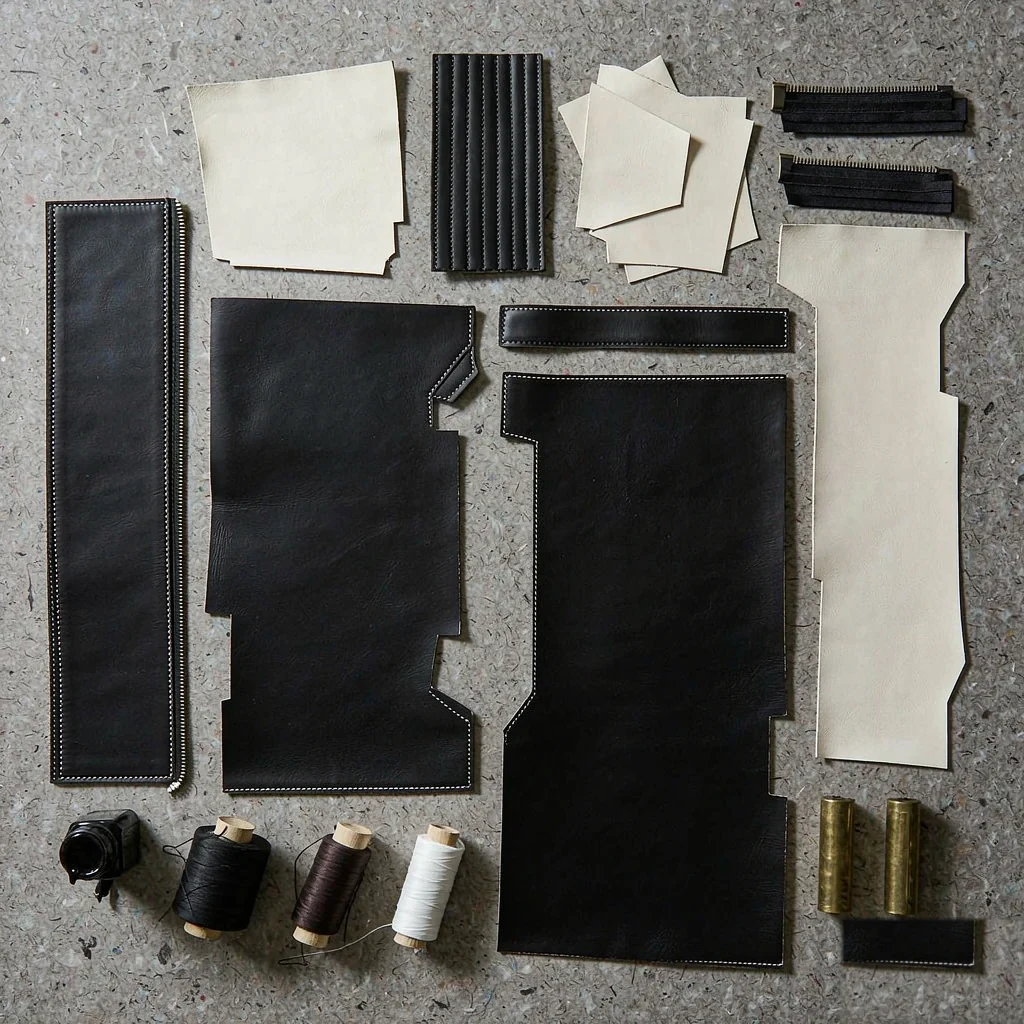
The trim bill tells the story in miniature. On a structured flap bag the hardware set is small in absolute terms: a #5 metal zip on the interior pocket, four base feet, a plated trim set on the strap ends and the closure itself. Assembled as parts before any bench time, that group lands at about USD 4.80 per piece. It is a modest figure next to the leather, and it is precisely why quiet hardware deserves proper specification: the spread between a stock clasp and a custom-cast one is marginal at this scale, but the difference in recognition on a shelf lasts for years.
| Line item | Logo-led bag | Quiet bag |
|---|---|---|
| Applied branding | Cast logo plate fixed to the flap | Removed; the spend moves to edge and closure |
| Edge finish | One machine coat, colour close to the panel | Three coats, weight-based formula, hand sanded |
| Leather selection | Corrected grain with a sprayed finish | Full-grain 1.2-1.4 mm, tannery lot recorded |
| Closure | Catalogue clasp in a stock finish | Custom-cast turn-lock, mould held for the house |
| Lining | Brushed polyester in a neutral tone | Cotton twill or microsuede, matched to the panel |
| Inspection | Visual pass at packing | AQL 2.5 under ISO 2859-1 against a sealed sample |
Materials That Read Quiet
Material choice does most of the work once the logo is gone. The vocabulary that reads quiet is narrow and specific, and it is worth writing into the specification ledger rather than leaving to a mood board. What follows is the combination that turns up most often in a quiet programme at this level.
- Full-grain calfskin at 1.2-1.4 mm for structured bodies, and 0.9-1.1 mm where the silhouette is meant to slouch.
- Vegetable-tanned trims that darken with handling, so the bag records its own history rather than wearing out.
- Matte or semi-matte finishes; a high sheen reads as film rather than as leather and is the fastest way to look loud.
- Cotton twill or microsuede linings colour matched to the panel rather than contrasted against it.
- Bonded Tex 40 thread at 8-9 stitches per inch, in a tone one shade darker than the leather it sits on.
- Edge paint mixed to a recorded weight formula in the panel colour, applied in three coats with a sanding step between.
- Base feet, rivets and strap ends drawn from the same finish lot as the closure so the metal family stays aligned.
Two of those items deserve emphasis because they are the ones most often cut. Matte finish is not a preference, it is a test: a sprayed high-gloss leather photographs well and looks wrong under shop lighting, where the reflection flattens the grain. And the edge is the single most-read surface on an unbranded bag, because it is the surface a customer runs a thumb along while deciding.
Hardware: Where the Difference Is Felt Before It Is Seen
On an unbranded bag the closure is the signature. It is the first thing a customer touches, and its weight, its travel and the sound it makes when it closes carry more brand information than any plate could have. A turn-lock that turns with resistance and lands with a short, dry click communicates something a printed logo never managed to.
The specification that produces that feel
Feel is an engineering output, and it is written down. Casting in brass or zamak to a held mould, plating at 0.15-0.3 µm, a sealer applied on top, and an X-ray fluorescence reading filed against every hardware lot. Zips are specified by chain size and verified through 500 pull cycles; salt spray runs 24 hours as standard and 48 hours for humid or coastal destinations. When a mould reaches the end of its life, a new one is cut and a comparison sample is run before the old reference is retired.
Spare hardware ships at 2% of unit quantity so a repair does not stall on a missing clasp, and unplated castings are held for custom components. That reserve is sound insurance compared with re-cutting a mould, and it is the sort of detail that separates a house with a repair pipeline from a house that simply replaces bags.
Tolerances: Why Quiet Design Is Harder to Make
Every tolerance that a logo once masked has to be written and measured. Shade, stitch density, edge build, closure alignment and zip travel are the five that carry most of the visible risk on a quiet bag, and each of them is invisible in a photograph and obvious in the hand. The figures below are the working band for a programme at this level.
None of these is exotic. What they have in common is that they are written before bulk cutting rather than argued about afterwards. A quiet line that enters production with an agreed tolerance ledger ships a consistent drop; one that enters with a reference photograph ships a season of negotiation.
What a Quiet Capsule Costs to Develop
The development cost of a quiet line is front-loaded. The money goes into the sample cycle, the tolerance ledger and the custom tooling rather than into applied branding. That is a real commitment at the start of a label's life, and it is the reason the movement favours houses that intend to run a style for several seasons rather than houses chasing a single drop.
- MOQ
- 500 pcs per style and colourway
- Sampling
- 6-10 working days, 12-15 for frame or exotic work
- First bulk
- 35-50 days from approved sample
- Re-order
- 28-35 days against a sealed reference
- Trim bill
- About USD 4.80 per piece for the zip, feet and plated trim set
- Incoterm
- FOB Xiamen
- Inspection
- AQL 2.5 under ISO 2859-1, sealed sample as arbiter
Two figures inside that table decide whether a quiet line is viable. The 500 pcs per colourway floor is low enough to test a silhouette and high enough to justify a custom mould. And the 28-35 day re-order window is what lets a house plan a second drop against a sealed sample rather than re-qualifying the whole specification. A brand that spends its opening season on a logo plate usually discovers at the second drop that it has nothing left to defend the price with.
Pricing a Bag That Carries No Logo
Without a mark, price defence rests on three things, and all three have to be true at once. The material story: where the hide came from and why this finish. The making story: what a bench did to it that a machine could not. The scarcity story: why this quantity, in this colourway, at this moment. If a label can only answer one of the three, the line is priced by comparison rather than by conviction.
There is a discipline here that quiet design enforces and logo design does not. A marked bag can raise a price and explain it with the mark. An unmarked bag has to raise the price and explain it with the object, which means the object has to have improved. Houses that accept that constraint tend to raise prices more slowly and hold them far longer, which is the actual mechanism behind the resale strength quiet pieces enjoy.
What a Quiet Programme Delivers Each Season
The deliverable of a quiet programme is not a bag, it is a repeatable set of results attached to that bag. A season hands the brand a sealed reference, a tolerance ledger, a material certificate pack and an inspection report, and the next season is checked against those rather than reinvented.
Sealed reference
One golden sample per style and colourway, held by the house and by the atelier, arbiter of every later drop.
Written tolerances
Substance, stitch density, edge build, plating thickness and shade deviation recorded before bulk cutting starts.
Traceable materials
Tannery lot, alloy and plating bath on file, with REACH Annex XVII and Prop 65 declarations attached.
Stable windows
Sampling 6-10 working days, first production 35-50 days, quoted FOB Xiamen.
A Ninety-Day Sequence for a Quiet Capsule
- Weeks 1-2: fix the silhouette and the shortlist of finishes; order swatches in three candidate tannery lots.
- Weeks 3-4: cut the first prototype and review it in the hand under daylight, never from a photograph.
- Weeks 5-6: run sampling at 6-10 working days, then approve and seal the golden sample for each colourway.
- Weeks 7-8: write the tolerance ledger and the material ledger; book the custom hardware mould.
- Weeks 9-10: begin the first bulk cut, 35-50 days from the approved sample.
- Weeks 11-13: final inspection at AQL 2.5, packing to the agreed specification, shipment FOB Xiamen.
Put your bag next to one at four times the price, both unmarked, and hold them at arm's length under daylight. If the eye cannot tell which is which within three seconds, the specification is doing its job. If it can, the gap is almost always the edge build, the closure weight or the shade of the lining — never the logo.
Cost your first quiet capsule
If you are planning an unbranded line for 2026, send the silhouette, the finish shortlist and your target quantity per colourway. Our team will return a trim bill, a tolerance ledger and a sampling plan through our quotation desk.
What quiet production looks like in practice
- Across 7 production lines running about 200,000 pcs per month, a quiet programme is one where the reference sample, the tolerance ledger and the material certificates travel with the order. Shade is held at ΔE ≤ 1.0 under D65, plating at 0.15-0.3 µm from a recorded bath, and every drop is inspected at AQL 2.5 under ISO 2859-1. Export experience since 2014 and a 28-35 day re-order window are the parts a house can plan a launch around.
Frequently Asked Questions
What is the quiet luxury bag movement?
It is the shift of value from visible branding to material, construction and finish. Logotypes, monograms and obvious metal plates come off the bag, and the money moves into leather selection, edge build, custom-cast closures and written tolerances. For a brand it is a specification change rather than a styling trend, because an unmarked bag is judged on surfaces a marked bag never had to defend.
Why does removing a logo make a bag harder to make?
Because the mark was hiding the details. With a large logo on the flap the eye goes to the mark first and tolerates a slightly wavy edge or a lining a shade off. Remove it and the eye goes straight to the seam line, the corner radius and the closure alignment. Quiet design raises the inspection bar simply by removing the distraction that used to absorb it.
What should a quiet handbag be made of?
Full-grain calfskin at 1.2-1.4 mm for structured bodies and 0.9-1.1 mm where the shape should slouch, in a matte or semi-matte finish. Vegetable-tanned trims that darken with handling add the patina quiet buyers look for. Lining should be cotton twill or microsuede matched to the panel, and thread bonded Tex 40 at 8-9 stitches per inch in a tone one shade darker.
How much does hardware cost on a quiet bag?
Less than most people expect, and that is the point. A #5 metal zip on the interior pocket, four base feet and a plated trim set on the strap ends come to about USD 4.80 per piece in parts before assembly. Because the absolute figure is modest, the spread between a stock clasp and a custom-cast one is marginal, which makes custom hardware one of the best returns in a quiet specification.
What plating thickness should a quiet bag use?
Between 0.15 and 0.3 µm, applied from a single recorded bath with a sealer on top. Every hardware lot should carry an X-ray fluorescence reading filed against the order so the colour family cannot drift between drops. Zips are verified through 500 pull cycles and metal parts run 24 hours of salt spray, extended to 48 hours for humid or coastal destinations.
How is colour kept consistent on an unbranded bag?
By specifying the finish by tannery and batch, sealing a golden sample, and measuring every new lot against it in a D65 light booth at ΔE ≤ 1.0. That band is close to the limit of what an untrained eye detects on a curved panel. A named alternative finish should be approved in advance so a discontinuation never forces an unplanned change mid-season.
What is the minimum order for a quiet capsule?
500 pcs per style and colourway. That floor is low enough to test a silhouette in two colourways and high enough to justify a custom-cast mould, which is the part that makes a quiet bag recognisable. Sampling runs 6-10 working days, extended to 12-15 for frame work or exotic skins, and the first bulk ships 35-50 days from the approved sample, quoted FOB Xiamen.
How long does a re-order take on a quiet line?
Between 28 and 35 days when there is a sealed reference and a live tolerance ledger on file. The saving against the 35-50 day first order comes from material and hardware approvals already being recorded, not from rushing the bench. Re-orders are inspected at AQL 2.5 under ISO 2859-1 against the same sealed sample the first drop was measured against.
How do you price a bag with no logo on it?
On three defences that must all hold at once: the material story, the making story and the scarcity story. The customer has to be told where the hide came from, what a bench did that a machine could not, and why the quantity is limited. If only one of the three is true, the market prices the bag by comparison rather than by conviction.
Why do quiet bags hold resale value better?
Because the thing that dates a bag is usually the mark, and a quiet bag does not have one. Its value rests on material and construction, which either age well or do not, independent of a season's campaign. That is also why quiet houses raise prices more slowly: an unmarked bag has to justify an increase with the object itself rather than with the logo.
What inspection standard applies to a quiet programme?
AQL 2.5 under ISO 2859-1 at final inspection, with the sealed golden sample as the arbiter for shade, edge and closure. Beyond the sampling procedure, the working checks are stitch density at 8-9 SPI, closure alignment within 0.5 mm of the flap axis, 500 zip pull cycles and an XRF plating reading per hardware lot.
What is the biggest mistake new quiet labels make?
Removing the logo without adding anything in its place. A bag with no mark and no material story, no custom closure and no tolerance ledger is not quiet, it is unmarked, and the market prices it accordingly within a season. The brands that succeed spend the money the logo plate used to cost on the edge, the lining and the closure.
People Also Ask
What does quiet luxury mean in handbags?
It means value expressed through material, finish and construction rather than through visible branding. The bag carries no logotype or monogram, so the hide, the edge build, the closure and the hand of the piece carry the whole argument for the price.
Why are quiet luxury bags more expensive to make?
Because the money the logo plate used to cost moves inward. Edge finish goes from one machine coat to three hand-sanded coats, the lining becomes a cloth the customer touches, and the closure is custom-cast rather than pulled from a catalogue. Each of those costs more than the mark it replaced.
What materials are used in quiet luxury bags?
Full-grain calfskin at 1.2-1.4 mm with a matte finish, vegetable-tanned trims that darken with handling, cotton twill or microsuede linings matched to the panel, and bonded Tex 40 thread at 8-9 stitches per inch in a tone one shade darker than the leather.
How can you tell a well-made unbranded bag?
Look at the edge, the closure and the lining. The edge should be smooth with no brush ridge, the closure should turn with resistance and land with a dry click, and the lining should sit flat without puckering. Those three surfaces carry most of the quality signal once the logo is gone.
Do quiet luxury bags hold their value?
They tend to, because what dates a bag is usually the mark rather than the making. A quiet piece is judged on material and construction, which age independently of a season's campaign, so its value depends on how well it was built rather than on how recognisable it was.
Sources and further reading
Every figure on this page is either our own programme data or attributed below. Open the originals before you write them into a specification.
- ISO — International StandardsInternational Organization for Standardization Publisher of ISO 2859-1 sampling procedures by attributes and the ISO 105 colour fastness methods used to check a quiet drop.
- Leather Working GroupLeather Working Group Tannery audit protocol referenced when a programme names a hide source that must stay available across consecutive drops.
- Understanding REACHEuropean Chemicals Agency Annex XVII substance restrictions that apply to leather finishes, edge coatings and plated hardware.
- Proposition 65California OEHHA Substance and warning requirements for handbags and metal hardware placed on the California market.