Luxury Handbag Turnaround and Hand Finishing: The 38 Minutes That Set the Date
Luxury handbag turnaround is governed by hand finishing, and hand finishing is governed by chemistry: 38 minutes of bench work per structured body, three edge coats with 8-10 minutes of flash between them, a burnish at 60-70 C and a 24-hour rest before packing. None of those four can be compressed by adding hands, which is why an honest schedule quotes 6-10 working days for sampling and 35-50 days for bulk.
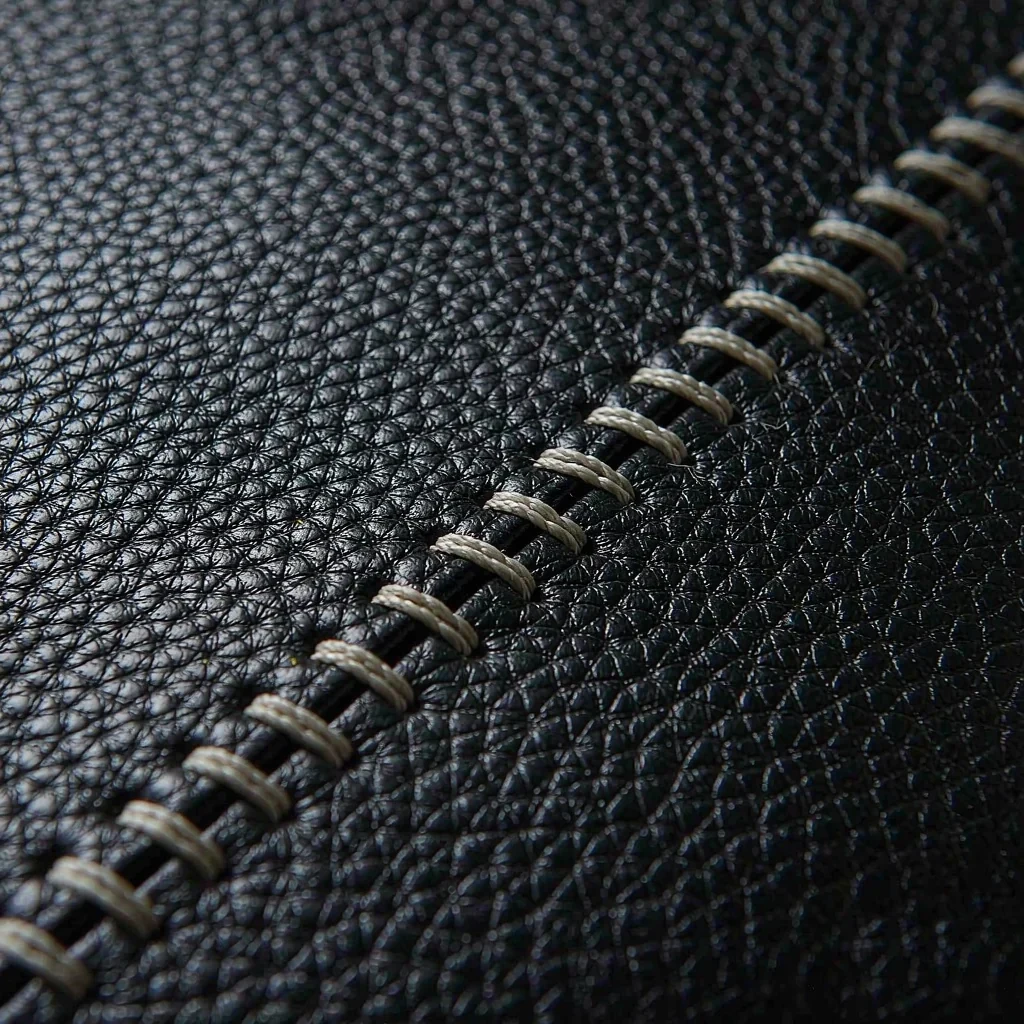
How Long Does Hand Finishing Actually Take?
Thirty-eight minutes of bench work per structured body, and that figure is the honest answer to most turnaround questions. It splits into roughly 20 minutes of edge work, 10 minutes of burnishing and conditioning, and 8 minutes of final dress including a torque check on every screw. The number is remarkably stable across silhouettes, because the operations behind it are set by coating behaviour and by how long a slicker takes to raise a surface, not by how complicated the design is.
Why Can't It Be Shortened?
Because two of the three blocks are chemical rather than discretionary. Flash time between edge coats is 8-10 minutes, set by the solvent in the coating; a second coat applied before the first has flashed traps solvent under a surface that has already skinned. Burnishing needs the surface to reach 60-70 C, which takes 45-60 seconds per 100 mm of edge whatever the size of the team. Adding hands to either buys nothing and buys defects instead.
- Total hand-finishing time
- 38 minutes per structured body
- Edge coats
- Three, at 0.10-0.14 mm wet
- Flash between coats
- 8-10 minutes, tested by touch
- Sanding between coats
- 400 grit, then 800 grit after the second
- Burnish surface temperature
- 60-70 C, held for 45-60 seconds per 100 mm
- Rest before packing
- 24 hours at 20-22 C and 50-55% relative humidity
The touch test is worth understanding, because it is what the 8-10 minutes is really describing. The coat is ready when it is dry to a fingertip and does not drag. Applied too early, solvent is trapped; applied too late, the next coat sits on a cured surface instead of keying into it and lifts away from the fold later. The clock is a guide and the fingertip is the test.
The planning consequence is that the only honest way to shorten a schedule is to run more bodies in parallel rather than to push one body through faster. Six bodies can be at six different stages of the same 38-minute sequence at once, which is why a bench holds a rolling buffer rather than finishing one piece before starting the next. It is also why a delivery date moves in steps rather than sliding: if the buffer is full, the date is fixed; if it is empty, the next piece starts from zero.
What Happens in the 38 Minutes?
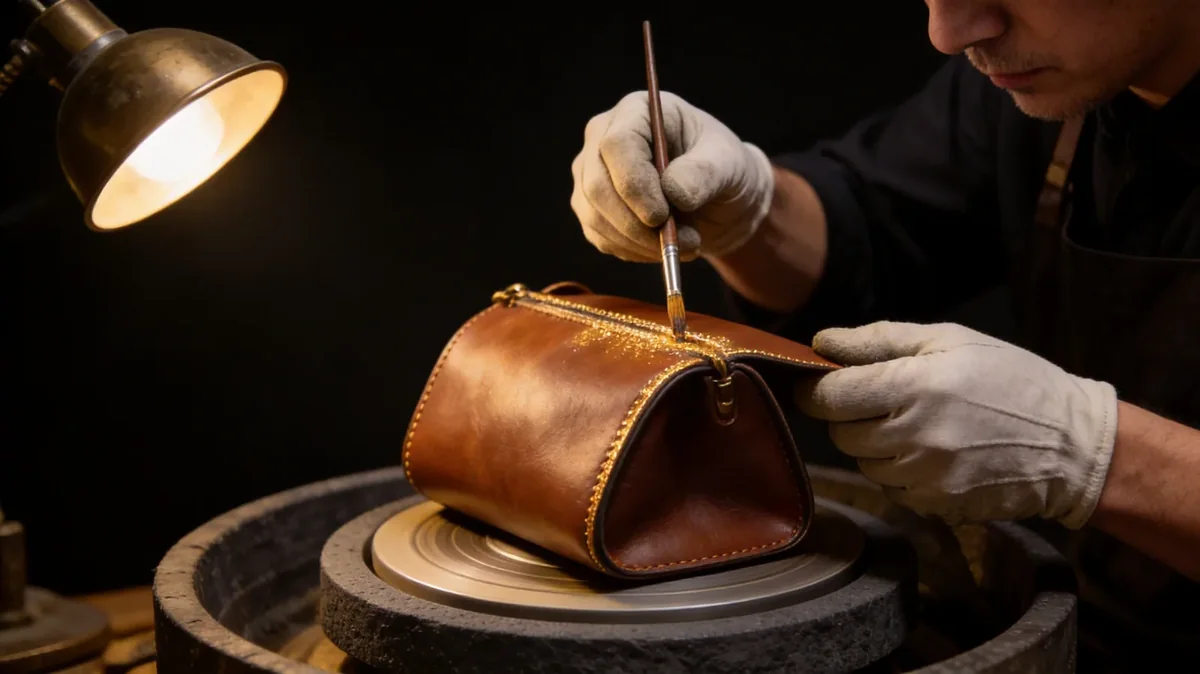
The sequence is fixed, and each step has a reason a buyer can inspect. Edge coats go on thin and build; sanding flattens the layer boundaries; burnishing heats and compresses the surface so it reads continuous with the face; conditioning restores moisture the solvent has taken out; and final dress sets hardware, checks torque and reads the piece as a customer would. Skipping any one of them produces a piece that passes an unaided read and fails a flex test.
- Coat one at 0.10-0.14 mm wet, sanded at 400 grit once flashed.
- Coat two, sanded at 400 then 800 grit, building to a flush contour.
- Coat three, left to cure fully before burnishing rather than burnished early to save time.
- Burnish at 60-70 C with a slicker, 45-60 seconds per 100 mm of edge.
- Condition the panel, because solvent strips moisture from the grain.
- Final dress: hardware torque, symmetry read, and a fourteen-point checklist.
Conditioning is the step most often dropped when a schedule tightens, and it is the one whose absence shows latest. Solvent in the coating draws moisture out of the grain along the fold, and a panel that has not been conditioned dries brittle exactly where the piece flexes most. The result is a bag that passes every check at despatch and develops a hairline along the edge in the second month, which is close to the worst possible timing for a fault to appear.
Where Does Rework Enter the Schedule?
Rework enters as a loop, not as a delay at the end. A sample round that fails the edge check goes back for a corrected piece, and that loop costs 3-4 working days each time it runs. Four rounds of sampling is therefore not four times the base figure but the base figure plus three loops, which is why an honest quote separates development time from revision time rather than bundling them into one number.
| Stage | Working days | What can extend it |
|---|---|---|
| First sample, simple build | 6-10 | Hardware not yet on hand adds 3-5 days |
| First sample, complex build | 12-15 | Exotic skin requiring CITES documentation |
| Each rework loop | 3-4 | A change to the pattern rather than to the finish |
| Bulk, standard | 35-50 | Order above capacity on a single colourway |
| Third-party inspection | 1-2 | Re-sorting a carton that exceeds the reserve |
| Packing and despatch | 2-3 | Retail packaging requiring hand assembly |
What Does the Final Dress Cover?
Fourteen points, read in the same order every time, because the order is what stops a reader skipping the awkward ones. It opens with symmetry and balance, moves through seam, edge and hardware, and closes on the interior and the packing. A house that can show you the list will usually be able to show you the last one filled in, which is a better signal than any claim about care.
Structure
Handle drop within 2 mm side to side, body level on its four feet with no more than 1 mm of rock, gusset depth equal at both ends and silhouette holding when the piece is set down empty.
Surface
Pitch counted over 25.4 mm at three points per seam, edge showing three coats with no hairline after twenty flex cycles, and no glue squeeze readable at any seam or turn.
Hardware
Every screw seated flush with no cam-out mark, plates flat to the panel with no gap under a fingernail, magnets releasing at 1.2-1.6 kgf and plating warm at the high points.
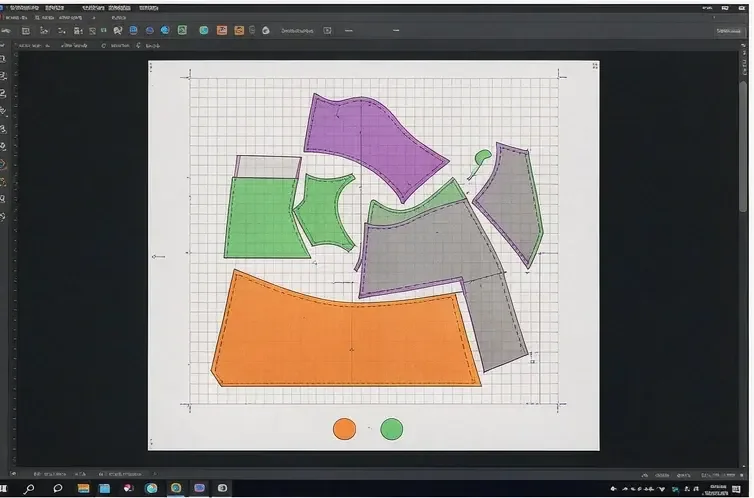
Why Rest Before Packing Matters
Twenty-four hours at 20-22 C and 50-55% relative humidity is the last line of the schedule and the one most often cut. Solvent from the edge coating continues to leave the piece for several hours after the final coat, and packing a body before that finishes traps vapour against the leather in a sealed polybag. What arrives is a piece with a bloom on the grain and a faint smell that the customer reads as a material fault rather than a scheduling one.
Packing before the coating has finished off-gassing is the single most common cause of a bloom arriving at a boutique. It costs one day to prevent and a season of returns to explain.
How Turnaround Is Quoted Honestly
An honest quote names the base window and the loops separately, and states what is inside each. Sampling at 6-10 working days covers a first sample in the agreed material; it does not cover a revised pattern. Bulk at 35-50 days covers the run from material release; it does not cover a hardware delay. A quote that gives one number for everything is a quote that will be renegotiated in week three, and the renegotiation always lands on the buyer.
The second mark of an honest quote is that it names the bottlenecks in writing. Edge finishing and burnishing are named because they are chemical; hardware is named because it is bought in; exotic skin is named because CITES documentation moves at the pace of the authority rather than the pace of the house. Naming them converts a late surprise into a shared risk, and it gives both sides something to manage rather than something to argue about.
A third mark is that the quote distinguishes a revision from a change. A revision adjusts a finish within the specification — an extra coat, a different sanding grit — and costs a 3-4 day loop. A change alters the specification itself: a new gauge, a new hardware part, a different reinforcement. A change restarts the relevant part of development rather than adding a loop, and a house that prices a change as a revision will either lose money on it or recover the difference later in the run. Asking which one you are being quoted for is the least costly question on the whole schedule.
What a Buyer Can Do to Protect the Date
Four things, all of them done before the order is placed. Approve hardware drawings early, because plating and casting are the longest lead items on a structured body. Freeze the specification before sampling starts rather than during it. Decide the packaging at the same time as the bag, because hand-assembled retail packaging adds 2-3 days that nobody budgets. And agree what happens if a round fails, including who carries the 3-4 day loop.
- Approve hardware drawings before sampling; plating and casting carry the longest lead.
- Freeze the specification at brief rather than during development.
- Decide packaging alongside the piece; hand assembly adds 2-3 days.
- Agree in advance who carries the 3-4 day rework loop when a round fails.
One more item belongs on the buyer's side of the schedule, and it is the most frequently ignored: the approval clock. A house can hold a 6-10 working days of sampling window only if the sample it produces is answered within a comparable period. A piece sitting on a designer's desk for two weeks does not pause the run behind it; it releases the bench to other work, and the order goes back into the queue when the answer arrives. Agreeing a response time at brief is worth more to a delivery date than any amount of pressure applied later, because it is the one variable entirely inside the buyer's control.
Programme Figures
Our programme runs through our validated partner factory Quanzhou Yingming Bags, an SGS-validated site with 7 production lines and roughly 200,000 pcs per month of capacity, holding export experience since 2014. Sampling takes 6-10 working days, or 12-15 on a complex build; bulk occupies 35-50 days; minimums sit at 500 pcs per style and colourway; and shipments leave FOB Xiamen with FOB, CIF and DDP terms all available. Inspection is drawn at AQL 2.5 under ISO 2859-1, with leather tested against ISO 3376 for tensile strength and finish adhesion against ISO 11644. Development windows are set out on luxury sampling.
Get a schedule that names its bottlenecks
Send the silhouette, hardware direction, quantity per colourway and target delivery date. You will receive a schedule separating development, revision and bulk, with the bottlenecks named in writing. Request a quote.
Frequently Asked Questions
How long does hand finishing take on a luxury bag?
About 38 minutes of bench work per structured body: 20 minutes of edge work, 10 of burnishing and conditioning, and 8 of final dress. The figure holds across silhouettes because the operations behind it are set by coating behaviour rather than by design complexity.
Why can't hand finishing be shortened by adding people?
Because two of the three blocks are chemical. Flash between edge coats is 8-10 minutes and set by the solvent; burnishing needs the surface at 60-70 C for 45-60 seconds per 100 mm. Neither responds to extra hands, and both fail visibly when rushed.
How many edge coats should a luxury bag have?
Three, applied at 0.10-0.14 mm wet and sanded at 400 then 800 grit between the second and third. One coat at three times the thickness dries proud of the panel and cracks at the fold within the first ten flex cycles.
How do you know when an edge coat is ready?
By touch rather than by the clock. The surface should be dry to a fingertip and should not drag. Applied too early, solvent is trapped beneath a skinned surface; applied too late, the next coat will not key and lifts later.
Why does a piece need to rest before packing?
Because the edge coating keeps off-gassing for several hours after the final coat. Packing before that finishes traps vapour against the leather in a sealed bag, and the piece arrives with a bloom on the grain that reads as a material fault.
How long does a rework loop add to the schedule?
About 3-4 working days each time it runs, and a little more if the failure needs a pattern change rather than a finish correction. Four sample rounds is therefore the base window plus three loops, which is why the two are quoted separately.
What is included in the final dress of a bag?
A fourteen-point list read in a fixed order: symmetry and balance first, then seam, edge and hardware, then interior and packing. Fixing the order is what prevents the awkward checks being skipped when the line is under pressure.
What are the real bottlenecks in a luxury bag schedule?
Three: edge chemistry, which is fixed; bought-in hardware, because casting and plating carry the longest lead; and CITES documentation on exotic skins, which moves at the pace of the authority rather than the house.
How can a buyer protect a delivery date?
Four things before the order is placed: approve hardware drawings early, freeze the specification at brief rather than during development, decide packaging alongside the piece, and agree in writing who carries the rework loop.
What temperature should leather be burnished at?
Between 60 and 70 C at the surface, held for 45-60 seconds per 100 mm of edge. Below that the surface does not compress and the edge stays dull; above it the grain can scorch, which shows as a darker band along the fold.
How long does sampling and bulk take?
Sampling takes 6-10 working days, or 12-15 on a complex build, and bulk occupies 35-50 days at 500 pcs per style and colourway. Shipments leave FOB Xiamen, with FOB, CIF and DDP terms all available.
What does a conditioning step actually do?
It restores moisture that the solvent in the edge coating has stripped from the grain. Without it the panel dries brittle at the fold, and the edge that looked correct at despatch begins to show a hairline within a season of use.
People Also Ask
Is hand finishing worth the time it adds?
Yes, because it is the part a customer touches. A machine-applied edge can look acceptable in a photograph and fail a flex test in ten cycles; three hand coats at 0.10-0.14 mm survive twenty.
Why is the sampling window quoted as a range?
Because a first sample in a stocked material takes 6-10 working days while a complex build with bought-in hardware takes 12-15. The range reflects the build, not uncertainty about the bench.
What happens if a bulk run is delayed?
The cause is usually hardware or documentation rather than the bench. Asking which of the three bottlenecks is responsible tells you whether the delay is recoverable by adding time or not recoverable at all.
Can inspection be added without delaying despatch?
Yes. A third-party inspection drawn at AQL 2.5 under ISO 2859-1 adds 1-2 days and should be booked before the run finishes, so the plan is ready when the cartons are.
How should packaging be decided?
Alongside the piece rather than after it. Hand-assembled retail packaging adds 2-3 days that are almost never in the original schedule, and deciding late pushes the despatch date rather than the packing date.
Sources and further reading
Every figure on this page is either our own programme data or attributed below. Open the originals before you write them into a specification.
- ISO — International Organization for StandardizationISO Publisher of ISO 2859-1 for the AQL 2.5 inspection plan, ISO 3376 for tensile strength and ISO 11644 for finish adhesion.
- SATRA Technology CentreSATRA Independent testing body for leather goods, referenced for flex resistance and finish adhesion test methods.
- CITES — Convention on International Trade in Endangered SpeciesCITES Permit authority whose documentation timelines govern schedules on exotic skin appended under Appendix II and Appendix III.
- European Chemicals AgencyECHA Regulator for REACH, whose Annex XVII restrictions apply to the solvents in edge coatings and finishes.